
Celebrities & Music
Dolly Parton built a global empire behind a shield of rhinestones and heavy cosmetics, but a quiet acoustic stage eventually revealed the reason she put the armor on in the first place.
Dolly Parton’s glittering public image was built as a shield against the poverty and insecurity of her childhood, and a stripped-down acoustic performance revealed the emotional truth behind that armor. The article also connects that vulnerability to the raw, autobiographical songwriting that defined her earliest records.

Dolly Parton built a global empire behind a shield of rhinestones and heavy cosmetics, but a quiet acoustic stage eventually revealed the reason she put the armor on in the first place. For an artist who famously refuses to leave the house barefaced and even sleeps in her makeup, the visual presentation has always been intentional. It began as a psychological defense against the extreme poverty she survived in the Smoky Mountains. During a stripped-down acoustic performance, the massive arena sound systems and visual effects were gone. Left with just a vintage guitar and a microphone, Parton addressed her carefully constructed image directly. Speaking to the quiet room, she looked out at the audience and told them their love was the most beautiful makeup she could ever wear. By using the very tool she created to hide her childhood insecurities, she turned her signature artificiality into a moment of pure gratitude. The acoustic setting acted as a musical removal of that armor, leaving only the voice of a girl who once wore patched rags. The heavy wigs and painted smile changed her outward appearance, but the lingering wounds from a hungry childhood still relied on the crowd for comfort. How she translated that exact vulnerability into the raw recordings of her earliest mountain records remains the deeper foundation of a half-century career.
DOLLY PARTON BUILT A GLOBAL EMPIRE BEHIND RHINESTONES AND WIGS — BUT A QUIET STAGE ONCE REVEALED THE REASON SHE PUT THE ARMOR ON IN THE FIRST PLACE.
For more than half a century, the public image of Dolly Parton has been defined by high-gloss exaggeration. Towering wigs, heavy cosmetics, tailored silhouettes, and thousands of rhinestones created a persona so larger-than-life that it often seemed impenetrable. She famously refused to be seen barefaced, joking through the decades that it cost a fortune to look that cheap.
Yet behind the deliberate humor was an instinct born in the deep hollows of Sevier County, Tennessee.
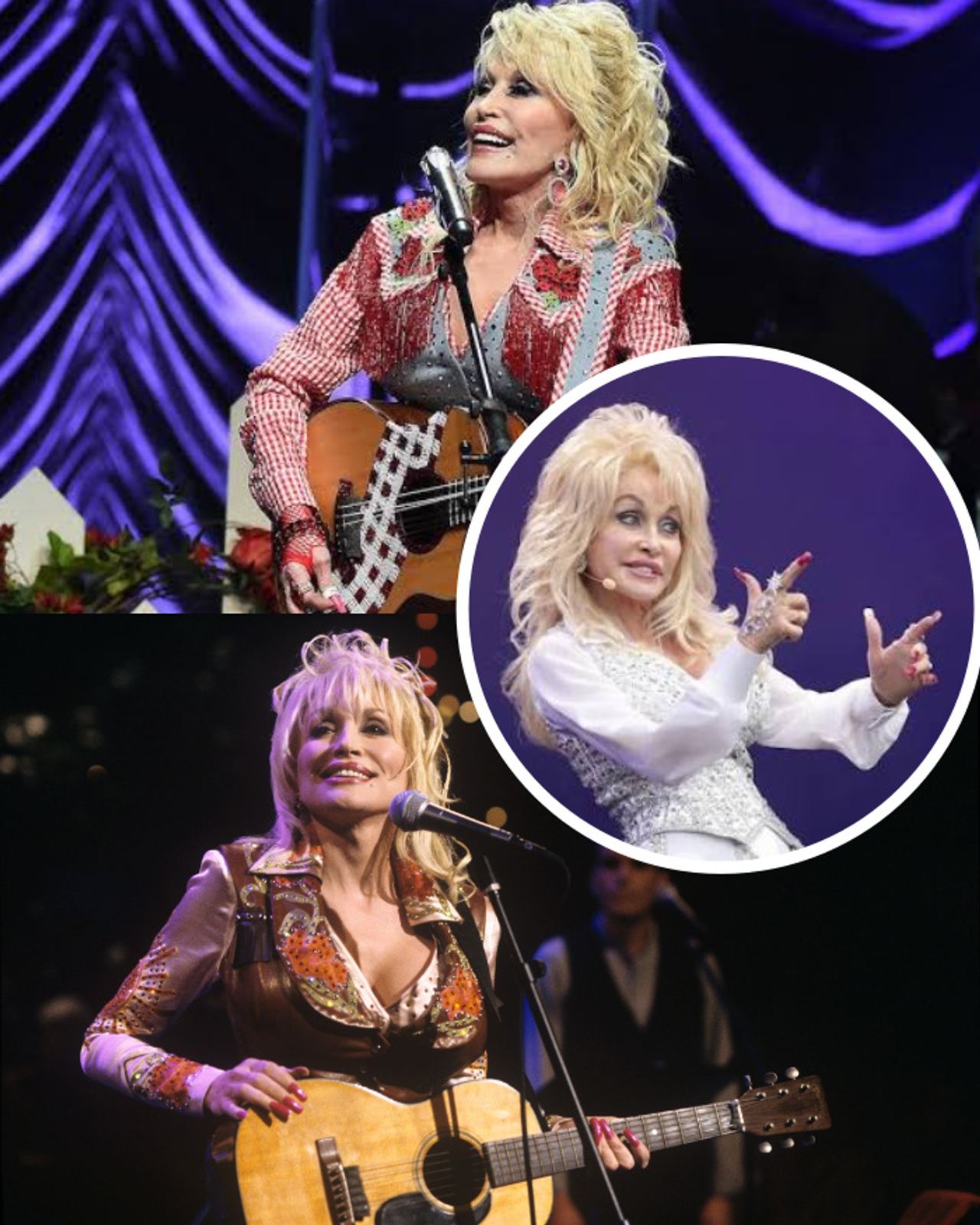
Growing up as one of twelve children in a one-room cabin without running water or electricity, Parton experienced an extreme poverty that left quiet emotional scars. The visual armor she adopted as a young woman entering Nashville was not an industry compromise. It began as a psychological shield, built to conceal the vulnerability of a girl who had known hunger and worn patched clothing to school.
The weight of that shield shifted during an intimate, stripped-down acoustic performance.
Away from the massive stadium lighting, the backup dancers, and the electric roar of an arena band, Parton stood under a single spotlight with only an acoustic guitar and a microphone. The usual spectacle was stripped clean, forcing the focus entirely onto the woman behind the brand.
Looking out into the silence of the room, she addressed her appearance with unusual directness. She admitted to the listeners that underneath the paint and the glamour, her greatest source of beauty had always been the warmth of the people who gathered to hear her sing. She told them their love was the true makeup she wore.
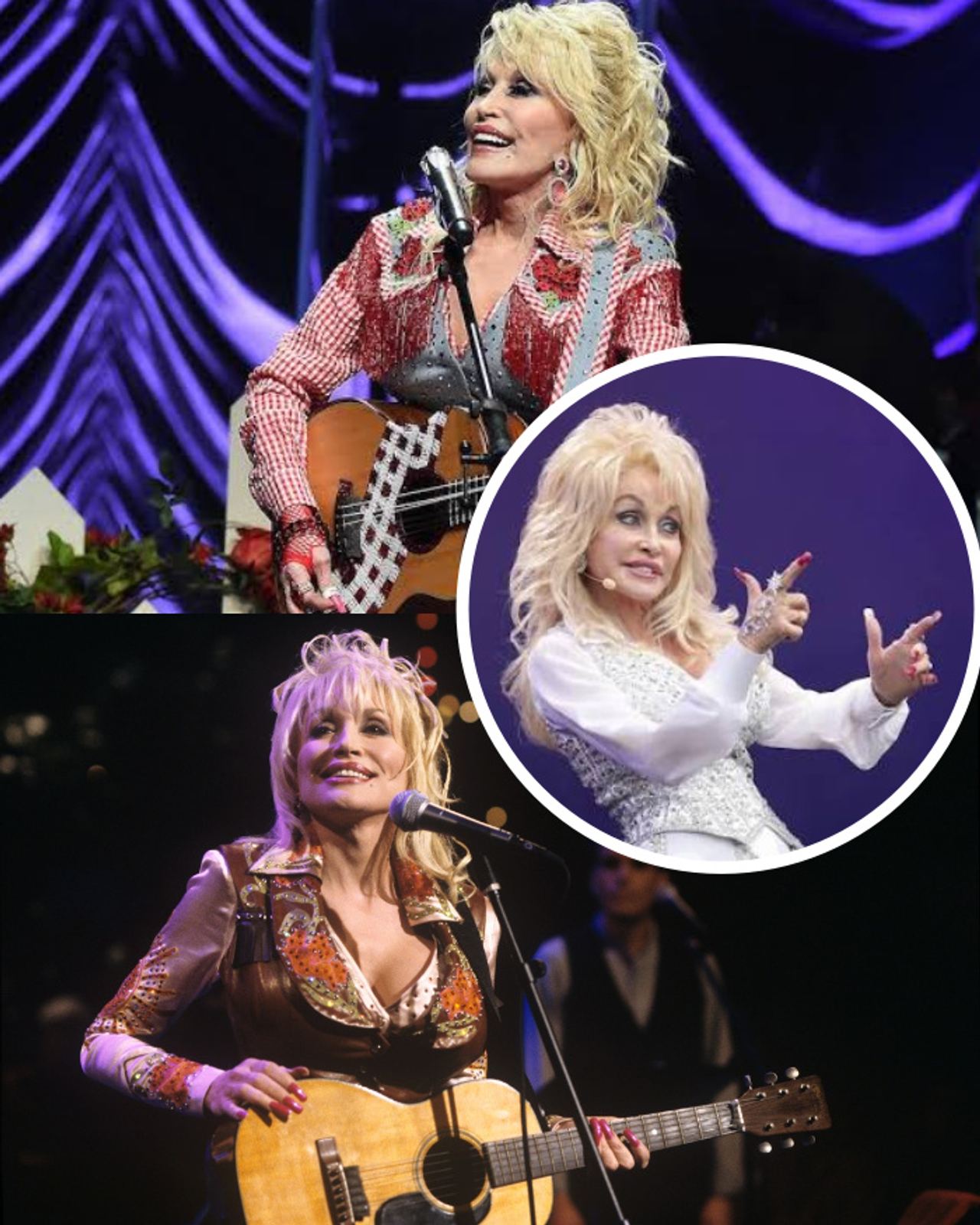
In that quiet exchange, the artificiality she had built to protect herself dissolved into genuine gratitude.
That willingness to reveal what lay beneath the armor had already shaped her earliest studio work. When she first gained creative control of her recording sessions in the late 1960s and early 1970s at RCA’s Studio B in Nashville, she refused to polish away the raw ache of her childhood. Working alongside producer Bob Ferguson, she insisted on recording stark, acoustic-driven story songs that laid bare the tragedies of mountain life.
Tracks like “Coat of Many Colors,” written on the back of a dry-cleaning receipt while traveling on a tour bus, drew directly on the ridicule she faced as a child. She kept the arrangements spare, relying on simple mountain fingerpicking, acoustic guitars, and unvarnished vocal delivery. By putting the specific hurts of Appalachian poverty into the center of her recorded work, she proved that her songwriting was fearless long before her visual brand became famous.
The arena shows, the business ventures, and the television specials would follow, solidifying her place as one of the most successful figures in American entertainment. But no amount of commercial dominance ever severed her connection to the small mountain community where she began.
The rhinestones gave her the confidence to face the cameras of the world. Yet the songs she sang when the noise fell away belonged entirely to the young girl from the cabin, standing at the edge of the stage with an acoustic guitar and an open heart.
Read more stories
- Why Carl Dean Never Feared Dolly Parton and Kenny Rogers’ Famous Chemistry
- How a French Pop Song Became Frank Sinatra’s Ultimate Statement
- “Unforgettable”: How Nat King Cole’s 1951 Ballad Became a Love Song Across Generations
- At Home in Dallas: The Quiet Golden Anniversary That Framed Charley Pride’s Life

