
Celebrities & Music
Toby Keith could have filled arenas back in the states, but some of his most defining shows took place on flight decks floating in the Persian Gulf.
This article recounts Toby Keith’s memorable USO performances aboard U.S. aircraft carriers in the Persian Gulf, where he played for sailors deep inside the ships as well as on flight decks. It emphasizes his close connection to service members and the lasting respect he earned from the fleet.

Toby Keith could have filled arenas back in the states, but some of his most defining shows took place on flight decks floating in the Persian Gulf. To reach aircraft carriers like the USS Enterprise and USS Abraham Lincoln during active combat deployments, Keith flew in on carrier onboard delivery planes, slamming down onto pitching steel decks caught by arresting wires. Instead of returning to shore quarters after singing, he checked into tight officer staterooms, lined up for chow alongside young deck crews, and stayed aboard overnight. The performances came together on short notice inside hangar bays parked tight with F/A-18 strike fighters, where the air smelled of JP-5 jet fuel and salty Gulf wind. Between the roar of night launches, Keith pulled out his acoustic guitar. Flight-deck mechanics in oil-stained green and purple jerseys walked up with grease on their fingers, wrapping the singer in tired handshakes and hugs that smeared soot straight onto his shirt. Once the main crowd cleared out, Keith took the guitar deep into the ship, walking down narrow companionways into engine rooms and radar stations to play for sailors on watch who could not leave their duty stations. He sat with nineteen-year-olds holding photos of newborns they had never seen in person, signing flight helmets and listening quietly about home. Those steel hulls carried crews cut off for nine months at a stretch, and Keith treated every grease mark on his clothes as a quiet honor. The carrier deck shows and the private visits deep inside the hulls during those Persian Gulf operations left an enduring bond between Keith and the fleet.
Toby Keith could have filled arenas back in the states, but some of his most defining shows took place on flight decks floating in the Persian Gulf. To reach aircraft carriers like the USS Enterprise and USS Abraham Lincoln during active combat deployments, Keith flew in on carrier onboard delivery planes, slamming down onto pitching steel decks caught by arresting wires. Instead of returning to shore quarters after singing, he checked into tight officer staterooms, lined up for chow alongside young deck crews, and stayed aboard overnight. The performances came together on short notice inside hangar bays parked tight with F/A-18 strike fighters, where the air smelled of JP-5 jet fuel and salty Gulf wind. Between the roar of night launches, Keith pulled out his acoustic guitar. Flight-deck mechanics in oil-stained green and purple jerseys walked up with grease on their fingers, wrapping the singer in tired handshakes and hugs that smeared soot straight onto his shirt. Once the main crowd cleared out, Keith took the guitar deep into the ship, walking down narrow companionways into engine rooms and radar stations to play for sailors on watch who could not leave their duty stations. He sat with nineteen-year-olds holding photos of newborns they had never seen in person, signing flight helmets and listening quietly about home. Those steel hulls carried crews cut off for nine months at a stretch, and Keith treated every grease mark on his clothes as a quiet honor. The carrier deck shows and the private visits deep inside the hulls during those Persian Gulf operations left an enduring bond between Keith and the fleet.
WHILE HIS HITS PACKED ARENAS BACK HOME, TOBY KEITH CHOSE PITCHING STEEL DECKS IN THE PERSIAN GULF — SPENDING NIGHTS BELOW DECK WITH SAILORS WHO COULD NOT WALK AWAY FROM THEIR WATCH.
By the mid-2000s, Toby Keith had become one of the most bankable headliners in American music, routinely selling out major amphitheaters from Oklahoma to the Atlantic coast. Yet some of his most defining audiences gathered far beyond the reach of standard tour buses and professional arena lighting.
To reach warships like the USS Enterprise and USS Abraham Lincoln during active combat deployments, Keith traveled aboard twin-engine C-2 Greyhound transport aircraft. The flights ended with violent carrier arrested landings, the tailhook catching steel arresting cables across pitching flight decks in choppy waters.
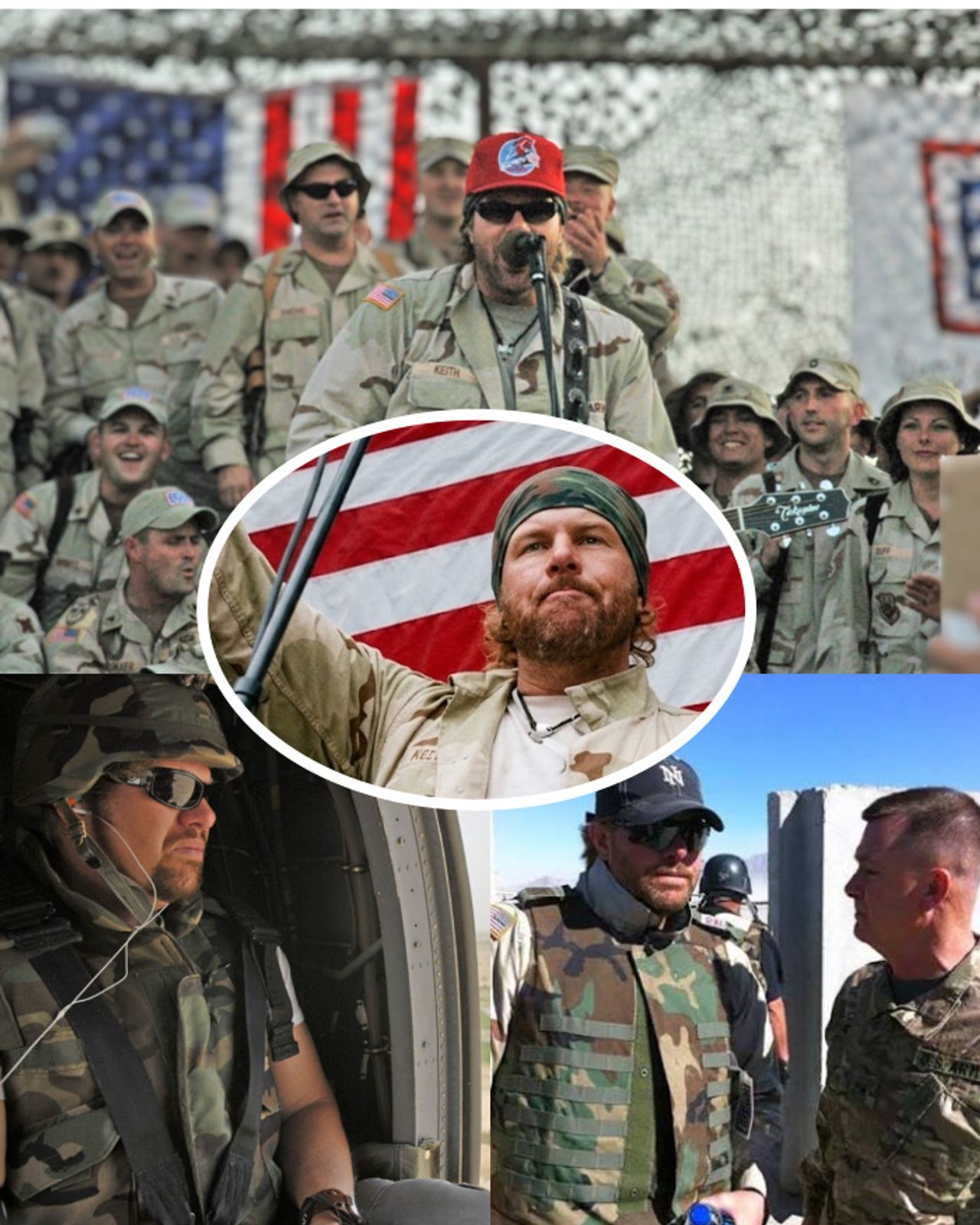
While visiting dignitaries often departed by helicopter before nightfall, Keith checked his gear into modest quarters on board. He slept inside the ship’s narrow staterooms, took his turn in the chow line with the lower-enlisted crew, and stayed overnight as flight operations continued around the clock.
The shows came together on short notice inside cavernous hangar bays packed tight with F/A-18 strike fighters and naval ordnance. The heavy air smelled of saltwater, hot metal, and JP-5 aviation fuel blowing through open elevator bays overlooking the dark water.
Between the deafening thunder of steam catapult launches on the deck overhead, Keith unpacked his acoustic guitar without an entourage or elaborate sound engineering. Thousands of sailors and Marines gathered on nonskid metal surfaces, trading long hours of sea duty for an hour of straight acoustic songs.
Deck crew mechanics in sweat-stained green and purple jerseys crowded the edge of the improvised performance area. When the music stopped, sailors with soot and hydraulic fluid still clinging to their hands stepped forward, wrapping the singer in broad handshakes and tired embraces that left grease marks directly across his shirts.
Keith welcomed every stain. To him, those smudges were not ruined fabric; they were tangible proof of honest work performed under exhausting deployment cycles.
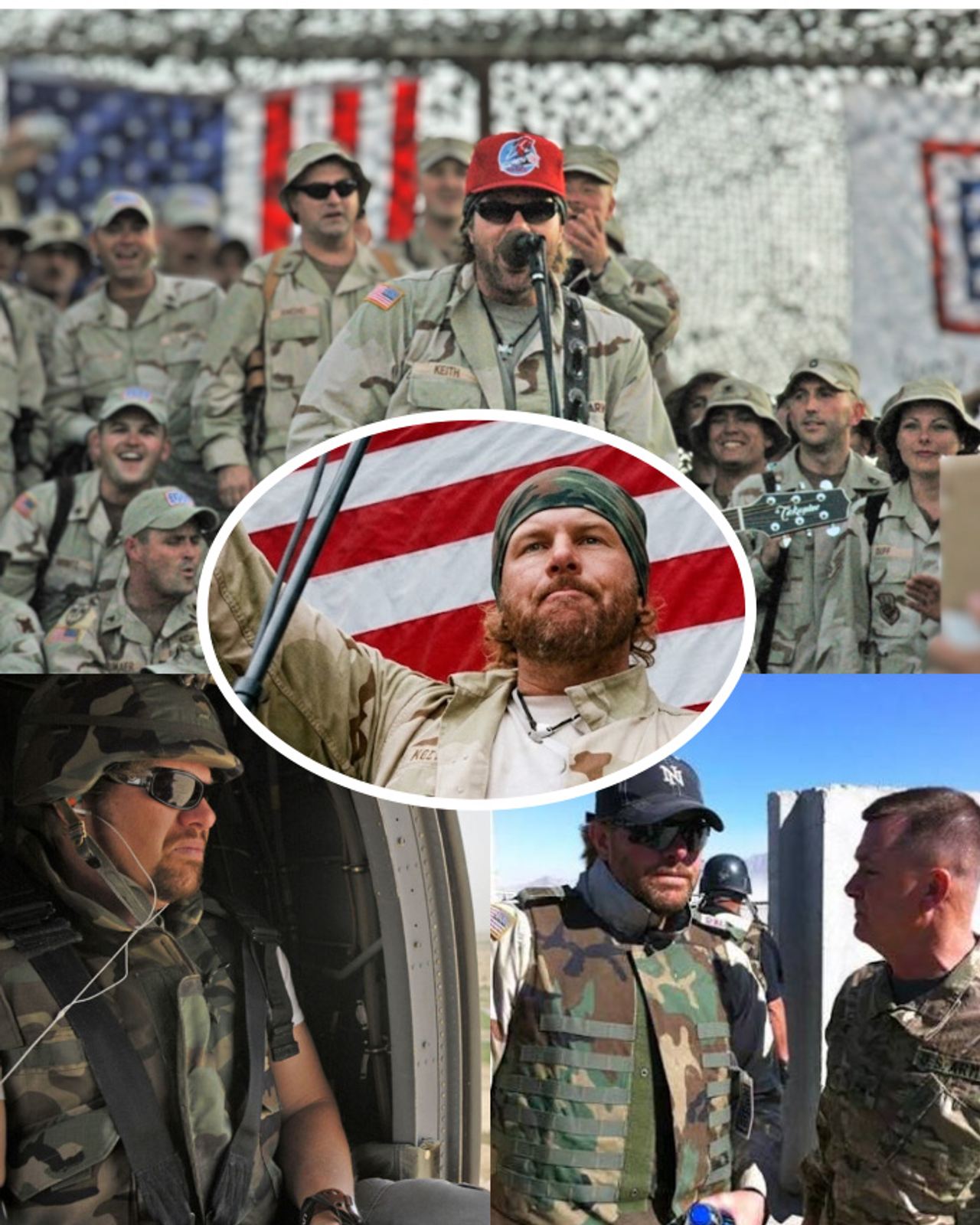
The central weight of those visits began after the main crowd dispersed back to flight operations. Guided through narrow passageways and down steep steel ladders, Keith carried his guitar deep into the warship’s lower levels, heading toward auxiliary engine spaces and secure radar compartments.
In those windowless spaces, watchstanders could not leave their consoles for concerts or mess deck gatherings. Keith sat down on gray tool lockers and folding chairs, playing unamplified songs for two or three sailors at a time while cooling fans hummed in the background.
Those quiet exchanges revealed the heavy personal cost of nine-month combat deployments. Young petty officers pulled creased wallet photographs from their uniform pockets, showing Keith pictures of newborn babies they had only known through email printouts.
He signed scratched flight helmets, shared chewing tobacco, and sat quietly listening to stories about high school sweethearts, farm chores, and small Midwestern towns. He never rushed the conversations or gave rehearsed speeches; he simply gave young Americans far from home an unhurried presence.
The carrier visits formed part of an extraordinary commitment that saw Keith complete eleven USO tours and nearly three hundred individual military appearances before his passing in February 2024. Long after the tours ended, the Navy recognized that deep loyalty by presenting him with prestigious civilian commendations.
To the thousands of fleet sailors who served in the Persian Gulf, the memory that endures is not a polished music star under stadium spotlights. It remains the tall man with a worn guitar who climbed down into the steel hull, stayed through the night, and treated every smear of grease like a quiet badge of honor.
Video can’t be loaded because JavaScript is disabled: Toby Keith – Courtesy Of The Red, White And Blue (The Angry American) (Official Music Video) (
Read more stories
- Don Williams’ Final Wish: Why the Country Legend Chose the Gulf Over a Nashville Grave
- “Blue Suede Shoes”: How Carl Perkins Turned One Dance Floor Remark Into a Rockabilly Landmark
- Why Don Williams Walked Away Quietly in 2016
- Sam Cooke’s Prophetic Song of Pain, Hope and Civil Rights: “A Change Is Gonna Come”

