
Human Stories
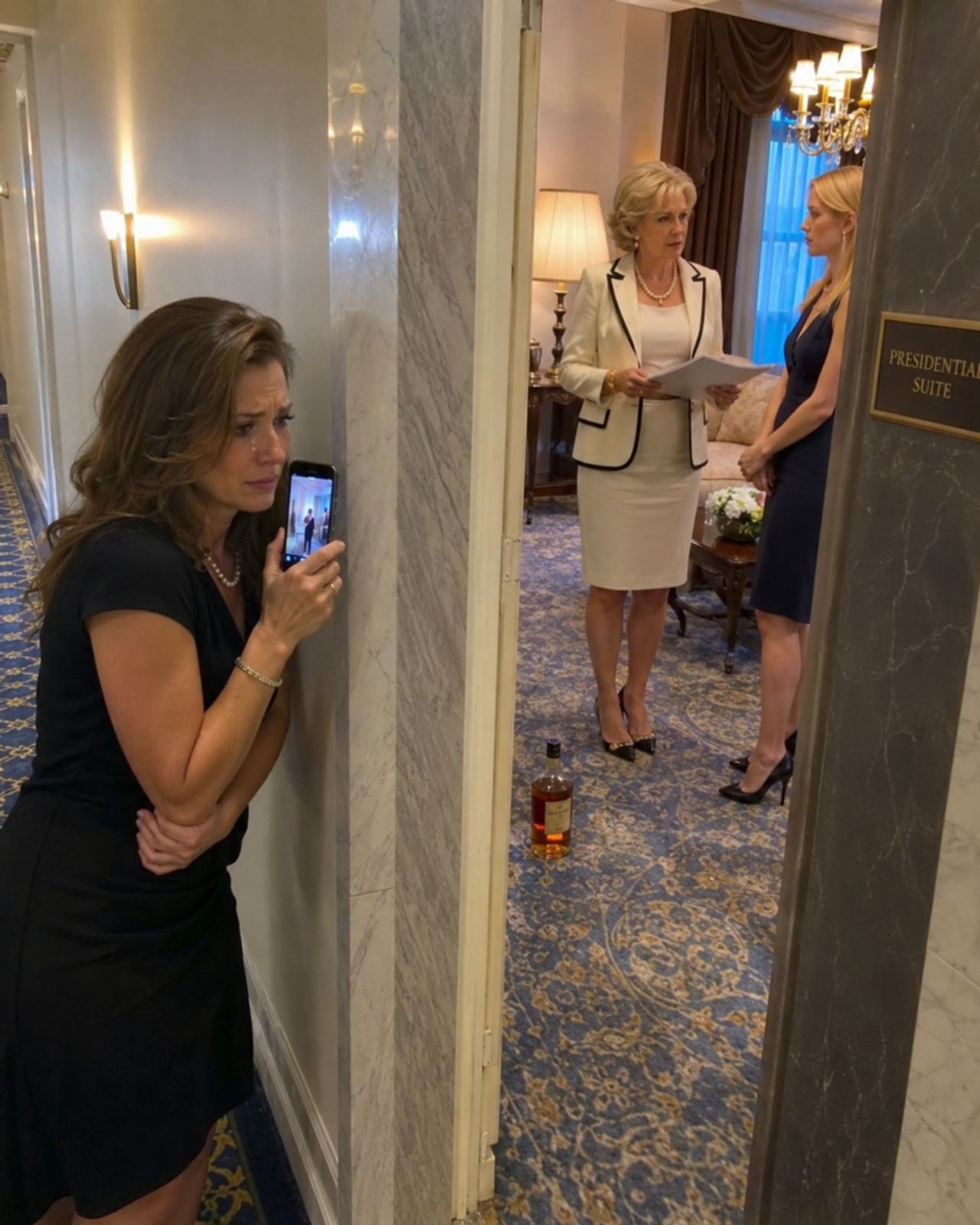
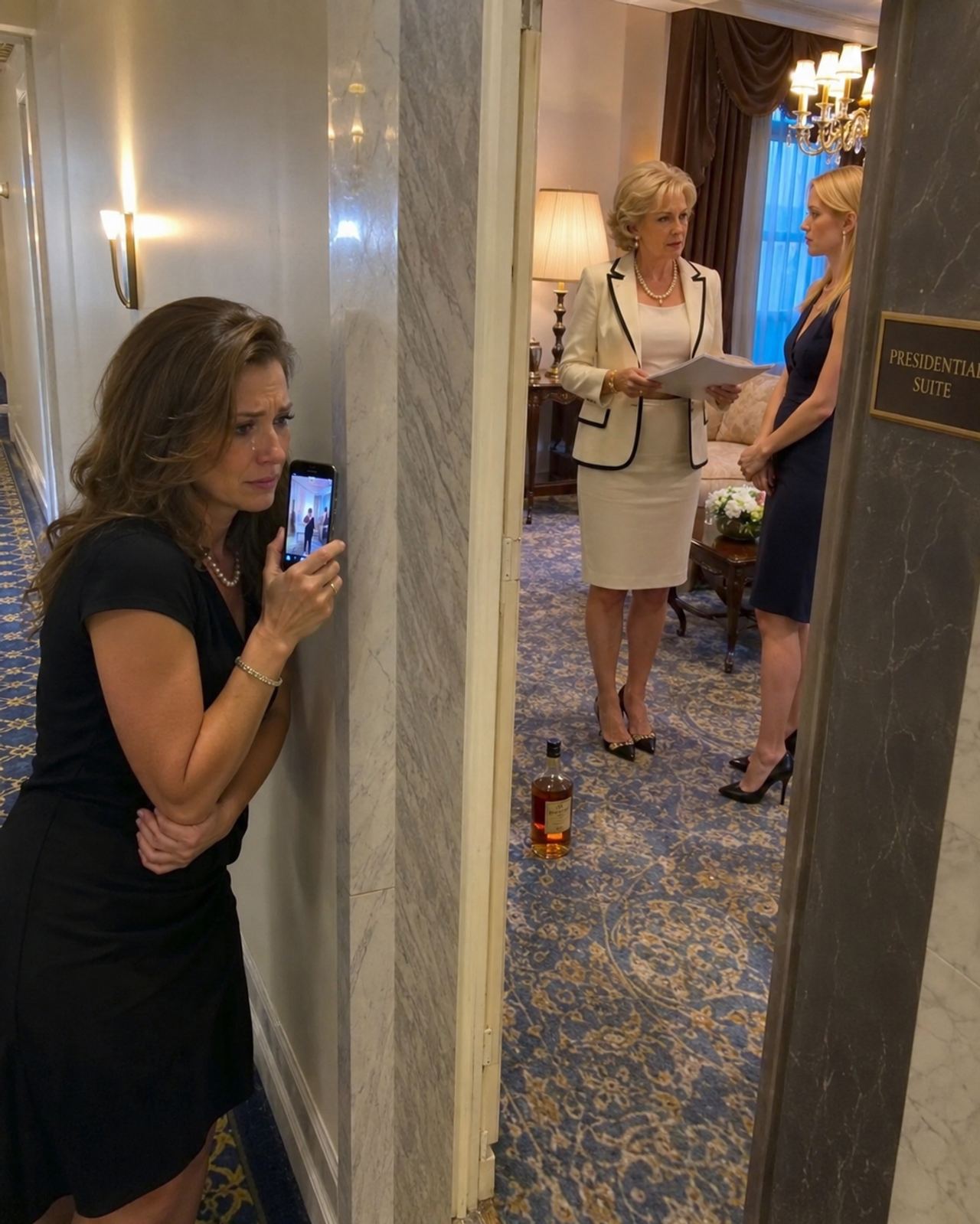
My mother stood inside the Four Seasons suite and said, “Make Isadora sign over Grandma’s house.” My sister laughed that I was too weak to fight. I set Dad’s bourbon on the carpet and kept my phone recording.
After enduring her family’s contempt and an attempted scheme to seize her grandmother’s house, Isadora reveals herself as a bestselling author at the Boston Literary Awards. She exposes the family’s fraud with a recording, protects her grandmother’s home, and finally claims her life and name on her own terms.

Part 1
I had just come off a twelve-hour flight that had been delayed three times, still wearing the black dress I packed for the Smith family weekend. Every November, fifty relatives gathered at the Four Seasons Hotel Boston so my mother, Eleanor, could polish our family name in public.
She liked the marble lobby, the champagne, the air kisses, and the way people lowered their voices around money. I came with a peace offering: a bottle of my father’s favorite bourbon, the kind he would never buy for himself.
I thought I might leave it in the suite, hug him before dinner, and maybe, for once, stop being introduced as the daughter who was “still exploring her options.” For ten years, my family treated my writing like a childish detour. My sister Natalie was the attorney, the perfect one, the senior associate with the Cartier bracelet and the polished laugh. I was the one they pitied over cocktails.
They did not know that S. H. Montgomery, the anonymous author they kept seeing on bestseller lists, was me. They did not know that a few hours earlier I had signed a publishing deal that would put my name in every literary column in Boston. And they definitely did not know I was outside the presidential suite when my mother began rehearsing how she would take my grandmother Clara’s house.
“A simple quitclaim deed,” Eleanor said. “We frame it as protecting the family legacy.”
Natalie laughed. “Please. She’ll sign. Isadora folds the second anyone raises their voice.”
The house they wanted was not just property. It was the Beacon Hill Victorian where my grandmother taught me that words had power. It was the window seat where I wrote my first story, and it was proof that one woman in our family had believed in me before I knew how badly I would need it. Inside the suite, my mother kept going.
Smith Developments was drowning after a failed waterfront project. Natalie was buried under debt she had hidden behind designer clothes and firm dinners. Grandma’s house had become their escape plan, and I was the obstacle they planned to shame in front of the whole family at the Saturday meeting.
I did not knock, and I did not cry.
I put the bourbon down where they would find it, stepped into the service alcove, and pressed record.
My mother walked out first, already calling the attorney who had drafted the papers. Natalie followed, telling someone on the phone that I would break by Sunday because I still wanted approval. They passed so close I could smell my mother’s Chanel perfume, and that was the moment I stopped wanting anything from them.
By midnight, I was in an Uber to Logan Airport. By morning, I was gone, my phone off, my location hidden, my family’s group chat exploding across a screen I checked from a villa in Costa Rica.
They found the bourbon.
They found the hallway footage.
They realized I had heard enough.
For fourteen days, they panicked. My mother called me selfish. Natalie called me worried. Uncle Richard called me disappointing. They had no idea I was using those same fourteen days to prepare for the Boston Literary Awards, where S. H. Montgomery would finally step out from behind the pen name.
The ceremony was at the Four Seasons. My mother sat on the board, which meant she would be there in the front rows, smiling for cameras, pretending she was a patron of the arts. Natalie would be beside her, dressed like success and drowning in fear.
Oliver Reed’s speech was still thirty minutes away when Lucas Bennett, the CEO of Northbridge Publishing, crossed the ballroom toward my mother with a glass of champagne in his hand.
He smiled, extended his hand, and said the one sentence that made her face go still.
Part 2
Lucas Bennett said, “Mrs. Smith, I believe Isadora will be joining us tonight.”
My mother gave him the smile she used on donors, the one that looked warm only from a distance. “I’m afraid my daughter couldn’t attend. Prior commitments.”
Lucas glanced toward Natalie, then back at my mother. “That is strange. She is our honoree.”
Natalie’s champagne glass tilted so sharply a waiter stepped closer. “Honoree for what?”
“Author of the Year,” Lucas said. “S. H. Montgomery.”
The little circle around them went quiet. A critic from the Boston Globe stopped mid-sentence. A publisher from New York turned his whole body toward the conversation. My mother tried to laugh, but the sound came out thin.
“There must be a mistake,” she said. “Isadora writes small things online.”
Lucas took out his phone and showed her the contract summary with my legal name beside my pen name. I saw the color drain from her face through the livestream. Natalie leaned in, read the number, and whispered something I could not hear. Her lips formed the shape of disbelief.
At 8:30, Oliver Reed stepped onto the stage. The ballroom doors behind the audience were still closed. My mother had been guided back to table three, but she no longer looked like the woman who had spent the evening collecting compliments. She looked trapped in a room full of witnesses.
The screens lit up with the covers of The Silverwood Chronicles.
Five books.
Millions sold.
Thirty-seven languages.
The anonymous author everyone in publishing had been hunting for.
Then Oliver looked toward the back of the ballroom and began the sentence my family had spent ten years making impossible.
Part 3
“…And tonight,” Oliver Reed’s voice echoed through the high-ceilinged ballroom, amplified by speakers that made every syllable feel heavy and absolute, “we do not just honor a book. We honor a voice that chose truth over noise, a writer who built an empire in silence.”
The heavy mahogany doors at the back of the room did not open with a bang. They slid open smoothly, silently, on polished brass tracks.
I stepped into the light.
I was no longer wearing the travel-wrinkled black dress from the long-haul flight. I wore a tailored, ice-blue silk floor-length gown with clean, architectural lines—no flashy jewelry except for the simple silver ring my grandmother Clara had given me on my eighteenth birthday. My hair was swept back, sharp and unyielding.
The ballroom was filled with two hundred of Boston’s elite: publishing titans, literary critics, board members, and my family.
As I walked down the center aisle, the room split like water around the hull of a ship. Whispers flared up, low and electric. I kept my eyes fixed straight ahead, but out of the corner of my vision, I felt the exact moment Eleanor and Natalie registered my presence.
My mother stood half-bent over table three, her knuckles white against the crisp white tablecloth. Her eyes were wide, strained, searching my face as if looking for a ghost or an impostor. Beside her, Natalie looked as though someone had stripped away her Cartier bracelet and left her standing exposed in a winter draft. Her mouth was slightly open, her breath catching in her throat.
I climbed the wooden steps to the stage. Oliver handed me the brass and crystal award, heavy and cool in my hands, and stepped back with a respectful nod.
I leaned down to the microphone. The room dropped into complete, breathless silence.
“Ten years ago,” I began, my voice clear, echoing off the gilded molding of the Four Seasons—the very hotel where my mother had spent my entire life rehearsing our family’s curated perfection, “I was told that words were a foolish hobby. I was told that unless a name was attached to a deed, a firm, or a bank account, it held no value.”
I looked directly at table three. My mother’s spine straightened, but her face was ash-grey.
“So I gave up my name,” I continued softly. “I wrote in the quiet hours. I let S. H. Montgomery speak for me because S. H. Montgomery could not be belittled over vintage wine. She could not be coerced into signing away what was not hers to give.”
A murmur rippled through the front row. Lucas Bennett sat at the publisher’s table, watching Eleanor with a quiet, knowing smile.
“Tonight, I take my name back,” I said. “Not to polish a family legacy, but to protect one.”
I held up the award slightly, acknowledging the room, but my eyes never left my sister and my mother. “To everyone who thought silence meant weakness: thank you. You gave me five bestsellers’ worth of material.”
The applause erupted—spontaneous, thunderous, and deafening. Publishers stood. Critics clapped. Camera flashes flared, throwing sharp white light across Eleanor’s terrified face.
She wasn’t looking at a daughter who needed her approval anymore. She was looking at a woman who held the power to destroy everything she had built.
Part 4
The private green room behind the main hall was quiet, insulated by heavy velvet drapes. Ten minutes after the speech, the door rattled.
Eleanor shoved her way past the security officer standing outside, with Natalie trailing close behind, her heels clicking frantically against the hardwood.
“Isadora!” my mother gasped, her voice trembling with an volatile mix of rage, humiliation, and desperate relief. She closed the door behind them, sweeping her silk shawl over her shoulders. “What was that display? Are you out of your mind? To embarrass us—to embarrass me—in front of the entire board?”
“Hello, Mother,” I said, setting my champagne glass on the glass coffee table. “Natalie.”
Natalie stepped forward, her polished veneer cracking at the edges. Her voice rose an octave higher than usual. “Do you have any idea what you’ve done? Lucas Bennett pulled the funding from the firm’s charity gala within five minutes of you stepping off that stage! Isadora, Smith Developments is in the middle of—”
“A collapse,” I interrupted quietly.
Natalie froze.
I sat back on the leather sofa, crossing my ankles. “A failed waterfront deal. Twelve million dollars in unhedged liabilities. And your firm, Natalie, is currently investigating three separate escrow accounts you tampered with to cover your personal margin calls.”
The room went deathly still.
Natalie’s face flushed a deep, ugly red, then turned bone-white. “How… how do you know that?”
“You talk loudly on the phone when you think the person you’re plotting against is weeping in a corner,” I replied, pulling my phone from my clutch.
I tapped the screen once.
My mother’s recorded voice vibrated from the speaker, crisp and crystalline: “A simple quitclaim deed. We frame it as protecting the family legacy.”
Then Natalie’s voice: “Please. She’ll sign. Isadora folds the second anyone raises their voice.”
Eleanor stumbled back a step, catching herself on the edge of a mahogany side table. “You recorded us… in the hallway?”
“I recorded a felony conspiracy,” I corrected gently. “Yesterday morning, my attorneys filed a formal petition for legal guardianship over Grandma Clara’s estate, backed by a sworn affidavit from her personal physician confirming her sound mind, and a copy of this audio file. The court issued an immediate injunction. You cannot touch the Beacon Hill house. You cannot touch her assets. And if you attempt to approach her without my legal team present, you will be served with a restraining order.”
“Isadora, please!” Eleanor’s voice broke, dropping the imperious tone she had cultivated for thirty years. She reached out, her hands shaking, her manicured nails trembling in the air. “We are your family! Your father’s company—our home—everything depends on securing that capital! If the board finds out about the waterfront project, your father will lose his seat! We will lose everything!”
“You already lost it,” I said, standing up. I was taller than her now, standing on my own foundation, built word by word, contract by contract. “You spent ten years treating me like a ghost in your house. You used my grandmother’s love as a bargaining chip to cover your own greed. You don’t want my help, Eleanor. You want my silence. And that is the one thing I will never sell you again.”
Natalie began to cry—not the quiet, elegant tears of a victim, but the harsh, panicked gasps of someone who realized the door had locked from the outside. “Isadora, they’ll disbar me…”
“Then you had better find a very good lawyer,” I said softly. “Because I won’t be paying for yours.”
Part 5
Three weeks later, the Boston winter set in with a bitter, clean cold that swept off the Charles River.
The scandal had broken across the financial pages first, then the literary columns. Smith Developments restructured under bankruptcy protection; my mother’s seat on the cultural board was quietly revoked. Natalie took a leave of absence from her firm that everyone knew was permanent. They had tried to reach me through uncles, through old family friends, through letters left at my publisher’s office.
I answered none of them.
Instead, I stood in the parlor of the Beacon Hill Victorian. The tall bay windows looked out over the frosted cobblestone street. The room smelled of old oak, lavender, and the woodfire crackling in the hearth—the exact smell of my childhood, unchanged by the storm outside.
Grandma Clara sat in her wingback chair by the window seat, a cashmere blanket over her knees, sipping tea from a delicate porcelain cup. She looked smaller than she used to, but her eyes were sharp, bright, and completely clear.
“They thought I was frail, you know,” Clara said, her voice dry with quiet amuse. “Eleanor always confused gentleness with stupidity.”
I walked over and sat on the wooden window seat where I had written my very first notebook of stories at twelve years old. I rested my hand on her knee. “It’s over now, Grandma. The house is locked in a private trust. No one can ever touch it.”
She reached out and covered my hand with her own, her skin thin like parchment, but her grip surprisingly firm. “I knew who S. H. Montgomery was after the first chapter of your first book, Isadora.”
I looked up, startled. “You knew?”
Clara smiled, her eyes crinkling at the corners. “You write about freedom the way only a caged bird can. I recognized your heart on every single page. I didn’t say a word because I knew you needed to build your own key.”
She glanced around the warm, firelit parlor, then back at me.
“You didn’t just save this house, my dear,” she whispered gently. “You built your own life. And that is something no deed, no mother, and no court can ever take from you.”
Outside, snow began to fall softly over Boston, dusting the glass of the window pane. I looked down at the blank leather journal resting on my lap, opened to the first page, and uncapped my pen.
For the first time in my life, I didn’t write to escape my family. I didn’t write to hide behind a pen name.
I wrote because I was finally home, writing my own story, under my own name.
Read more stories
- After a Starving Girl Stole Two Cans of Milk, the Stranger Who Followed Her Uncovered a Buried Past
- Five minutes after signing the divorce papers
- My husband slammed my eight-month-pregnant belly into a checkout counter over a $14 baby blanket.
- She Found Her Son At The Door, Then The Paramedic Recognized Her Brother