
Stories
My husband invited his ex to our housewarming, then told me I could leave if I couldn’t “handle it.” So I smiled, stayed perfectly calm, and gave him the most mature answer of his life… right before everything he thought he controlled slipped out of his hands.
Maya realizes her husband has invited his ex to their housewarming and is trying to frame her discomfort as immaturity. As the party unfolds, Maya quietly prepares to leave and reclaim control of her life.

The Housewarming That Changed Everything
Derek did not bring Nicole into our apartment on Saturday.
He brought her in three nights earlier, while I was on my knees under the kitchen sink, my hair twisted into a messy knot, my work jeans stained with machine grease, my shoulder wedged against a cabinet that smelled like old wood and lemon cleaner. A wrench was tight in my hand. Cold water dripped steadily into a mixing bowl beside my hip.
The front door slammed so hard the picture frames jumped against the wall.
I heard his keys hit the entry table.
Then silence.
Not the normal kind of silence after work. Not tired silence. Not let-me-take-off-my-shoes silence.
This was the kind of silence that stands in a room before bad news walks in wearing someone else’s voice.
“Maya,” Derek called.
I slid out from under the sink and sat up on the floor.
He was standing in the kitchen entrance with his arms crossed, his jaw set, his expression polished into something stern and disappointed, like a manager about to fire a woman who had not yet been told she was employed at his pleasure.
“We need to talk about Saturday,” he said.
Saturday.
Our housewarming.
Thirty people. Music. Food. His friends, my friends, coworkers, neighbors from down the hall. The first real party since I had moved into his apartment six months earlier and tried to convince myself that turning his place into our place was only a matter of time.
“What about it?” I asked, wiping my wet hands on a rag.
He straightened his shoulders.
That should have been my first warning.
Derek only did that when he had rehearsed something. He would lift his chin a little, soften his eyes just enough to seem reasonable, and speak in a calm voice that made every sentence feel like a conclusion instead of a conversation.
“I invited someone,” he said. “She’s important to me. And I need you to be calm and mature about it. If you can’t handle it, we’re going to have a problem.”
The drip under the sink continued.
One drop.
Then another.
“Who?” I asked.
He did not look away.
“Nicole.”
His ex.
The one from all the stories.
The one from the Portland road trip, the Vancouver weekend, the midnight hike that apparently changed his perspective on life. The one whose name came up too easily and too often. The one he still followed online because, according to him, “blocking people is immature.” The one whose photos he never liked anymore, but somehow always saw.
I set the wrench on the counter.
The small metal clink sounded far too loud.
“You invited your ex to our housewarming?” I said.
He did not flinch. If anything, he looked relieved that the hard part had arrived.
“We’re still friends,” he said. “Good friends. If that bothers you, maybe you’re not as confident as I thought.”
There it was.
Not an explanation.
Not a discussion.
An ultimatum dressed up as a moral lesson.
My mouth went dry, but my hands stayed calm. That surprised me. I expected heat. I expected the old reflex to defend myself, to prove I was not jealous, not difficult, not insecure, not the woman he was already preparing to accuse me of being.
Instead, I saw the whole scene clearly.
He had made the decision without me.
He had invited her without asking me.
He had waited until it was too late to object gracefully.
And now he was setting the trap.
If I objected, I was insecure.
If I got upset, I was dramatic.
If I asked him to uninvite her, I was controlling.
If I said nothing, he won.
“I need you to stay calm and mature,” he repeated. “Can you do that, or are we going to have an issue?”
He was ready for a fight.
Ready to sigh. Ready to rub his forehead. Ready to tell me I was proving his point. Ready to turn my discomfort into a performance review.
But something inside me went very still.
Not numb.
Still.
Like the moment inside an elevator shaft when the machine room goes quiet and you hear the cable before you see the problem.
I smiled.
Not a big smile. Not a fake one.
A calm, steady smile I did not recognize on my own face.
“I’ll be very calm,” I said. “And very mature. I promise.”
Derek’s eyes flickered.
That was not the script.
“Really?” he asked. “You’re okay with this?”
“Absolutely,” I said. “If she’s important to you, she’s welcome.”
He studied me for sarcasm. He searched my face for the anger he had already accused me of having. He found nothing.
“Great,” he said, slowly relaxing. “I’m glad you’re not going to make this weird.”
Then he turned away, already pulling out his phone as he walked toward the living room, probably to tell someone that his girlfriend had handled it better than expected.
I stayed on the kitchen floor for a moment longer.
The sink kept dripping.
The apartment smelled like damp wood, takeout containers, and Derek’s expensive cologne.
I looked around the kitchen I had organized, the cabinets I had cleaned, the cheap curtains I had bought because he said the place needed warmth but never got around to choosing any himself.
Then I reached for my phone.
I opened my messages and typed:
Hey, Ava. That spare room of yours still open?
Her reply came back in seconds.
Always. What’s going on?
I stared at the blinking cursor.
For a second, my hands trembled.
Not because I was scared of leaving.
Because I had just realized I was allowed to.
I’ll tell you Saturday, I wrote.
Just need a place to stay for a while.
Ava did not ask why. She did not demand a full explanation. She did not make me prove that I deserved shelter from my own life.
Her next message was simple.
Door’s open. Come anytime.
I set the phone down, picked up the wrench, and tightened the pipe until the dripping stopped.
It was the first thing in that apartment I fixed that week.
It would not be the last.
—
The Preparation
My name is Maya Chen. I was twenty-nine years old then, and I fixed elevators for a living.
Most people do not think about elevators until they stop working.
They step inside a metal box, press a button, and trust invisible cables, brakes, motors, sensors, and counterweights to carry them safely between floors. They trust the system because the system usually holds.
My job was to notice when it did not.
I spent my days in dark shafts, machine rooms, parking garages, hotel basements, office towers, hospitals, old brick buildings near Pioneer Square, and luxury condos where people wore slippers that cost more than my weekly groceries. I could hear a bad bearing before a building manager believed there was a problem. I could smell overheated wiring before the alarm panel noticed. I knew the difference between a door that jammed from age and one that jammed because someone had ignored maintenance for too long.
Maybe that was why Derek fooled me for so long.
People are harder than machines.
Machines do not tell you that your instincts are ugly.
Machines do not apologize just enough to keep you working.
Machines do not ask you to call neglect love.
I met Derek Holloway two years earlier at a mutual friend’s barbecue in Ballard. It was one of those rare Seattle afternoons when everyone acted like sunshine had been invented specifically for them. The grill smoked. Someone’s dog kept stealing hamburger buns. Music played from a dented Bluetooth speaker on the deck.
Derek stood near the cooler, laughing with a group of people, and when I walked up to grab a drink, he made space for me like he had been waiting.
“You look like someone who knows how to fix things,” he said.
I glanced down at my boots, then at the grease under one fingernail I had missed despite scrubbing. “That obvious?”
“Not obvious,” he said. “Capable.”
It was a good line.
I knew it was a line.
I still liked hearing it.
He worked in tech marketing. He had a smooth confidence that looked like competence from a distance. He told good stories, remembered small details, asked questions that made you feel like the room had narrowed around you in the best way. He remembered that I liked black coffee, old bookstores, Mariners games, and the smell of rain on concrete.
On our third date, he brought me a used hardcover copy of a book I had mentioned once in passing.
On our fifth, he changed our dinner reservation because I said I hated restaurants where the music was too loud.
On our ninth, he told me he had never met anyone like me.
That sentence is dangerous when you have spent too much of your life being useful and not enough of it being chosen.
I believed him.
For a while, being with Derek felt like walking into better lighting. He praised my independence. He said he loved that I had my own life, my own tools, my own opinions. He introduced me proudly to his friends as “the woman who keeps Seattle vertical.”
But admiration can become appetite when it comes from the wrong person.
Slowly, the things he once praised became things he tolerated.
My independence became “stubbornness.”
My work schedule became “unpredictable.”
My directness became “tone.”
My boundaries became “walls.”
Six months before the party, we moved in together.
His idea.
His timing.
His apartment that became “ours” mostly because I carried boxes through the door and put my toothbrush beside his.
It was a one-bedroom in a renovated building near South Lake Union, all exposed brick, concrete counters, and steel fixtures that looked industrial in a way only expensive apartments can be. Derek loved it. He loved the view of glass towers and cranes. He loved saying we lived “close to everything.” He loved the idea of us more than the daily reality of sharing space.
The lease stayed in his name.
At the time, that seemed practical.
The furniture was his. The art was his. The plates were his. The couch was his. The bed frame was his. The big framed black-and-white photograph of Pike Place Market was his, even though I hated it because it looked like every corporate lobby in Seattle.
I brought tools, books, work clothes, two cast-iron pans, a blue mug from my grandfather, and a watch he had left me when I was a kid.
That was the first mistake.
Not that I moved in.
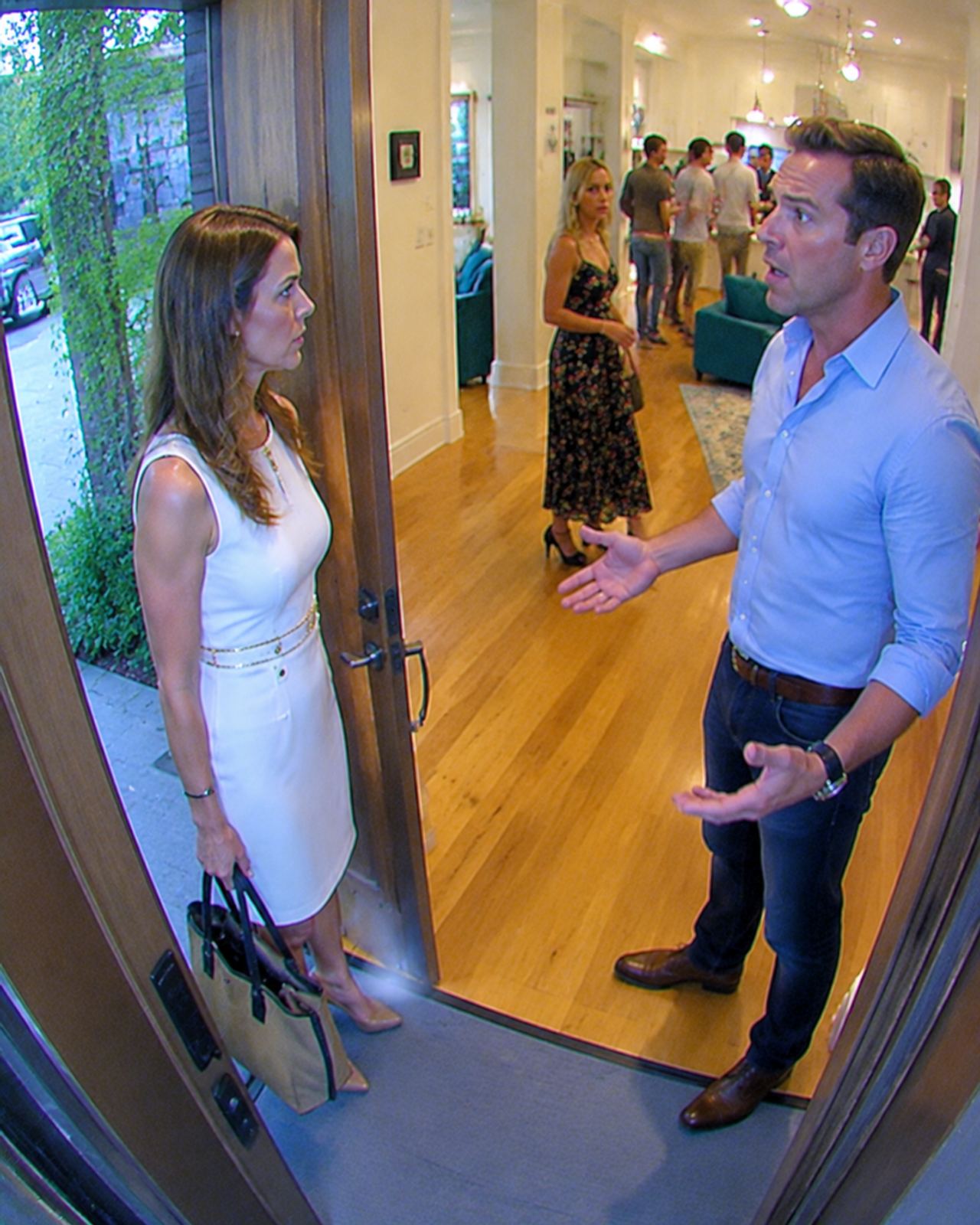
That I entered his life like an addition instead of an equal.
I told myself compromise was healthy. I told myself adults adjusted. I told myself that if something bothered me, I could bring it up later, when things were calmer, when Derek was less stressed, when the timing was better.
There is always a better time to ask for less pain.
That is how people stay too long.
The morning after he told me Nicole was coming, Derek woke up cheerful.
Too cheerful.
He made coffee, kissed my cheek, and asked if I had seen the weather forecast for Saturday.
“Sunny,” he said. “Can you believe it? Actual sun. People are going to love the balcony.”
“Great,” I said.
He did not mention Nicole.
In his mind, that problem had been handled.
He had given me instructions. I had agreed to perform them. Case closed.
All morning, he texted me about snacks, playlists, lighting, cups, which ice brand was better, whether we needed more seating, whether my work friends drank craft beer or regular beer.
By lunch, I was sitting alone in my work van in the parking lot of a mid-rise office building in Belltown, eating a turkey sandwich with one hand and making a list with the other.
Not a party list.
A leaving list.
The things that were actually mine:
A few clothes.
My work boots.
My tool bag from the storage closet.
My laptop.
My documents.
The framed photo of my grandfather standing beside me when I was twelve, both of us wearing hard hats at a construction site where he had worked before retiring.
His watch.
The blue mug.
Two pans.
A box of books.
My emergency cash.
My dignity, if I moved quickly enough.
It was almost embarrassing how little there was.
Six months in that apartment, and I could erase myself from it in less than an hour.
That realization should have hurt.
Instead, it clarified things.
After work, I went to the bank. I opened a separate account Derek could not see. I moved my savings. I made sure my share of rent and utilities was covered through the end of the month, because I did not want him to have even one clean excuse to call me irresponsible.
Then I went to a grocery store parking lot, climbed into the back of my van, and packed a gym bag with essentials.
Three days of clothes.
Toiletries.
A hoodie.
Chargers.
The watch.
I wrapped my grandfather’s photo in a sweatshirt and slid it behind the passenger seat.
I sat there afterward with the side door open, the smell of asphalt and rain-damp air drifting in, and wondered why my chest felt hollow and free at the same time.
When I got home, Derek was surrounded by shopping bags and decorations.
String lights.
Paper napkins.
A new Bluetooth speaker.
Two cases of sparkling water.
Three different kinds of olives because Nicole had once told him she liked good olives.
He did not say that last part, of course.
He did not have to.
“Can you help me hang these?” he asked, holding up the lights.
“Sure,” I said.
For an hour, we decorated together.
He climbed a chair and passed me hooks. I untangled wires. He talked about how the party was “a new beginning for us,” how people would finally see the place as ours, how this was the next step.
I listened.
I nodded.
I held the strand of lights while he taped them above the balcony door.
He leaned in the living room doorway when we were done, admiring everything as if he had created atmosphere itself.
“Don’t you think?” he asked.
“Oh,” I said, looking at the room where he would lose me. “It’s definitely a turning point.”
That night, eating pizza on the couch, he scrolled through the guest list.
“Nicole just confirmed,” he said, smiling at his screen. “She’s bringing really good wine.”
“How thoughtful,” I said.
His thumb paused.
“You’re really calm about this,” he said.
“You asked me to be mature,” I replied. “I’m doing exactly that.”
He watched me for a beat, then shrugged.
Crisis averted, in his mind.
Difficult girlfriend successfully managed.
I took another bite of pizza and mentally sorted every item in the room into two categories.
Things I owned.
Things I had mistaken for home.
There was not much overlap.
—
The Pattern I Had Ignored
I did not sleep that night.
Derek did.
He always slept well after hurting my feelings. That had become one of the great mysteries of our relationship. I could lie beside him with my heart beating like a trapped bird, and he would drift off peacefully, one arm thrown over his head, mouth slightly open, like the world had never asked him to consider his impact.
I stared at the ceiling and replayed the last two years with the brutal clarity that arrives only when denial gets tired.
The restaurant decisions.
At first, they were small. He would ask where I wanted to eat, I would suggest Thai or ramen or the little Ethiopian place near my old apartment, and he would say, “Yeah, or we could do that new Italian place downtown.”
If I hesitated, he would smile.
“Come on, you’ll like it.”
Somehow, by the time we got in the car, his suggestion had become our plan.
Then the jokes.
Derek was funny in public. People loved him for it. He had a way of turning ordinary moments into stories, and for a while, I liked being part of those stories.
Until I realized I was always the punchline.
“Maya’s great, but she has no sense of direction. Gets lost in parking lots.”
Everyone laughed.
I laughed too, because what else do you do when the room has already decided something is harmless?
“Maya fixes elevators but still can’t fix her habit of buying ugly mugs.”
Laughter.
“Maya eats like a construction worker, which is cute until you see the grocery bill.”
Laughter.
“Maya would rather repair a freight lift than talk about feelings.”
More laughter.
Each joke was tiny.
Each one could be explained away.
Don’t be sensitive.
He’s just teasing.
He loves you.
No one else thinks it’s a big deal.
But tiny cuts still bleed if they keep landing in the same place.
Then there was the weekend I got food poisoning.
It was July. We were supposed to go to a friend’s lake house. I woke up at three in the morning sweating, shaking, curled around my own stomach like my body was trying to fold itself in half.
Derek stood in the bathroom doorway with his phone in his hand and sighed.
Not because he was worried.
Because we might be late.
“Do you think this is going to be an all-day thing?” he asked.
I remember looking up at him from the tile floor and feeling something inside me quietly step back.
Not leave.
Just step back.
Another time, my work ran late because an elevator had trapped six people between floors in a downtown office building. No one was hurt, but the rescue took hours, and I came home exhausted, hands scraped, hair smelling like dust and lubricant.
Derek barely looked up from the couch.
“You forgot we were supposed to meet Tyler and Brooke,” he said.
“I’m sorry,” I said. “There was an emergency.”
He muted the TV and stared at me like I had chosen the emergency personally.
“You always have a reason.”
That sentence stayed with me.
Not because it was the worst thing he ever said.
Because it was one of the first times I realized he liked my competence only when it served him.
Then came the phrases.
“If you were more social…”
“If you were more relaxed…”
“If you were more confident…”
“If you were more understanding…”
He never said, “I need you to change.”
He said, “If you were more…”
As if the real version of me existed just beyond one final adjustment.
As if love was a performance review and I kept missing promotion by half a point.
My friend Ava saw it months before I did.
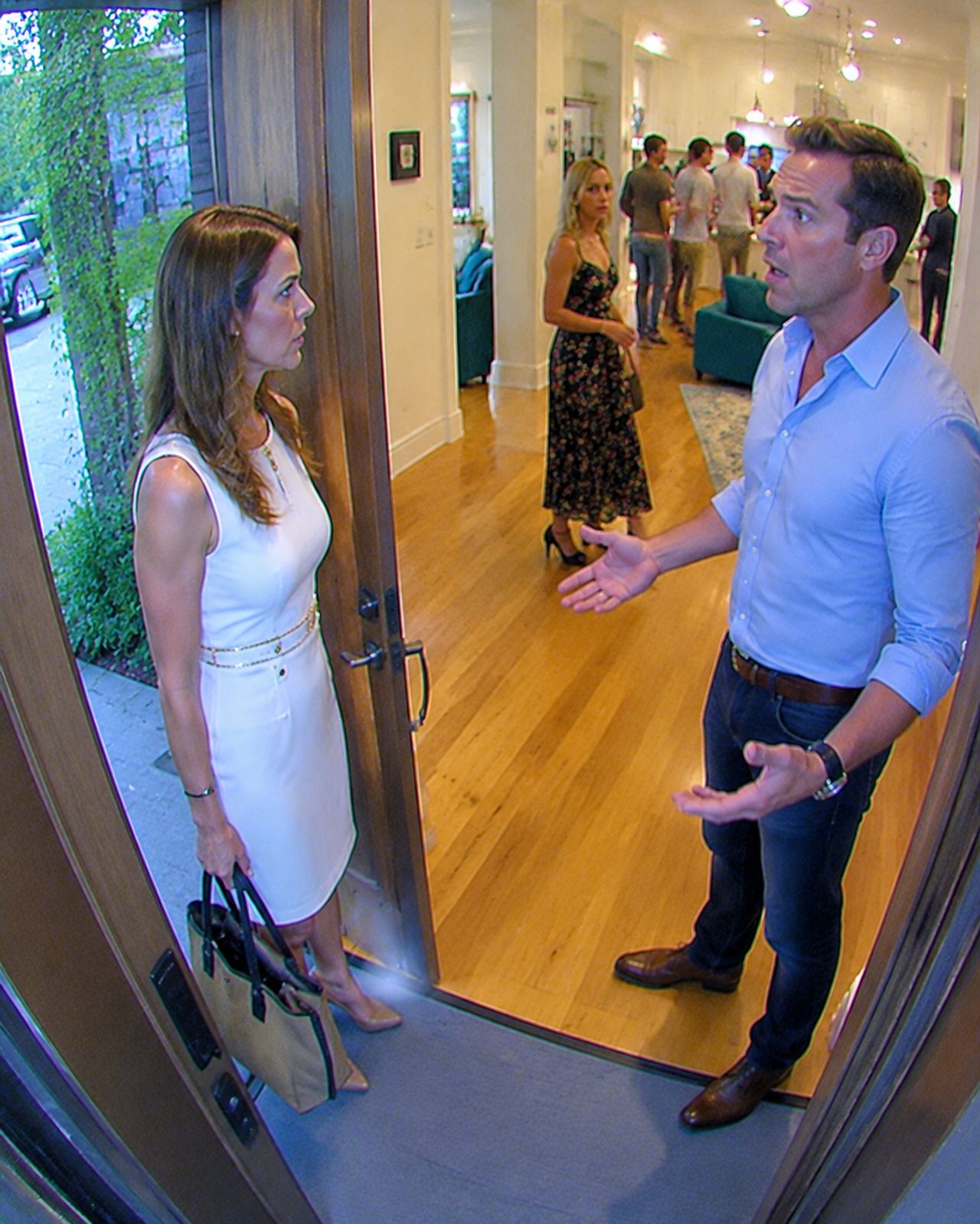
We were having coffee near Green Lake on a gray Sunday morning. I was telling her about some disagreement Derek and I had over vacation plans, trying to make it sound funny.
She did not laugh.
“Are you happy?” she asked.
I looked down at my coffee.
“Yeah, of course. Why?”
“Because you don’t seem like you.”
“That’s vague.”
“You seem like you’re performing,” she said.
I smiled too quickly.
“I’m just tired.”
“No,” Ava said gently. “I know tired. This is different.”
I told her she was overthinking it.
I told her all couples adjusted.
I told her Derek was good, just particular.
Ava did not argue. She only nodded in that careful way good friends do when they know the truth has to ripen before it can be touched.
“You know you can call me,” she said.
“For what?”
“For when you remember who you are.”
At the time, that irritated me.
Now, lying beside Derek while he slept peacefully after inviting Nicole into my home and daring me to react, I finally understood.
I had been performing.
Cool girlfriend.
Easy girlfriend.
Low-maintenance girlfriend.
The woman who did not care if he kept photos of his ex in old cloud albums.
The woman who did not mind when he compared her to people with softer jobs, softer hands, softer voices.
The woman who never wanted too much.
But wanting basic respect is not wanting too much.
It is wanting the floor to hold.
And mine had been cracking for months.
—
Party Day
Saturday arrived with perfect weather.
Of course it did.
Seattle has a cruel sense of humor that way. It will rain through your best moods and shine on your worst decisions. That afternoon, the sky was clean blue, the air mild, the mountains faint in the distance like a promise no one had earned.
Derek woke up early and energetic.
He played music while making coffee. He checked the balcony. He moved chairs three times. He asked if his shirt looked too casual, then changed before I answered.
I watched him from the bedroom doorway as he adjusted his collar in the mirror.
He looked handsome.
That annoyed me.
Heartbreak should make people ugly immediately. There should be some visible warning sign. Some stain. Some crack in the face. Something that tells the world: this man is preparing to humiliate someone who trusts him.
But Derek looked like a man hosting a party.
Clean shave.
Good hair.
Dark jeans.
White shirt.
Warm smile.
A man everyone would call charming by six o’clock.
By noon, I had already taken the important things to my van.
Not all at once. That would have been obvious.
A tote bag when I went down to “grab coffee.”
My tool bag when I said I needed something from work.
My documents tucked inside a grocery bag beneath paper towels.
My grandfather’s watch was in my pocket, heavy and reassuring.
At two, I cleaned the kitchen.
At three, I arranged food.
At three-thirty, Derek came up behind me while I was slicing lemons and rested his hands on my hips.
“Thank you for being cool about tonight,” he said.
The knife paused.
I looked down at the cutting board.
Lemon juice glistened on my fingers.
“Of course,” I said.
“I mean it,” he said. “It means a lot that you trust me.”
Trust.
That word felt almost funny.
Not because I did not understand it.
Because he didn’t.
Trust is not forcing someone to swallow discomfort so you can avoid accountability.
Trust is not saying, “Prove you believe me by ignoring what hurts.”
Trust is not a trap door disguised as emotional maturity.
But I did not say any of that.
Not yet.
By four o’clock, the apartment was full.
His coworkers arrived first, laughing too loudly in the hallway, carrying craft beer and expensive chips. Then his gym friends, broad-shouldered and easygoing. Then two women from his marketing team who hugged him first and greeted me second. Then my friends from work, Marcus and Elena, both still in weekend flannels and boots. Then Jenna, my best friend from high school, who stepped inside, took one look at my face, and immediately knew something was wrong.
“Maya,” she said softly as she hugged me. “What’s happening?”
“Later,” I whispered.
Her arms tightened.
Music played. Glasses clinked. Someone opened a bottle of champagne because Derek had told people this was a milestone. Laughter bounced off the concrete counters and high ceilings. The string lights glowed in the bright afternoon like they were trying too hard.
I moved through the crowd with a smile.
Refilling drinks.
Passing appetizers.
Laughing at the right moments.
Introducing people.
Playing hostess in an apartment that had never really felt like mine.
More than one person leaned in and whispered, “So… his ex is really coming? And you’re okay with that?”
It was amazing how quickly people knew.
Derek had presented Nicole’s invitation as a sign of emotional sophistication, but even his friends could smell the gasoline.
“Just keeping it friendly,” I said each time, with a small smile.
Every time I said it, I felt calmer.
Not because it was true.
Because it was almost over.
Jenna cornered me in the kitchen around four-forty.
She blocked the doorway with a plate of untouched bruschetta in one hand and a look on her face that said she was not moving.
“This feels wrong,” she whispered. “This feels like his party, not yours.”
“Because it is,” I said quietly.
Her eyes sharpened.
“What did he do?”
I glanced toward the living room. Derek was telling a story to three coworkers, one hand wrapped around a beer, the other gesturing with practiced ease.
“He invited Nicole without asking me. Then told me to be calm and mature or we’d have a problem.”
Jenna’s face changed.
Not shocked.
Furious.
“Oh, Maya.”
“I’m leaving tonight.”
Her mouth parted.
“Leaving leaving?”
“Yes.”
“Do you need me to get your things?”
“They’re already in my van.”
She looked at me for a long second, then nodded.
That was Jenna. Questions later. Loyalty first.
“What do you need?”
“Don’t leave early,” I said. “And keep your phone ready.”
Her eyebrows rose.
“Maya.”
“Nothing dramatic,” I said.
She gave me a look.
“Define dramatic.”
“I’m not throwing wine.”
“That’s reassuringly specific.”
“I’m just going to tell the truth.”
Jenna looked past me toward the living room, where Derek was laughing, comfortable and unaware.
“Then I’m staying close.”
Around five o’clock, the air shifted.
Derek started checking his phone every few minutes.
He smoothed his shirt.
He moved closer to the door.
He stopped mid-conversation twice and glanced toward the hallway.
People noticed.
Of course they did.
Groups always notice when the host begins waiting for someone who matters too much.
The room’s rhythm changed. Conversations dipped in odd places. People watched Derek without …
Read more stories
- After One Night With His Mistress, He Came Home Smiling—But His Pregnant Wife Was Already Boarding a Private Jet
- My mean sister-in-law finally acted nice and invited my son to a fun day out. Two hours later, my niece called me crying. Mom said, it’s just a little prank, but he won’t wake up. I rushed over and called the cops. What happened next had her shaking in her boots.
- Marvin Gaye’s ‘What’s Going On’ Redefines Protest Music and Soulful Storytelling in 1971
- My stepfather spent years terrorizing my twin sister and me because watching us live in fear was the only thing that seemed to satisfy him