
Human Stories
My father’s toast to “our real daughter” hung in the air as twenty faces turned toward Rachel, my fork clattered against china, then I cleared my throat and I said four words that drained the color from his face: respect isn’t inherited anymore.
At a family dinner in Philadelphia, Sarah’s father humiliates her by praising her sister Rachel as the “real daughter,” not knowing Sarah has quietly acquired Rachel’s law firm. The confrontation exposes years of favoritism and ends with Sarah asserting her success and walking out on the family’s cruelty.

The metallic taste flooded my mouth before I even realized I had bitten the inside of my cheek.
My father’s words did not arrive like ordinary words. They landed across the white tablecloth, rolled over the candlelight, and pressed against my chest with the weight of every dinner, every holiday, every quiet comparison I had swallowed for three years.
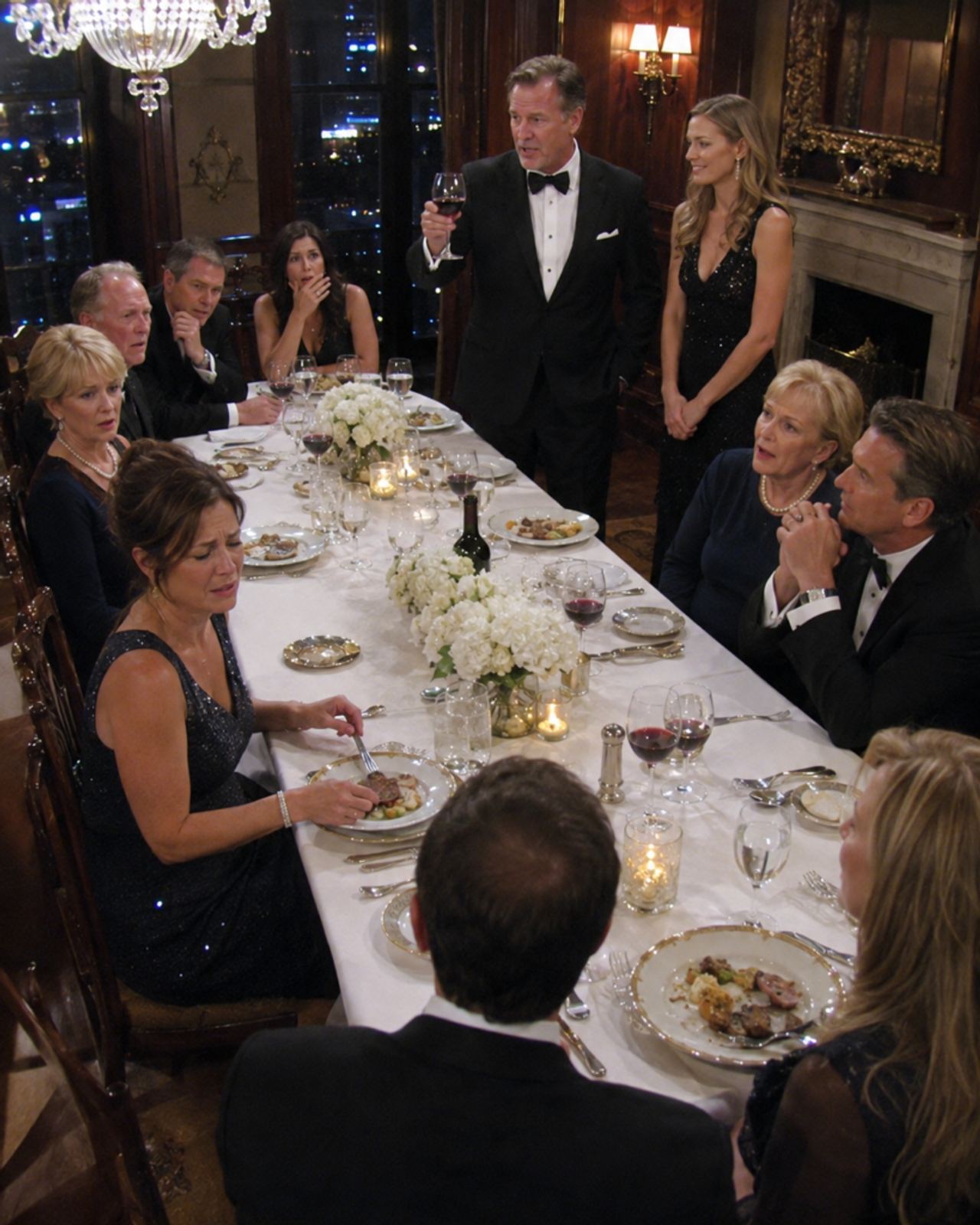
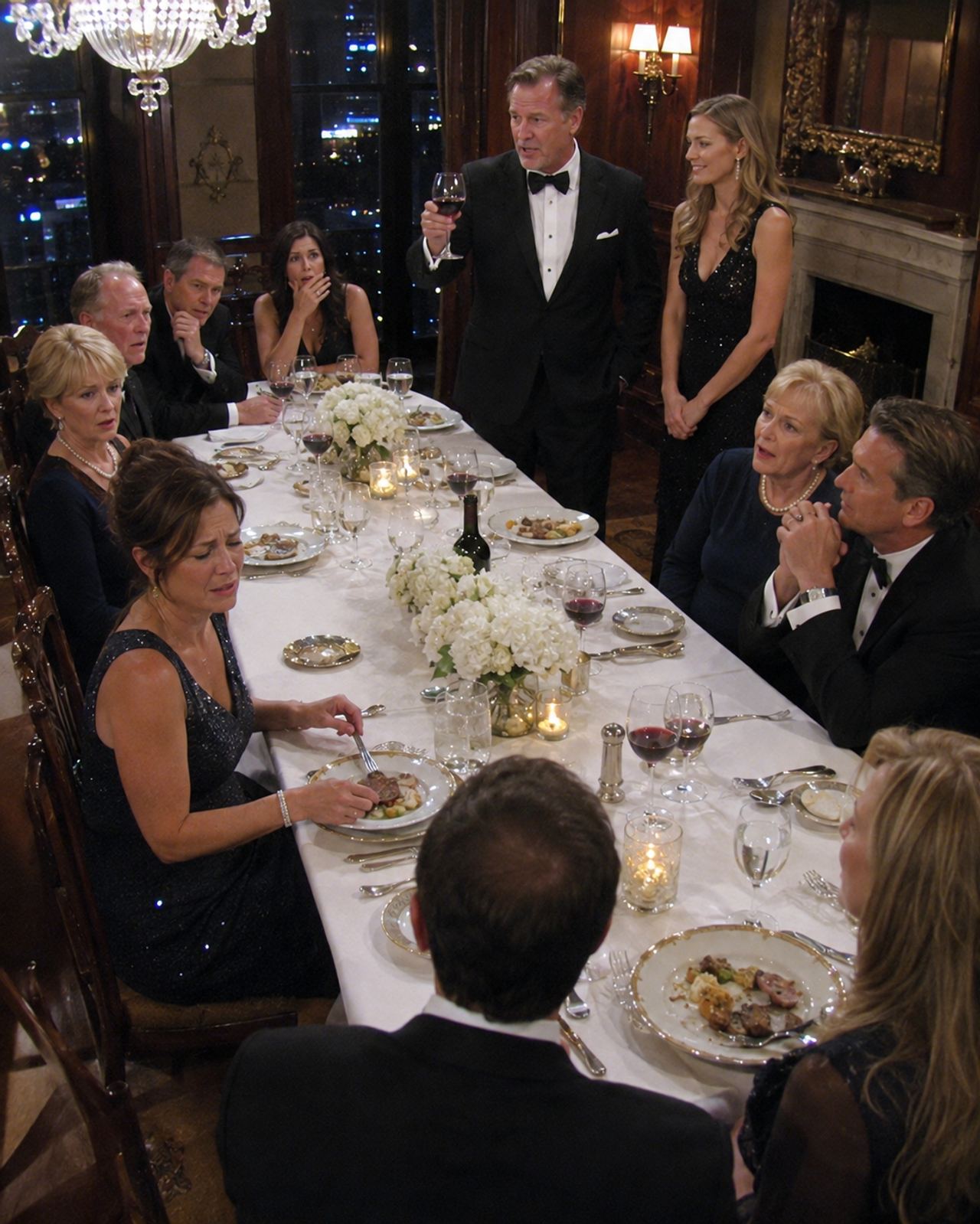
“Tonight,” he said, lifting his wine glass high enough for the crystal rim to catch every chandelier in the private dining room, “we celebrate our real daughter. The successful one.”
For one second, nobody moved.
Then my fork slipped out of my hand.
It hit the china plate with a sharp, delicate clatter that sounded far too small for what had just happened. Twenty faces turned at once, but not toward me. They turned toward Rachel, my younger sister, the woman being crowned in front of me as if I had already been removed from the family portrait.
Rachel sat three seats to my father’s right, framed by candlelight, soft jazz, and the glow of expensive approval. Her diamond bracelet caught the light each time she moved her wrist. Her lips parted in a little smile she tried to hide, but not very hard. Her husband leaned back beside her with a napkin near his mouth, pretending not to enjoy the moment.
The restaurant around us kept breathing.
A waiter crossed behind my chair carrying a tray of champagne. Silverware chimed at another table. Somewhere near the bar, a woman laughed as if the evening had no sharp edges at all. The private dining room smelled like roasted garlic, seared steak, old money, and the kind of polished confidence my father had always respected more than kindness.
My name is Sarah. I am thirty-four years old, a former startup founder, and that night in Philadelphia was the night my family tried to turn me into a lesson one last time.
It became the night they learned one instead.
Marcus, my husband, did not speak immediately. He never wasted words when the room was already crowded with them. His hand found my knee beneath the tablecloth, steady and warm, his thumb pressing once through the fabric of my dress.
Marcus had the kind of calm that came from years in operating rooms, from standing under bright lights while entire teams waited for his decision. His hands were trained for precision. His voice was trained for pressure. He could look at chaos and find the next right move.
But even his hand went still when my father finished that toast.
“The world should know the difference,” Dad continued, smiling at Rachel first, then letting his eyes slide toward me, “between real success and whatever it is Sarah is doing now.”
The silence stretched.
My Aunt Linda looked down at her dessert fork as if it had suddenly become the most important object in the room. My cousin Jason picked up his phone and stared at a dark screen. My mother’s face flushed, then faded into the careful blankness she wore whenever courage would have cost her something.
Always silent when it mattered.
Rachel tilted her head, her pearl earrings swaying softly. She had perfected that gesture over the years. It made her look concerned in photographs and generous in front of relatives.
“Dad,” she said, with a laugh so light it barely disturbed the air, “you don’t need to embarrass Sarah.”
But she did not ask him to stop.
She did not look at me with apology.
She looked at me as if she were waiting to see whether I would finally break the way they all expected me to.
“Oh, but I do,” my father said, raising the glass a little higher. “There is nothing wrong with honoring discipline. Rachel has worked for everything she has.”
Rachel lowered her lashes.
It was modesty performed for an audience that had already bought tickets.
“Still freelancing, Sarah?” she asked, turning to me with that soft smile. “Or did you find something more substantial?”
Her voice was gentle enough that a stranger might have mistaken it for concern. My family knew better. I knew better. Marcus knew best of all.
I lifted my water glass and took a slow sip. The cold water gave me something to do with my hands.
“Something like that,” I said.
My voice came out steadier than I expected.
Rachel leaned forward, encouraged by the stillness around the table. She always became braver when no one challenged her.
“Well,” she said, letting the word float, “we can’t all be senior partners at Morrison and Associates.”
The name landed exactly where she wanted it to.
Morrison and Associates.
A Philadelphia law firm with dark wood conference rooms, brass nameplates, old clients, older habits, and enough prestige to make my father sit taller whenever Rachel mentioned it. He had spent the last several years telling people his younger daughter worked there the way some men talk about Ivy League diplomas or summer houses on the coast.
Rachel gestured to the elegant room around us.
“This is what happens when you stick with something,” she said, pausing just long enough to make sure every eye stayed on her, “instead of giving up after one little setback.”
One little setback.
My tech startup had not felt little when it collapsed.
It had been three years earlier, right after a major funding round fell apart less than two weeks before closing. We had already hired based on verbal commitments. We had already built product roadmaps around numbers that disappeared overnight. I had stayed awake for days trying to save jobs, negotiate bridge financing, and protect the people who believed in me.
In the end, the company failed.
Not with scandal. Not with laziness. Not because I had stopped trying. It failed the way some young companies fail when timing, money, trust, and market weather all turn at once.
I lost my savings. I lost my office. I lost the version of myself my family had been willing to celebrate.
Most of all, I lost my father’s respect.
He never said it cleanly. Men like my father rarely do. He said it in jokes, in pauses, in the way he asked what I was “doing with my time now,” in the way he suddenly trusted Rachel’s opinions about business even though I had built an entire company before she had ever managed a team.
Rachel used my failure like a mirror that made her look taller.
At Thanksgiving, she would mention a client and then glance at me.
At birthdays, she would talk about promotion tracks and then ask if I was still “consulting.”
At Christmas, she once told a cousin, within my hearing, that I had “so much potential before the startup thing.”
The startup thing.
As if my work, my employees, my sleepless nights, my grief, my rebuilding, and my marriage surviving all of it had been a phase I had outgrown poorly.
Dad chuckled now and clinked his glass lightly against Rachel’s.
“Exactly,” he said. “You have made this family proud, sweetheart. You earned your place at this table.”
Marcus leaned close to my ear.
“Do you want to leave?” he asked.
The question was soft. It was not weak. There was steel under it.
I turned just enough to meet his eyes. Dark, steady, furious on my behalf, but waiting for my choice. That was one of the reasons I loved him. Marcus never grabbed the steering wheel of my life and called it protection.
I looked back at my father.
Not yet, I thought.
Not when they had finally decided to say the quiet part loud enough for the whole room.
“Not yet,” I whispered. “I want to see how far they push this.”
The waiter appeared with champagne, unaware that he was stepping into the center of something years in the making. He poured carefully, the pale liquid foaming into twenty crystal flutes. The bubbles rose like tiny celebrations for people who did not deserve them.
Dad stood again.
“To Rachel,” he declared, “and to Morrison and Associates for recognizing true talent.”
Glasses lifted all around the table.
Aunt Linda raised hers. Uncle Rob raised his. Jason raised his without looking up from his phone. My mother hesitated half a beat, then lifted hers too, her fingers trembling against the stem.
Rachel’s husband raised his glass with a smirk.
Rachel herself touched a hand to her chest as though humbled.
Marcus did not raise his glass.
Neither did I.
The cheerful clinking sounded like breaking glass.
Dad noticed.
Of course he did. Men like my father notice disobedience faster than pain.
His eyes narrowed over the rim of his wine glass.
“Sarah?”
Just my name.
A warning.
A command.
A reminder of the seat I had been assigned at this table. The failed daughter. The quiet daughter. The daughter grateful to still be invited even when the invitation came with a little public correction.
I set my untouched champagne down with care.
Rachel watched me.
So did everyone else now.
The room changed in tiny ways before anyone understood why. Conversations around the table thinned. My mother’s hands folded tighter around her napkin. Marcus leaned back slightly, no longer holding me still, because he knew I did not need to be steadied anymore.
Something inside me had shifted.
For three years, shame had lived in me like weather. Some days it was light rain. Some days it was a storm behind my ribs. But that night, under the candlelight, with my father’s toast still hanging between us and Rachel’s smile still shining at my expense, the shame crystallized into something clear.
Not anger.
Not revenge.
Clarity.
I cleared my throat softly.
“Dad.”
My father paused mid-celebration.
“What?”
I looked at him, then at Rachel, then around the table at twenty relatives who had mistaken my silence for agreement.
“Funny thing about Morrison and Associates,” I said, my voice calm as silk. “They changed ownership last Tuesday.”
For a moment, the sentence did not seem to reach anyone.
The words sat there between the wine glasses and the votive candles, plain and clean.
Then the first champagne glass froze halfway to a mouth.
Rachel frowned.
It was a small frown at first, almost irritated, as if I had mispronounced the name of her firm at her own celebration.
“What are you talking about?” she asked.
My father’s voice came out low.
“Sarah.”
It was another warning, but this time it had uncertainty under it.
Marcus leaned back in his chair. The corner of his mouth lifted, not with humor, exactly, but with the quiet satisfaction of a man watching truth enter a room that had locked its doors against it for too long.
“She is telling you,” Marcus said, conversationally, “that we bought it.”
Nobody moved.
Marcus continued.
“Every share. Every client contract. Every office lease.”
The air seemed to thin.
Rachel’s champagne glass touched the table too hard. The sound was sharp enough to make Aunt Linda flinch.
“You’re lying,” Rachel said.
I shook my head once.
The acquisition had officially closed five days earlier, though Marcus and I had been working toward it for months. Quietly. Carefully. While my family thought I was licking old wounds, I was reading balance sheets. While Rachel used my failure as dinner entertainment, I was sitting through late-night calls with attorneys, consultants, lenders, and former partners who were more than ready to leave Morrison and Associates behind.
The firm Rachel adored from the outside had been tired on the inside.
It had prestige, yes. It had old clients, old furniture, old habits, and old fear. It also had partners looking for exit strategies, younger lawyers leaving faster than the firm could replace them, staff who knew exactly where the cracks were, and clients who had started asking why respect cost extra.
Marcus had seen it first.
Not because he was a lawyer. He was not.
Because he understood systems under pressure. He understood what happened when people at the top confused obedience with health.
I had understood the rest.
I had learned from losing my company. I had learned cash flow the hard way. I had learned negotiation after people stopped returning calls. I had learned how fragile reputations are when there is no structure under them. I had learned to read weakness in a business the way Rachel read seating charts at family dinners.
And Morrison and Associates was weak.
“Your assistant already updated your calendar,” Marcus said to Rachel, still in that maddeningly calm voice. “Monday morning. Board meeting. Nine o’clock sharp.”
My father’s face went from red to white in seconds.
“You what?”
I stood slowly.
The napkin slid from my lap and fell beside my chair. I did not pick it up.
“You said you were proud of your real daughter,” I said. “You should be careful who you call real, Dad.”
Rachel stared at me as if my face had changed shape.
I looked directly at her.
“The one you have been overlooking just became your daughter’s boss.”
The silence that followed was not simply uncomfortable.
It was final.
Rachel shot to her feet, her chair scraping against the hardwood floor.
“This is a joke,” she said. “The partners would never.”
“Check your email,” I said gently.
That gentleness seemed to frighten her more than anger would have.
Her hands shook as she pulled her phone from the small designer clutch on the table. She tapped the screen once. Then again. Her thumb moved faster. The color in her cheeks began to drain slowly, as if the room had tilted and she was the last person to notice.
Her eyes moved over the official transfer notice.
Then the board announcement.
Then the updated ownership structure.
Then the calendar invitation.
“This can’t be real,” she whispered.
“Very real,” Marcus said. “Your senior partners were eager to retire once they heard our offer.”
Dad slammed his napkin on the table.
“You planned this?”
I looked at him.
He looked offended, as if private success were a betrayal when it belonged to me.
“You deliberately went behind our backs to—”
“To succeed?” I interrupted. “To build something meaningful? Isn’t that what you have been telling me to do for three years?”
My voice stayed level.
That mattered. I wanted them to hear every word without the convenient excuse of calling me emotional.
“You laughed when my startup failed,” I continued. “You said I would never understand business. So I learned quietly. Efficiently. Without needing your applause.”
The restaurant continued around us.
Other diners remained mostly unaware of the quiet earthquake at table twelve. The jazz trio near the front played something gentle. A server paused near the doorway, sensed the tension, and retreated with the survival instincts of someone who had worked private family events before.
Marcus folded his hands on the table.
“The Morrison partners were impressed by someone who treated their employees with respect,” he said. “It turns out humiliation is not a sustainable business model.”
Rachel’s eyes filled with tears.
That surprised me, though maybe it should not have. People who enjoy power often become emotional when they are asked to share it.
“You couldn’t stand that I finally made them proud,” she said, her voice rising. “So you had to ruin everything.”
“Ruin?” I repeated.
Something old and tired loosened in my chest.
“Rachel, you built your success on my failure. At every family gathering for three years, you used me as your personal before-and-after story.”
Her chin trembled.
I let the truth sit there long enough to be recognized.
“I did not ruin anything,” I said. “I just stopped letting you use me as furniture.”
My mother finally spoke.
“Sarah, honey,” she whispered, “maybe we should—”
I turned to her.
“Should what, Mom? Pretend this is normal? Pretend three years of public humiliation was somehow good for me?”
Her mouth closed.
She looked down.
I hated that I still wanted her to look up.
Dad found his voice again. This time it was low and controlled, which meant he was working hard to keep it from shaking.
“You do not get to lecture me about family.”
Marcus stood.
He did it without drama. No slammed chair. No raised voice. Just his six-foot frame rising beside me, casting a long shadow across the white tablecloth.
“Actually,” Marcus said, “she does. Because unlike you, she understands the difference between family and audience.”
The words stayed in the air like smoke.
I looked around the table.
Twenty faces. Twenty witnesses. People who had watched year after year as my father corrected me, Rachel compared herself to me, and my mother softened nothing with silence. Some looked ashamed now. Some looked fascinated. Some looked annoyed that the entertainment had turned unpredictable.
I felt something close to pity.
That was not what I had expected.
I had expected satisfaction, maybe. I had expected the rush people write about when someone who underestimated them finally has to look up.
But what I felt was quieter.
I felt done.
“I am not here for revenge,” I said. “I am here to show you what happens when you mistake kindness for weakness.”
Without another word, I placed my napkin beside my untouched plate.
Marcus stepped with me.
His hand found mine in full view of everyone.
We walked toward the exit through a room full of people suddenly trying very hard not to stare.
Behind us, Rachel’s voice cracked.
“You’ll regret this.”
I did not turn around.
We moved past tables where strangers were still enjoying their evening, past the bar glowing amber and gold, past the hostess stand where a young woman looked up and then quickly looked away.
The February air outside hit my face like a blessing.
Philadelphia glittered around us in cold light. Cars moved along the curb. A valet in a wool coat jogged toward the entrance. Somewhere down the block, a siren passed and faded into the city.
Marcus opened the passenger door of our car, then stopped before I got in.
“You okay?” he asked.
I looked back at the restaurant windows.
Inside, my family still sat in warmth and candlelight, but the room no longer belonged to them the way it had when the night began.
“Better than I have been in years,” I said.
The drive home was quiet.
Not empty. Quiet.
There is a difference.
For twenty minutes, the city moved past the windows in streaks of streetlight and shadow. We crossed from polished Center City streets toward the neighborhood where Marcus and I had built our life after the startup failed, after the apartment we had once imagined upgrading became a house we chose slowly, deliberately, with a small garden out front and a kitchen that caught morning light.
It was not like the house I grew up in on the Main Line.
My childhood home had wide stairs, formal rooms nobody sat in, and a dining room my mother decorated for holidays with museum-level care. It was beautiful in the way expensive rooms can be beautiful without ever becoming warm.
Our house was modest.
Comfortable.
Ours.
Built on mutual respect instead of conditional approval.
My phone began buzzing before we reached the front door.
Dad.
Rachel.
Mom.
Then Dad again.
Then a cousin who had not texted me directly in eight months.
I stood in the driveway looking at the screen while the notifications piled up.
Marcus took his keys from his coat pocket.
“Let them wait,” he said.
I almost laughed.
The sound surprised me. It came from some lighter part of me I had forgotten was still there.
“They’ll come here,” I said. “People like that can’t stand losing control.”
Marcus looked toward our front porch, then at the dark windows of our house.
“Good,” he said. “It is time they saw what we built while they were busy tearing you down.”
The next morning came gray and cold.
I woke before sunrise, not because I had slept well, but because my body had not yet accepted that the dinner was over. I lay in bed listening to the heater click on, Marcus breathing beside me, and the soft rustle of bare branches against the bedroom window.
For a few minutes, I let myself remember the exact sound of my fork striking china.
Then I got up.
By eight-thirty, I was in the kitchen with coffee, my laptop open on the island, reviewing emails from the transition team. The first board meeting was still scheduled for Monday. There were client notices to finalize, staff announcements to approve, and a thousand small decisions that mattered more than my father’s opinion ever should have.
Marcus came downstairs in sweatpants and a navy sweatshirt, his hair still damp from the shower.
“Any explosions?” he asked.
“Only digital ones.”
He leaned over my shoulder and scanned the inbox.
Dad had sent five messages. Rachel had sent seven. My mother had sent one that said, Please call me when you are ready. Aunt Linda had sent a heart emoji, then deleted it, then sent, I’m sorry about last night, then deleted that too.
“Family group chat?” Marcus asked.
“On fire, probably.”
“Not your problem.”
“It never was,” I said.
We both heard the security chime at the same time.
Movement at the front door.
Marcus looked toward the hallway.
I turned my laptop slightly and opened the camera feed.
My father and Rachel stood on our porch like storm clouds in expensive coats.
They had clearly coordinated. Dad wore his charcoal overcoat and the expression he used when correcting contractors. Rachel wore camel wool, dark sunglasses pushed into her hair, and the tight mouth of a woman who had spent the morning deciding she was the victim.
I watched them for three seconds.
Then I walked to the door and opened it before they could knock.
“Well,” I said, stepping aside, “this should be interesting.”
Dad pushed past me holding a folder of papers.
Rachel followed, her heels clicking against the hardwood like punctuation marks.
“You think this is funny?” Dad demanded. “Humiliating me in front of the entire family?”
I closed the door behind them.
“Humiliating,” I repeated. “Is that what we are calling honesty now?”
Rachel did not sit.
She paced to the living room window, looked out at our small street, then turned back as if the house itself had offended her.
“The board meeting is not until Monday,” she said. “This is not over.”
“Actually,” Marcus said from the kitchen doorway, “it is.”
He carried two cups of coffee.
He gave one to me.
He did not offer them any.
That small choice did more to unsettle my father than anything Marcus could have said. Dad was used to being hosted, flattered, accommodated. In our home, he was a guest by permission, not by entitlement.
Marcus walked into the living room and sat in his reading chair.
“We have already reviewed every client contract,” he said. “Every employee file. Every financial record.”
Rachel went very still.
Dad looked at me.
“You had no right.”
“I had every right,” I said. “I am the majority shareholder as of Tuesday morning.”
Marcus set a stack of legal documents on the coffee table.
Official seals.
Transfer papers.
Board resolutions.
The paper trail of everything my family had refused to imagine I could do.
The documents seemed to pull the air out of the room.
Rachel stared at them as if staring hard enough might make them disappear.
Marcus sipped his coffee.
“Your law firm has been losing talent for two years,” he said. “Sixty percent turnover among junior associates. Client complaints about arrogance and overbilling. Three workplace conduct settlements the partners chose to keep quiet.”
Rachel’s head snapped up.
“That is confidential information.”
“Not anymore,” I said. “Due diligence is part of any acquisition. The problems come with the building.”
Dad’s face darkened.
“You do not get to walk into a firm you do not understand and start judging people who have built careers there.”
“I understand more than you think,” I said.
That was the truth he hated most.
My father had built a story about me that allowed him to stop being curious. In his story, I was the daughter who had tried, failed, and needed correction. Rachel was the daughter who had chosen the safe road and earned praise. That version required him to believe my mind had stopped working the day my company closed.
But failure had not made me helpless.
Failure had made me careful.
I had learned to ask better questions. I had learned to distrust appearances. I had learned that a business could look elegant from the outside while rotting from the inside. I had learned that people who use fear to manage others are usually protecting a system too weak to survive inspection.
Rachel sank onto our couch without being invited.
“Why?” she asked.
The word came out small.
Then she recovered and sharpened it.
“Why would you do this to me?”
I studied her face.
The same face that had sm
Read more stories
- TEN DAYS AFTER A NATIONAL TRAGEDY, EVERY MAJOR NETWORK WENT SILENT — AND ONE WEATHERED VOICE TURNED A PROUD ANTHEM INTO A GENTLE LULLABY.
- I Came Home From My Husband’s Memorial And Found His Mother Packing His Belongings Into Suitcases, As If My Grief Had Made Me Too Weak To Stop Her. She Said I Was Only The Widow, But My Husband Had Left Me The Trust, The Condo, And The Evidence She Never Expected.
- A Father Came Home Early—Then His Daughter Named Who Hurt Her
- My daughter had only just been born when I heard my husband whisper outside the nursery, “Give the baby to Celeste before Mara wakes up.”