
Celebrities & Music
TEN DAYS AFTER A NATIONAL TRAGEDY, EVERY MAJOR NETWORK WENT SILENT — AND ONE WEATHERED VOICE TURNED A PROUD ANTHEM INTO A GENTLE LULLABY.
This article recounts Willie Nelson’s moving performance of “America the Beautiful” during the 2001 “America: A Tribute to Heroes” telethon, which aired shortly after 9/11 and raised more than $150 million. It also explains how the historic, commercial-free broadcast was assembled in just ten days as a national gesture of grief and resilience.

On September 21, 2001, the “America: A Tribute to Heroes” telethon aired across all major television networks without a single commercial break. The broadcast was an unprecedented attempt to raise money for the United Way’s 9/11 Telethon Fund and offer comfort to a grieving public. To close the historic night, the stage remained dark, illuminated only by the flicker of hundreds of candles. Willie Nelson stepped forward with his acoustic guitar. Behind him stood a makeshift choir of actors, musicians, and public figures. But when he began to sing “America the Beautiful,” he didn’t project the song with booming pride.
Instead, he sang it with a fragile, gravelly sincerity. At 68 years old, Nelson’s voice carried the exact weight of what the country was feeling—deeply wounded, vulnerable, yet still quietly enduring. He stripped away the grand orchestration, leaving only the bare acoustic chords and a melody that felt more like a shared prayer.
He wasn’t just performing for an audience; he was standing with his neighbors in the dark. The telethon ultimately raised over $150 million, and that quiet closing moment became a permanent piece of American history—but the story of how that specific group of artists organized in just ten days reveals an even deeper chapter of resilience.
On September 21, 2001, the “America: A Tribute to Heroes” telethon aired across all major television networks without a single commercial break. The broadcast was an unprecedented attempt to raise money for the United Way’s 9/11 Telethon Fund and offer comfort to a grieving public. To close the historic night, the stage remained dark, illuminated only by the flicker of hundreds of candles. Willie Nelson stepped forward with his acoustic guitar. Behind him stood a makeshift choir of actors, musicians, and public figures. But when he began to sing “America the Beautiful,” he didn’t project the song with booming pride.
Instead, he sang it with a fragile, gravelly sincerity. At 68 years old, Nelson’s voice carried the exact weight of what the country was feeling—deeply wounded, vulnerable, yet still quietly enduring. He stripped away the grand orchestration, leaving only the bare acoustic chords and a melody that felt more like a shared prayer.
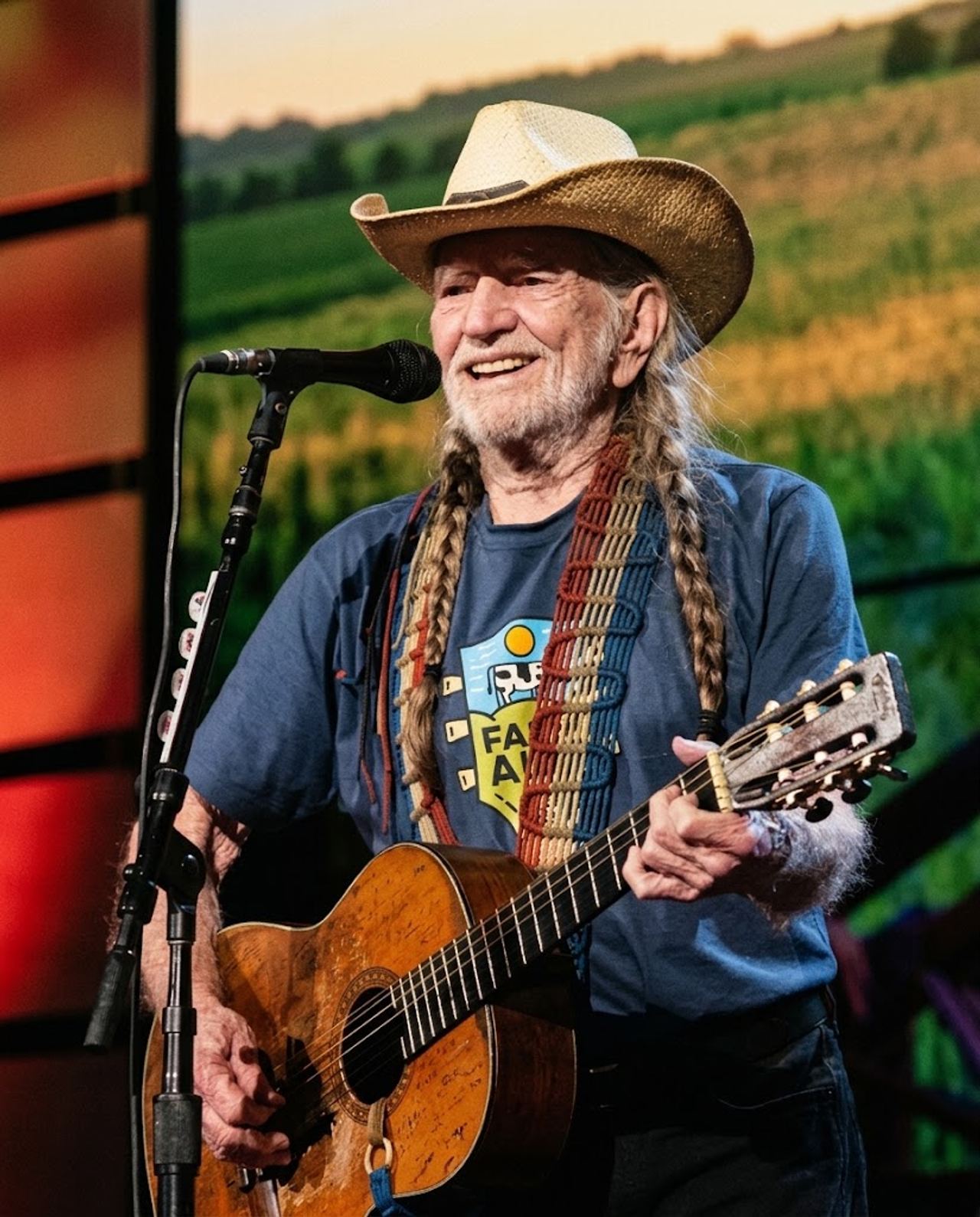
He wasn’t just performing for an audience; he was standing with his neighbors in the dark. The telethon ultimately raised over $150 million, and that quiet closing moment became a permanent piece of American history—but the story of how that specific group of artists organized in just ten days reveals an even deeper chapter of resilience.
TEN DAYS AFTER A NATIONAL TRAGEDY, EVERY MAJOR NETWORK SHUT DOWN COMMERCIAL PROGRAMMING — AND ONE WEATHERED VOICE TURNED A PROUD ANTHEM INTO A GENTLE LULLABY.
On September 21, 2001, the American television landscape did something it had never done before, and has never done since. Across all four major broadcast networks and dozens of cable channels, standard programming vanished. In its place was “America: A Tribute to Heroes,” a two-hour, commercial-free telethon dedicated to the victims of 9/11 and the first responders who rushed into the devastation. It was an unprecedented effort to raise funds for the United Way, but more importantly, it was an attempt to offer comfort to a fractured nation.
What the public saw that night was a seamless broadcast of music and spoken word, but the reality behind the cameras was a frantic, unprecedented logistical feat. Organizing an event of that scale would normally take months of negotiations, but this broadcast came together in just ten days. The rapid assembly was driven by an unspoken industry agreement to bypass the usual red tape. Organizers, spearheaded by figures like George Clooney and network executives, hit the phones directly, skipping agents and publicists to secure immediate commitments from the world’s biggest entertainers.
Because the nation was still on high alert, the logistics required intense security protocols. The telethon was broadcast live from three undisclosed, heavily guarded studios in Los Angeles, New York, and London. There was no live audience in the rooms. There were no formal introductions for the performers, no self-promotion, and no applause. The silence in the studios was intentional, forcing the artists to perform not to a cheering crowd, but directly to the millions of people sitting quietly in their living rooms.
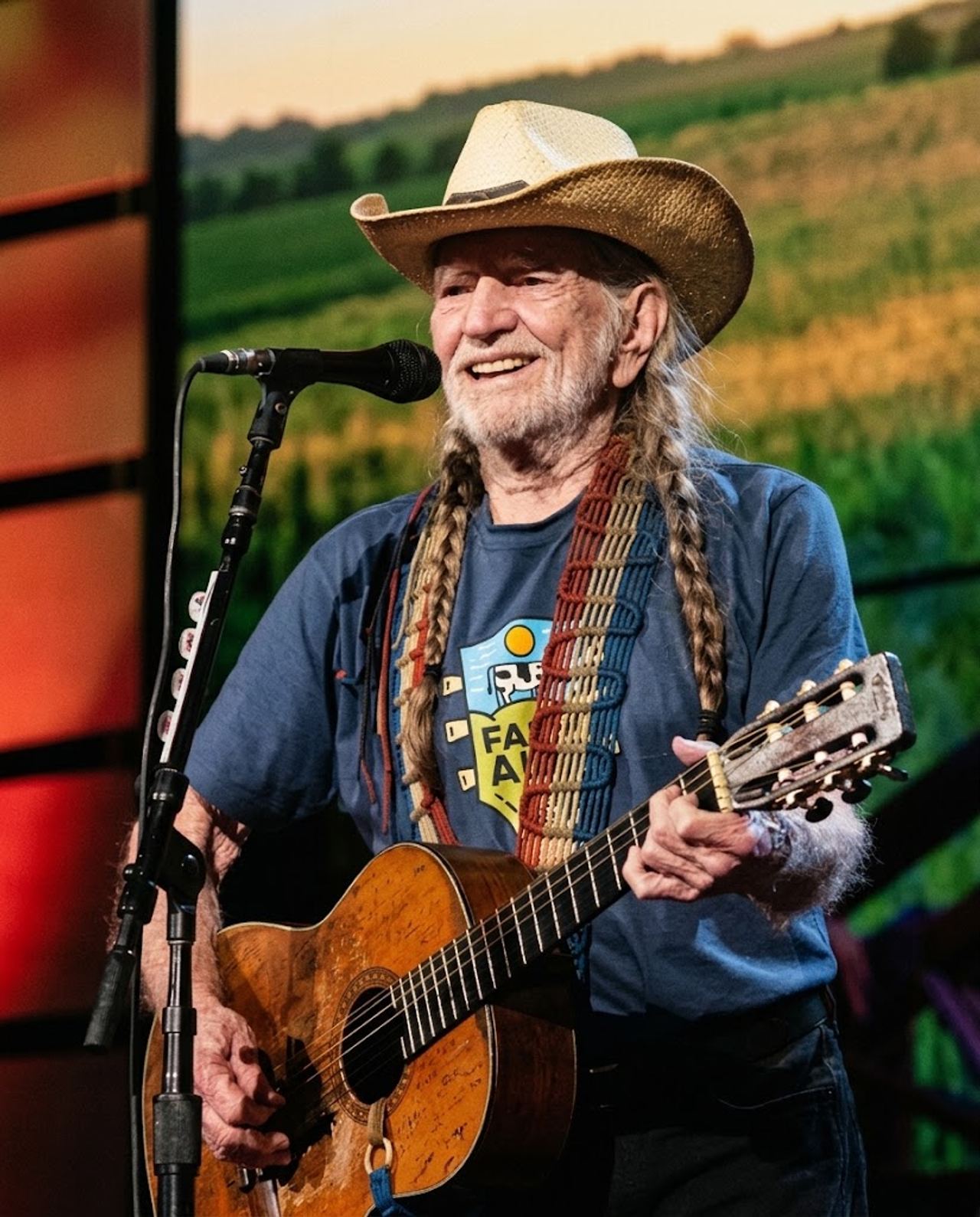
When it came time to close the historic broadcast, the organizers did not choose a booming, triumphant finale. Instead, the stage remained draped in darkness, illuminated only by the flickering light of hundreds of candles. Willie Nelson, then 68 years old, stepped forward with his battered Martin acoustic guitar, Trigger. Behind him stood a makeshift choir comprising some of the most famous faces in the world—actors, musicians, and public figures—all gathered with their heads bowed.
Nelson began to sing “America the Beautiful,” but he did not project the song with the towering pride of a traditional national anthem. Instead, he delivered it with a fragile, gravelly sincerity. He stripped away the grand orchestration and the brass bands, leaving only the bare acoustic chords and a melody that felt more like a shared, whispered prayer.
His voice carried the exact weight of what the country was feeling in that moment—deeply wounded, vulnerable, yet still quietly enduring. Nelson has always had the rare ability to make a song sound as though he is singing it just to you, sitting across a kitchen table. On that September night, he extended that intimacy to an entire country. He wasn’t performing for an audience; he was simply standing in the dark alongside his neighbors.
As the song progressed, the ensemble behind him joined in. Tom Hanks, Tom Petty, Muhammad Ali, Clint Eastwood, and dozens of others blended their voices with Nelson’s. It was a rare moment where fame dissolved entirely. They were not celebrities in that room; they were just Americans, relying on a country music elder to lead them through the dark. When the final note faded, there was no applause—just the quiet, persistent ringing of donation telephones in the background.
The telethon ultimately raised over $150 million for relief efforts, providing critical aid to families whose lives had been permanently altered. But the broadcast provided something else that could not be quantified. It offered a collective space to breathe. Before the nation shifted into the long years of recovery that followed, there was this two-hour pause, anchored by a man and his guitar.
Willie Nelson did not try to fix the grief of a nation that night. He simply gave it a place to rest. The anthem did not roar; it held on, proving that sometimes the quietest voice is the only one strong enough to carry the weight.
Video can’t be loaded because JavaScript is disabled: Willie Nelson and Ensemble – America the Beautiful (from “America: A Tribute to Heroes”)
Read more stories
- I Came Home From My Husband’s Memorial And Found His Mother Packing His Belongings Into Suitcases, As If My Grief Had Made Me Too Weak To Stop Her. She Said I Was Only The Widow, But My Husband Had Left Me The Trust, The Condo, And The Evidence She Never Expected.
- A Father Came Home Early—Then His Daughter Named Who Hurt Her
- My daughter had only just been born when I heard my husband whisper outside the nursery, “Give the baby to Celeste before Mara wakes up.”
- At My Daughter’s 8th Birthday, My Brother Hijacked the Party With One Announcement—and Everyone Cheered While She Scrubbed Frosting Off the Ground. I Stayed Silent Until the Next Morning, When a Single Letter on the Kitchen Table Left My Entire Family Speechless…