
Human Stories
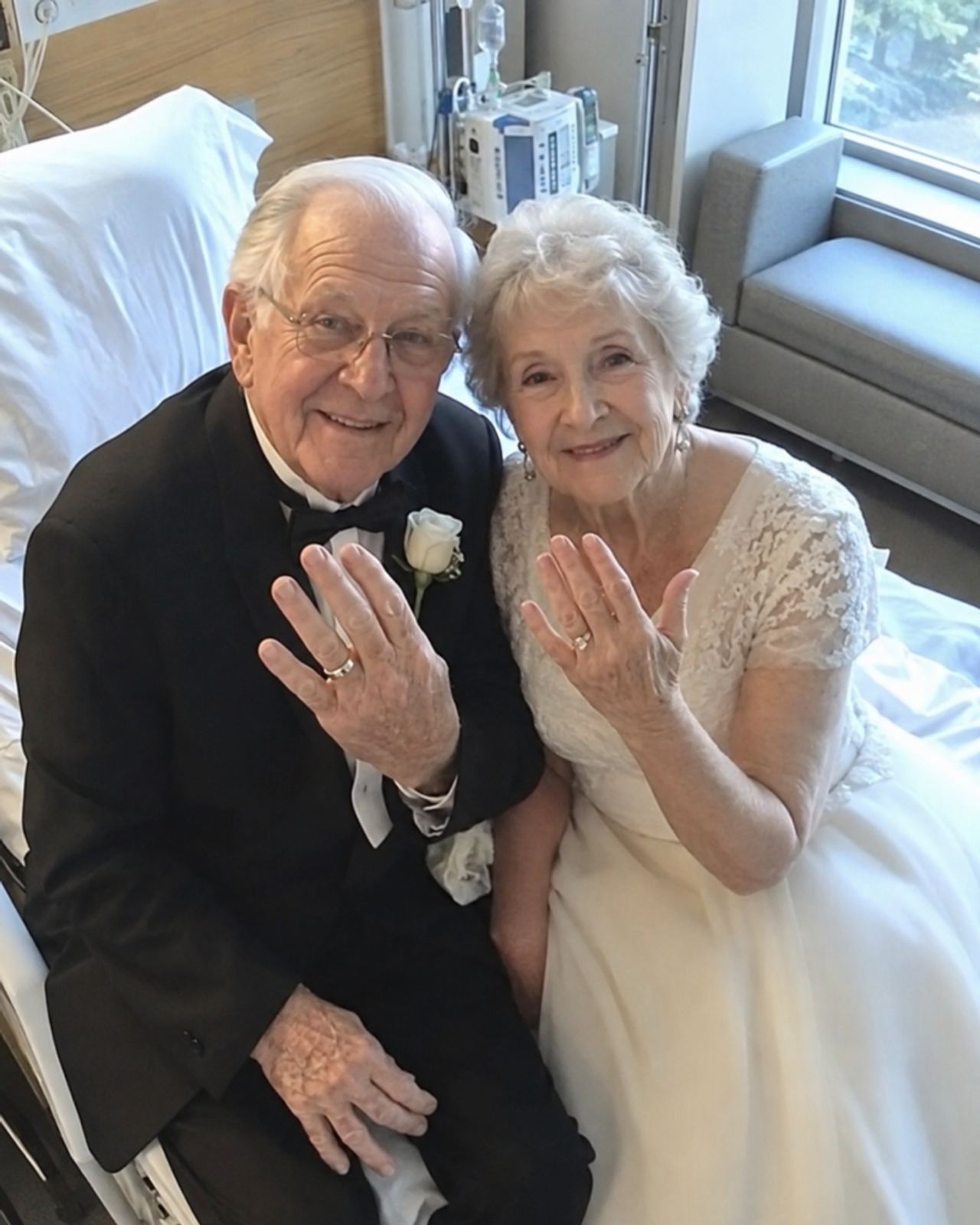
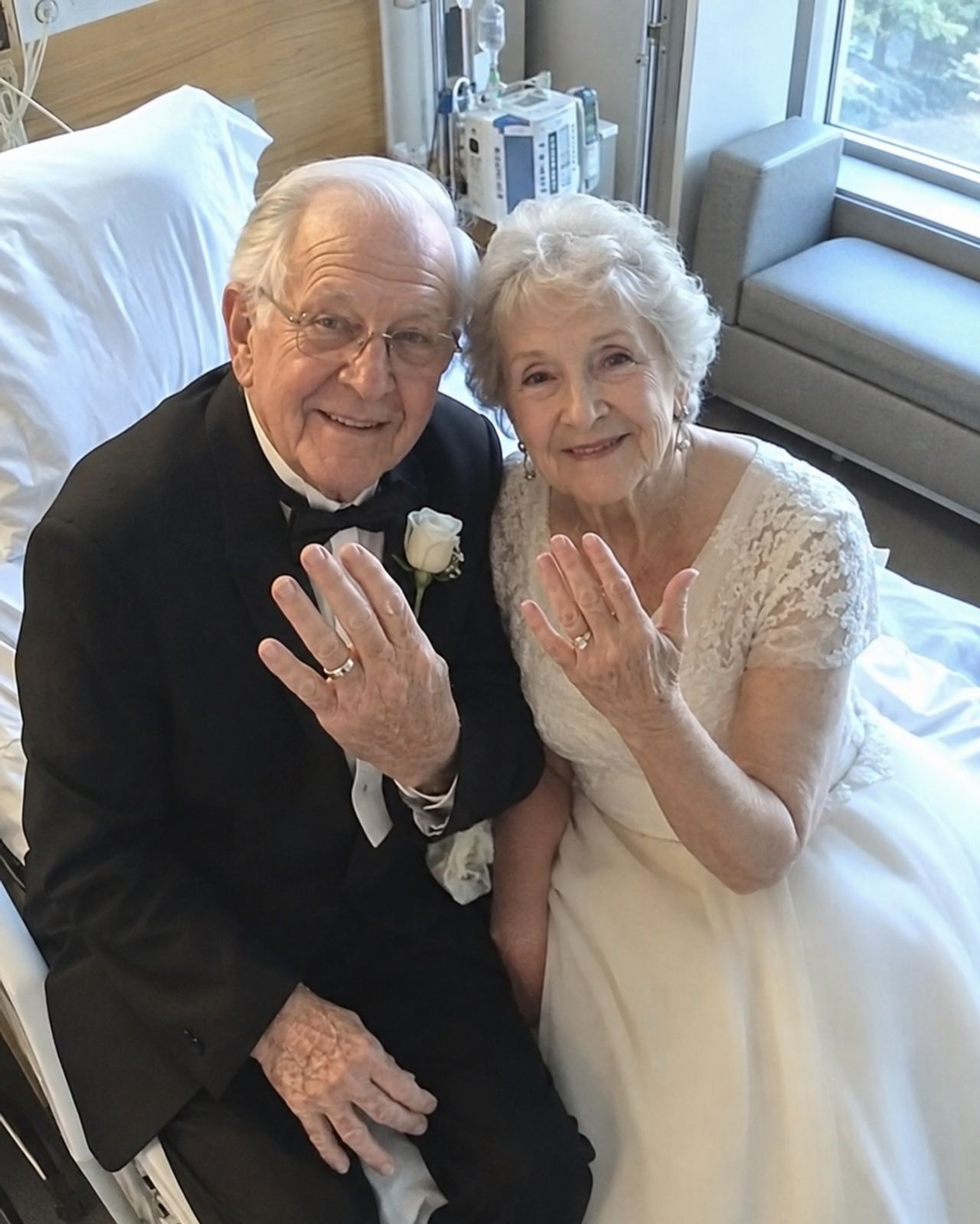
I married my dying high school sweetheart at seventy-three
A woman receives a box left by her late husband and discovers a lifetime of hidden truths about their lost love, a sabotaged scholarship, and the people who helped keep them apart. As she uncovers the past, she begins to understand that what she believed was rejection was actually the result of manipulation and fear.

I screamed because for one terrible second, my mind refused to understand what my eyes were seeing.
Inside the wooden box was a stack of photographs tied together with a faded blue ribbon, an old bus ticket sealed inside a plastic sleeve, and a small velvet pouch resting on top of a folded letter.
But it was the photograph lying faceup that made the room tilt beneath me.
It showed me at seventeen.
Not the polished school portrait my mother had kept on the mantel for years. Not some faded group picture from a yearbook. This photograph had been taken from a distance. I was standing at the bus station, one hand gripping the handle of my suitcase, the other pressed against my mouth as I cried.
Behind me, half hidden behind the corner of the old brick station, stood Thomas.
He had not left.
He had watched me go.
My knees weakened so badly I had to clutch the edge of the kitchen table. The attorney, Mr. Calloway, reached out as if to steady me, but I pulled back.
“What is this?” I whispered.
His expression changed. The strange smile faded, replaced by something more careful. Almost regretful.
“Mrs. Whitaker—”
“Don’t call me that yet.” My voice came out sharper than I intended. “Tell me what this is.”
He looked at the box, then back at me.
“Thomas asked me to deliver it after the funeral. He said I was to tell you those exact words before you opened it.”
“You said I walked into his trap.”
“Yes.”
“What trap?”
Mr. Calloway removed his hat and held it in both hands. He was a tall man in his late sixties, with silver hair and tired blue eyes, the kind of man who looked as though he had spent his entire life keeping other people’s secrets and had grown weary of the weight.
“I believe,” he said slowly, “Thomas meant that you had walked into the truth.”
I stared at him.
The truth.
The word sounded simple, but it landed inside me like a stone dropped into deep water.
For a long moment, neither of us spoke. The morning sun spilled through my kitchen window and stretched across the old linoleum floor. Outside, Mrs. Delaney’s wind chimes sang softly in the breeze. It was an ordinary morning. Birds chirped. A truck passed on the road. Somewhere, a dog barked twice and fell silent.
But inside my little kitchen, my whole life had begun to come undone.
I reached into the box with trembling fingers and lifted the photograph. It had been carefully preserved, its edges still sharp despite the years. On the back, in Thomas’s handwriting, were three words.
The day I lost her.
My throat tightened.
“You knew about this?” I asked.
“I knew he had the box,” Mr. Calloway said. “I didn’t know every item inside. Thomas was very private about it.”
“Then why did he wait until now?” I demanded. “Why not tell me while he was alive?”
Mr. Calloway looked away.
“That question is answered in the letter.”
The letter.
My eyes dropped to the folded paper beneath the velvet pouch. My name was written across it in Thomas’s familiar hand.
Nancy.
Just that.
No “my darling.” No “my wife.” No explanation on the outside.
My fingers hovered over it, but I could not bring myself to touch it.
“What’s in the pouch?” I asked.
Mr. Calloway gave a small nod toward it. “I believe you should open it.”
I picked it up carefully. The velvet was soft, worn thin at the corners. When I loosened the drawstring and tipped it into my palm, a ring slipped out.
A silver ring with a tiny blue stone.
My breath caught.
I knew that ring.
I had given it to Thomas when we were teenagers. It had belonged to my grandmother, nothing valuable, just a little silver band she had worn when she was young. I had slipped it onto a chain and hung it around his neck the night before I left for college. He had laughed and told me it looked too delicate for him, but then he tucked it under his shirt and promised he would never take it off.
“I thought he lost this,” I whispered.
“He wore it for decades,” Mr. Calloway said. “Not as a ring. On a chain.”
My knees finally gave out, and I sank into the chair.
For a few minutes, I simply sat there with the little ring resting in my palm. All the years I had lived without Thomas rose around me like ghosts. The apartment I rented in the city. The long shifts at the hospital. The patients I had held as they took their last breaths. The quiet holidays. The birthday candles I blew out alone. The question I never allowed myself to ask too often.
What if I had stayed?
And now another question pressed against it.
What if he had come after me?
My voice was barely audible when I spoke again.
“Leave me alone with it.”
Mr. Calloway hesitated. “Thomas wanted me to explain certain matters after you read the letter.”
“I’ll call you.”
“Nancy—”
“Please.”
Something in my face must have convinced him, because he nodded. He placed a cream-colored envelope beside the box.
“My card is inside. There are legal matters to discuss. Not today, if you’re not ready. But soon.”
“Legal matters?”
“Yes.” His gaze flickered to the wooden box. “And family matters.”
Before I could ask what he meant, he was already moving toward the door.
At the threshold, he turned back.
“One more thing. Thomas was afraid you would think the worst of him.”
“I already don’t know what to think.”
“I know.” His eyes softened. “But he asked me to say this, too. He said, ‘Tell Nancy I was a coward for too long, but not a liar.’”
Then he left.
The door clicked shut behind him.
I sat in the kitchen with the ring in one hand and the photograph in the other, listening to the silence grow.
Finally, with my heart pounding so hard I could feel it in my wrists, I unfolded the letter.
My dearest Nancy,
If you are reading this, then I have already done the one selfish thing I swore I would not do. I asked you to marry me knowing I had secrets. I let you hold my hand, forgive me, and love me again before I told you the truth.
That is the trap.
Not a cruel one, I hope. Not meant to hurt you. I wanted you close enough that you could not run from what I am about to tell you. I wanted, just once in my life, to be brave enough to put the truth in your hands.
You believed I let you go at the bus station.
I let you believe that because it was easier than admitting what really happened.
I did not go home that day. I followed your bus in my father’s truck all the way to Millbridge. I told myself I would find you, apologize, and ask if we could try again. Not ask you to give up college. Not anymore. I had been young and proud and frightened, and I knew it the moment that bus pulled away.
But when I reached the city, I found you outside your dormitory. You were standing with another young man. He was helping carry your suitcase, and you were smiling through your tears.
I thought I had already been replaced.
I turned around and drove home.
I know now how foolish that was. I know now a boy carrying a suitcase was not a promise, not a betrayal, not even a beginning. But I was seventeen, and my heart was louder than my sense.
A tear slid down my cheek and fell onto the paper.
I remembered that boy.
His name had been Michael Baird. He was a student volunteer assigned to help new arrivals move into the dormitory. I had known him for less than ten minutes. I could not even remember his face clearly.
All my life, Thomas had thought—
I pressed the letter to my chest and closed my eyes.
When I had steadied myself, I continued reading.
That was my first mistake.
My second was listening to my father.
When I came home, he already knew I had followed you. Someone had seen the truck leaving town, and in a place like ours, secrets traveled faster than wind. He told me I had humiliated myself. He said a woman who wanted a bigger life would never be content with me. He said if I chased you, I would spend the rest of my days begging for scraps of your attention.
I believed him because believing him hurt less than hoping.
For years, I wrote letters to you and never sent them. I kept your college address folded in my wallet until the ink faded. Every time I decided I would mail one, fear stopped me.
Then one letter came back to me.
I frowned.
One letter?
My eyes moved faster now.
I had finally sent it. I wrote to tell you I was sorry. I wrote that I had been wrong to ask you to stay. I wrote that if you ever wanted to hear from me, I would wait.
Three weeks later, the envelope returned unopened.
On the front, someone had written: “She does not wish to receive correspondence from you.”
It was not your handwriting.
I sat very still.
The air in the room seemed to thin.
Someone had written that?
My first thought was my mother. Then I rejected it immediately. My parents had died years ago, and whatever flaws they had carried, cruelty had never been one of them. They had encouraged me to go to school. They had believed in my future even when I doubted it myself.
So who?
I turned the page with shaking hands.
I should have questioned it. I should have driven to you and asked with my own mouth. Instead, I let shame decide for me. I put the letter in this box, along with the photograph I took the day you left and the ring you gave me.
Then I spent years pretending I had accepted it.
I built the business. I cared for my father when he became ill. I sat beside his bed when he died. I made money. I lost friends. I grew older. People called me successful, and I let them, because it was easier than telling them I had become an expert at living with one empty room inside me.
When I saw you again in the hospital, I thought God had made a mistake or given me a mercy I did not deserve.
You walked into my room with my chart in your hands, and for one second I was seventeen again. Then I remembered I was dying.
I should have told you everything that day.
But I was afraid.
There it was again.
Afraid.
A word so small beside all the years it had stolen.
I got up from the chair and walked to the sink. Outside, a squirrel darted along the fence. Mrs. Delaney’s curtains shifted, and I knew she was probably wondering about the attorney’s visit. In our town, grief was never private for long.
I poured myself a glass of water, but my hands shook so badly that most of it spilled over my fingers.
When I returned to the table, I looked inside the box again. Beneath the photographs was another envelope, yellowed with age.
I knew before touching it what it was.
Thomas’s returned letter.
The stamp was from fifty-two years earlier. My college address was written carefully across the front. And beneath it, in darker ink, were the words he had described.
She does not wish to receive correspondence from you.
The handwriting was sharp, angled, familiar in a way that made my skin prickle.
I knew that handwriting.
But I could not place it.
Not yet.
I turned back to Thomas’s letter.
Nancy, I married you because I loved you. That part was true. But I also married you because there are things only a wife can claim, things only a wife can ask, things only a wife can finish.
My father left behind more than a business. He left behind records. Debts. Letters. Lies.
Years ago, after he passed, I found proof that he interfered in more lives than mine. He controlled people with money, favors, and secrets. I did not understand the full shape of it then, and maybe I was too tired to try.
But when I became ill, I hired Calloway to help me put my affairs in order. Together, we found something I had missed.
Something connected to you.
My hand tightened around the page.
Connected to me?
I read the next line twice.
Nancy, the scholarship that took you away from town was almost taken from you before you ever received it.
A memory opened inside me.
The scholarship letter arriving in our mailbox on a rainy afternoon. My mother crying as she read it aloud. My father lifting me off my feet. Me running all the way to Thomas’s house to tell him, my shoes soaked, my hair dripping, my heart full of future.
Almost taken from me?
I kept reading.
My father sat on the school board that year. He did not choose the scholarship winner, but he knew who had applied. He knew you were the strongest candidate. He also knew that if you left, I would be heartbroken.
At first, he tried to have your application disqualified. When that failed, he did something worse.
He made sure you got it.
I blinked, confused.
That made no sense.
He made sure I got it?
Thomas seemed to know exactly how I would react, because the next line answered me.
He believed sending you away was the only way to keep me where he wanted me. If you stayed, I might have built a life around you instead of the business. If you left, he believed I would be angry enough, wounded enough, and dependent enough to become the son he needed.
I covered my mouth.
The kitchen blurred.
All these years, I had thought life had simply divided us. Circumstance. Ambition. Youth. Pride. The ordinary accidents that make some people strangers.
But what if our lives had been quietly rearranged by someone else’s hand?
There is more, Thomas had written.
Of course there was.
Men like my father do not stop with one decision. He kept files on people. He called them “insurance.” Most were business records, but some were personal. After his death, I locked them away because I was ashamed of him and because I did not want to become him.
But when Calloway and I reviewed those files, we found your name.
Not once.
Many times.
I placed the letter down and stood again, though I had nowhere to go. My legs carried me into the living room and back again. I felt trapped between the woman I had been and the woman I had become.
My name in Thomas’s father’s files.
Why?
I had been nobody important. A scholarship girl from a modest family. A nurse. A woman who left town and never looked back because looking back hurt too much.
I returned to the table.
The box had a false bottom. Thomas had marked it with a small brass pin in the corner. I found it beneath the stack of photographs. My fingernail caught the edge, and the bottom lifted with a soft wooden sigh.
Inside was a manila envelope, thick with papers.
Across the front, in Thomas’s handwriting, were two words.
For Nancy.
I did not open it right away.
Instead, I reached for the phone.
Mr. Calloway answered on the second ring.
“I read part of the letter,” I said. My voice sounded distant, as if it belonged to someone standing across the room. “You need to come back.”
“I’m only five minutes away.”
Of course he was.
Part of me wanted to be angry that he had not gone far. Another part was grateful.
While I waited, I read the last page of Thomas’s letter.
I do not know how much truth you will want. Truth is not always healing. Sometimes it is only a door, and once opened, it lets in every cold wind.
But I need you to know this: I did not stop loving you because you left. I stopped reaching for you because I believed I had been told to let go.
That was my failure.
The month we had as husband and wife was the happiest mercy of my life. I know it was too little. I know it came too late. But it was real. Every moment of it was real.
Now I am asking you for one more thing.
Find out who wrote on that envelope.
Find out why my father kept your name.
And forgive me only if the truth leaves room for it.
All my love, all my life,
Thomas
By the time Mr. Calloway knocked again, I had stopped crying.
That frightened me more than the tears.
Grief I understood. I had lived with grief. I had held grieving families in hospital corridors and helped them make phone calls they never wanted to make. Grief was heavy, but it was honest.
This was something else.
This was a room beneath the room. A story beneath the story.
I opened the door before Mr. Calloway could knock a second time.
He stepped inside without a word.
I led him to the kitchen table and pointed to the envelope.
“Tell me what you know.”
He sat across from me, folded his hands, and took a breath.
“Thomas came to me eight months ago. He knew his prognosis was poor. At first, he only wanted his will updated. Then he mentioned you.”
“He knew I was back in town?”
“Yes.”
“How?”
“He saw your name in a hospital newsletter. A small mention about returning staff.”
I almost smiled at that. The hospital had taken a photograph of me with three other nurses beneath a banner that said WELCOME BACK TO OUR CARE TEAM. I had hated that picture. My hair had refused to behave that day.
Thomas had seen it.
“He asked me to find out whether you were married,” Mr. Calloway continued. “When I told him you weren’t, he became very quiet. The next week, he asked me to help review his father’s old documents.”
“Why then?”
“Because he said if life had brought you back, he wanted to make sure no old harm was still buried where it could reach you.”
I looked down at my hands.
Old harm.
“What did you find?”
“Enough to trouble him. Not enough to fully explain.”
He opened the manila envelope and removed several pages. The first was a photocopy of a school board memo from the year I graduated. My name appeared in the middle of a list of scholarship applicants. Someone had circled it in red pencil.
Beside it, in handwriting I did not recognize, were the words: Encourage acceptance. Ensure departure.
My stomach turned.
“Ensure departure,” I repeated.
Mr. Calloway nodded.
“Thomas believed his father wanted you gone.”
“But he also helped me get the scholarship.”
“Yes. He wanted you gone in a way that looked like opportunity. That way, no one could accuse him of cruelty.”
I almost laughed, but no sound came out.
Opportunity.
The thing I had treasured most as a young woman. The door that opened my life.
Had it also been a door someone pushed me through?
“And the returned letter?” I asked.
Mr. Calloway slid the envelope toward me.
“We had it examined by a handwriting analyst.”
I looked up sharply.
“You already know who wrote it?”
“We have an opinion. Not legal proof, but a professional opinion.”
“Whose handwriting?”
He hesitated.
“Before I answer, you should see one more thing.”
From his leather folder, he removed another sheet of paper and laid it before me.
It was a copy of a letter dated two months after I left for college. Addressed to Thomas’s father.
Dear Mr. Whitaker,
As requested, I have discouraged further contact between Thomas and Nancy. I agree that continued attachment would be harmful to his future and distracting to hers. Please understand that I acted only out of concern for both young people.
There was no signature on the copy.
Only initials.
E.M.
I stared at them.
E.M.
My mind searched the past. Teachers. Neighbors. Church ladies. School secretaries. Parents of friends.
Then a face rose before me.
Soft gray hair. Pearl earrings. The scent of lavender hand cream. A woman who had hugged me at graduation and whispered that I was destined for great things.
“Eleanor Morris,” I said.
Mr. Calloway did not answer, which was answer enough.
Miss Morris had been the guidance counselor at our high school.
She had helped me fill out my scholarship application. She had corrected my essay. She had told me which forms needed extra copies and reminded me of every deadline. When the acceptance letter arrived, she brought a cake to school and made the whole office celebrate.
“She wouldn’t,” I whispered.
“I’m sorry.”
“No. She wouldn’t.”
But even as I said it, memory shifted.
Miss Morris gently taking my hand after Thomas and I argued in the hallway one spring afternoon. Miss Morris telling me, “Some boys love a girl best when she stays small enough to fit inside their plans.” Miss Morris warning me not to let romance ruin my future. Miss Morris asking, more than once, whether Thomas had written after I left.
And me, proud and wounded, saying no.
Had she known why?
My chest tightened.
“Is she still alive?” I asked.
“Yes.”
The answer startled me.
“She’s at Briarwood Assisted Living,” Mr. Calloway said. “She’s ninety-one. Thomas wanted to speak with her, but his health declined too quickly.”
A strange anger moved through me—not hot, not wild, but focused. It frightened me because it felt clear.
“I want to see her.”
“I expected you would.”
“Today.”
“Nancy, there are things to consider—”
“I’ve considered fifty-six years of silence. That’s enough.”
He studied me for a long moment, then nodded.
“I’ll drive.”
The ride to Briarwood took twelve minutes. I knew because I watched every minute pass on the dashboard clock.
The town looked smaller than it had when I was young, though perhaps it was only me who had changed size. We passed the old pharmacy where Thomas had bought me cherry soda after school. The movie theater had become a hardware store. The diner still stood on Maple Street, though its sign had been repainted and its windows were brighter now.
At the corner of Ash and Third, we passed the bus station.
It was no longer a station. It had been converted into a thrift shop with cheerful yellow curtains in the windows.
I turned away.
Briarwood smelled of lemon polish, warm soup, and the faint powdery scent of old furniture. A young receptionist greeted Mr. Calloway by name, which told me he had been there recently.
“Miss Morris is in the sunroom,” she said. “She’s having tea.”
Of course she was.
I followed Mr. Calloway down a hallway lined with framed watercolor paintings. Residents sat in armchairs, watching television or dozing beneath knitted blankets. A woman in a pink cardigan smiled at me as I passed. Somewhere, someone laughed.
The sunroom was bright and full of plants.
Eleanor Morris sat beside a window, a teacup balanced on its saucer in her lap. She was smaller than I remembered, her shoulders narrow, her hair white instead of gray. But the pearl earrings were there. So was the careful posture. Even at ninety-one, she looked like a woman waiting to be judged by the principal and determined to pass inspection.
Her eyes lifted when we entered.
For a moment, she looked politely confused.
Then she saw me.
The teacup rattled against the saucer.
“Nancy,” she said.
Not Mrs. Whitaker. Not Ms. Hale, the name I had used most of my adult life.
Nancy.
I stopped a few feet away.
“Miss Morris.”
Her gaze moved to Mr. Calloway, then back to me.
“So,” she whispered. “Thomas told you.”
“Thomas is dead.”
Her face changed. Something inside it seemed to collapse inward.
“I know.”
“You knew he was sick?”
“Yes.”
“And you didn’t go see him?”
Her thin hands tightened around the saucer.
“He would not have wanted me there.”
“No,” I said. “I imagine he wouldn’t.”
Mr. Calloway remained near the door, quiet and watchful.
I reached into my purse and removed the returned envelope. I placed it on the small table beside her tea.
“Did you write this?”
She did not look at it.
That was how I knew.
“Did you?” I asked again.
Her mouth trembled.
“Yes.”
The word was small, but it ended something.
I sat down across from her before my legs could fail me.
“All these years,” I said, “Thomas thought I rejected him.”
Miss Morris closed her eyes.
“I thought I was protecting you.”
“From what? A letter?”
“From coming back.”
The answer was so direct that it stole my next breath.
She opened her eyes. They were watery, but clearer than I expected.
“You were brilliant, Nancy. Do you understand that? Truly brilliant. Not just a good student. Not just hardworking. You had a mind that could carry you beyond this town. Everyone saw it. Even those who resented it.”
“That was not your choice to make.”
“No,” she said. “It wasn’t.”
The admission gave me no satisfaction.
“Then why?”
She looked out the window. In the courtyard, an aide pushed an elderly man in a wheelchair beneath a blooming crepe myrtle tree.
“Because I had seen too many girls stay,” she said. “They had scholarships, dreams, chances. Then a boy cried, or a parent got sick, or someone said love meant sacrifice. And they stayed. Five years later, they were tired. Ten years later, they were angry. Twenty years later, they couldn’t remember what they had wanted.”
Her voice grew unsteady.
“I thought Thomas would pull you back.”
“He didn’t. His father did.”
“Yes.” Her eyes returned to mine. “And I helped him.”
Silence settled between us.
Not empty silence. Full silence.
The kind that holds too much.
“What did he offer you?” I asked.
She flinched.
“I beg your pardon?”
“Thomas’s father. Men like that don’t ask without offering something or holding something. Which was it?”
For the first time, fear crossed her face.
Mr. Calloway shifted near the door.
Miss Morris set the teacup down with trembling hands.
“He knew about my brother,” she said.
The words seemed to cost her.
“What about him?”
“My brother had borrowed money from Mr. Whitaker. More than he could repay. There were forged checks. Bad decis…
Read more stories