
Human Stories
Her Family Tried to Force a House Sale—Then the Patrolman Spoke
After her father attacks her to force a house sale, the narrator discovers the police, an attorney, and long-hidden legal documents have already turned the situation against him. A recorded deed proves the house was transferred to her years earlier, exposing the family’s greed and silence.

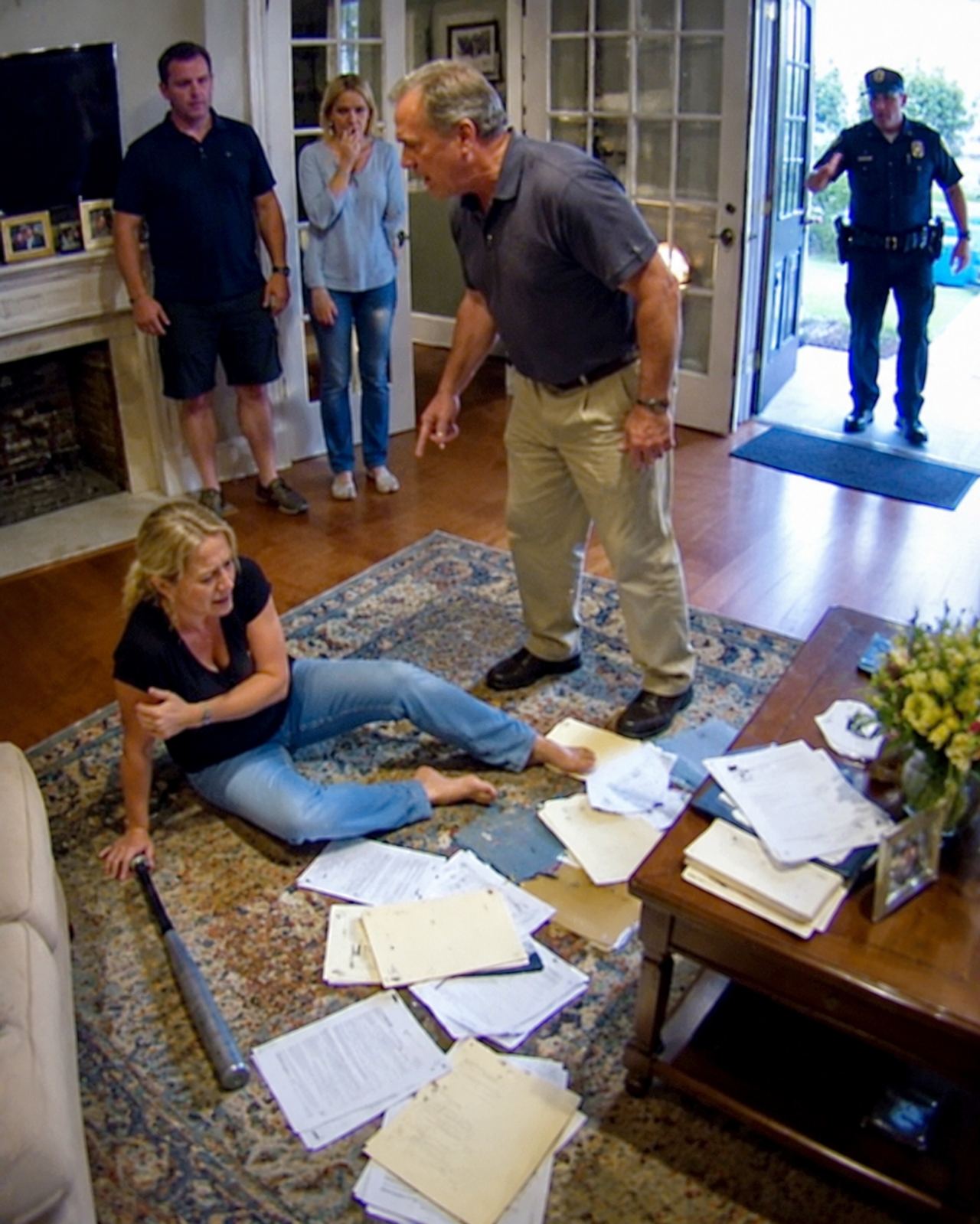
My father broke two of my ribs with a baseball bat in Grandma’s living room and told me to sell the house because my sister needed the money.
He said it like the house was his to distribute, my body was his to punish, and my signature was only a detail he could force into place.
The braided rug scratched my cheek while the copper taste of blood spread across my tongue.
Grandma’s mantel clock kept ticking above the fireplace, calm and steady, as though the room had not just split open.
Dad’s work boots stopped inches from my face.
Mom stood behind him with both hands pressed near her mouth.
“Harold, please,” she whispered.
She said it softly, almost politely, the way she had learned to speak whenever one of his rages took over a room.
Claire watched from the doorway with her arms folded.
She had driven three hours to collect my inheritance.
That was how she thought of it.
Not Grandma’s home.
Not the place where we had spent summer afternoons shelling peas at the kitchen table or sleeping under quilts that smelled like cedar.
An inheritance.
A number.
A problem that could be solved if I stopped being difficult.
“Grandma wanted the house to stay in the family,” Claire said.
I swallowed against the blood in my mouth.
“Grandma wrote a will.”
Dad’s hands tightened around the baseball bat.
The room went still.
Mom stared at the coffee table.
Claire’s fingers stopped moving around her keys.
Above the fireplace, the service ribbons Grandma had framed for me caught the light.
Nobody stepped toward me.
Nobody told him to stop.
Nobody moved.
Nine years earlier, Dad had cut me off when I chose the Navy over his construction company.
He had expected me to choose his construction company and stay inside the future he had already decided for me.
When I chose the Navy instead, he treated it as betrayal.
He cut me off and let nine years pass without asking what the choice had cost me or what it had made possible.
He never asked about the work, the promotions, the responsibility, or the people who trusted me to remain steady when a situation turned chaotic.
He did not know I had become Captain Hart.
In his version of the family, I was still the disobedient daughter who had walked away with nothing.
He had never bothered to learn what I became.
Claire crouched near the couch, careful not to get close enough to touch me.
“Sign the sale agreement,” she said. “We can be done with this tonight.”
The folder she had dropped beside the couch lay open on the floor.
My name was printed beneath a blank signature line.
The property description had already been typed.
The sale price had already been entered.
There were initials on several pages where mine were supposed to go.
They had not come to discuss Grandma’s wishes.
They had come to complete paperwork.
That was what greed looked like in my family.
Not shouting at first.
Not threats.
Paper.
A plan.
A blank line waiting for someone weaker to surrender.
For one hard second, I looked at the brass fireplace poker and imagined how easily I could reach it.
I imagined Dad falling backward.
I imagined Claire’s confidence breaking.
I imagined Mom finally being forced to see what years of silence had made possible.
Then I let the thought go.
Rage would not make me safer.
It would only give them another story to tell.
“I’m not signing,” I said.
Dad’s expression changed.
The blow had caught my side and folded me onto Grandma’s rug.
Now he stepped closer and lowered his voice.
“You always thought you were better than this family.”
“No,” I said, forcing air into my lungs. “I just learned I could survive without it.”
Claire’s smile vanished.
Dad bent down and reached under the coffee table for the bat again.
Then the front door burst open.
“Drop it!”
The command struck the room harder than the bat had.
A county deputy filled the doorway with his weapon aimed at Dad.
Two shore patrol officers entered behind him.
Red and blue light flashed across the living-room walls and moved over the family pictures above the fireplace.
Dad released the bat.
It hit the rug beside my hand with a dull thud.
One of the shore patrol officers stepped forward.
Patrolman Ellison recognized me immediately.
His face changed, and he straightened as if we were standing on a parade deck instead of inside the room where my father had just attacked me.
“Captain Hart,” he said. “Don’t move, ma’am. Medical is coming.”
Claire’s mouth fell open.
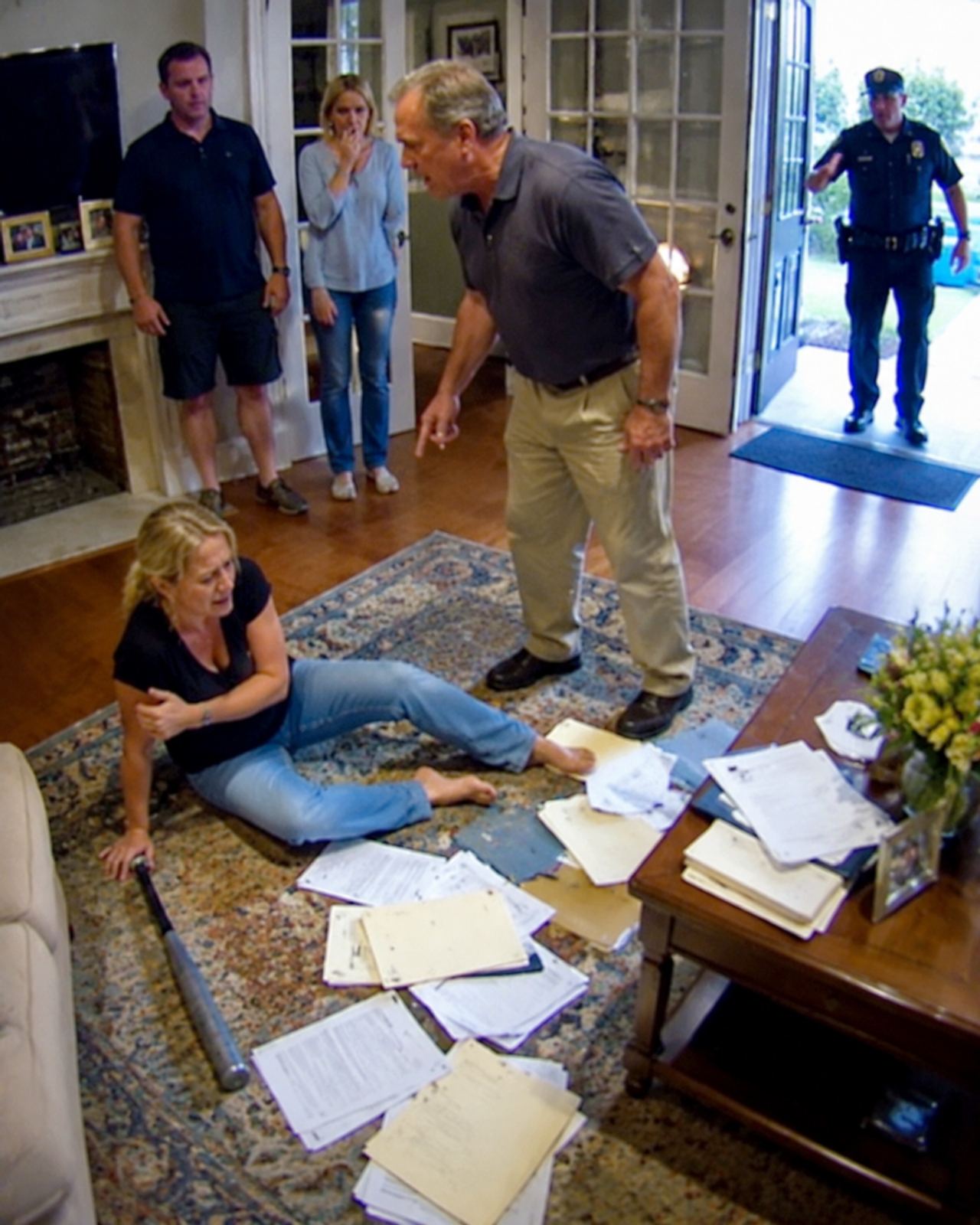
Dad looked at Ellison, then at me.
For the first time that night, uncertainty replaced rage.
He stared at the service ribbons above Grandma’s fireplace, ribbons she had insisted on framing after one of my promotions, and then looked back at the daughter he had dismissed for nine years.
Mom sank against the wall.
The deputy moved Dad’s hands behind his back and cuffed him.
Outside, neighbors gathered near the driveway beneath the wash of patrol lights.
Claire pulled out her phone.
Ellison told her to put it away.
“This is a family disagreement,” she said.
The deputy glanced down at the bat.
“No, ma’am. This is an assault scene.”
The sentence seemed to remove the last excuse from the room.
Mom covered her mouth.
Dad said nothing.
At County General, the X-ray showed two fractured ribs.
The doctor explained that the blow had missed my lung.
He used the word lucky.
I watched a nurse hold a paper cup steady because my hands would not stop shaking.
Lucky was a word my mother had used for years.
Lucky the rage had ended.
Lucky nobody else had been hurt.
Lucky the neighbors had not heard.
Lucky Claire and I had been somewhere else when his temper turned.
That night, lying beneath a thin hospital blanket, I understood how often luck becomes the language people use when they are too frightened to say survival.
Patrolman Ellison came to my room around nine with his hat tucked beneath his arm.
He closed the door behind him.
“The neighbor’s doorbell camera caught your father carrying the bat into the house,” he said.
I stared at him.
“It also caught your sister telling him not to leave until you signed.”
The first recording showed Dad crossing the driveway with the bat tucked along his leg.
The second captured Claire near the porch, speaking low but clearly enough for the camera microphone.
Don’t leave until she signs.
Ellison had already documented the footage and logged it with the responding deputy’s report.
The sale agreement had been collected from the living room.
The bat had been photographed, bagged, and entered into evidence.
For years, my family had survived by controlling the story after the damage was done.
This time, the story had a timestamp.
Claire appeared outside my room twenty minutes later.
She was pale, furious, and still carrying a clean copy of the sale agreement.
She demanded to speak with me before the police turned the situation into something ugly.
I did not let her inside.
Through the glass, she lifted the document.
“Dad made a mistake,” she said. “Sign the sale agreement tonight, and we can tell everyone you fell.”
The words were so familiar in their structure that they barely sounded new.
He made a mistake.
You fell.
We can fix this.
In my family, truth was always treated like the dangerous thing.
I pressed the call button beside the bed.
A nurse stepped between Claire and the doorway.
Security arrived and escorted her toward the elevator while she shouted that the house belonged to all of us.
My phone rang before the elevator doors closed.
The caller was Evelyn Shaw, Grandma’s attorney.
“I heard about your father,” she said. “Do not sign anything. Your grandmother expected this.”
I went still.
Evelyn had handled Grandma’s affairs for years.
She was not dramatic.
She did not make late-night calls without a reason.
“What do you mean she expected this?” I asked.
“I mean your grandmother knew exactly who would come for that house once she was gone.”
Evelyn arrived before midnight carrying a weathered leather folder sealed with Grandma’s initials.
Mom came with her.
Her eyes were swollen, and she held a small brass key in both hands.
She had apparently hidden it for six years.
Dad’s attorney called twice.
Claire sent eleven messages.
The last one read: YOU HAVE NO IDEA WHAT’S IN THAT HOUSE.
Evelyn locked the hospital-room door.
Then she placed the leather folder across my blanket.
The leather was scratched at the corners and softened from years of handling.
Grandma’s initials were pressed into the flap.
Mom stood near the window, twisting the brass key between her fingers until the metal flashed beneath the fluorescent light.
I looked at her.
“Six years?”
Her mouth opened, but no answer came.
For most of my life, silence had been the thing my family used to protect the person doing the most damage.
That night, it looked different on my mother.
It looked exhausted.
It looked ashamed.
It still was not an explanation.
Evelyn opened the folder and removed a certified deed, a sealed letter, and a flash drive.
Claire’s messages continued to light up my phone.
Evelyn placed the deed on top.
“Your grandmother did not leave you the house in her will,” she said.
My stomach dropped.
For a moment, every word Claire had thrown at me seemed to rush back into the room.
The inheritance.
The sale.
The claim that the house belonged to all of us.
Then Evelyn turned the deed toward me.
She pointed to the date recorded at the county clerk’s office.
The transfer had been completed three years before Grandma died.
Grandma had not left me the house because the house was already mine.
The will was never the source of my ownership.
The deed was.
I read my name once.
Then again.
The letters did not change.
The date did not move.
The county recording stamp sat at the bottom of the page, ordinary black ink carrying more weight than every threat Dad had made in Grandma’s living room.
Outside the glass, Claire had returned with Dad’s lawyer.
She saw the document in Evelyn’s hand.
All the color drained from her face.
The lawyer leaned closer to read the page.
His attention moved from the date to my name and then back to Claire.
She started talking quickly.
He lifted one hand.
She stopped.
That may have been the first time all night Claire understood that confidence could not alter a recorded deed.
Evelyn did not open the door.
She held the certified copy where the lawyer could see it through the glass.
He stood there for several seconds, reading what he could.
Then he stepped back.
Claire did not.
She stared at me as though I had hidden the property from her instead of Grandma protecting it from people who believed they could take it.
Mom placed the brass key on the blanket.
It was small enough to disappear inside a closed fist.
She had carried it for six years.
Through years of family conversations about the house.
I wanted to ask why she had waited until a baseball bat put me in a hospital bed.
I wanted to ask whether she would have brought it if the neighbor had not called for help.
I wanted to ask how many times fear had made her choose silence and call it peace.
But the questions could wait.
The deed could not be argued away.
The assault could not be renamed.
The video could not be persuaded to forget.
For once, every version of the truth had an object attached to it.
A bat.
A recording.
An unsigned sale agreement.
An X-ray.
A certified deed.
Evelyn picked up the brass key.
She slid it into a hidden clasp along the folder’s edge.
The clasp released with a soft click.
Claire heard it through the glass.
Her face changed again.
Evelyn opened the concealed section and positioned the flash drive beside the sealed letter.
Then she looked at me.
“Your grandmother expected this,” she said again.
Dad’s lawyer knocked once on the glass.
Evelyn did not turn around.
Claire pressed closer to the door, her eyes moving between the flash drive, the letter, and the deed.
The daughter who had arrived demanding money now looked frightened of a piece of plastic no bigger than her thumb.
My ribs hurt when I breathed.
My hands still shook beneath the hospital blanket.
But the room no longer belonged to the loudest person in it.
It belonged to the evidence.
Evelyn rested one hand on the weathered folder.
“Now we show them what she recorded before she transferred everything to you.”
I looked through the glass at Claire.
Then I looked at Mom, still standing beside the window with years of fear written across her face.
Finally, I looked down at the deed dated three years before Grandma’s death.
Dad had cut me off because he believed walking away would leave me powerless.
He had never bothered to learn what I became.
Grandma had.
And before anyone touched the flash drive, one truth was already settled in black ink: the house was mine, my signature was still mine, and nobody in that family would ever beat either one out of me again.
Read more stories
- My Mother-in-Law Pushed Me Downstairs—Then the X-Rays Told the Truth
- My Mother Asked for the Name of My Commanding Officer. I Should Have Known Then.
- One week before his 18thbirthday, my grandsonsaid: “The best giftwould be your deathso we can… For five years I paid my daughter’s mortgage, car notes, and Axel’s school bills.
- Because my ex-wife’s lawyer held up my pay stubs in family court, pointed at my