
Celebrities & Music
HE TRADED A SECURE FUTURE IN MEDICINE FOR A $30 UPRIGHT PIANO — AND BET EVERYTHING ON A VOICE NOBODY WANTED TO HEAR.
Neil Diamond walked away from a pre-med future and a fencing scholarship in 1962 to pursue songwriting, enduring years of rejection while working above Birdland with only an upright piano. His persistence paid off with hits like “I’m a Believer,” “Solitary Man,” and “Sweet Caroline,” launching a legendary career as both songwriter and performer.

In the spring of 1962, Neil Diamond was just months away from graduating from New York University. Instead of finishing his pre-med studies and holding onto his fencing scholarship, he walked away. He took a $50-a-week contract with Sunbeam Music Publishing in the heart of Tin Pan Alley, choosing the uncertainty of songwriting over a guaranteed career.
The gamble did not pay off immediately. After just 16 weeks, his contract was not renewed. For years, he faced a relentless string of rejections. Searching for a place to work, he rented a small, $35-a-month storage space above the famous Birdland jazz club, furnishing it with nothing but a cheap upright piano.
While crowds cheered for legendary musicians downstairs, Diamond sat in the quiet room above, writing songs that publishing houses kept turning down. He had given up a doctor’s life for a string of failed singles and empty pockets, yet he refused to stop playing.
That stubborn persistence finally broke through in 1966 when he wrote “I’m a Believer” for The Monkees. The track dominated the Billboard Hot 100 for seven consecutive weeks, proving that his early sacrifices were not a mistake.
He gambled his entire youth on his own words, turning years of rejection into the foundation of a legendary solo career. How he transitioned from writing hits in that small storage room to selling out stadiums worldwide remains the deeper chapter of his enduring legacy.
HE TRADED A SECURE FUTURE IN MEDICINE FOR A $30 UPRIGHT PIANO — AND BET EVERYTHING ON A VOICE NOBODY SEEMED TO WANT.
In the spring of 1962, Neil Diamond was just months away from graduating from New York University. He was a pre-med student on a fencing scholarship, perfectly positioned for a respectable, guaranteed career. Instead, he made a decision that defied all conventional logic. He walked away from his degree to take a $50-a-week contract with Sunbeam Music Publishing in the heart of Tin Pan Alley.
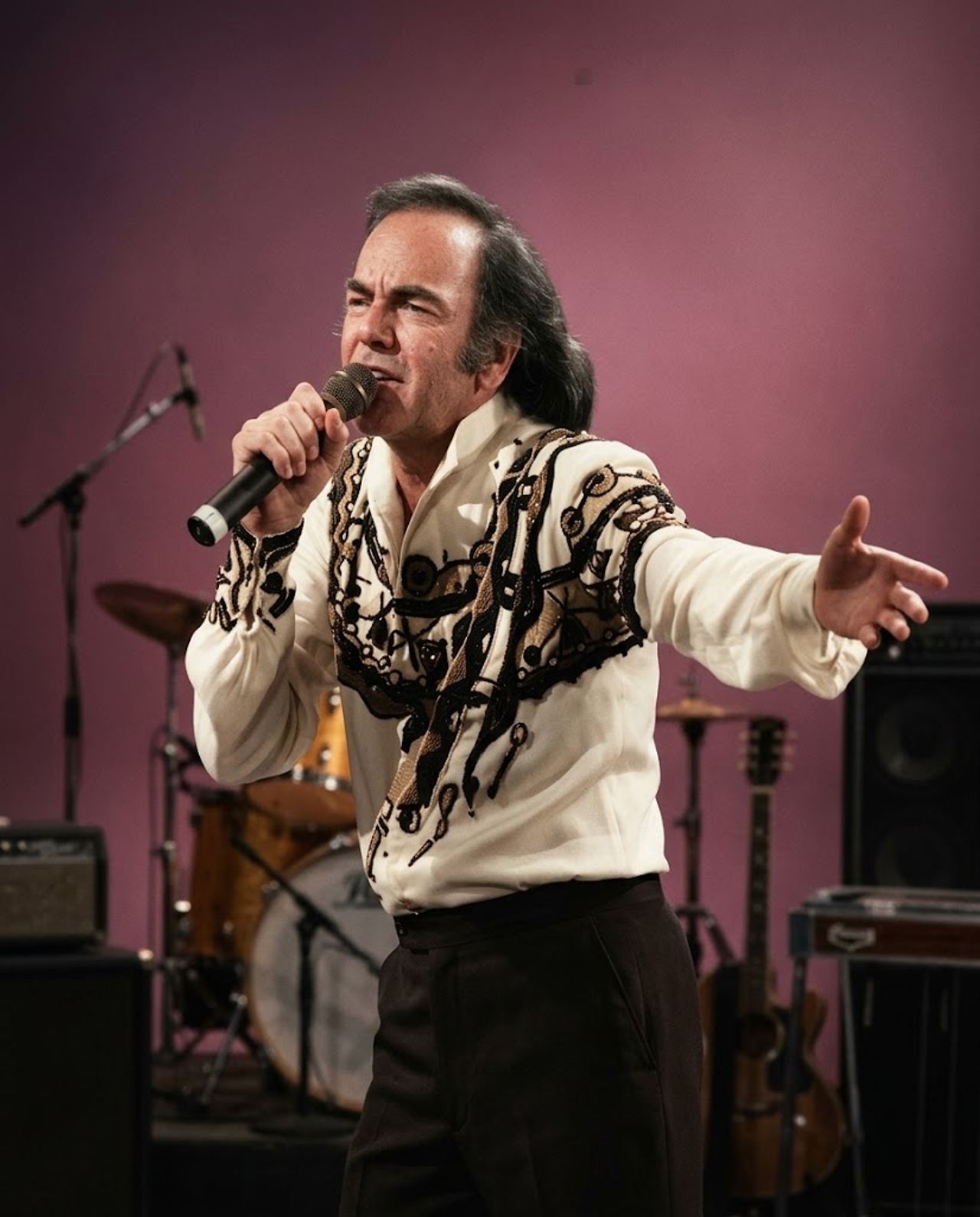
He chose the grueling, uncertain grind of songwriting over the stability of medicine. But the gamble did not pay off immediately.
After just sixteen weeks, Sunbeam did not renew his contract. Diamond found himself out of a job and facing a relentless string of rejections from the major publishing houses. Needing an affordable place to work, he rented a small, $35-a-month storage space above the famous Birdland jazz club in Manhattan. He furnished the cramped room with nothing but a cheap, $30 upright piano and a desk.
It was a study in profound contrast. Downstairs, legendary jazz musicians played to packed, cheering rooms. Upstairs, Diamond sat entirely alone, playing chords and writing lyrics that executives kept turning down. He had given up a doctor’s life for empty pockets and a string of failed singles, yet he simply refused to stop playing.
His stubborn persistence finally broke through in 1966. He wrote “I’m a Believer,” a track that found its way to The Monkees. The song became a massive phenomenon, dominating the Billboard Hot 100 for seven consecutive weeks and standing as the biggest-selling record of the year.
With that success, Diamond could have easily settled into a lucrative, quiet life as a behind-the-scenes hitmaker. But the man who spent years writing in a lonely storage closet still wanted to sing his own words.
That same year, he released “Solitary Man,” shifting his destiny from a contracted writer to a frontline performer. This was the critical transition that altered his trajectory forever. He took the introspective storytelling he had honed above Birdland and brought it directly to the public. The shift from an isolated room to the center spotlight culminated in 1972, when he took the stage at the Greek Theatre in Los Angeles.
Those Hot August Night concerts redefined his career. He wasn’t just a songwriter anymore; he was a commanding, theatrical presence holding thousands of people in the palm of his hand. He began writing massive, sweeping anthems that practically required a live audience to complete them.
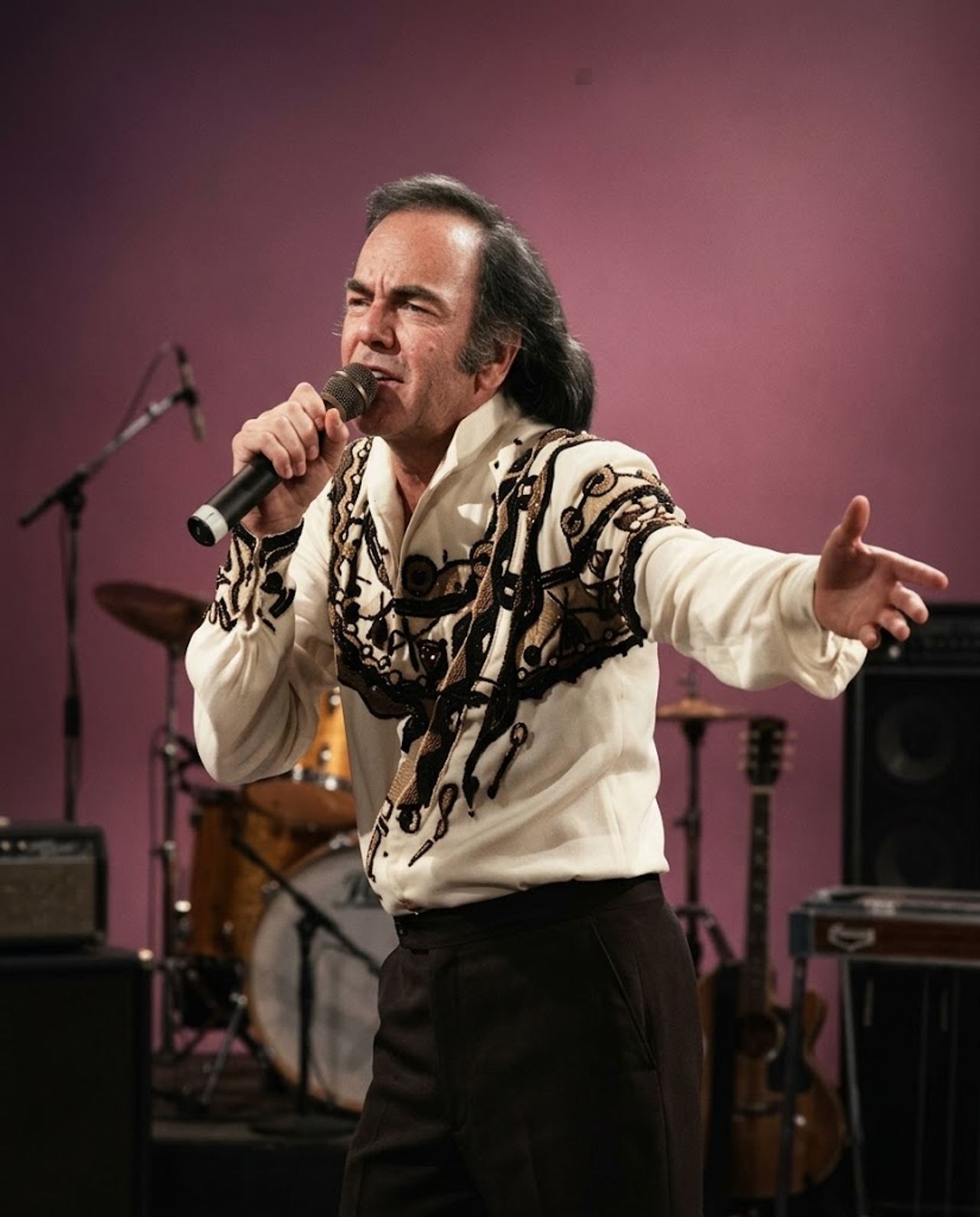
Tracks like “Sweet Caroline” transformed him into a permanent stadium fixture. The song became far more than a radio hit; it evolved into a cultural cornerstone. Today, it echoes through massive sports arenas and local neighborhood bars alike, sung by generations of people who instinctively know exactly when to shout the horn parts.
For over five decades, Diamond traveled the world, turning sprawling venues into intimate living rooms. He performed with an unrelenting physical energy until 2018, when a Parkinson’s disease diagnosis forced him to step away from the grueling demands of touring. He retired from the road, but his connection to the audience remained unbroken.
When he makes rare, unannounced public appearances today—like stepping out to sing at Fenway Park or attending a Broadway musical based on his life—the crowd’s reaction is deafening.
Looking back, the weight of his entire legacy rests on that singular choice in 1962. It required an irrational amount of faith to leave a clear path for a storage closet with an out-of-tune piano.
The young man who once wrote in complete silence above a nightclub ended up creating the soundtrack for millions. He gave up a life in medicine, only to heal people in an entirely different way.
Video can’t be loaded because JavaScript is disabled: Neil Diamond – Cracklin’ Rosie (Audio)
Video can’t be loaded because JavaScript is disabled: Neil Diamond – Sweet Caroline (Audio)
Read more stories
- “THE MORNING RYAN ABANDONED ME, HE DIDN’T SLAM A DOOR OR SHOUT A FINAL INSULT. HE SIMPLY ZIPPED HIS SUITCASE, KISSED MY CHEEK LIKE I WAS A NEIGHBOR, AND LEFT ME STANDING IN THE RAIN WITH NEWBORN TWINS AT MY FEET.
- My Daughter Asked Me If Russell Practiced Hitting on Everyone or Just Her
- I was hired to visit a blind, isolated veteran every Sunday and act as though
- The little girl accidentally ruined a feared mafia boss’s expensive shoes—and everyone expected him to explode