
Human Stories
The Baby Girl Who Shouldn’t Have Been Mine
A mother wakes from an emergency C-section expecting the son she was told she was carrying, only to be handed a baby girl and thrust into a devastating mystery. As DNA testing and medical records unravel the truth, the family discovers a vanished twin and learns the daughter they nearly rejected is their surviving child.

Chapter One
The Wrong Baby
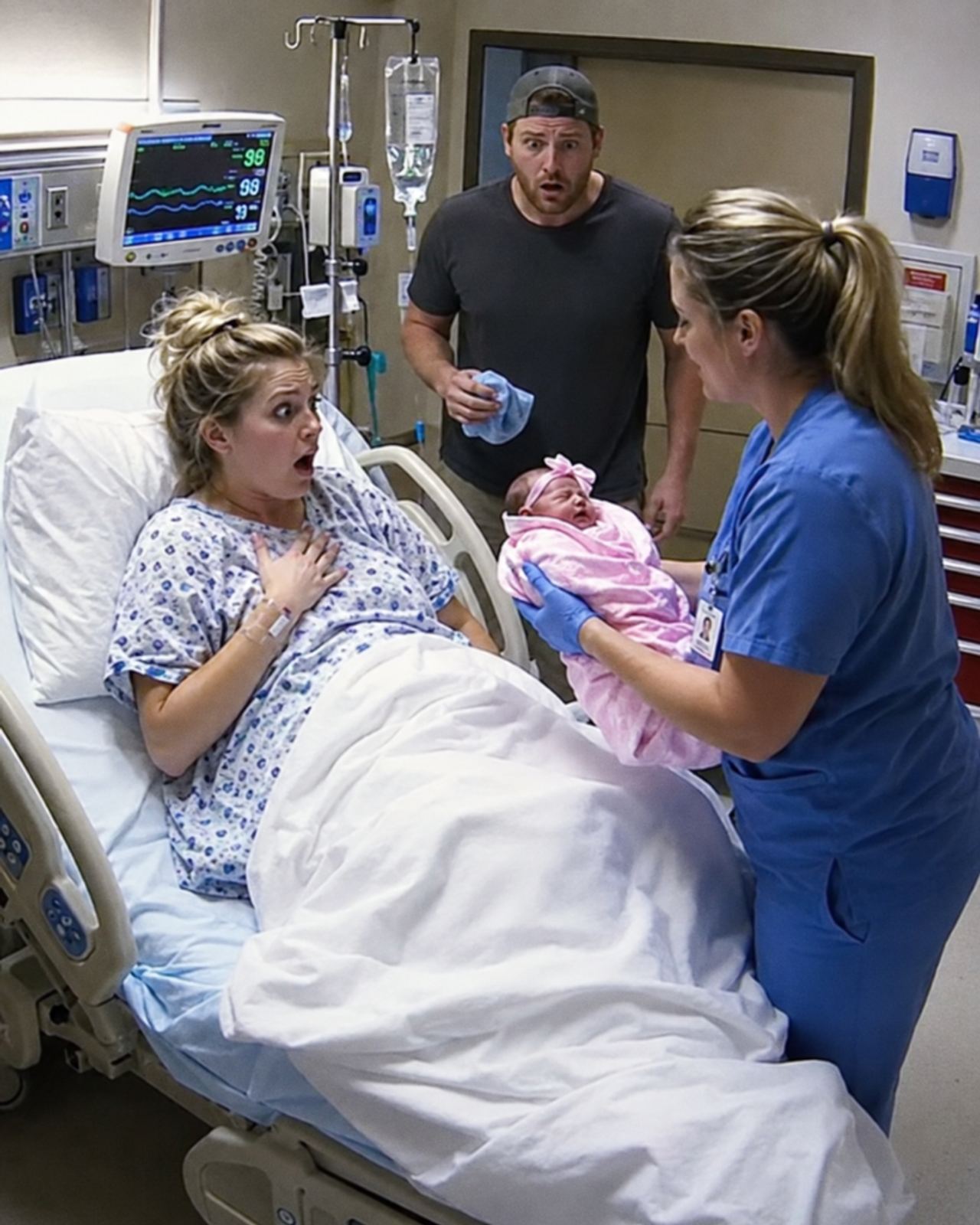
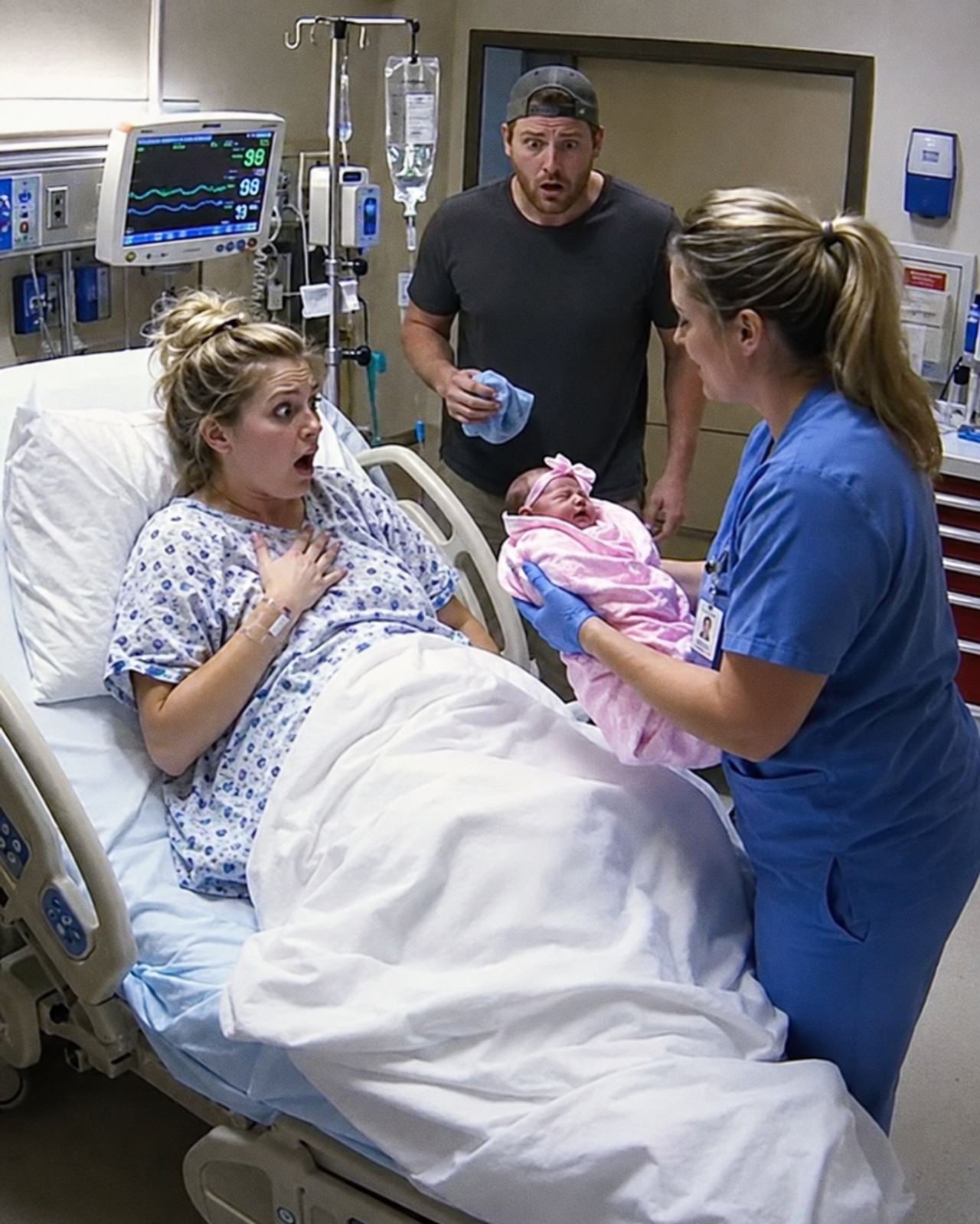
“Every test said I was carrying a boy. When the nurse handed me a baby girl, I refused to believe she was mine.”
The last thing I remembered before the emergency C-section was Dr. Celia Rowan shouting that my baby’s heart rate had fallen below sixty.
One moment, Nolan was beside me, gripping my hand and promising we would meet our son soon. The next, nurses were running down the hall with my bed, Nolan disappearing behind a pair of closing doors.
“Why can’t he come with me?” I asked.
“There isn’t time,” someone answered.
A mask came down over my face.
I thought of the blue room waiting at home. The wooden letters Nolan had mounted above the crib. The name we had whispered to my stomach every night for seven months.
Callum.
Then everything went black.
When I opened my eyes, my abdomen felt as though it had been split in half. The room was dim, and a monitor beeped somewhere behind my head.
A nurse stood beside me holding a tightly wrapped newborn.
“Your baby is doing beautifully,” she said.
“Is he breathing?”
“She’s breathing perfectly.”
I stared at her.
“What did you say?”
The nurse smiled as though I had misunderstood something harmless.
“You have a healthy baby girl.”
She lowered the bundle toward me.
The baby had dark wet hair, swollen eyelids and one tiny fist pressed beneath her chin. She opened her mouth and released a furious cry.
I did not reach for her.
“That isn’t my baby.”
The nurse stopped.
“Mrs. Keene—”
“I’m having a boy.”
“You delivered a girl.”
“No.” I tried to push myself upright, but pain tore through my stomach. “My blood test found a Y chromosome. The report said male.”
The baby cried harder.
The nurse glanced toward the door. “Sometimes prenatal results can be wrong.”
“Not every result.”
Technically, only the blood test had confirmed the sex. But from that day forward, every appointment summary had called my baby “he.” Two ultrasound technicians had congratulated me on my son. Dr. Rowan had asked whether Callum was moving enough.
For months, nobody had expressed a single doubt.
“Check her bracelet,” I demanded.
The nurse looked at the band around the baby’s ankle.
“Baby Girl Keene. Born at 3:42 p.m.”
“My name is on any baby you think came out of me. That doesn’t prove she’s mine.”
The door opened, and Nolan rushed inside wearing the clothes he had slept in the night before. His face was gray.
“You’re awake.”
“Where is Callum?”
He looked at the newborn.
The nurse moved toward him. “Mr. Keene, your daughter is healthy—”
“My what?”
His eyes dropped to the strip of pink lettering on the baby’s band. He pulled out his phone and opened the NIPT report we had saved nearly seven months earlier.
Y chromosome detected.
Fetal sex consistent with male.
“You gave us the wrong baby,” he said.
The nurse’s expression changed.
“I was in the operating room. This baby was delivered from your wife.”
“Willa was unconscious. I wasn’t allowed inside. Neither of us saw what happened.”
“Nolan,” I whispered, “where is our son?”
He moved between the nurse and the door.
“Nobody takes that baby anywhere until security checks every infant on this floor.”
The nurse pressed a button on the wall.
Within minutes, the recovery room filled with people. The charge nurse scanned my wristband, Nolan’s band and the baby’s ankle tag. All three numbers matched. A security officer contacted the maternity unit and temporarily halted newborn transfers while staff checked the delivery log.
Dr. Rowan arrived still wearing her surgical cap.
“Willa, you lost a significant amount of blood,” she said. “You and the baby are both stable, but you need to remain calm.”
“Did you deliver my child?”
“Yes.”
“Did you see him?”
Dr. Rowan hesitated.
“I delivered one infant. A girl.”
Nolan raised the NIPT report.
“Then explain this.”
“I can’t explain it yet.”
The baby’s cries weakened into small, exhausted sounds. The nurse placed her in the bassinet because I still would not hold her.
I hated myself when she turned toward my voice.
A security officer stepped back into the room carrying a printed page.
“We’ve reviewed the operating-room log,” he said. “The infant was tagged before leaving the surgical table. She went directly to the warmer and then came here. She never entered the nursery.”
“What about the cameras?” Nolan demanded.
“They show the same thing.”
He looked at me, and for the first time, I saw fear replace his anger.
The officer continued.
“There were no other deliveries in that operating suite for forty-two minutes before or after Mrs. Keene’s procedure.”
I stared at the baby whose bracelet carried my name.
“Then where is my son?”
No one answered.
Dr. Rowan slowly closed the door.
“There was no boy in that operating room, Willa,” she said. “Only one child was removed from your body.”
Her eyes moved toward the crying baby.
“And it was her.”
Chapter Two
The Son on Every Page
Dr. Rowan’s words did not make the baby mine.
They only made my son missing.
Nolan paced between the bassinet and the door while the hospital administrator reviewed the security report for the third time. The operating-room camera showed the same swaddled infant being carried from the surgical table to the warmer. Her ankle band had been attached before she left the room.
No cuts. No opened clasp. No unexplained gap in the footage.
According to the hospital, there had been no opportunity to exchange her.
“Then your test was wrong,” Nolan said.
“The NIPT was performed by an outside laboratory,” Dr. Rowan replied.
“You ordered it.”
“I ordered a screening test. It is highly accurate, but it is not diagnostic.”
“You didn’t call it a screening test when you congratulated us on having a son.”
Dr. Rowan did not answer.
Nolan opened my prenatal records on his phone and placed them on the table.
“There,” he said. “Eleven-week blood test. Male fetus. Twenty-week appointment. Male fetus. Twenty-eight-week growth scan. Male fetus.”
Dr. Rowan examined the notes.
“The later records repeated the sex reported by the NIPT. They did not independently confirm it.”
“What about the ultrasounds?” I asked.
“The anatomy scan says fetal sex was not visualized.”
I remembered the technician moving the probe across my stomach while Callum kept his legs tightly crossed.
“Stubborn little boy,” she had joked.
At twenty-eight weeks, his face had been turned toward my spine. The technician had measured his head, heart and legs, but no one had checked between them.
We had not asked because we thought we already knew.
For seven months, every doctor had called my baby “he.” Every appointment summary had done the same. My son existed on every page, yet Dr. Rowan was now telling me none of those pages proved he existed at all.
A nurse moved the bassinet closer to my bed.
“You should try feeding her.”
“I’m not ready.”
The baby stirred at the sound of my voice. Her face tightened, and she released a thin cry.
My body reacted before my mind did. Milk leaked beneath my gown, and an ache tightened across my chest.
I turned my face toward the window.
The nurse quietly lifted the baby.
“She needs to eat, Mrs. Keene.”
“Then give her formula.”
“Willa,” Nolan said softly.
I looked at him. He was still holding his phone, the screen showing the photograph from our gender-reveal party. Blue powder had covered his shirt. His mother stood beside him with both hands raised in celebration.
Behind them was a banner bearing the name Callum.
“I can’t feed someone else’s child,” I whispered.
Before Nolan could respond, the baby cried again.
I had heard that cry from inside my body.
Not the sound itself, but its rhythm. Three sharp cries, a pause, then one longer protest. It matched the pattern of the kicks that had awakened me every morning at four.
I began humming without meaning to.
It was the song I had sung in the nursery while folding Callum’s clothes.
The baby stopped crying.
The room went silent.
Her head turned toward me inside the nurse’s arms.
Nolan stared at her.
“That doesn’t prove anything,” he said, but his voice had changed.
The door opened before I could answer.
Lenora Keene entered carrying a blue overnight bag and the knitted blanket she had spent four months making for her grandson.
She looked first at me, then Nolan, then the baby.
“Where is Callum?”
Nolan explained what had happened. Lenora listened without interrupting, her face becoming harder with every sentence.
When the nurse tried to hand her the baby, Lenora stepped back.
“No.”
“Mom,” Nolan said.
“That is not my grandson.”
“She may be your granddaughter.”
“Do not say that until we have proof.”
The baby began crying again. Lenora placed the blue bag on a chair but kept the knitted blanket clutched against her chest.
“We need an attorney,” she said. “And an independent DNA test. Not one controlled by this hospital.”
Dr. Rowan had already offered to arrange genetic testing, but the official laboratory would take several days. Lenora said that was enough time for records to disappear and samples to be replaced.
Nolan told her she sounded paranoid.
Hours earlier, he had accused the hospital of the same things.
That night, exhaustion finally pulled me under. Nolan fell asleep in the chair beside my bed, his toothbrush and overnight things on the bathroom counter.
The baby slept in the bassinet between us.
At 2:17 a.m., Lenora returned.
She told the night nurse she had forgotten her purse. Then she closed the door, removed a sealed cotton swab from her handbag and leaned over the bassinet.
She rubbed the swab inside the baby’s cheek while I slept three feet away.
From the bathroom, she took Nolan’s toothbrush and sealed it inside another plastic bag.
She did not collect anything from me.
By sunrise, both samples were on their way to a private laboratory.
Lenora believed the results would prove the hospital had given us a stranger’s child.
Instead, they would raise a question far worse than anything I had imagined.
Chapter Three
My Husband’s Daughter
The private DNA report arrived on the morning I was supposed to leave the hospital.
Lenora entered carrying a white envelope. She locked the door, placed it in Nolan’s hands and said, “The hospital cannot explain this away.”
He opened it while I held the baby against my chest.
I had agreed to feed her only because the nurse said she had lost too much weight. But once her cheek rested against my skin, I could not return her to the bassinet.
I still had not called her my daughter.
In my mind, however, I had begun calling her Elodie.
Nolan read the first page twice.
“What does it say?” I asked.
He handed the report to Lenora.
Her face had lost all color.
“Nolan is the father,” she said.
The room became completely still.
“What?”
“The probability of paternity is 99.99 percent.”
I looked down at the sleeping baby.
“You tested her without my permission?”
“I was protecting our family.”
“You put something in her mouth while I was asleep.”
“And now we know the hospital did not give you a random child.”
“That is not what we know.”
Nolan moved toward me. “Willa—”
“Stay away.”
The baby startled against my chest.
Nolan stopped.
I read the report. The laboratory had compared DNA recovered from his toothbrush with the sample taken from the baby. There was no maternity sample. Nothing on those pages connected her to me.
Only to my husband.
“If she isn’t mine,” I said, “then whose daughter is she?”
Nolan stared at me.
“No.”
“Did you have a child with someone else?”
“Of course not.”
“Your DNA says she belongs to you.”
“She came out of your body.”
“I was unconscious. You were outside the operating room. Neither of us saw that happen.”
Lenora stepped between us.
“This could prove there were two babies involved. Perhaps another woman delivered Nolan’s child, and the hospital—”
“Listen to yourself,” Nolan snapped.
But her theory had already entered my mind.
What if the mistake had not been random? What if someone knew Nolan was the father? What if the baby placed beside me had always been intended for him?
I remembered the nights he had come home late. The phone he kept face down during dinner. The week-long conference in Denver when I was fourteen weeks pregnant.
Ordinary pieces of our marriage rearranged themselves into evidence.
“Who is her mother?” I asked.
“You are.”
“Then prove it.”
Dr. Rowan entered twenty minutes later with the hospital administrator. When she saw the private report, anger tightened her face.
“This sample was collected without consent or a verified chain of custody. We cannot make medical decisions based on it.”
“Because it proves your hospital switched the baby?” Lenora asked.
“No. Because we cannot verify where either sample came from.”
The hospital arranged a legal parentage test that afternoon. A technician photographed all three of us, checked our identification and collected separate cheek swabs while a nurse witnessed the procedure.
When the swab touched the inside of the baby’s mouth, she began to cry.
I reached through the bassinet and offered my finger.
Her tiny hand closed around it.
The grip was surprisingly strong.
“I’m here,” I whispered.
She stopped crying.
Nolan watched from across the room.
That night, he slept on the couch without touching me. Lenora went home, but not before warning him that I might take the baby and disappear before the results arrived.
I wanted to hate her for saying it.
Instead, I wondered whether I should.
Two days later, Dr. Rowan asked us to meet her in a consultation room. A woman I had never seen before sat beside her.
“This is Dr. Tamsin Reed,” Dr. Rowan explained. “She specializes in medical genetics.”
Dr. Reed placed the new report in front of us.
“The private paternity result was correct,” she said. “Nolan is the baby’s biological father.”
Lenora leaned forward triumphantly.
Then Dr. Reed turned the page.
“The maternity analysis also confirms that Willa is the biological mother.”
I read the two numbers.
Probability of paternity: greater than 99.99 percent.
Probability of maternity: greater than 99.99 percent.
My husband was her father.
I was her mother.
No one had switched her.
No other woman had given birth to her.
Yet the blood test taken from my body had detected a son.
Dr. Reed folded her hands.
“The baby belongs to both of you,” she said. “Now we need to determine why your pregnancy contained male DNA.”
Chapter Four
Two Parents, One Impossible Child
The DNA results should have ended the investigation.
Instead, they destroyed the only explanations we understood.
The baby had not been switched. Nolan had not fathered another woman’s child. The hospital had not accidentally attached our names to a stranger.
She was ours.
But so was the Y chromosome detected eleven weeks into my pregnancy.
Dr. Reed ordered a chromosomal analysis of the baby. While we waited, the hospital contacted the company that had performed my NIPT.
The laboratory confirmed that the identification numbers matched my medical record. They also examined the maternal portion of the sample and found genetic markers consistent with me.
“It was your blood,” Dr. Reed explained. “There is no evidence of a labeling error.”
“Then she has a Y chromosome,” Nolan said.
“No.”
Dr. Reed placed the baby’s new test results beside the NIPT report.
“Her chromosomes are 46,XX. Genetically, she is female. We found no evidence of Y-chromosome material in her blood.”
Lenora stared at the papers.
“DNA does not simply appear.”
“Correct,” Dr. Reed said. “Which means we are missing part of the pregnancy history.”
She began asking questions about fertility treatment, prior pregnancies, transplants and every medication I had taken.
Then she asked about bleeding.
I remembered waking at six weeks pregnant with blood on my pajamas.
Nolan had been traveling, so I drove myself to a small emergency department near my office. I sat alone for four hours, convinced I was losing the baby we had waited five years to conceive.
“They performed an ultrasound,” I said. “The doctor told me there was one heartbeat.”
“Did he mention anything else?”
“He said there was a shadow beside the pregnancy. He thought it might be a small bleed.”
“Do you have the report?”
“It should be in my chart.”
It was not.
The hospital searched the regional records system using my married name and found nothing. Then an older clerk asked what name had appeared on my insurance card at the time.
I had changed my legal name after marrying Nolan, but my employer’s insurance had continued listing me as Willa Ellis for nearly a year.
The clerk searched again.
A record appeared.
The emergency scan had been performed when I was six weeks and two days pregnant. The written report described one embryo with cardiac activity.
Beneath that line was another sentence:
Second smaller gestational sac containing a yolk sac and possible fetal pole. Viability uncertain. Follow-up recommended.
My hands began shaking.
“What does that mean?”
Dr. Reed requested the original images.
While we waited, I tried to remember the emergency physician’s exact words. He had told me one baby looked strong. I had been crying so hard that I barely heard anything after the word heartbeat.
At my first appointment with Dr. Rowan two weeks later, the ultrasound showed one healthy embryo. I had mentioned the bleeding, but the outside images never reached her office. Because only one sac remained, no one searched for another.
The images arrived that evening.
Dr. Reed enlarged the first one on her screen. A dark oval sat in the center, holding the tiny shape that had become the baby sleeping beside me.
Then she moved the cursor.
Several inches away was a second, smaller oval.
Inside it was a pale circular structure.
“A yolk sac,” she said.
“Was there a baby?”
“At that stage, the embryo would have been only a few millimeters. But this was not a pocket of blood. It was a second gestational sac.”
Nolan lowered himself into a chair.
“You’re saying we had twins?”
Dr. Reed opened the ultrasound from two weeks later. Only one sac remained.
I stared from one image to the other.
In the first, there were two.
In the second, one had vanished.
Dr. Reed turned toward me.
“Willa, you did not begin this pregnancy with one child.”
Chapter Five
The Boy in My Blood
I had spent nine months believing I was carrying one son.
The truth was that I had begun with two babies—and lost one before I knew either of them.
Dr. Reed called it vanishing twin syndrome.
“The second embryo stopped developing very early,” she explained. “The gestational sac then collapsed and was gradually reabsorbed. By your eight-week ultrasound, it was no longer visible.”
“Why didn’t I miscarry?”
“You may have interpreted the loss as the bleeding that brought you to the emergency room. Because the surviving embryo continued developing normally, the pregnancy continued.”
I looked at the baby in my arms.
“Did she absorb the other baby?”
“No. People sometimes describe it that way, but your daughter did not do anything to her twin. The tissue was gradually absorbed by your body and the developing placental environment.”
Nolan pressed both hands over his face.
“What does that have to do with the NIPT?”
Dr. Reed pulled my old laboratory report closer.
“NIPT analyzes cell-free DNA in the mother’s blood. Most of what we call fetal DNA in that test actually comes from placental cells. After an embryo stops developing, cells associated with that pregnancy can continue releasing DNA for weeks.”
She pointed to two numbers buried in the technical section.
“The total fetal fraction in your sample was much higher than the fraction attributed to the Y chromosome. If the surviving fetus had been male, those values should have been more similar.”
“But the report said male,” I said.
“Because the laboratory was told this was a singleton pregnancy. The system detected Y-chromosome material and attributed it to the only fetus anyone believed existed.”
The test had not invented my son.
It had detected what remained after he was gone.
“Can you prove the other baby was a boy?” Nolan asked.
“We cannot test an embryo that was completely reabsorbed. But your surviving baby is chromosomally female. You had a documented second gestational sac, and the NIPT detected a small amount of Y-chromosome material shortly afterward. Taken together, the evidence strongly indicates that the vanished twin was male.”
“Callum,” I whispered.
We had chosen the name months after the loss, but it suddenly felt as though it belonged to someone.
Someone who had existed only briefly.
Someone whose last measurable trace had appeared in a tube of my blood.
My memories changed shape. The bleeding at six weeks was no longer only a frightening night that ended well. It was the night one of my babies had disappeared while I drove myself home believing both of us were safe.
“Did I cause it?” I asked.
“No.”
“I worked a double shift the day before. I drank coffee. I carried boxes upstairs.”
“None of those things caused this.”
“I did not even know there were two.”
“That was a failure of communication, not a failure of motherhood. Early embryonic loss is common and is often related to developmental or chromosomal problems no parent could prevent.”
I began to cry.
The baby woke and made a small sound against my chest. I held her closer.
For the first time, grief for the child I had lost did not make the child in my arms feel false.
They had both been mine.
One had left traces in my blood.
The other had stayed.
The door opened behind us.
Lenora had been standing in the hallway. I knew from her expression that she had heard enough.
She looked at the baby, but she did not ask to hold her.
Instead, she faced me.
“You knew you were bleeding,” she said.
“Mom,” Nolan warned.
“You went home instead of protecting the pregnancy.”
“The doctor discharged me.”
“You continued working. You kept drinking coffee. You never demanded another scan.”
Dr. Reed stood.
“Mrs. Keene, nothing Willa did caused the loss.”
Lenora ignored her.
Her eyes filled with tears, but there was no compassion in them.
“You lost my grandson,” she said. “Then you let everyone pretend this girl was him.”
Chapter Six
The Daughter Who Survived
For three days, I had allowed other people to decide what the baby meant.
A stranger.
A mistake.
Evidence of an affair.
A replacement for a son.
Lenora’s accusation finally ended that.
I stood too quickly, and pain pulled through my incision. Nolan reached for me, but I raised one hand.
“No.”
I looked directly at his mother.
“I did not lose your grandson.”
“You admitted there were two babies.”
“I lost my child. Nolan lost his child. You lost a grandchild you never knew existed. But he was not yours more than he was mine.”
“If you had demanded better care—”
“The doctor just told you I could not have prevented it.”
“Doctors protect each other.”
Dr. Reed opened the door.
“This conversation is harming my patient. Mrs. Keene, you need to leave.”
Lenora looked at Nolan, expecting him to defend her.
He stared at the blue blanket folded across her arm.
His mother had carried it into every room since the birth but had never once wrapped it around the living baby.
“Mom,” he said quietly, “give me the blanket.”
Her grip tightened.
“It was made for Callum.”
“Yes.”
“And she is not Callum.”
“No,” Nolan said. “She isn’t.”
The baby began crying in her bassinet. Nolan walked past his mother and lifted her carefully.
It was the first time I had seen him hold her without looking frightened.
“She does not have to replace him,” he said. “She only has to be herself.”
Lenora’s face hardened.
“You wanted a son as much as I did.”
“I wanted the child we spent months imagining. But she was never the problem.”
He looked at me.
“We were.”
The admission hurt because it was true.
I had refused to touch my daughter. Nolan had treated her like evidence from a crime scene. We had mourned Callum before we understood that the baby beside us had heard every song, felt every hand against my stomach and survived every terrifying second of the delivery.
Lenora moved toward the door.
“Your father wanted the family name continued.”
“A daughter can carry our name.”
“You know that is not what he meant.”
“Then he was wrong too.”
Lenora stared at her son as though he had betrayed generations of people.
Nolan handed the baby to me.
“If you cannot look at our daughter without blaming her mother or mourning the boy you expected, you cannot be around her.”
“You would keep my grandchild from me?”
“You have not called her your grandchild once.”
Lenora left without the blue blanket.
That evenin…
Read more stories
- The Medic Recognized My Brother by Another Name
- Bee Gees’ ‘How Deep Is Your Love’ Breaks Pop Barriers in 1977 with Unmatched Soul and Elegance – Page 2 of 2 – StoryPulse
- PART 2: At 2:17 in the morning, a hospital nurse told me the one woman I had spent six months avoiding was fighting for her life—and repeating my name between breaths M1
- He Threw His Pregnant Wife Away—Then Her Lawyer Opened the Folder