
Stories
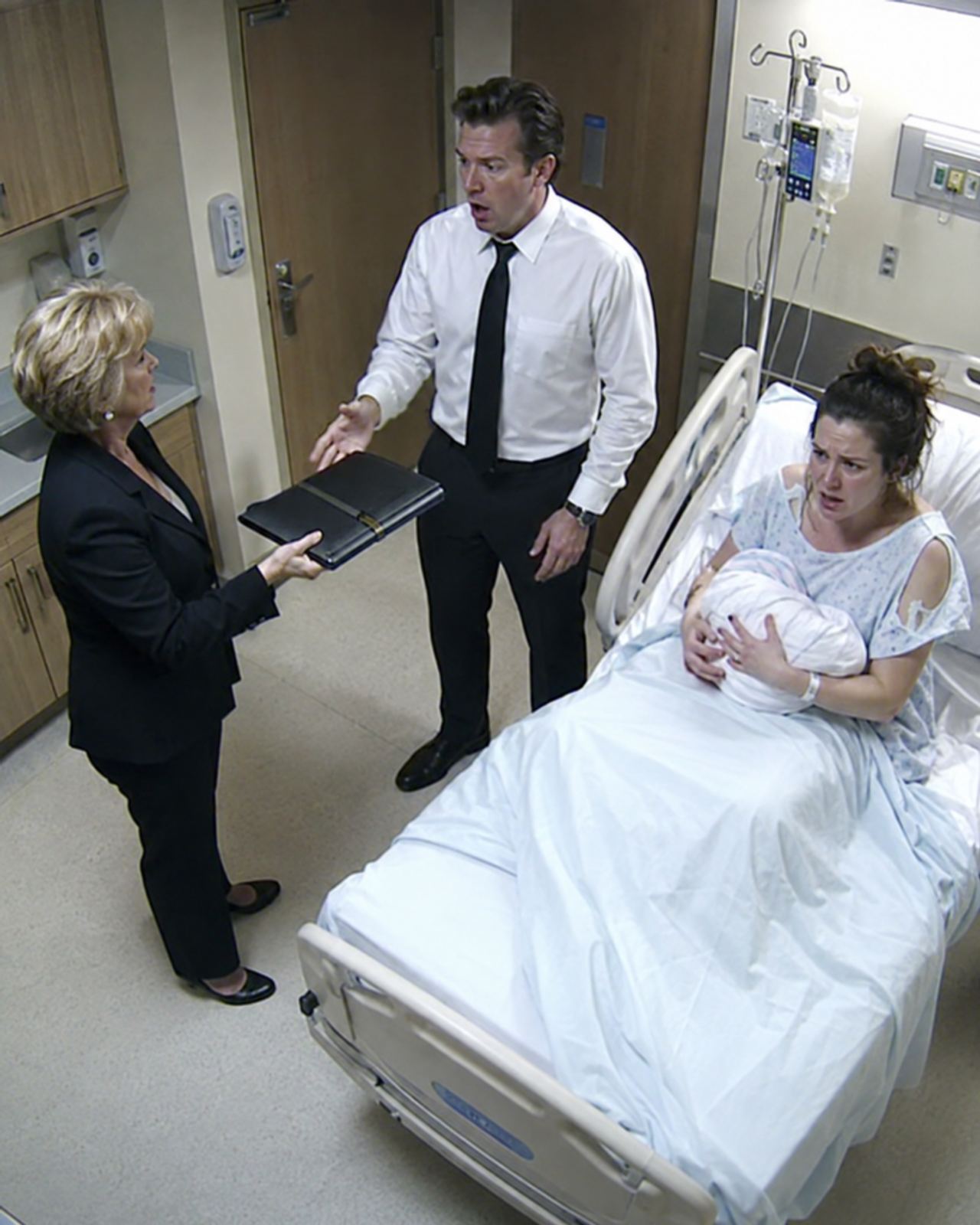
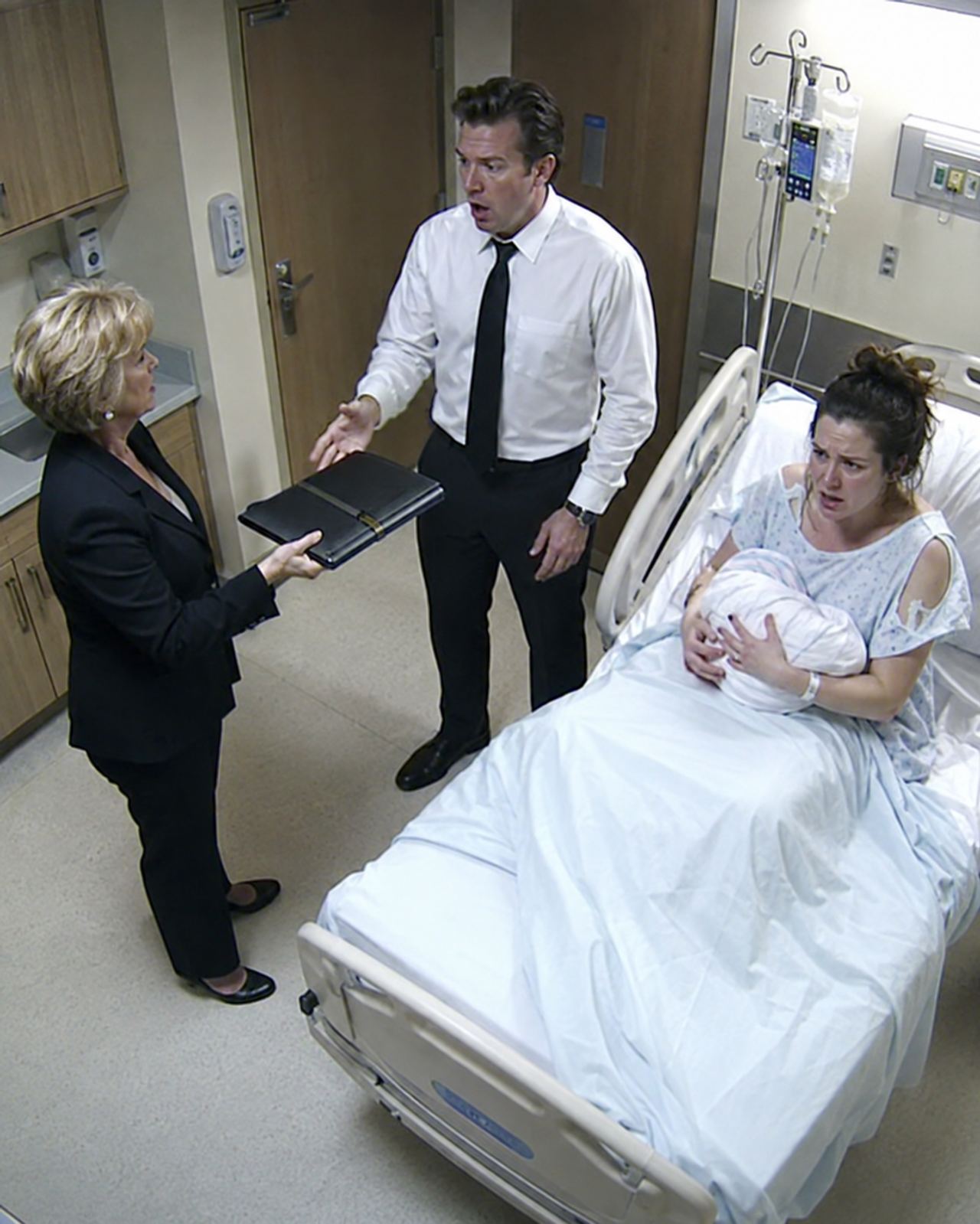
He Threw His Pregnant Wife Away—Then Her Lawyer Opened the Folder
Caleb Whitaker’s attempt to discard his pregnant wife unravels when her lawyer reveals that Emily is the controlling force behind Rowan Capital and has already uncovered his fraud. The confrontation leads to arrests, criminal convictions, and Emily turning the site of her attack into a symbol of survival.

Caleb Whitaker stared at the name on the first page of the black folder until his lips parted.
Emily Rowan Vale.
For several seconds, no one in the hospital room moved.
The monitor beside Emily’s bed continued its steady electronic rhythm.
Her newborn son slept beneath a pale blue blanket.
Rain tapped against the windows while Caleb’s attorney looked from the document to Emily as though seeing her for the first time.
Vanessa Crane was the first to speak.
“That proves nothing,” she said.
Emily’s attorney, Miriam Cole, turned the page.
The second document bore the embossed seal of Rowan Capital, one of the largest privately held real estate lenders in the Southeast.
Beneath the seal was a resolution signed six months earlier, transferring controlling authority from Margaret Vale to her only daughter.
Emily.
Caleb’s face tightened.
“Rowan Capital is owned by a board.”
“It is governed by a board,” Miriam corrected.
“It is owned by the Vale family.
Emily controls fifty-eight percent of the voting interest.”
Caleb gave a short, disbelieving laugh, but there was no amusement in it now.
“She would have told me.”
Emily looked at him from the bed.
“You never asked who I was.
You asked what I could do for you.”
That silenced him.
Seven years earlier, Emily had left the Vale name behind after watching wealth distort every relationship around her.
Her father had died when she was twenty-four.
Her mother, Margaret, had become increasingly protective, surrounding Emily with advisers, security teams, and people eager to impress the family.
Emily wanted one part of her life that had not been arranged by money.
She moved to Charlotte, used Rowan as a middle name, and accepted a modest position analyzing properties for one of the family’s private offices.
She met Caleb at a community housing fundraiser.
He was ambitious, charming, and still struggling to complete his first major development.
At the time, he drove a ten-year-old sedan and spoke passionately about building affordable homes.
Emily fell in love with the man he appeared to be.
She did not tell him her full history.
She told herself she was protecting something pure.
When Caleb proposed, he said he loved that she was ordinary.
For a while, she believed him.
Then Rowan Capital approved a loan to one of Caleb’s companies.
Emily had not requested special treatment; the project was promising, and the underwriting committee supported it.
Caleb never discovered that the final approval carried her authorization.
The project succeeded.
A second loan followed, then a third.
As his skyline rose, Caleb changed.
He began measuring people by usefulness.
He stopped discussing affordable housing and started courting luxury investors.
He hired Vanessa as his communications director, then gave her an office beside his.
Emily noticed late dinners, deleted messages, and the way Vanessa wore Caleb’s confidence like borrowed jewelry.
When Emily became pregnant, Caleb’s behavior hardened.
He demanded a postnuptial agreement.
He complained that a baby would complicate his public image.
He started sleeping in the guest suite and traveling with Vanessa.
Emily did not confront him immediately.
She watched.
Her work had taught her that arrogance left records.
Three months before the birth, Emily discovered that Caleb had pledged the same parcel of land as collateral to two different lenders.
She found forged construction invoices,
money routed through a consulting company controlled by Vanessa’s brother, and a custodial account opened using their unborn son’s identity.
The account contained nearly nine hundred thousand dollars diverted from a Rowan-funded project.
Emily copied everything and sent it to Miriam.
They planned to confront Caleb after the baby was born.
Emily wanted the evidence secured before he learned she had access to Rowan Capital’s internal files.
Caleb moved first.
That afternoon, he had insisted on driving Emily to a private prenatal appointment.
Vanessa was already sitting in the rear seat when Emily entered the Mercedes.
Caleb said they needed to discuss the future calmly.
Instead, he locked the doors and drove toward Interstate 85.
Vanessa placed a stack of papers on Emily’s lap.
The documents transferred temporary custody of the baby to Caleb and released Emily’s claim to several marital assets.
“Sign them,” Caleb said.
Emily read the first page and set the papers aside.
“No.”
Vanessa grabbed her phone.
Caleb’s hands tightened on the steering wheel.
“You have no idea what happens to women who make trouble for men like me.”
Emily watched the exit signs pass.
“Men like you usually leave excellent paper trails.”
That sentence changed the air inside the car.
Caleb glanced at Vanessa in the mirror.
Vanessa asked what Emily had found.
Emily refused to answer.
At Exit 42, Vanessa unlatched Emily’s seat belt and opened the rear door.
Caleb slowed, but he did not stop.
“Last chance,” he said.
Emily gripped the door frame.
“When this is over, your name will not be on a single building.”
Vanessa shoved her.
Now, in the hospital room, the evidence of that moment waited on Luis Morales’s dashcam card.
A state investigator connected the card to the television.
The image appeared grainy but clear enough: the Mercedes drifting toward the shoulder, its rear door opening, Emily falling, and the vehicle slowing afterward.
The microphone captured Caleb’s laughter.
Vanessa stared at the screen.
“He told me she jumped,” she said quickly.
Caleb spun toward her.
“You pushed her.”
“Because you told me to!”
The room went still again.
One of the investigators, Special Agent Dana Holt, stepped forward.
“For clarity,” she said, “are either of you claiming that statement was misunderstood?”
Neither answered.
Caleb’s attorney closed his briefcase.
“My representation ends here,” he said.
Caleb blocked his path.
“You cannot leave.”
“I was retained to negotiate a domestic agreement,” the attorney replied.
“I was not retained to participate in witness intimidation after an attempted homicide.”
Vanessa moved toward the door, but Agent Holt stopped her.
“You will remain until uniformed officers arrive.”
Caleb looked at Emily.
His expression shifted.
The contempt disappeared, replaced by the polished tenderness he used for cameras and investors.
“Emily, this has gone too far.
You are exhausted.
You have been through trauma.
Tell them it was an accident.
We can fix our marriage.”
Emily almost admired the speed of the transformation.
“You questioned whether your son was yours ten minutes ago.”
“I was angry.”
“You left him on a highway before he was born.”
Caleb lowered his voice.
“Think about what a scandal will do to him.”
Emily looked at the bassinet.
Her son slept with one tiny fist near his cheek.
“The scandal is not what you did to him,” she
said.
“The scandal is that people like you believe silence can be purchased.”
Miriam removed another envelope from the folder.
Inside were copies of the custodial account Caleb had created using the baby’s identity, along with transfer records linking the money to Vanessa’s brother.
Vanessa began shaking her head before Miriam finished explaining.
“I never touched that account.”
“Your brother withdrew two hundred thousand dollars,” Miriam said.
“Caleb arranged it.”
“Vanessa,” Caleb warned.
She rounded on him.
“Do not say my name like I did this alone.”
The alliance that had seemed unbreakable inside the Mercedes collapsed in less than a minute.
Vanessa told investigators about the forged invoices.
Caleb accused her of creating them.
She revealed that he had stored duplicate corporate seals in a safe at his penthouse.
He claimed she had stolen them.
She described a second phone he used to communicate with contractors and officials.
He said she was lying because she was jealous.
Agent Holt listened without interrupting.
When they finished, she asked one question.
“Where is the second phone?”
Vanessa pointed at Caleb’s coat.
An officer searched the inner pocket and found it.
Caleb closed his eyes.
The phone contained months of messages.
Some concerned money.
Others showed Caleb and Vanessa discussing how to portray Emily as unstable.
They had drafted statements suggesting postpartum psychosis before Emily had even given birth.
One message, sent three days earlier, read: Once she signs, we control the baby and the trust.
Another read: If she refuses, the highway solves it.
Caleb was arrested before dawn.
Vanessa was arrested minutes later.
Their charges initially included assault, conspiracy, financial fraud, identity theft, and reckless endangerment.
After prosecutors reviewed the dashcam video and phone messages, they added attempted murder.
Caleb’s empire began collapsing that same morning.
Rowan Capital issued default notices on four developments after auditors confirmed fraudulent financial statements.
Two banks froze related accounts.
Investors demanded emergency meetings.
Contractors stopped work when they learned project funds had been diverted.
By noon, television crews surrounded Whitaker Tower.
The gold letters bearing Caleb’s name remained above the entrance, but employees carried boxes through the lobby beneath them.
Emily saw none of it live.
She spent the day holding her son.
She named him Samuel Rowan Vale.
A doctor asked whether she wanted Whitaker included on the birth certificate.
Emily looked at the bruises along her arms, then at Samuel’s peaceful face.
“No,” she said.
Margaret Vale arrived that afternoon in a wheelchair, accompanied by a nurse and two security officers.
The stroke had weakened her left side, but not her presence.
Emily had not seen her mother in person for nearly a year.
Their relationship had been strained by Emily’s insistence on living without protection and Margaret’s certainty that Caleb was dangerous.
Margaret stopped beside the hospital bed.
For once, she did not say she had been right.
She simply touched Emily’s cheek.
“I should have come sooner,” she whispered.
Emily’s composure finally broke.
She leaned forward carefully, and her mother held her while Samuel slept between them.
“I thought I could handle him,” Emily said.
“You did,” Margaret replied.
“Surviving is handling it.
The rest is paperwork.”
Luis Morales visited later with his wife.
He stood awkwardly near the door holding a stuffed bear from the hospital gift shop.
Emily
thanked him for stopping.
Luis shrugged, embarrassed by the attention.
“Anyone would have stopped.”
“Many people drove past,” Emily said.
He looked toward Samuel.
“Then they were not the people you needed.”
Emily learned that Luis owned a small delivery company and had been struggling after a major client failed to pay him.
Weeks later, Rowan Capital’s community division helped his company secure a fair contract delivering supplies to housing projects across the state.
Emily made certain the agreement was earned, not charity.
The nurse who helped deliver Samuel received a commendation from Mercy General.
The state trooper who blocked the highway testified at trial.
Every stranger who had formed a shield with their vehicles became part of the record Caleb could not erase.
Caleb and Vanessa turned on each other before the case reached court.
Vanessa accepted a plea agreement and testified that Caleb had planned the confrontation.
She admitted pushing Emily but claimed Caleb had threatened to implicate her in the fraud unless she helped force the signatures.
The jury still held her responsible.
Caleb refused every agreement offered to him.
He insisted Emily had manipulated the evidence to seize his company.
His lawyers argued that the fall had been accidental and the messages were jokes taken out of context.
Then prosecutors played the dashcam recording.
The courtroom heard Vanessa say, “You were never built for his world.”
They heard Caleb laugh as the Mercedes pulled away.
They watched him look back at his pregnant wife on the asphalt.
No argument recovered from that sound.
He was convicted on the most serious charges, along with multiple counts tied to fraud and identity theft.
The sentence ensured that Samuel would be an adult long before Caleb could seek release.
Vanessa also received a prison sentence, reduced because of her cooperation but long enough to make clear that fear did not erase choice.
The financial consequences continued after the criminal trial.
Whitaker Tower was sold during restructuring.
Several viable developments were transferred to new management and completed under court supervision so workers and buyers would not lose everything.
Projects built on fraud were liquidated.
Emily ordered Caleb’s name removed from every property controlled by Rowan Capital.
One luxury development was converted into mixed-income housing with an emergency residence for pregnant women escaping domestic violence.
The building included a twenty-four-hour medical transport program and legal assistance offices.
Emily named it Exit 42 House.
Some advisers worried the name was too personal.
Emily kept it.
She wanted the place where Caleb had tried to end her life to become a marker of survival instead.
A year after the highway, Emily returned to the same stretch of Interstate 85 for a private ceremony honoring the responders who had helped her.
Traffic moved behind a concrete barrier.
Wildflowers grew along the shoulder where she had crawled toward her phone.
Samuel stood unsteadily beside her, gripping one of her fingers.
Margaret watched from a nearby chair.
Luis and the nurse laughed as Samuel attempted another step.
Emily looked down the road where the Mercedes had disappeared that night.
For months, she had remembered only Caleb’s laughter.
Now she heard different sounds.
Her son’s delighted squeal.
Her mother’s voice.
The quiet conversation of people who had chosen to stop.
Caleb had believed power meant deciding who
could be discarded.
Emily had learned that real power was the ability to survive without becoming cruel, to use evidence instead of vengeance, and to rebuild something useful from the place where someone had tried to destroy you.
Samuel took one uncertain step, then another.
Emily bent and lifted him into her arms.
The highway stretched ahead beneath a clear morning sky.
This time, she was not lying beside it.
She was standing.
Read more stories
- MY SISTER WALKED INTO PROBATE COURT IN A CREAM COAT AND DEMANDED THE JUDGE TRANSFER OUR GRANDFATHER’S ENTIRE INHERITANCE TO HER THAT SAME DAY—WITH MY PARENTS SITTING BEHIND HER LIKE THEY’D REHEARSED EVERY NOD. HER LAWYER SLID THE MOTION ACROSS THE TABLE, CALLED ME “UNFIT,” AND WHEN THE JUDGE LOOKED AT ME AND ASKED IF I OBJECTED, I DIDN’T ARGUE—I ONLY SAID, “WAIT… UNTIL THE LAST PERSON ARRIVES.” THEY LAUGHED… UNTIL THE COURTROOM DOORS OPENED AND A MAN IN A PLAIN BLACK SUIT DELIVERED AN ENVELOPE “FROM THE TRUSTEE” THAT MADE THE JUDGE GO PALE… THEN MY SISTER PANICKED AND BLURTED ONE WORD—“ELDER ABUSE”—AND BEFORE ANYONE COULD EXHALE, THE BAILIFF LEANED IN TO WHISPER… AND A UNIFORMED DEPUTY STEPPED INSIDE WITH PAPERWORK FOR MY FATHER THAT WASN’T FROM THIS COURT… – usnews
- My Mother-in-Law Moved Into My Cash-Paid Villa, Then My Husband Sent Me to the Shed
- Grandpa stopped eating when he found out I was paying my parents rent while my
- MARTY ROBBINS WAS SUPPOSED TO SING AT THE GRAND OLE OPRY ON DECEMBER 4, 1982. A HEART ATTACK PUT HIM IN THE HOSPITAL TWO DAYS BEFORE. HE NEVER MADE IT BACK TO THE STAGE.