
Human Stories
My Parents Left My Little Girl Alone in the Rain
After her parents leave her daughter Lily alone in the rain, Emily confronts decades of family favoritism and financial betrayal. A hidden trust, altered records, and a secret tied to Lily’s welfare reveal that the abandonment was connected to a long-buried scheme.

PART 2
My father’s name glowed on the screen while Lily’s small fingers stayed wrapped around mine.
For a moment, I did nothing.
Cars moved through the pancake house parking lot, tires hissing over damp pavement. The rain had stopped, but the morning still smelled like wet asphalt and cold air. Lily stood beside me in her yellow raincoat, holding the paper bag with her leftover pancakes as if it contained treasure.
“Is it Grandpa?” she asked.
I looked down at her worried little face.
“Yes, sweetheart.”
“Are you going to answer?”
I wanted to say no.
I wanted to put the phone away, take her home, make popcorn, build a blanket fort, and pretend for one more hour that people who shared our blood had not left her standing outside school in a storm.
But avoiding my father had always made him stronger.
So I answered.
“Hello.”
His voice came through sharp and impatient. “Emily, where are you?”
“Out with Lily.”
“You need to come by the house today.”
No apology.
No question about my daughter.
Not even a mention of the rain.
My grip tightened around the phone. “Why?”
“Your mother is upset.”
I closed my eyes briefly.
Beside me, Lily watched a puddle ripple beneath her shoes.
“About what?” I asked.
“About your attitude yesterday.”
I almost laughed. Not because anything was funny, but because sometimes absurdity arrives wearing the face of normal family conversation.
“My attitude,” I repeated.
“Yes. Miranda said David sounded cold when he called last night. Your mother barely slept.”
“Lily was left outside her school in a downpour.”
A pause.
Then my father sighed.
That sigh had ruled half my childhood.
It said I was being dramatic, difficult, ungrateful, emotional. It said the conversation would only continue if I accepted his version of reality.
“She was not abandoned,” he said. “She was at school.”
“School was closed. Everyone had left except Mrs. Patterson.”
“She had an umbrella.”
“Mrs. Patterson had an umbrella because she found Lily crying by the gate.”
Lily looked up when she heard her name. I softened my face for her, though my chest felt like stone.
My father lowered his voice. “Your mother and I had three children already in the car. Miranda was dealing with a migraine. The twins were restless. There simply wasn’t space.”
“There was space.”
“You weren’t there.”
“No,” I said. “But my daughter was.”
Another pause.
This one was colder.
“You need to be careful how you speak to us, Emily.”
Something inside me became very still.
For years, that sentence would have made me apologize. I would have explained myself more gently, offered sympathy for Mom’s stress, found some way to make peace before dinner. I had been the dependable daughter so long that even my anger used to arrive carrying a casserole.
Not today.
“I’ll come by at two,” I said.
“Good.”
“But not to apologize.”
He inhaled sharply. “Excuse me?”
“I’ll come to discuss new arrangements.”
“What arrangements?”
“The ones where I stop paying for people who cannot make room for my child.”
The silence that followed was the first honest thing he had given me all morning.
Then his voice changed.
“Emily, don’t be foolish.”
“I’ll see you at two.”
I ended the call before he could train me back into obedience.
Lily squeezed my hand.
“Is Grandpa still mad?”
I knelt in front of her, ignoring the damp pavement beneath my knee.
“Grandpa is having grown-up feelings,” I said carefully. “Those are his job to handle, not yours.”
She thought about that.
“Did I do something bad by crying?”
My heart cracked right down the center.
“No.” I held both her hands. “Crying when you’re scared is not bad. Asking for help is not bad. Being left alone was not your fault.”
She nodded, but I could tell the words would need to be repeated many times before they became belief.
Children are not wounded once.
They remember in layers.
At home, David was waiting in the kitchen with my laptop open and a mug of coffee untouched beside him. His face was calm, but I knew my husband well enough to see the anger behind his eyes.
“He called?” David asked.
“Yes. Mom is upset.”
David leaned back in his chair and gave a humorless smile. “Of course she is.”
I helped Lily out of her raincoat and set her up in the living room with coloring books and cartoons. When I returned to the kitchen, David had opened the spreadsheet again.
Rows and rows of transfers filled the screen.
My parents’ mortgage.
Miranda’s private school tuition for Ethan and Chloe.
Car insurance.
Emergency medical bills.
Utilities.
A roof repair.
A family vacation Miranda had called “essential for the kids after a hard year.”
Hard year meant her husband had quit another job because, according to Miranda, his manager didn’t respect his potential.
I stared at the total until the numbers lost shape.
Three hundred seventy-two thousand, four hundred and eighteen dollars.
Not including cash.
Not including gifts.
Not including the unpaid labor of always being available.
David rested a hand on my shoulder. “What do you want to do?”
I looked toward the living room, where Lily had started humming along with the cartoon.
“I want everything documented,” I said. “Not to punish them. To stop the pretending.”
David nodded. “Then we bring receipts.”
For the next three hours, we worked quietly. David printed bank records, payment confirmations, tuition receipts, insurance drafts, and emails where my mother thanked me privately while telling relatives that Miranda was “carrying so much.” I created a clean summary sheet, not dramatic, not emotional. Dates. Amounts. Purpose.
Facts.
Facts had a steadiness feelings did not.
At one-thirty, David changed into a navy sweater and helped me pack the folder into a leather portfolio. I wore civilian clothes, simple black slacks and a gray coat. Not my uniform.
My rank had nothing to do with whether Lily deserved kindness.
Still, I placed my military ID in my wallet, as always.
Lily looked up from her crayons. “Am I coming?”
“No, sweetheart. You’re staying with Dad.”
David smiled gently. “We’re making grilled cheese and tomato soup.”
Her eyes brightened. “With the triangle cuts?”
“Only the official way.”
I kissed Lily’s forehead.
She wrapped her arms around my neck. “Don’t let Grandma be mean to you.”
I closed my eyes.
“I won’t.”
When I arrived at my parents’ house, my sister’s SUV was already in the driveway.
Of course it was.
The house looked exactly as it had for twenty years: white shutters, trimmed hedges, a flag near the porch, and my mother’s ceramic birdbath by the walkway. From outside, it looked stable and warm. A house where birthdays were remembered, grandchildren were adored, and family meant something.
Inside, the truth had always been arranged differently.
My mother opened the door before I knocked.
Her eyes were red, but her hair was perfect. That told me everything I needed to know. She had prepared to be seen as injured.
“Emily,” she said stiffly.
“Mom.”
She stepped aside.
My father stood in the living room near the fireplace, arms crossed. Miranda sat on the couch with a throw blanket around her shoulders, though the room was warm. Her husband, Paul, occupied the recliner and avoided my eyes.
Miranda’s children were not there.
That was a mercy.
I sat in the armchair across from them and placed the leather portfolio on my lap.
No one offered coffee.
My father spoke first.
“This family has always handled issues privately.”
“Good,” I said. “Then we’ll handle this privately.”
Miranda made a soft sound. “You’re acting like we committed a crime.”
“You left a six-year-old outside school during a storm.”
“She was safe,” Miranda snapped. “Nothing happened.”
“Something did happen,” I said. “She learned that adults she trusted could drive away from her.”
My mother covered her face. “I can’t believe you would say that to me.”
“Mom, did you look at Lily when you told her there wasn’t room?”
Her hands lowered.
She looked away.
That was answer enough.
My father stepped in. “Your mother made the best decision she could under pressure.”
“No. She made the easiest decision for Miranda.”
Miranda sat upright. “Why are you dragging me into this?”
“Because your children were in the car.”
“They’re younger.”
“Ethan is nine. Chloe is seven. Lily is six.”
Miranda’s mouth closed.
Paul shifted uncomfortably.
My father pointed at the portfolio. “What is that?”
I opened it.
“The new arrangements.”
His face hardened. “You have no right to threaten us.”
“I’m not threatening anyone.”
I slid the first sheet onto the coffee table.
It was the summary page.
My mother glanced at it and went pale.
Miranda leaned forward. “What is that?”
“Money I’ve paid over the last four years.”
My father picked up the page. His jaw tightened as his eyes moved down the columns.
Miranda laughed nervously. “Why would you make a list like that?”
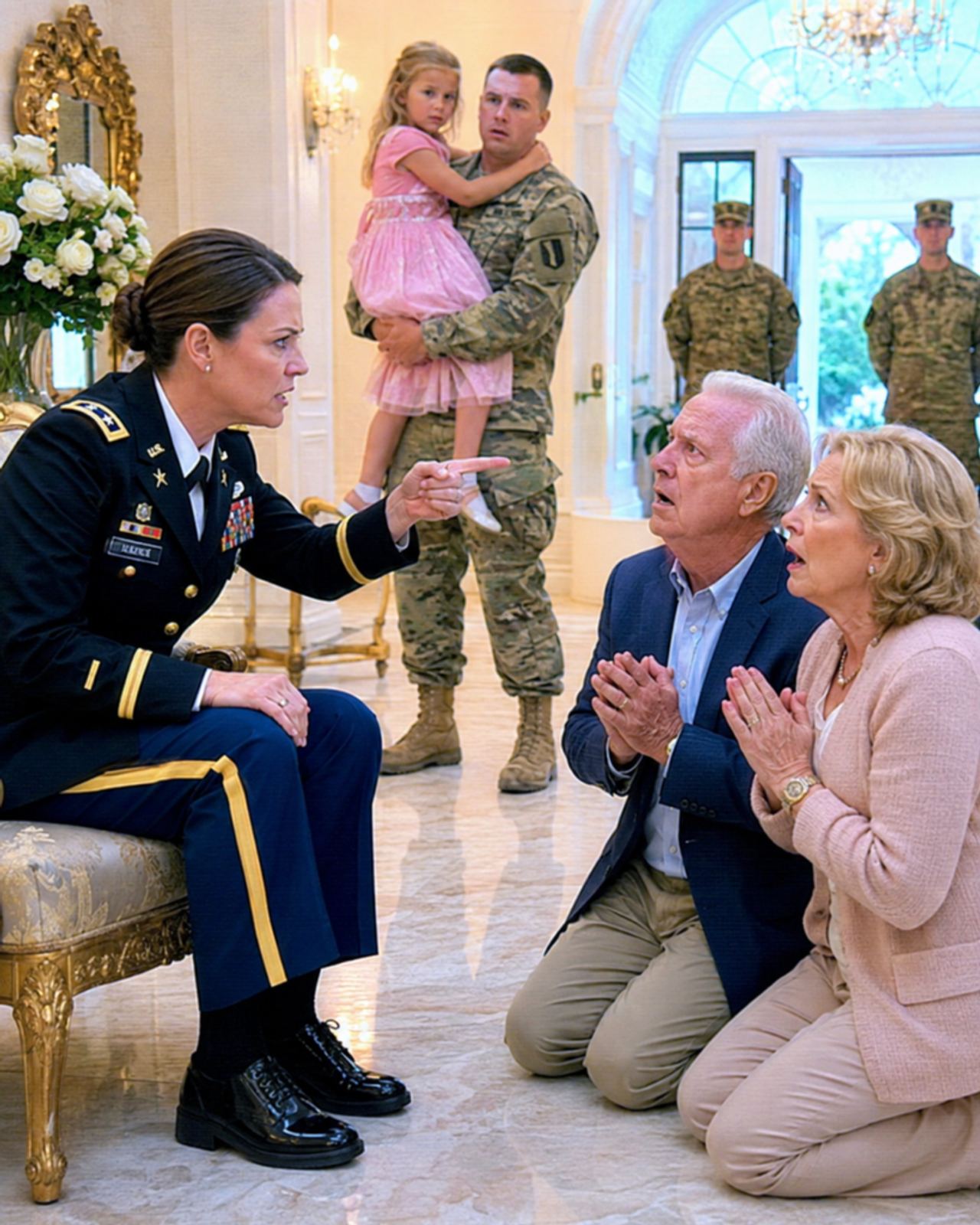
“Because yesterday made it clear I needed one.”
My mother’s voice dropped to a whisper. “Emily, this is cruel.”
“No,” I said. “Cruel would be sending a child into the rain because her cousins deserved comfort more.”
The room went silent.
I did not raise my voice.
I did not need to.
My father set the paper down. “We never asked you to keep score.”
“No. You just asked me to keep paying.”
Miranda’s eyes flashed. “That’s unfair. We’ve had emergencies.”
“You’ve had patterns.”
Paul stood. “I don’t think I should be part of this.”
“For once,” I said, turning to him, “I agree.”
He froze.
Miranda looked offended on his behalf, which was rich, considering Paul had not held steady employment in five years and still called himself an entrepreneur.
My father snapped, “Enough.”
That word used to end conversations.
Today, it barely moved the air.
“I have canceled all automatic payments effective today,” I said.
My mother gasped.
Miranda stood. “You can’t do that.”
“I already did.”
“The tuition is due next week.”
“Then you and Paul need to contact the school.”
“My kids can’t just leave midyear.”
“That’s a conversation for their parents.”
Miranda’s face twisted. “You know we can’t afford it.”
“Then choose something you can afford.”
The words came out quietly, and for a moment I heard another version of myself in them. The woman I might have become earlier if I had understood that love without boundaries becomes a resource others mine until nothing is left.
My father’s hands curled into fists at his sides, but his voice stayed controlled.
“You are punishing children.”
I looked at him.
“No. I am refusing to fund adults who abandoned mine.”
My mother began to cry then, real tears this time. Or perhaps partly real. With Mom, pain and performance had grown together for so long I no longer knew where one ended.
“How can you do this to us?” she whispered. “After everything we sacrificed for you?”
That sentence opened an old room inside me.
I saw myself at sixteen, driving Miranda to cheer practice because Mom was tired. At twenty-two, sending money home from my first military paycheck. At twenty-seven, covering the furnace replacement while Miranda posted beach photos. At thirty-three, missing a weekend with David and Lily because Dad needed help negotiating a car loan he should not have taken.
Everything we sacrificed for you.
“What exactly did you sacrifice for me?” I asked.
My father looked offended. “We raised you.”
“Yes. You did. And I’m grateful for the roof, the meals, the school supplies, the ordinary responsibilities of parenting. But you have spent my adulthood charging interest on my childhood.”
My mother made a wounded sound.
A memory flashed across her face before she hid it.
Not anger.
Fear.
It was quick, but I saw it.
My father saw me see it.
“Joyce,” he warned.
I went still.
“What was that?”
Miranda looked between them. “What?”
My mother wiped her cheeks. “Nothing.”
“No,” I said. “That was not nothing.”
My father stepped forward. “This conversation is over.”
“Not for me.”
He pointed toward the door. “Then leave.”
I stood slowly, but I did not move toward the door.
“I came here to set financial boundaries,” I said. “But something about that sentence scares you.”
My mother’s lips trembled.
Miranda threw up her hands. “Oh, for heaven’s sake, now we’re inventing mysteries?”
“No,” Paul said quietly.
Everyone turned to him.
He stood near the hallway, pale and uncertain.
Miranda frowned. “Paul?”
He swallowed. “There is something.”
My father’s face darkened. “Sit down.”
Paul did not.
Miranda stared at him. “What do you mean?”
Paul looked at me, guilt written clearly across his tired face. “A few months ago, your father asked me to scan some old documents from the garage. Insurance papers, tax records, things like that.”
My father moved toward him. “Paul.”
Paul backed up. “I saw Emily’s name.”
My heart began to beat harder.
“What documents?” I asked.
My mother sat down as if her legs had weakened.
Paul rubbed the back of his neck. “A trust. Or something like a trust. It had your name and Lily’s name.”
“Lily’s?” I whispered.
Miranda’s face went blank. “Why would there be a trust for Lily?”
My father spoke through clenched teeth. “He misunderstood.”
“No,” Paul said, surprising everyone. “I didn’t.”
For the first time since I had known him, Paul looked ashamed but determined. Maybe he had spent years floating through responsibility, but in that moment, he found enough spine to stand inside a truth.
“It was from someone named Margaret Hale,” he said. “There were payments. Annual ones. Some restricted for education and dependent care.”
My body went cold.
Margaret Hale.
My grandmother on my father’s side.
A woman my parents rarely mentioned except to say she had been difficult, controlling, and disappointed in everyone.
“She died when I was twelve,” I said.
My mother would not look at me.
Paul nodded. “The account kept paying after that. I thought you knew.”
I turned to my father. “What account?”
His face had gone rigid.
“There is no account.”
“Don’t lie to me.”
Miranda whispered, “Dad?”
My father snapped, “Everyone calm down.”
But no one was calm now.
Not even him.
My mother whispered, “Harold, please.”
That one word confirmed more than any confession.
Please.
Not because the accusation was false.
Because the truth was close.
I reached into my portfolio, pulled out my phone, and called David.
He answered immediately. “Are you okay?”
“I’m safe,” I said. “I need you to search Margaret Hale trust Emily Miller Lily Miller dependent care. Check anything in the old email archive, county records, financial references, anything.”
My father lunged for my phone.
Not violently enough to strike me, but fast enough to expose panic.
I stepped back before he reached it.
His face went red.
The room froze.
In that moment, he remembered what I did for a living.
My father had always been proud to mention my military career when it impressed neighbors, but in private he still treated me like the girl who used to carry groceries without complaint.
He forgot that I had spent years learning what panic looks like before it becomes action.
“Dad,” I said calmly, “sit down.”
He did.
Not because he wanted to.
Because everyone saw.
David’s voice came through the phone. “Emily?”
“Still here.”
“I’ll look now.”
I ended the call.
Miranda had gone very quiet.
“What is happening?” she asked.
I looked at my mother. “You tell us.”
She shook her head, tears spilling again. “It was your father’s decision.”
My father’s eyes flashed. “Joyce.”
“No,” she whispered. “No more.”
The room shifted.
My mother’s tears were no longer a shield. They were surrender.
“Margaret left money for you,” she said, barely audible. “For education. Housing. Later for your child, if you had one.”
I stared at her.
“How much?”
“I don’t know.”
“Yes, you do.”
She closed her eyes.
My father answered.
“Enough.”
The single word told me it was worse than I imagined.
Miranda sank back onto the couch. “Did you use it?”
My father glared at her. “We used it for the family.”
“For the family,” I repeated.
He seized the phrase gratefully. “Yes. Your mother had medical bills. The house needed repairs. Miranda had expenses. You were in the Army. You had benefits. You didn’t need it.”
I felt something deep inside me go quiet.
Not numb.
Clear.
“You decided that.”
“You were always fine.”
“No,” I said. “I became fine because no one came when I wasn’t.”
My mother sobbed softly.
I thought of the years I lived in cramped base housing, carefully stretching my paycheck. The time David and I delayed having a second child because finances were tight. The time Lily needed specialized speech therapy and I picked up extra administrative duty to cover what insurance did not.
All while money meant for her sat somewhere, redirected by people who claimed family love as justification.
My phone buzzed.
David.
I put him on speaker.
“I found references,” he said. “Margaret Hale established the Hale Family Educational and Care Trust. Beneficiaries include Emily Miller, and any biological or legally adopted children of Emily Miller. There are annual disbursements beginning when you turned eighteen.”
My knees weakened.
“How much?” I asked.
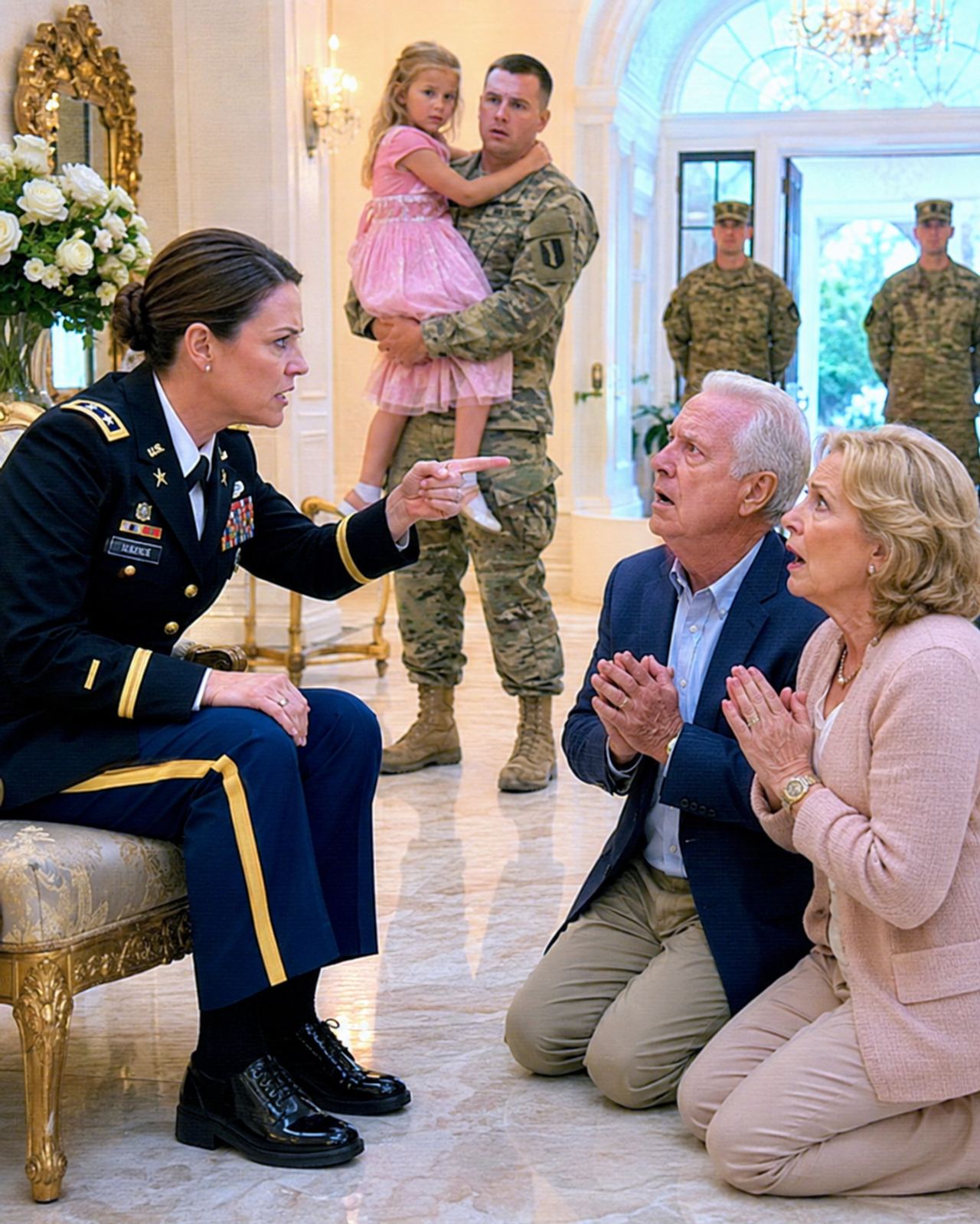
A pause.
“Emily.”
“How much?”
“Original principal was six hundred thousand dollars. With growth, it should have been far more. I can’t see current balance.”
Miranda covered her mouth.
Paul whispered, “Oh my God.”
My father stood. “Hang up the phone.”
I did not.
David’s voice hardened. “Emily, come home.”
“I will.”
My father turned to my mother. “Look what you’ve done.”
That, finally, broke something in me.
“No,” I said. “Look what you did.”
He faced me, breathing hard.
“You don’t understand what it was like. Margaret hated me. She thought I wasn’t good enough. She wanted to control this family from the grave.”
“So you stole from her granddaughter?”
“I redistributed what she hoarded.”
“To Miranda?”
Miranda flinched.
My father looked away.
There it was again.
The hierarchy of worth laid bare.
Miranda whispered, “Dad, did my house come from Emily’s trust?”
He did not answer.
She looked ill.
For the first time in my life, my sister seemed to understand that being chosen had made her comfortable, but it had also made her dependent on a lie.
“Dad,” she said. “Answer me.”
“Yes,” he snapped. “And your children’s tuition. And medical bills. And this roof. And half the things none of you appreciated.”
My mother cried harder.
I looked around the room I had helped maintain. The fireplace repaired with money I thought came from my savings. The sofa Miranda lounged on during holidays. The framed school portraits of grandchildren, Lily’s always placed near the edge.
All of it had a cost.
And somehow, Lily had paid too.
My phone buzzed again.
This time, an unknown number.
I almost ignored it.
Then a text appeared.
Colonel Miller, my name is Anne Whitaker. I represent the Hale Family Educational and Care Trust. Please contact me immediately. We have reason to believe your daughter was placed at risk because someone attempted to prevent discovery of the trust audit.
I read the message twice.
My breath stopped.
David had gone silent on speaker.
“What is it?” Miranda asked.
I looked at my parents.
My father’s face changed.
He knew that name.
“You know Anne Whitaker,” I said.
He said nothing.
My mother whispered, “Harold, what did you do?”
The question was so full of fear that every person in the room felt it.
My father’s jaw worked once, then settled.
“I protected this family.”
“No,” I said slowly. “You protected yourself.”
Another message arrived from Anne Whitaker.
Your grandmother’s trust required a welfare confirmation for any minor beneficiary. Lily was scheduled for a private meeting with our field auditor yesterday after school only to verify her welfare and confirm that dependent care funds were being used appropriately. Your father was notified because, according to old paperwork, he was still listed as an auxiliary family contact.
He knew.
Yes. And minutes before dismissal, someone using his credentials removed both himself and your mother as pickup contacts, then failed to update the school.
The words blurred.
Yesterday.
After school.
The rain.
Lily waiting.
My parents had not simply failed to make room.
They had left her there because someone was coming to ask questions.
I looked at my mother.
She shook her head violently. “I didn’t know that part.”
Miranda stood, trembling. “Dad?”
My father remained silent, but his silence had become confession.
I picked up my portfolio.
“I’m leaving.”
He stepped toward me. “Emily, wait.”
“No.”
“You can’t trust lawyers. They’ll tear this family apart.”
I looked at him, and for the first time, I saw not an authority figure, not the father whose approval I had chased, but a frightened man standing in the wreckage of decisions he had called love.
“You did that before any lawyer arrived.”
I walked to the door.
My mother followed a few steps behind. “Emily.”
I stopped.
She held her hands together, shaking.
“I am sorry about Lily.”
For years, I had wanted those words from her for so many things. For missed birthdays. For favoritism. For the invisible work expected of me. For every time she asked me to understand why Miranda needed more.
Now they arrived too small for the wound they were meant to cover.
“I hope someday you tell her that,” I said.
Then I left.
Outside, the sky had darkened again.
Rain gathered in the clouds, but I reached my car before it fell.
As I pulled away, Miranda ran onto the porch barefoot.
“Emily!”
I lowered the window.
Her face was pale, stripped of its usual certainty.
“I didn’t know,” she said. “About the trust. About Lily yesterday. I swear.”
“I believe you didn’t know all of it.”
Tears filled her eyes.
That was not forgiveness.
But it was truth.
She nodded as if she understood the difference.
At home, Lily ran into my arms before I had even set down my bag.
“Mom! Dad burned the grilled cheese.”
David appeared behind her. “One piece. Slightly.”
“It was black,” Lily announced.
I laughed.
The sound came out broken, but real.
I held her tight enough that she squirmed.
“Mom, too much hug.”
“Sorry, baby.”
But I wasn’t sorry.
Not really.
David sent Lily to wash her hands for dinner, then pulled me into the dining room.
“What happened?”
I handed him my phone.
He read Anne Whitaker’s messages, his face becoming still in the way mine did during emergencies.
“This is bigger than money,” he said.
“Yes.”
“Do you want to call her now?”
I looked toward the hallway where Lily was singing to herself at the bathroom sink.
“Yes.”
Anne Whitaker answered on the first ring.
Her voice was measured and professional, but there was warmth beneath it.
“Colonel Miller?”
“Yes. This is Emily.”
“I’m relieved you called.”
“What is happening?”
A pause.
“The Hale trust has been under internal review for six months. Irregular disbursements, altered guardian confirmations, and unauthorized contact changes were flagged. We attempted to reach you directly several times, but our letters were returned.”
“My parents?”
“That appears likely.”
I closed my eyes.
Anne continued. “Yesterday, our auditor was scheduled to meet your daughter at school only to verify her welfare and confirm that dependent care funds were being used appropriately. Your father was notified because, according to old paperwork, he was still listed as an auxiliary family contact.”
“He knew.”
“Yes. And minutes before dismissal, someone using his credentials removed both himself and your mother as pickup contacts, then failed to update the school.”
David’s hand found mine.
Anne’s voice softened. “Colonel, that may be why Lily was left waiting. The school believed no authorized family pickup was active, and your parents appear to have driven away before the confusion was resolved.”
A colder realization moved through me.
“He didn’t just abandon her,” I whispered. “He tried to erase the connection before the auditor saw him.”
“That is one possibility.”
“What happens now?”
“We secure the trust, notify the court, and provide documentation to your counsel. But there is another matter.”
My heart sank.
“What matter?”
“Your grandmother included a sealed personal letter to be released if the trust was ever compromised.”
“Addressed to me?”
No,” Anne said.
I looked at David.
“To whom?”
“To Lily.”
I could not speak for a moment.
Anne continued gently. “The letter is unusual because it was written before Lily was born. Margaret Hale left it for the first daughter born to you.”
My breath caught.
“What does it say?”
“I’m not permitted to open it. But there is a notation attached.”
“What notation?”
Anne hesitated.
“It says: If the child is ever made to feel unwanted, tell Emily the truth about why her father feared daughters.”
The room seemed to go silent around me.
David whispered, “Emily?”
I gripped the phone.
“My father feared daughters?”
Before Anne could answer, Lily appeared in the doorway holding a towel, her hands still dri…
Read more stories
- “Pay $25,000, surrender half the estate, and apologize—or you’re not coming to your sister’s wedding.”
- Johnny Cash and Hurt: The Haunting Final Goodbye of a Legend
- I never told my arrogant son-in-law that I was a retired federal prosecutor. At 5:00
- My Father Threw Me Out After I Donated My Kidney to My Stepsister—But the Hospital Recording Exposed the Truth That Changed Everything Forever