
Celebrities & Music
FOUR GIANTS OF COUNTRY MUSIC STOOD ON A MILITARY BASE STAGE IN 1985—AND ACCIDENTALLY LAUNCHED THE GREATEST SUPERGROUP IN HISTORY.
In 1985, Johnny Cash, Waylon Jennings, Willie Nelson, and Kris Kristofferson shared a stage and formed the unlikely chemistry that would become The Highwaymen. The article recounts how their brotherhood and collaboration led to chart-topping success and a lasting country music legacy.

On July 4, 1985, Johnny Cash, Waylon Jennings, Willie Nelson, and Kris Kristofferson gathered for a special Independence Day concert at Hurlburt Field in Florida. At the time, all four men were already independent legends, having pioneered the Outlaw Country movement that defied Nashville’s rigid expectations.
The Florida concert was not initially planned as the birth of a formal band. Yet, as they stepped under the lights and shared the stage, the chemistry between them became undeniable. These were men who had individually survived bankruptcy, addiction, and industry rejection. Standing shoulder to shoulder, they set aside their massive egos to support one another, communicating through knowing glances and weather-beaten voices.
The true weight of the performance was not just in their star power, but in their shared survival. The audience that day watched four men who had walked through the darkest sides of fame find a genuine brotherhood on a single stage. They were no longer just outlaws fighting the system alone; they had found their own family in the music.
They left the stage that night bound by a mutual respect that would soon turn them into The Highwaymen and lead them to dominate the charts. How that spontaneous Florida concert transformed into a number-one studio record just one year later remains the defining chapter that reshaped the industry.
On July 4, 1985, Johnny Cash, Waylon Jennings, Willie Nelson, and Kris Kristofferson gathered for a special Independence Day concert at Hurlburt Field in Florida. At the time, all four men were already independent legends, having pioneered the Outlaw Country movement that defied Nashville’s rigid expectations.
The Florida concert was not initially planned as the birth of a formal band. Yet, as they stepped under the lights and shared the stage, the chemistry between them became undeniable. These were men who had individually survived bankruptcy, addiction, and industry rejection. Standing shoulder to shoulder, they set aside their massive egos to support one another, communicating through knowing glances and weather-beaten voices.
The true weight of the performance was not just in their star power, but in their shared survival. The audience that day watched four men who had walked through the darkest sides of fame find a genuine brotherhood on a single stage. They were no longer just outlaws fighting the system alone; they had found their own family in the music.
They left the stage that night bound by a mutual respect that would soon turn them into The Highwaymen and lead them to dominate the charts. How that spontaneous Florida concert transformed into a number-one studio record just one year later remains the defining chapter that reshaped the industry.
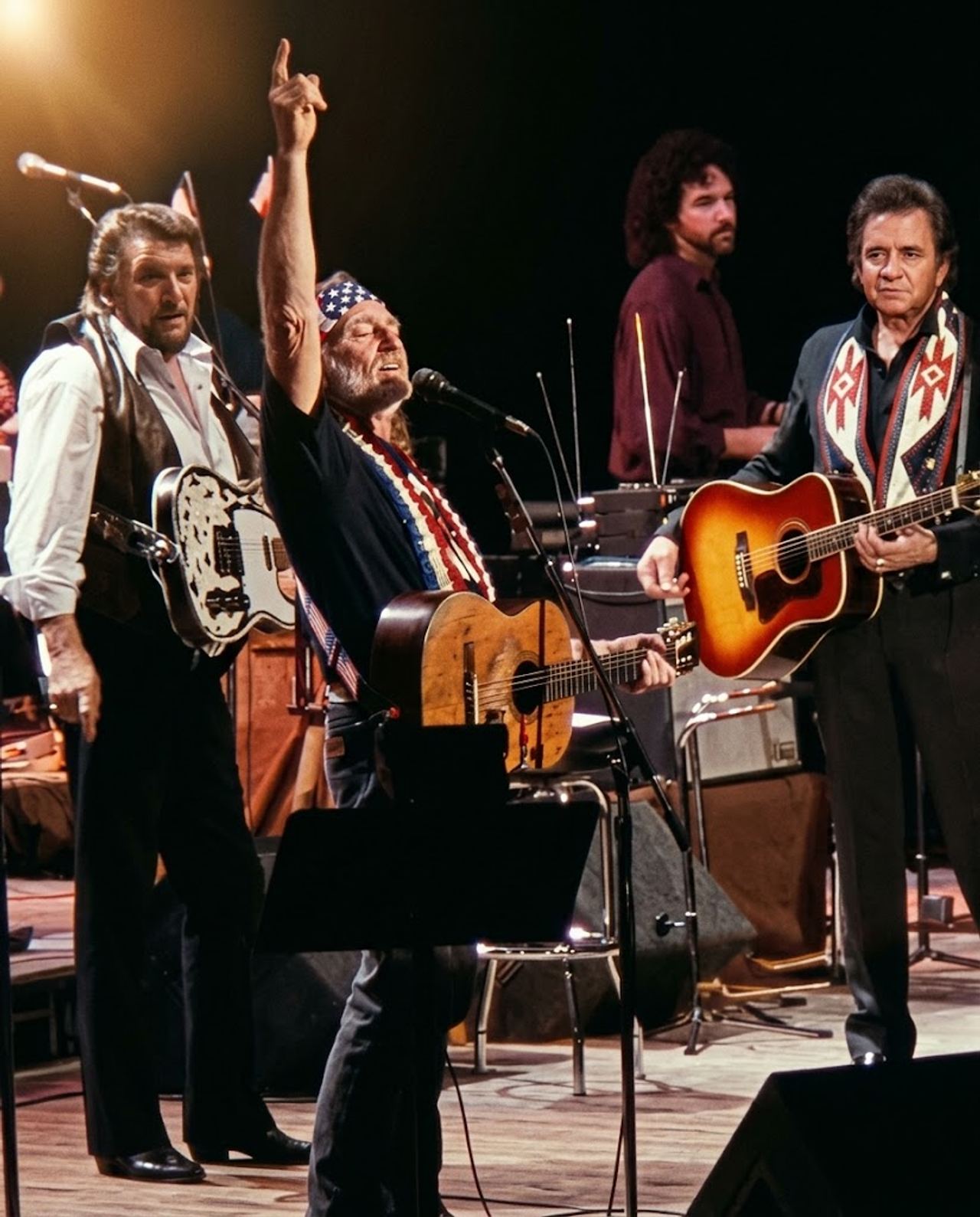
FOUR GIANTS OF COUNTRY MUSIC SHARED A STAGE ON INDEPENDENCE DAY IN 1985 — AND ACCIDENTALLY LAUNCHED THE GREATEST SUPERGROUP IN HISTORY.
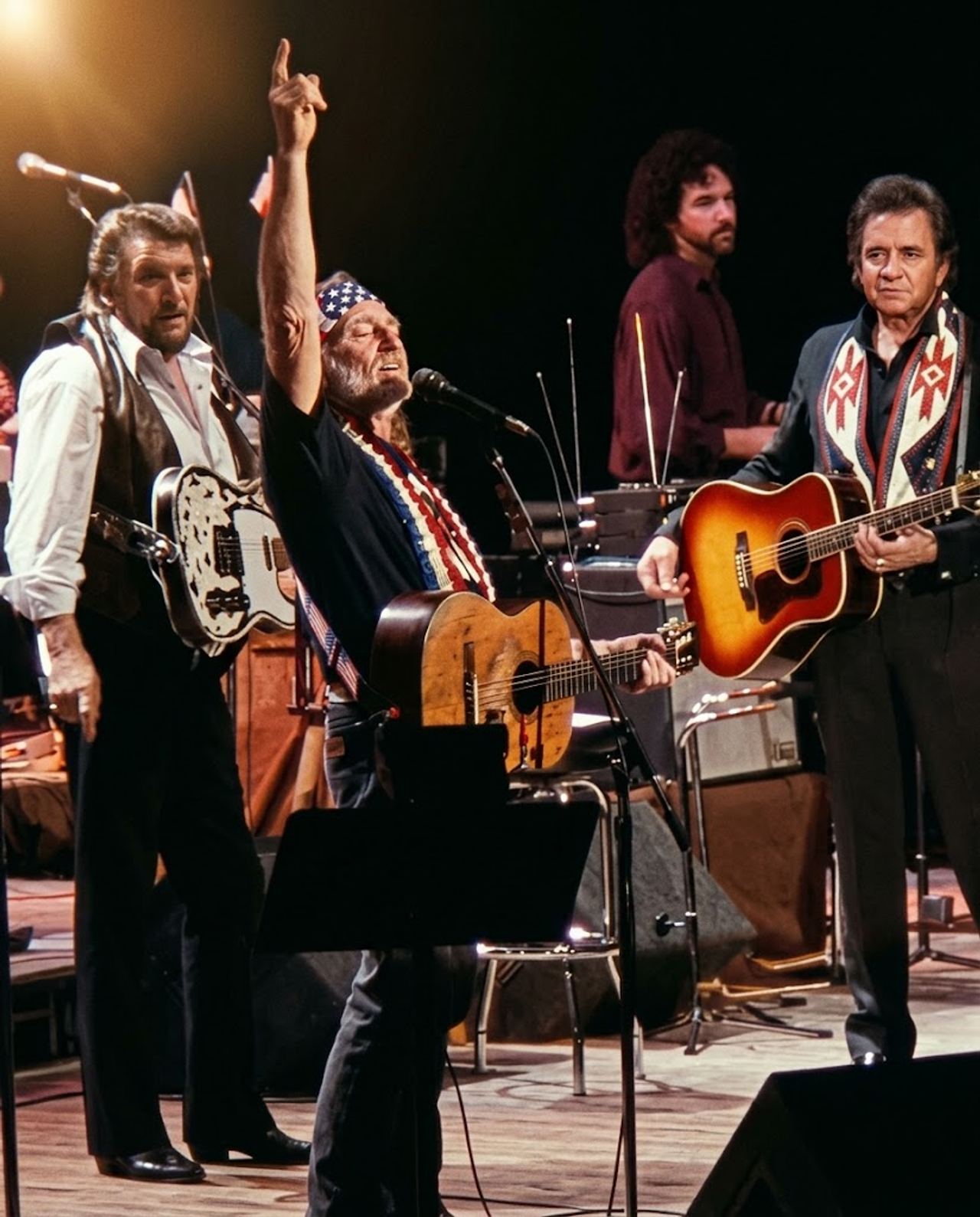
It was July 4, 1985. Willie Nelson, Johnny Cash, Waylon Jennings, and Kris Kristofferson gathered in Austin, Texas, for Nelson’s annual Fourth of July Picnic. The summer sun was unforgiving, and the crowd was vast, but the real electricity was happening up on the platform.
At the time, all four men were already independent legends. They were the undisputed cornerstones of the Outlaw Country movement, having spent the 1970s rewriting Nashville’s rigid rules and blazing their own trails. Cash was the Man in Black, a larger-than-life figure who had walked the line for decades. Nelson and Jennings had fought fiercely for their creative freedom, abandoning the polished Nashville Sound for the gritty authenticity of Texas dance halls. Kristofferson, the Rhodes Scholar turned studio janitor, had permanently changed the literary depth of country songwriting.
They had built massive, uncompromising solo careers, often paying a steep personal price for their independence. But when they stepped under the lights together that day, the dynamic shifted entirely.
These were men who had individually survived the steepest costs of fame. Between the four of them, they had navigated high-profile bankruptcies, public battles with addiction, industry rejection, and the heavy, quiet isolation that comes with being an American icon. For years, they had each carried the burden of their own mythology. They knew exactly how heavy the crown was, and they knew the exhaustion of fighting the system alone.
Yet, standing shoulder to shoulder, they laid down their massive egos. They communicated through knowing glances, weathered smiles, and weather-beaten voices. Instead of competing for the spotlight, they actively backed each other up, finding comfort in the shared rhythm of their history.
The roots of that public brotherhood had actually begun months earlier in a hotel room in Montreux, Switzerland. The four musicians had flown overseas to film a Christmas television special with Cash.
While sitting around playing music and swapping stories, they realized their distinct voices belonged on a record together. The project found its anchor when Marty Stuart, who was playing in Cash’s backing band at the time, introduced the group to a Jimmy Webb ballad called “The Highwayman”. The song’s structure featured four distinct verses, allowing each legend to inhabit a different soul across time. It was a perfect thematic fit for the four veterans.
The transition from friends passing a guitar around a hotel room to a formal recording act moved with remarkable speed. They enlisted producer Chips Moman and headed into the studio to capture the magic they had found overseas.
By August of 1985, just a short time after their historic Independence Day performance in Texas, their debut single “Highwayman” went straight to No. 1 on the Billboard Hot Country Songs chart. The accompanying album, produced by Moman for Columbia Records, also reached No. 1 on the Billboard Top Country Albums chart. Their casual collaboration, initially credited simply as Nelson, Jennings, Cash, and Kristofferson, had quickly turned into an industry-defining powerhouse.
But the true weight of their partnership was never just about chart dominance or star power. It was about mutual survival in an industry that routinely discarded its elders.
The audience that day in 1985 watched four men who had walked through the darkest sides of the music business find a genuine sanctuary in one another. They were no longer just outlaws defending their territory. They had found their own family in the music.
Over the next decade, they would officially adopt the name The Highwaymen. They went on to release three major studio albums, headlining massive tours across the globe and introducing their brand of country music to a completely new generation of listeners. But the foundation of all that commercial success was the quiet, unshakable respect forged in those early moments of collaboration.
The history books will always remember the No. 1 hits, the sold-out arenas, and the undeniable talent on that stage.
But the real legacy was the brotherhood. They did not just share a microphone; they gave each other a place to belong.
Video can’t be loaded because JavaScript is disabled: The Highwaymen – Highwayman (American Outlaws: Live at Nassau Coliseum, 1990)