
Human Stories
My Niece Called Me “Family Trash,” So I Removed My Name From Everything Keeping Them Afloat
Whitney Caldwell spent years quietly financing her parents’ house, her sister’s car, and a long list of family expenses until her niece repeated the cruel phrase “family trash.” After that breaking point, she documented every payment and removed her name from the arrangements, forcing her relatives to face the consequences themselves.

I did not listen to the voicemail immediately. I stood in my kitchen while the kettle hissed behind me, watching my phone illuminate the counter in short, frantic bursts. The apartment was quiet except for the radiator knocking inside the wall and traffic whispering over wet pavement four floors below. Those ordinary sounds steadied me because they belonged to a life that was mine, even if I had spent years treating it as less important than everyone else’s emergencies.
My name is Whitney Caldwell, and I was thirty-six years old when I finally understood the difference between being loved and being useful. On paper, my life looked stable. I had a reliable operations position at a logistics company in South Philadelphia, an apartment I could afford, excellent credit, and no debt except the obligations I had accepted for people who openly resented me.
I had no children, no spouse, and no partner whose income or needs had to be considered. My family interpreted that absence as unlimited capacity. Because I did not have what they called a “real family,” they believed my time, money, and future naturally belonged to them.
Desiree was three years younger than I was, but our parents had always treated the distance between us as something far greater. She had been the bright center of the Caldwell household from the moment she learned that tears could rearrange a room. When we were children, her emergencies involved dance lessons, expensive sneakers, and birthday parties that had to be larger than those of her classmates. Mine involved learning not to need anything that might compete with her.
My mother often described me as independent, which sounded like praise until I became old enough to recognize it as permission for neglect. Desiree was sensitive, while I was strong. Desiree required encouragement, while I could manage. If she failed, someone had to catch her; if I struggled, it was evidence that I needed to work harder.
Those roles followed us into adulthood with remarkable efficiency. Desiree married young, divorced within four years, and returned to our parents’ home with Alana and a collection of debts she described as consequences of trusting the wrong man. I did not blame her for the marriage failing. I blamed myself, however, for believing every financial crisis afterward was temporary.
The first major rescue involved my parents’ row house. They had missed property tax payments while carrying a second mortgage whose variable rate they had never fully understood. By the time they showed me the notices, penalties had accumulated, and the language had become frightening enough to make my mother cry at the kitchen table.
I remember the smell of overcooked coffee that afternoon and the way my father kept folding the same letter into smaller rectangles. He had spent my childhood insisting that a man provided for his household, yet he slid those documents toward me without meeting my eyes. I mistook his humiliation for gratitude and promised I would find a solution.
The personal loan I took out was large enough to stabilize the immediate crisis. I signed the agreement alone because my income and credit qualified, then arranged for the payment to leave my account automatically each month. My parents promised to reimburse me when things improved, but “improved” became an increasingly movable destination.
At first, my mother handed me small amounts in envelopes. Then the envelopes came less frequently, followed by explanations about rising utility costs, repairs, and reduced hours at work. Eventually, we stopped discussing reimbursement at all. The monthly withdrawal became as ordinary and unquestioned as my own rent.
The crossover came several years later. Desiree had been driving an aging sedan that required repairs, and she insisted the vehicle was unsafe for Alana. I agreed that she needed reliable transportation, but the model she selected was not merely reliable. It was new, polished, and expensive enough to create the appearance of a life she had not built.
The dealership rejected her application. My mother called me from the showroom and described Alana sitting beneath harsh fluorescent lights while Desiree tried not to cry. By the time I arrived, the salesperson already had the paperwork prepared for me.
“You’re not buying the car,” Desiree had said, squeezing my hand. “You’re only helping me qualify. I’ll make every payment.”
She made the first two. The third arrived late, and I covered it to protect my credit. The fourth never arrived at all because Alana needed winter clothes. By the sixth month, the payment was coming directly from my account, and Desiree spoke about the vehicle as if it were proof of her own perseverance.
The insurance followed because the policy cost less under my name. Then came registration fees, tolls, and maintenance charges. Each expense was presented as a temporary adjustment, yet temporary things have a way of becoming permanent when only one person suffers from them.
My mother’s health coverage began after her part-time employer reduced her hours. My company’s plan allowed me to add qualifying dependents under specific circumstances, and I spent weeks gathering documentation. When Philip’s prescription costs rose, I placed my card on file at the pharmacy because he had begun skipping doses to stretch the medication.
Alana’s coding club seemed harmless by comparison. Desiree described it as an opportunity that might shape her daughter’s future, and I wanted the girl to have chances none of us had enjoyed. The monthly tuition was not overwhelming alone, but neither were the phone lines, internet service, streaming subscriptions, school supplies, camp fees, or emergency grocery transfers when considered separately.
That was how the burden survived scrutiny. No single piece looked large enough to justify refusing. Together, however, they formed a second life that I financed from a distance.
I lived carefully because someone always needed the difference. I postponed replacing my worn living-room furniture and declined vacations with coworkers because I could not predict which family emergency would arrive next. I bought groceries according to a list, walked to work when weather allowed, and placed my own dental procedure on a payment plan while paying my parents’ insurance premium in full.
None of those sacrifices appeared in family photographs. Desiree posted pictures of holiday meals and weekends at the shore, while my parents praised her for being such an attentive mother. I was often the person taking the photograph, arranging the reservation, or quietly paying the bill before anyone else saw it.
There had been moments when resentment surfaced, but I always pushed it down. I told myself love was not an accounting exercise and that generous people did not keep score. What I failed to understand was that refusing to keep score had allowed everyone else to pretend there was no cost.
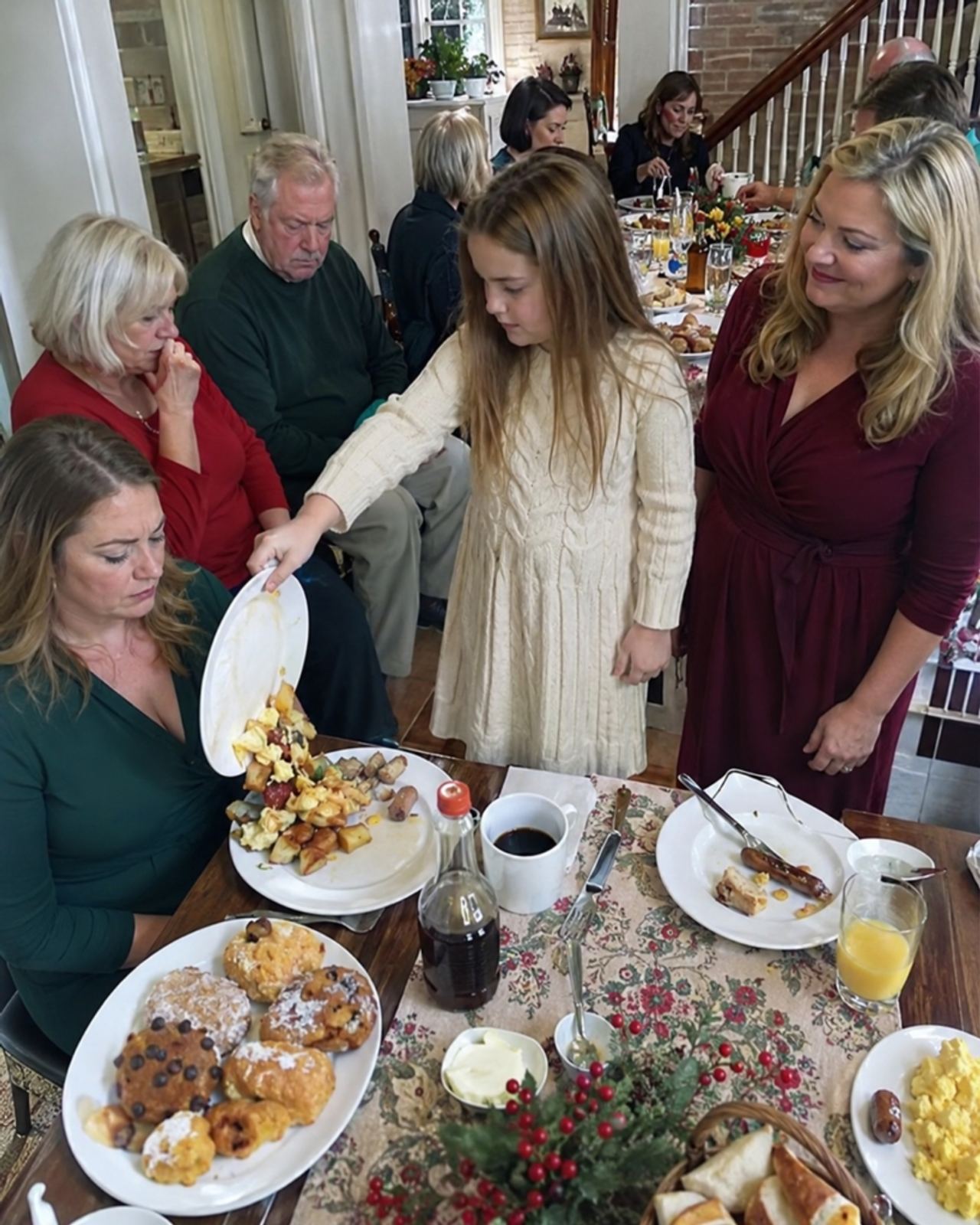
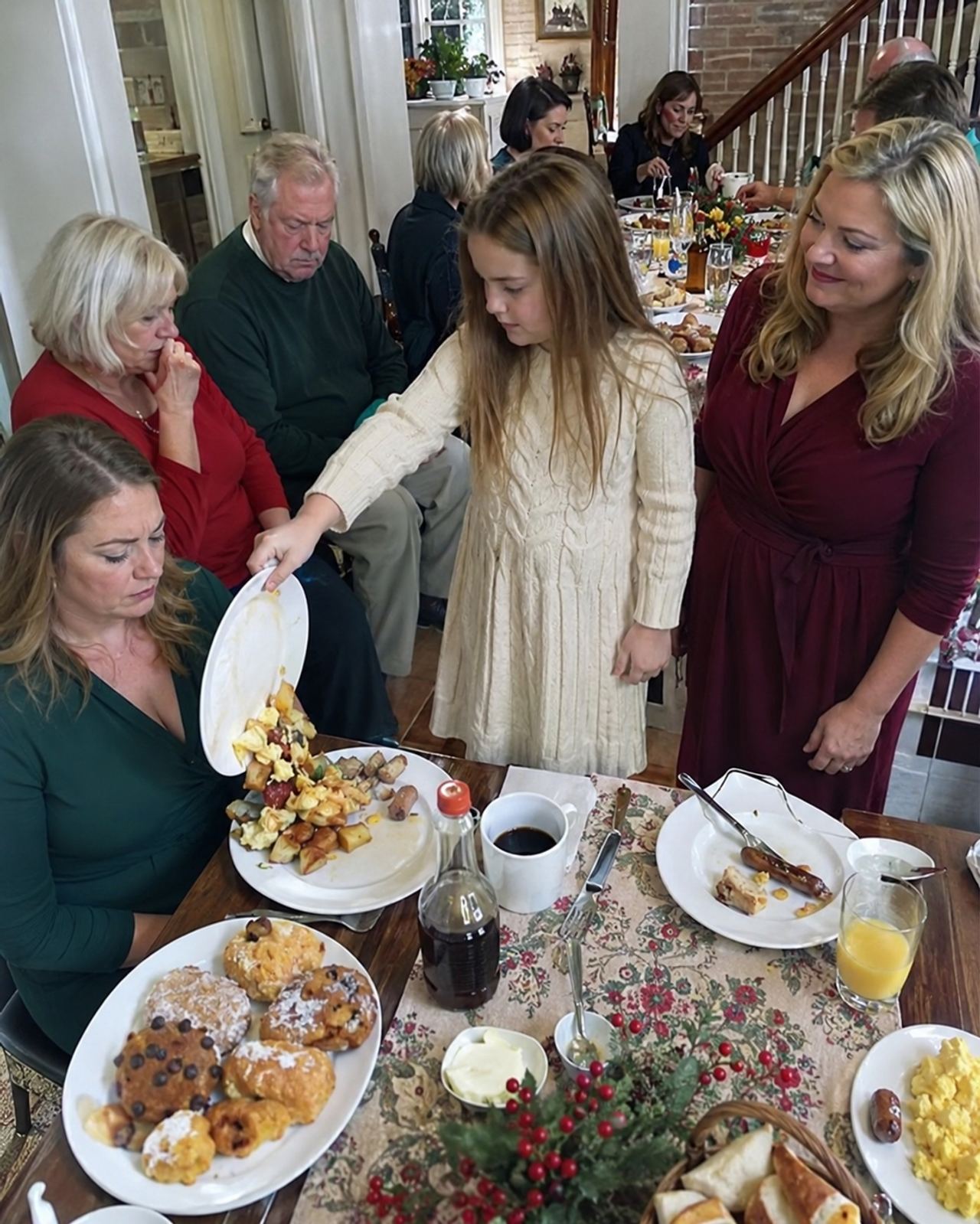
That New Year’s brunch changed the equation because Alana’s insult did not emerge from nowhere. Children borrow the language that surrounds them. She had heard her mother call me family trash, probably more than once, and she had learned there would be no consequence for repeating it.
The adults’ reactions confirmed it. Desiree’s smile, my mother’s silence, and my father’s warning not to make a scene told me they were not shocked by the belief. They were only uncomfortable that it had been spoken where I could hear it.
After sending my message in the group chat, I opened Desiree’s voicemail. Her breath came rapidly, and I could hear a television playing somewhere behind her.
“Whitney, call me back immediately,” she said. “The lease company says the automatic payment was removed. You cannot do that because your name is on the contract. This affects you too, so stop acting insane and fix it before they charge us.”
She did not apologize. She did not mention what Alana had said or acknowledge the message declaring me outside the family. Even in fear, her concern remained fixed on the service I provided.
My mother’s voicemail arrived next. Her voice was softer, but the manipulation was more familiar.
“Honey, I know you’re hurt, but you’re taking this too far. Alana is a child, and children repeat things without understanding them. We can talk about what happened, but you cannot risk the house. Your father’s blood pressure is already up, and I have not slept since your message. Please call me before you do something you’ll regret.”
The phrase stayed with me: something I would regret. My mother could imagine the loss of her house, insurance, and comfort. She could not imagine that I might regret the decade I had spent sacrificing for people who considered me disposable.
Philip sent a text rather than a voicemail.
Responsible adults honor their signatures. Stop behaving like a child.
I read it twice and then placed the phone face down.
For the first time in my life, I did not compose an explanation. I did not soften my words to protect their pride or offer another deadline that would quietly dissolve. Instead, I opened my laptop and began documenting everything.
I created folders for the house loan, the vehicle lease, health insurance, prescriptions, phone service, internet, and Alana’s program. I downloaded statements reaching back as far as each website allowed and saved copies to an external drive. The process lasted well into the night, accompanied by the hum of my refrigerator and the faint ticking of the clock above the stove.
Every document was evidence of a decision I had once called love. The dates formed a history more honest than any family story. When I reached the total amount I had paid over the years, I leaned back and stared at the screen until the numbers blurred.
It was enough for a substantial down payment on a home of my own. It was enough to eliminate my remaining student loans years earlier, travel, invest, or create the emergency savings account I had always postponed. It represented thousands of hours of work, including holidays and weekends I had surrendered because someone else required my stability.
The discovery did not fill me with rage. Rage would have been easier because it burns quickly and gives the body something dramatic to do. What I felt was grief for the woman who had believed endurance would eventually earn her a secure place in the family.
Near midnight, I contacted Roderick Harris, a senior analyst at my company who had become a trusted friend. We met during my first year in logistics, when I was balancing student debt and two part-time jobs. He had a talent for seeing structures beneath confusion, whether he was analyzing a distribution problem or a personal budget.
Years earlier, after hearing me describe another temporary family emergency, he had asked me to gather all the obligations into one folder. I laughed and told him families did not work like spreadsheets. He replied that anything taking money from my account already worked like a spreadsheet, whether I looked at it or not.
I had avoided following his advice because documentation would have made denial impossible. That night, denial no longer offered comfort.
I sent him a brief explanation and asked what steps I should take to protect myself. His response came within minutes.
“I can’t give you formal legal advice,” he wrote, “but stopping automatic drafts is different from altering the contracts. Call every institution during business hours, document the conversation, and request written confirmation. Save the complete payment history somewhere your relatives cannot access. If they accuse you of abandoning them, the records will show a decade of the opposite.”
That final sentence settled something inside me. Paper did not care who shouted loudest or cried most convincingly. It recorded who had paid, who had benefited, and how long the arrangement had continued.
The next morning, I called my bank as soon as the customer service line opened. I sat through transfers while pale winter light spread across the kitchen floor. When I reached a representative, I requested formal stop-payment instructions for every recurring draft connected to accounts that were not mine.
The representative explained the limits carefully. Stopping a payment did not erase contractual responsibility, and creditors could still contact me where my name appeared on an agreement. I told her I understood and asked for confirmation numbers, written notices, and copies of every authorization change.
I contacted the lease company next. Because I was listed as the primary signer, I could not simply remove myself from the contract. The vehicle could be refinanced in Desiree’s name, transferred under certain conditions, voluntarily surrendered, or paid according to the existing agreement.
I explained that the vehicle had always been in my sister’s possession and that I would no longer allow automatic withdrawals from my personal bank account. The representative noted the file and confirmed that future invoices would be sent to the address where the crossover was registered.
The house loan required another long conversation. I informed the servicer that my account would no longer fund automatic transfers. The employee recited the consequences of missed payments, including fees, credit damage, default, and possible foreclosure if the borrowers failed to act.
My parents were the borrowers. I had been the payer.
For years, those two facts had blurred together until everyone behaved as though responsibility naturally belonged to me. Hearing them separated in formal language felt strangely liberating.
I did not cancel anything that would leave my parents immediately without medical care. Instead, I reviewed my company’s rules and identified the next enrollment window when they could assume the premium or transition to another plan. I printed the dates, continuation options, and estimated costs.
Setting a boundary did not require cruelty. I could refuse to finance their lives without endangering them without warning.
By late morning, my family had sent more than forty messages. Desiree accused me of trying to make Alana suffer. My mother alternated between pleading and reminding me how much she had sacrificed raising me. Philip repeated that a person’s word mattered, although he seemed unable to see that their message removing me from the family had also been a declaration.
I answered only once.
“We need to meet. Public place. Tomorrow at eleven.”
I selected a narrow diner near Center City where the booths were visible from the counter and no one could trap me in a private room. The restaurant smelled of coffee, fryer oil, and disinfectant, with an old ceiling fan moving warm air above chipped tables. I arrived fifteen minutes early and chose a seat facing the entrance.
My hands trembled when I placed the folder beside me. Fear does not always disappear when a person decides to be brave. Sometimes courage is simply arranging the papers while fear remains in the chair beside you.
Maureen entered first, scanning the room as though she expected bad news to be written on the walls. Philip followed with his jaw set and his coat half open. Desiree came last, holding Alana’s hand while scrolling through her phone.
They moved toward me together, a unit so practiced that watching them hurt. My parents sat across from me. Desiree took the seat beside my shoulder, positioning Alana at the outside edge of the booth.
The waitress poured coffee, and for several seconds no one spoke. Plates clattered in the kitchen while the grill hissed behind the counter. Philip finally leaned forward and placed both hands on the table.
“This ends today,” he said. “Mortgages are not weapons, and bills are not tools for revenge. You put the house at risk because your feelings were hurt.”
“My feelings were not the issue,” I replied.
“They clearly are,” Desiree said. “You disrupted the car payment less than twelve hours after brunch. Do you understand that collections will come after you too? Your name is on the lease.”
“I understand exactly where my name appears.”
“Then fix it.”
Her certainty was almost impressive. Even after I had warned them, taken action, and refused dozens of calls, she still believed the conversation would end with my surrender.
Maureen folded and unfolded the edge of a paper napkin. “Whitney, no one is saying what Alana did was appropriate. Desiree has already spoken to her.”
I looked at my niece. She was coloring a cartoon pancake on the children’s menu, apparently unconcerned.
“What did she say to her?” I asked.
Desiree exhaled sharply. “That is not what we’re here to discuss.”
“It is exactly why we are here.”
“We are here because you canceled payments that affect everyone.”
“No. I stopped using my account to make payments that benefit everyone except me.”
Philip’s expression hardened. “You signed agreements.”
“I signed because each of you presented a crisis and promised it was temporary.”
“That doesn’t change the responsibility.”
“It changes the story you’ve been telling.”
I opened the folder and placed the first group of statements on the table. The pages showed ten years of transfers connected to the house loan, each payment drafted from my account. Behind them were property tax payments, emergency repair invoices, and two deposits I had provided when the loan was modified.
The next stack contained the crossover statements. Every successful payment was highlighted, along with insurance premiums, registration fees, toll charges, and maintenance expenses. I added documents from the health plan, pharmacy, coding club, phone carrier, and internet provider.
The folder was not thick enough to contain every sacrifice, but it was thick enough to silence the table.
“This is what I have paid,” I said. “Not one favor. Not occasionally. Year after year.”
Maureen stared at the dates. Her face changed as she reached the oldest statements and realized how long the pattern had continued. Philip adjusted his glasses and studied the totals without touching the pages.
Desiree looked only at the most recent lease notice.
“Why didn’t you tell us it had become this much?” Philip asked.
The question was so astonishing that I almost laughed. “Because every time I tried to discuss one expense, another emergency appeared. Because you praised me for being strong whenever I looked tired. Because no one ever asked what the total was as long as the payments cleared.”
“We would have helped,” Maureen whispered.
“You could have asked.”
“I thought you were comfortable.”
“You thought I was quiet.”
Desiree tapped the lease statement with one manicured nail. “Whatever else happened, this has to be paid first. I need the car for Alana. We can talk about the rest after you reactivate the automatic payment.”
Her response proved more than any apology could have repaired. Faced with ten years of evidence, she still focused on preserving the most visible symbol of her lifestyle.
“You can refinance it,” I said. “You can trade it for something affordable, find another qualified signer, or return it under the terms the company provides.”
“I won’t qualify.”
“Then you cannot afford it.”
Her cheeks flushed. “You knew my situation when you signed.”
“I also believed you when you promised to pay.”
“You don’t have children. You don’t understand what it costs.”
“I understand exactly what your child costs me.”
The words came out more sharply than I intended, and Alana looked up. I immediately regretted directing any part of the anger toward her. She was a child shaped by the language and values around her, not the architect of them.
Before I could soften the statement, she studied me with open curiosity.
“I thought you liked paying for everything,” she said.
The adults froze.

“Why would you think that?” I asked.
Alana glanced at Desiree. “Mom says you always pay because you don’t have your own family. She says it makes you feel important.”
Desiree’s hand tightened around the edge of the table. “Alana, stop.”
The girl lowered her crayon but continued, confused by the sudden tension. “She said you act better than us because you have money, but you’re still family trash because nobody wanted to marry you.”
The diner seemed to narrow around the booth. I heard the fan rotating overhead, the soft crackle of food on the grill, and a spoon striking the inside of a coffee cup at the next table. Ordinary life continued while a child calmly repeated the private contempt that had shaped my place in the family.
Maureen covered her mouth. Philip turned toward Desiree with an expression I could not read.
I looked at my sister. “Did you say those things?”
“She misunderstands adult conversations.”
“That is not an answer.”
Desiree leaned closer, lowering her voice. “You have always judged me. Every payment came with that look, like you were waiting for me to fail. Maybe I said something when I was angry, but you have no right to destroy Alana’s stability over words.”
I realized then that she believed financial support had purchased my silence but not earned me respect. In her version of events, I had given because I was lonely, superior, or desperate to matter. That explanation allowed her to accept everything without gratitude.
My mother finally spoke. “Desiree, you told your child her aunt was trash?”
“Oh, please,” Desiree snapped. “You have said worse things about Whitney whenever she wasn’t around.”
The accusation struck the table with greater force than Alana’s plate had struck mine.
My mother’s face drained of color. Philip stared at her, but she did not deny it. The silence contained its own confession.
I closed the folder slowly. “That is enough.”
“Whitney,” Maureen began.
“No. You removed me from the family in writing while expecting me to continue financing it. Desiree taught her daughter that my life was less valuable because I was unmarried. Dad believes responsibility only applies to my signatures, not anyone else’s promises. There is nothing left to misunderstand.”
Philip’s voice softened for the first time. “What are you saying?”
“I am saying the payments will not restart.”
My mother’s eyes filled. “You would let us lose the house?”
“I am giving you the opportunity to save your own house. Speak with the lender. Refinance, restructure the loan, sell, or make the payments. Those choices belong to the people who live there.”
“And the insurance?”
“You will receive formal notice and information about continuing coverage. I am not removing anyone overnight.”
Desiree shook her head. “And you think that makes this reasonable?”
“I think it makes it finished.”
I slid out of the booth, placed cash beneath my untouched coffee cup, and lifted the folder. My legs felt unsteady, but the sensation did not stop me.
Behind me, my mother called my name. I continued toward the exit because I knew that turning around would return me to the role they understood. The winter light outside was painfully bright, reflecting from dirty piles of snow along the curb.
I walked several blocks before I realized I was crying. The tears were not an invitation to reconsider. They were the body’s response to releasing something it had carried too long.
Two days later, formal notices reached every household involved. The lender informed my parents that the automatic transfer had failed and gave them a grace period before a late fee would apply. The lease company notified Desiree that payment information needed to be updated.
The phone carrier sent instructions explaining how each person could transfer a number to an individual plan. Alana’s program issued a reminder that future tuition required a new payer. My benefits department prepared continuation information for my parents.
For the first time, institutions addressed them directly instead of treating me as the only adult responsible for responding.
Their panic intensified. Desiree sent photographs of herself waiting at a dealership, screenshots of refinancing denials, and a picture of Alana sitting in the crossover with a caption asking whether I was proud of hurting a child.
I did not respond to emotional photographs. I forwarded only the lease company’s contact information and the list of options the representative had provided.
My mother called from new numbers after I blocked the first two. In one voicemail she cried and promised to repay every dollar. In another, she accused me of choosing money over blood. The contradiction no longer confused me because both messages served the same purpose: restoring the arrangement.
Philip remained focused on honor. He wrote that a daughter should not expose her parents to humiliation and warned that people would lea…
Read more stories
- Linda Ronstadt’s ‘You’re No Good’ Reshapes Pop-Rock Radio and Secures Her Crown as the Queen of the ‘70s Sound in 1975
- Barbara Mandrell’s ‘Sleeping Single in a Double Bed’ and the Country-Pop Shift of 1978
- Linda Ronstadt’s ‘You’re No Good’ and the Breakthrough That Recast 1970s Pop-Rock
- My daughter was bruised, bleeding, and trapped in a windowless ER room. A corrupt doctor stood over her with a syringe, ready to lock her in an asylum so her billionaire husband could bury a terrifying secret. “Mom, they're framing me!” she sobbed. Her mother-in-law smirked, looking at my Army uniform. “We own the medical board. Your military rank doesn’t impress us,” she hissed. I stepped between the needle and my child. I didn’t scream. I smiled. They had made a fatal mistake…