
Human Stories
My parents sold my ten-year-old daughter’s antique cello to help build my sister’s pool, then called it a family asset. When my father threatened the roof over our heads, I said nothing. Three days later, a certified letter from my grandmother's trust made him go pale.
A woman’s parents secretly sell her daughter’s cherished antique cello to fund a pool for her sister, then try to seize the family home. With the help of a grandmother’s trust and legal action, the family’s theft is exposed, the cello is recovered, and the parents face serious consequences.

The cello had a name. Lily called her Harriet, because my daughter believed old instruments deserved old-fashioned names and careful hands.
It was a 1925 German cello with warm amber varnish, a repaired hairline crack across the top, and the kind of sound that filled our little apartment like sunlight. My grandmother Margaret had played that same cello long before Lily was born, including once at Carnegie Hall, and when Lily was seven she placed it in her lap after a recital and said, “This belongs with someone who will love it.”
Margaret also signed a notarized gift letter. I scanned it because I worked around legal documents and knew better than to trust family memory with anything valuable, but I never imagined I would need it against my own parents. They never heard music when Lily played. They heard money.
At Sunday dinners, my father Axel sat at the head of the table like the chair came with a crown, while my mother Julia fussed around him, making herself look generous. My sister Vanessa arrived late with her twin boys, who got real chairs while Lily sat on the folding chair from the garage. One Sunday, Vanessa complained that every house on her street had a pool except hers, and my mother instantly said the boys deserved space. When Lily quietly told my father her recital was coming up, he barely looked at her and said, “Maybe you should try a sport like your cousins.”
Lily folded her napkin into a perfect square, the way she always did when she was trying not to cry. Two weeks later, I had to work three days across the city while Lily was at music camp, so Harriet stayed locked in her room. Before I left, my mother asked for the spare key “just in case.” She smiled and said everything would be exactly where I left it.
When I came home, Lily’s bedroom lock had been changed. The cello case was still in the corner, but it leaned too lightly against the wall, and when I opened it I found only the velvet imprint of an instrument that had been there for years. The bow was gone. The rosin was gone. Even Lily’s little cleaning cloth was gone.
The next day, Lily came home from camp, ran to her room, opened the case, and simply stood there with her bow hand raised in the air. “Mom,” she whispered, “where’s Harriet?” I told her I would find out, and then I called my mother. Julia said my father had taken it for maintenance.
My father ignored my calls until I drove to Vanessa’s house and saw the truth for myself: a backhoe in her yard, workers laying rebar, and my sister taking photos beside the hole where her pool was going. When Axel finally answered, he sounded bored. “The cello was a family asset,” he said. “I sold it to a dealer in Seattle. Your mother and I decided to use the money for the family.”
“That cello belongs to Lily,” I said. “Margaret gave it to her. There is a notarized letter.”
“Your grandmother is ninety-one,” he said. “She doesn’t remember what she signs anymore.” Then he hung up.
Two days later, he called a family meeting at his house, where Julia had tissues ready and Vanessa crossed her arms as if she were the injured one. My father announced that I was overreacting over an old instrument.
I let the table go quiet before I said, “That cello was a notarized gift to a minor. This is theft.”
Axel’s face hardened. “You want lawyers involved? Fine. But don’t forget who owns the roof over your head, Marina.”
I stood, picked up my bag, and said, “I’ll remember. And so will you.”
At home, I opened the file I had saved years earlier: Margaret_Ellison_Gift_Letter.pdf. Then I called my grandmother and told her everything, from the empty case to the sale to the pool to the threat. She listened without interrupting. When I finished, she did not shout or cry; she adjusted her glasses and said, “The cello is listed under my trust schedule. So is the house your father thinks he owns.”
I sat at my kitchen table, staring at the screen while Margaret smiled softly. “We do not need noise, Marina. We need the right signatures.”
Three days later, my father signed for a certified letter in his front yard. My friend Rachel happened to drive past and saw him open it by the mailbox, and she said his face changed three times in ten seconds: normal, angry, then pale.
Twenty minutes later, my phone rang. It was Axel, and his voice was shaking when he asked, “Marina, what did your grandmother do?”
Part 2
The first page told him the cello was not his, the money was not his, and the house he had claimed for twenty-five years was not his either. Margaret, as trustee, demanded full restitution for the stolen instrument and revoked his permission to live in the property he had always called his own.
Axel tried to laugh it off at first. Then he called a lawyer. That lawyer pulled the deed, read the trust documents, and gave him the answer he had never expected: he had been living in Margaret’s house by permission, not ownership. Permission can end.
While he was learning that, I was learning something else. The Seattle dealer had listed Harriet for far more than Axel sold her for. Then I found the wire transfer into his personal account, followed by emails between Julia and Vanessa. Vanessa had found the buyer. Julia had promised to keep me distracted. Axel had carried the cello out.
That was the moment the theft stopped feeling like one cruel decision and started looking like a plan.
Margaret’s attorney filed the police report with my documents attached:
- The gift letter
- The dealer listing
- The wire transfer
- The emails
- The trust schedule
My mother posted online that I was destroying the family over a “piece of furniture.” I took screenshots of that too.
Then came the hearing. Axel walked in with a folder so thin it almost looked empty. Margaret sat beside me with her hands folded over her cane, calm as a judge herself.
When the real judge looked at my father and asked one question, the whole courtroom went silent.
Part 3
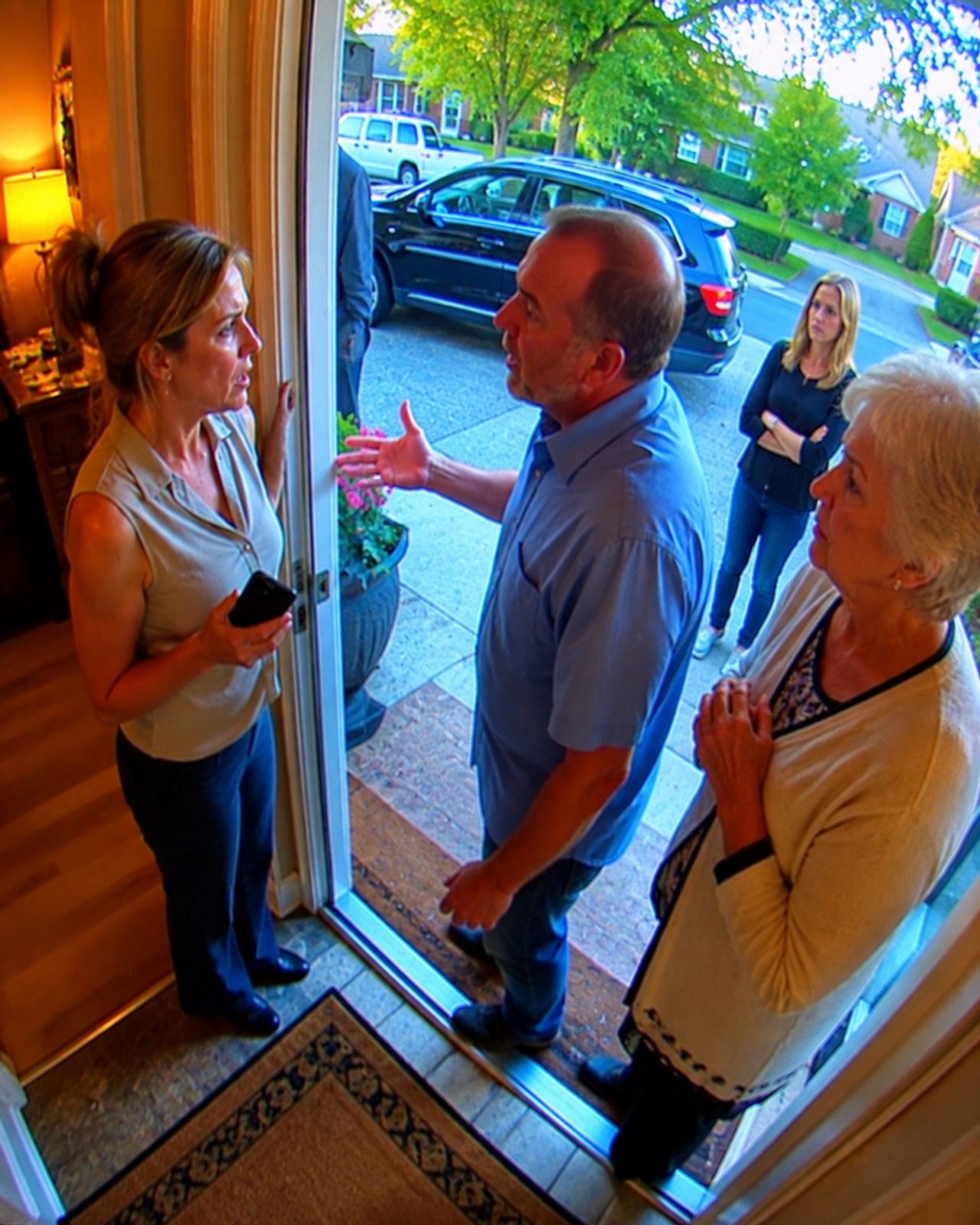
“Mr. Ellison,” the judge said, holding up a printout of the wire transfer, “did you honestly believe a vintage 1925 German cello was worth three thousand dollars, or did you simply want a fast payout to break ground on your daughter’s swimming pool?”
Axel’s mouth opened, but no sound came out. His thin folder stayed flat on the wooden table before him, useless against the thick stack of financial logs, certified trust documents, and email chains sitting on the judge’s bench. Beside him, his lawyer closed his eyes briefly, taking a slow, weary breath. He had already warned my father outside the doors that this was no longer a civil dispute among relatives; it was a formal evidentiary hearing for grand larceny and breach of fiduciary trust.
“Your Honor,” Axel’s lawyer stammered, standing up slowly, “my client acted under the mistaken belief that the family trust was shared marital property—”
“The trust clearly designates Margaret Ellison as the sole settlor and trustee,” the judge interrupted, her voice sharp and cool as ice. “Mr. Ellison has zero authority over trust assets, zero ownership of the real estate on Elm Street, and zero authority to liquidate personal property belonging to a minor.” She shifted her gaze directly onto my father. “You have seventy-two hours to produce the full current market value of forty-eight thousand dollars as assessed by the Seattle instrument dealer, or I will hand this matter directly over to the District Attorney’s office with a recommendation for immediate felony prosecution.”
Axel flinched as if he had been struck. Beside me, my grandmother Margaret did not move a muscle. Her aged hands remained rested neatly on the silver head of her walking stick, her posture straight, her breathing steady and calm.
When the hearing adjourned, my mother Julia rushed toward us down the carpeted aisle, her handbag clutched tightly against her chest, her eyes red and frantic. “Margaret! Marina! Please!” she cried, her voice echoing off the hard walnut paneling of the hallway outside. “You can’t do this to your own family! Axel was only trying to help Vanessa’s boys have a decent summer! The house… you can’t throw us out on the street! Where are we supposed to live?”
My grandmother stopped walking. She slowly turned around, adjusted her wire-rimmed glasses, and looked at Julia with a quiet, devastating clarity. “You had a home because I allowed you to live under my roof,” Margaret said, her tone devoid of anger, which made it far more terrifying. “You rewarded that generosity by stealing from a child. You did not just break a lock, Julia. You broke the trust that held this family together.”
“It was just a piece of wood!” Julia sobbed, grasping at my grandmother’s sleeve.
Margaret pulled her arm away with effortless grace. “It was my legacy,” she said softly. “And it was Lily’s future. You have three weeks to pack your belongings and surrender the keys.”
We walked out into the bright afternoon sunlight, leaving my parents and sister standing together in the marble lobby. Vanessa was on her cell phone, screaming at the pool contractors to stop the backhoes, while Axel sat heavily on a marble bench, staring blankly at his polished leather shoes.
That evening, I sat on the edge of Lily’s bed. The empty velvet case still lay on her rug, a hollow reminder of what had been stolen. Lily was sitting with her knees pulled up to her chest, drawing small circles on her blanket.
“Did the judge say we get Harriet back, Mom?” she asked quietly.
“Not yet, sweetie,” I said, running my fingers through her hair. “The dealer in Seattle sold her to a private collector in Chicago the day after your grandfather took her. But the police know where she is now. We are going to get her back, no matter what it takes.”
Lily looked down at her fingers, her voice barely a whisper. “Grandpa told me once that I wasn’t real family because I played an instrument instead of playing sports. Is that why he took Harriet?”
Hearing those words from my eleven-year-old daughter sent a cold ache straight through my heart. I pulled her close and held her tightly. “No, Lily,” I whispered into her hair. “He took it because he couldn’t see the value in something beautiful. But we do. And your great-grandmother does.”
Two days later, the real war began. Axel failed to deposit the money into the court escrow account. Instead, he pulled every string he had left, using his remaining savings to hire a aggressive litigation attorney who filed an emergency injunction to stay the eviction, claiming Margaret suffered from severe cognitive decline and had been “unduly influenced” by me to strip her son of his inheritance.
They weren’t just fighting for the money anymore. They were trying to declare my grandmother incompetent to invalidate the trust entirely.
Part 4
The accusations came fast and dirty. Within forty-eight hours, local family court officers arrived at my grandmother’s quiet cottage to conduct a surprise welfare check. Julia had filed a formal claim with Adult Protective Services, alleging that I was isolating Margaret, controlling her bank accounts, and coercing her into signing legal documents against her will.
When the social worker walked through the door, Margaret was sitting at her grand piano in the living room, effortlessly playing a Chopin nocturne from memory.
She paused, rested her fingers on the keys, and greeted the officer with absolute composure. For two hours, Margaret answered every medical, financial, and legal question with clinical precision. She recited the exact dates of her trust amendments, named her primary care physician, detailed her monthly living expenses, and recounted the exact history of the 1925 German cello—down to the exact luthier in Munich who had repaired its hairline crack in 1968.
The social worker closed her notepad, looked at me, and shook her head in disbelief. “Mrs. Ellison is sharper than most corporate attorneys I work with,” she remarked as she signed the dismissal form. “This claim is completely unsubstantiated and clearly malicious.”
While Margaret stood her ground against the state, I took the fight to Chicago.
Using my legal background, I collaborated with Margaret’s attorney to draft a formal Third-Party Revocation Notice and served it directly to the high-end instrument gallery in Chicago that had purchased Harriet from the Seattle dealer. Because the cello was stolen property—a fact now backed by a formal police report and grand jury indictment—the sale was legally void. Under federal law, a buyer cannot acquire clear legal title to stolen goods, regardless of whether they bought them in good faith.
The Chicago collector, a wealthy philanthropist who prided himself on his reputation in the classical music world, was mortified to learn he was holding stolen property belonging to an eleven-year-old girl and her Carnegie Hall-performing great-grandmother. He immediately surrendered the cello to the local authorities without demanding a single cent from us, redirecting his legal team to sue the Seattle dealer and Axel for full reimbursement plus damages.
The walls were closing in on my father from every direction.
At the same time, the eviction notice reached its final deadline. Sheriff’s deputies arrived at the Elm Street house on a rainy Tuesday morning to oversee the court-ordered lockout.
I drove past the house on my way home from work. Moving trucks lined the curb. Vanessa’s yard was a muddy swamp where the half-excavated pool lay abandoned, giant yellow backhoes sitting silent surrounded by caution tape. Workers were hauling out heavy oak furniture, leather sofas, and rows of designer clothes—everything my parents had accumulated over decades while living rent-free under the illusion of permanent ownership.
Julia was standing on the wet sidewalk in a raincoat, crying hysterically into a towel as the locksmith changed the deadbolts on the front door. Axel stood beside a pile of cardboard boxes, his expensive suit soaked with rain, shouting useless threats at the moving crew. When his eyes met mine through the car window, there was no anger left in his face—only a hollow, terrified desperation. He had gambled his daughter’s home, his reputation, and his freedom on the belief that I would back down to keep the peace.
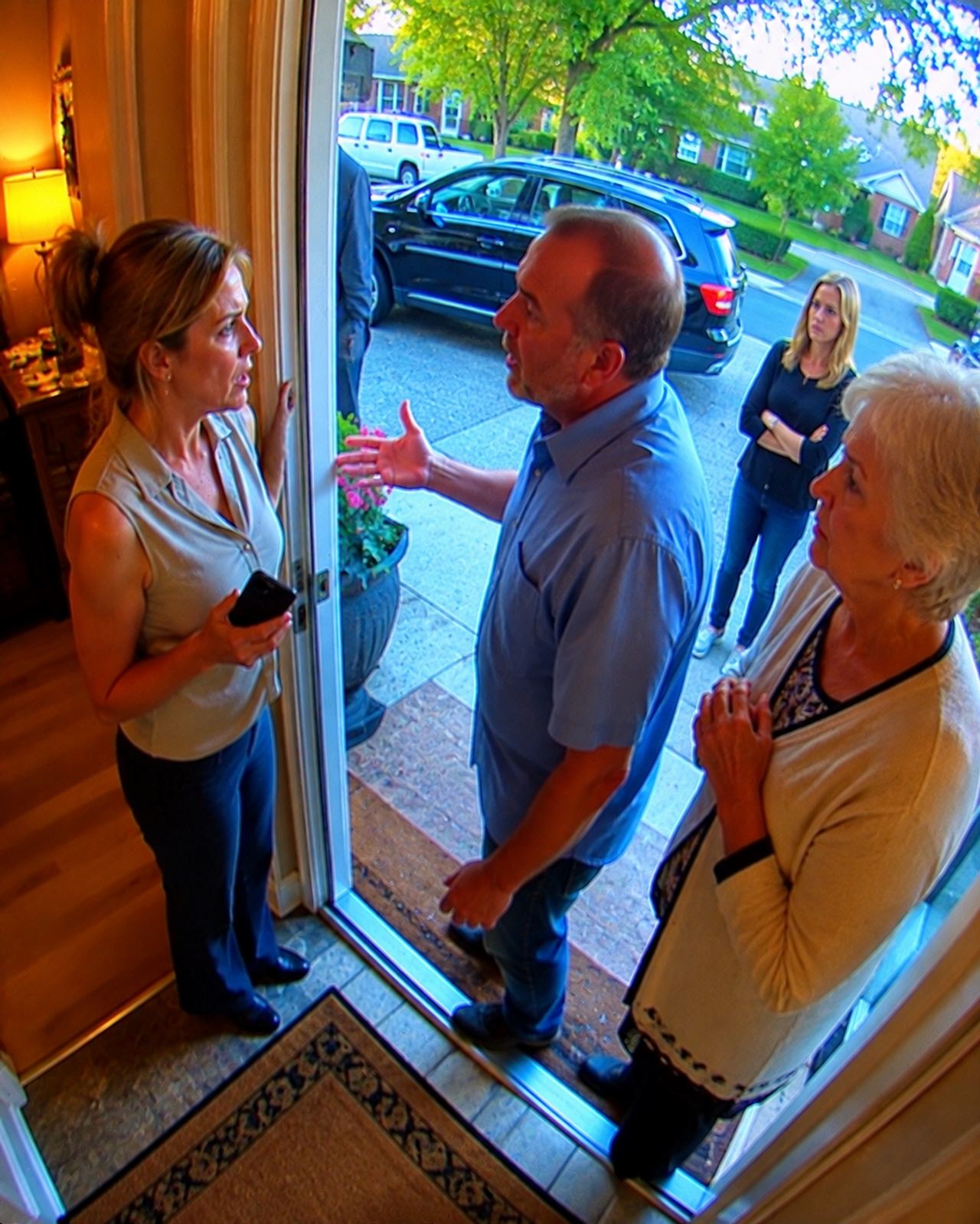
He had calculated wrong.
That evening, the doorbell rang at my apartment. It was my sister Vanessa.
Her hair was disheveled, her makeup smeared, and for the first time in her life, she wasn’t wearing designer jewelry. She stood in the dim hallway of my apartment building, shivering slightly in the cool air.
“Marina,” she said, her voice trembling. “Please. Dad’s facing actual jail time. The Seattle dealer is pressing fraud charges, the Chicago collector is suing him, and the sheriff took the keys to the house today. Mom and Dad are staying in a cheap motel near the highway. My pool project broke the water main, and the city is fining me five hundred dollars a day.”
I stood in the doorway, holding the frame, watching her closely. “And what do you want me to do about it, Vanessa?”
“Talk to Grandma,” she begged, tears spilling over her lashes. “Tell her to drop the criminal charges. Tell her to let Mom and Dad move back into the house. We’re your family, Marina! You’re ruining all of our lives over a stupid old instrument!”
I took a slow breath, feeling the weight of thirty years of folding chairs, silent slights, and quiet cruelties settling into absolute stillness inside me.
“No, Vanessa,” I said quietly, looking her straight in the eye. “You ruined your own lives the second you decided that my daughter’s heart was worth less than a hole in your backyard.”
Before she could speak, I closed the door smoothly and locked it.
Part 5
A week later, the long journey came to an end.
A climate-controlled courier vehicle pulled up outside our apartment building. Two uniformed couriers carefully carried a heavy, reinforced hard shell flight case up the stairs and brought it straight into our living room.
Lily stood by the sofa, her hands clasped tightly in front of her, her breath hitched in her throat. She didn’t move until the couriers signed the delivery release and left the apartment.
“Go ahead, Lily,” Margaret said softly from her armchair by the window, her hands resting calmly in her lap. “Open it.”
Lily stepped forward on trembling legs. Kneeling on the rug, she unlatched the heavy brass clasps one by one. The metal clicks echoed loudly in the quiet room. She lifted the lid.
There she was.
The warm amber varnish caught the afternoon sunlight streaming through the window, glowing like liquid gold. The repaired hairline crack across the top was right where it had always been, like a well-heeled scar telling a story of resilience. Beside the instrument, nestled neatly in their velvet grooves, lay the bow, the rosin, and the small cotton cleaning cloth.
Lily didn’t say a word. She didn’t cry. She simply reached out with gentle, careful fingers and touched the polished scroll of the neck, letting her thumb rest on the smooth maple wood.
“She’s home,” Lily whispered.
“She belongs with someone who loves her,” Margaret replied, her voice rich with warmth and quiet pride.
The criminal proceedings against my father were finalized three months later. To avoid a public trial and a potential state prison sentence for felony theft and wire fraud, Axel entered a formal guilty plea. Under the terms of his plea agreement, he was sentenced to five years of probation, ordered to perform five hundred hours of community service, and forced to pay complete restitution for all legal fees and transport costs incurred by the trust.
With no legal claim to the Elm Street property, my parents were forced to sell off their personal belongings to clear their debts and move into a small, rented two-bedroom apartment on the outskirts of the county. Vanessa’s yard remained a mud pit for months until the city filled it with dirt and billed her for the municipal restoration. The illusion of family royalty, built on my grandmother’s quiet generosity, had completely collapsed.
They had wanted money, and in the end, money was the very thing that stripped them of everything they held dear.
Spring arrived six months later.
The regional youth symphony held its annual spring showcase at the city’s main concert hall. The auditorium was packed with hundreds of people, the stage brilliantly lit beneath towering brass reflectors.
In the middle of the cello section sat Lily.
She wore a simple black velvet dress, her posture perfect, her face focused and calm. On her lap sat Harriet, the amber varnish catching the bright stage lights, radiating a deep, glorious warmth.
Beside me in the third row sat Margaret. She wore a deep navy dress with a pearl brooch pinned to her collar—the same brooch she had worn when she played at Carnegie Hall decades ago. Her eyes were fixed entirely on her great-granddaughter.
When the conductor raised his baton, a brief, breathless silence fell over the crowded hall. Then, with a unified sweep of their bows, the orchestra began to play.
The rich, resonant voice of the 1925 German cello soared above the woodwinds and violins, filling every corner of the massive hall like brilliant, radiant sunlight. It was a sound born of history, carried through generations, rescued from greed, and returned to careful hands.
I reached over and gently covered my grandmother’s hand with mine. Margaret did not turn her head, but a quiet, peaceful smile touched her lips as she leaned back in her seat, listening to the music that no one could ever take away from us again.
Read more stories
- My daughter-in-law smashed a plate over my head because I told her “no” – she thought I was just a weak 71-year-old, not the woman who’d already made three phone calls that would blow her whole world apart…
- I inherited a cabin while my sister got a Miami apartment. When she mocked me: “Fits you perfectly, you stinking woman!” and told me to stay away, I decided to spend the night at the cabin… When I got there, I froze in place at what I saw…
- She Changed the Locks After Her Husband Dismissed Her Promotion
- I went to my granddaughter’s wedding. Right at the entrance, my son stopped me and said, “Mom, your name isn’t on the list.” Two hundred guests were standing there, and all of them were looking at me. I replied, “It’s okay, son.” Then I turned around, went back home, and called my lawyer. The next morning, a letter was sent straight to his house.