
Human Stories
She Changed the Locks After Her Husband Dismissed Her Promotion
After changing the locks on her husband and his family, Andrea uncovers signs of hidden financial transfers, a forged signature, and a larger scheme involving her name. As the truth emerges, she moves from shock to resolve and prepares to confront the betrayal through legal channels.

PART 2
For several seconds, no one spoke.
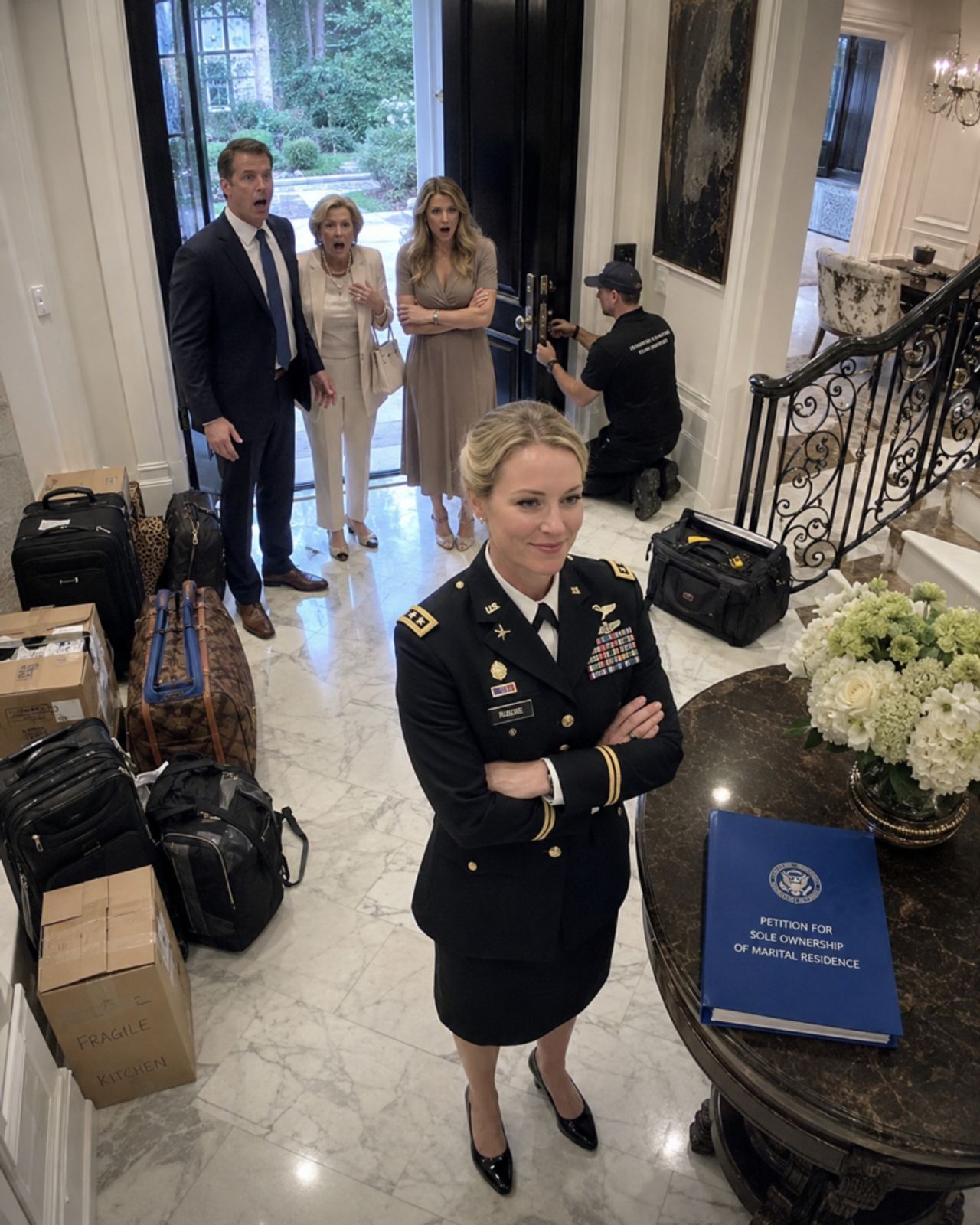
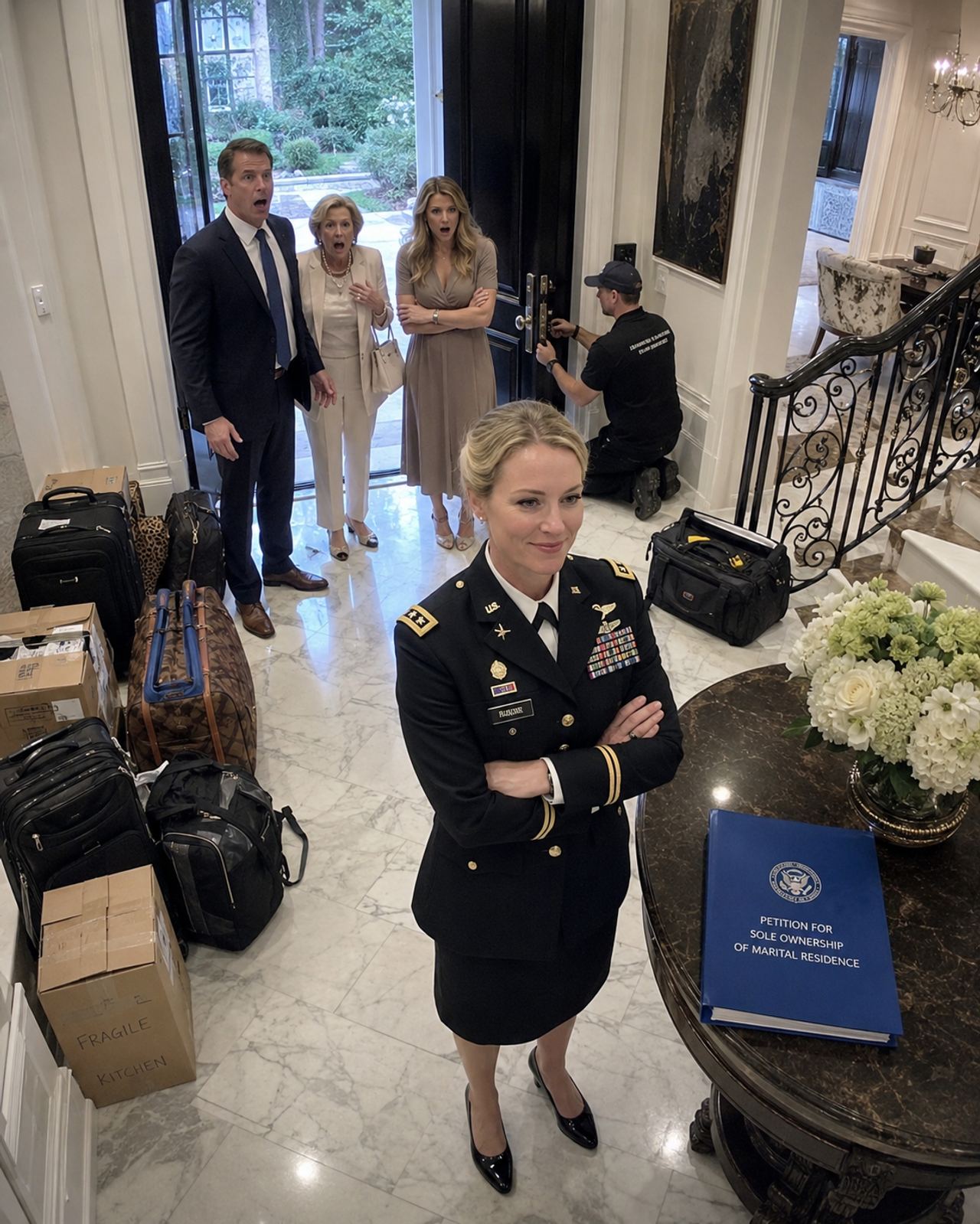
The hallway smelled faintly of cardboard, rain-damp wool, and the lemon oil the movers had used on the floors after rolling out the last dolly. Wesley stood with his hand still wrapped around a key that no longer opened anything in my life.
Behind him, Beulah clutched her purse to her chest as if the building itself had insulted her, and Gwen stared at the labeled boxes like she was reading a language she had never expected to understand.
Wesley found his voice first.
“You changed the locks.”
“Yes.”
“You can’t do that.”
“I can, actually.” I held the door only halfway open, keeping my body in the gap. “I spoke to Mr. Albright this morning. Everything was handled legally.”
His eyes jumped over my shoulder, searching for proof that the apartment was still his stage, still the place where his voice carried the most weight. But the living room behind me was calm. My duffel sat neatly by the sofa. My framed promotion certificate rested on the mantel. The dining table was bare except for the blue folder.
Beulah leaned sideways to peer around him. “Wesley, why are your things in the hallway?”
Wesley didn’t answer her. He was too busy looking at me like I had become someone he could no longer recognize.
“You embarrassed me in front of my family.”
“No,” I said quietly. “I protected my home.”
“Your home?” His laugh came out thin and sharp. “Andrea, don’t start rewriting history.”
“I’m not rewriting anything. That folder has the lease records, payment history, and bank statements. You’re welcome to read them.”
Gwen’s gaze flicked to the folder, then back to me. Something uncertain passed across her face. She had always treated me with casual distance, polite when Wesley was watching and dismissive when he wasn’t. But now she looked less amused than confused.
Beulah stepped forward, her cheeks flushed. “After everything my son has done for you, this is how you repay him?”
I looked at her, really looked at her. She was shorter than I remembered, wrapped in a beige coat with pearl buttons, her hair sprayed into a careful silver helmet. For years I had allowed her confidence to fill any room she entered. That night, it only made the hallway feel smaller.
“What exactly has Wesley done for me?” I asked.
The question landed softly, but it landed.
Wesley’s jaw tightened. “Mom, don’t answer that.”
“I will answer,” Beulah snapped, though she didn’t seem to know with what. “He gave you a home. He gave you his name.”
I nodded once. “And I paid the rent, the utilities, the insurance, and the groceries. I repaired his credit twice. I moved duty stations to keep this marriage steady. I came home from field exercises and cooked dinner because he said ordering out was careless. I missed promotion celebrations because he said family came first, then watched that same family make plans without me.”
The hallway went still.
I hadn’t meant to say so much. The words had not come out hot or trembling. They came out like inventory, accurate and long overdue.
Wesley stepped closer. “Careful.”
“No,” I said. “That word has worked on me for too long.”
His expression shifted. The anger was still there, but behind it, something else flickered. Not fear exactly. Recognition, maybe. The first dim awareness that I had been keeping records—not just on paper, but inside myself.
The locksmith cleared his throat near the elevator. “Ma’am, I’m finished here.”
“Thank you,” I said, handing him an envelope.
Wesley turned on him. “You changed locks on a marital residence without my consent?”
The locksmith gave him the tired look of a man who had heard too many arguments in too many hallways. “I changed locks at the request of the leaseholder with property management approval. Take it up with them.”
Then he left.
The elevator doors closed with a soft chime.
For a moment, the four of us simply stood there, surrounded by Wesley’s carefully packed belongings. Each box bore a printed label: WESLEY—CLOTHING. WESLEY—BOOKS. WESLEY—OFFICE. WESLEY—MISCELLANEOUS. The movers had been more respectful to his possessions than he had been to my future.
Gwen finally spoke. “Where are we supposed to go?”
Her voice was quieter than I expected.
“That is for Wesley to decide,” I said. “He made arrangements without speaking to me. He can make new ones.”
Beulah turned to her son. “Wesley?”
He rubbed a hand down his face. “We’ll go to a hotel.”
“With what money?” Gwen asked.
That question cut through the air differently.
Wesley shot her a warning glance, but it was too late. Beulah’s mouth tightened. Gwen looked away.
I noticed then that Gwen’s suitcase was old, the corner cracked and taped over. Beulah’s purse, though polished, had worn seams. They did not look like women arriving for a comfortable visit. They looked like women who had packed under pressure.
A part of me, the part trained to read rooms before they became dangerous, registered the detail and stored it.
Wesley reached for the blue folder on the entry table.
I moved just enough to block him.
“Copies,” I said. “You can have one. The originals are with my attorney.”
His eyes narrowed. “Attorney?”
“Yes.”
Beulah gasped softly, but Gwen didn’t. Gwen looked down at the boxes again.
“You called an attorney because I asked my family to stay here?” Wesley said.
“No. I called an attorney because you informed me that my career, my time, my home, and my consent meant nothing. Those are different things.”
He shook his head like he was disappointed in me. That familiar gesture might once have folded me in half. That night, it passed through me without finding anything to hold.
“This isn’t you,” he said.
I almost smiled. “That’s the problem, Wesley. It is.”
A neighbor’s door opened down the hall. Mrs. Alvarez from 4C peeked out, her reading glasses perched on her nose. She took in the boxes, the faces, and my posture.
“Everything all right, Andrea?” she asked.
“Yes, ma’am.”
She looked at Wesley, then back at me. “Call if you need anything.”
“I will.”
Her door closed again.
Wesley’s face darkened, but he lowered his voice. “You made this public.”
“You brought an audience.”
Gwen exhaled, almost like a laugh, but not quite. Beulah noticed and glared at her.
“I’m not having this discussion in a hallway,” Wesley said.
“Neither am I.” I took one of the duplicate folders from the table and handed it to him. “Your belongings are packed. Nothing is damaged. The movers photographed everything. There’s a hotel two blocks away. Tomorrow, my attorney will send you the next steps.”
“The next steps for what?”
“Our separation.”
The word entered the hallway with a strange gentleness. No thunder, no music, no shattering glass. Just separation. A clean word for something that had been tearing quietly for years.
Wesley stared at me. “You don’t mean that.”
“I do.”
“You’re tired. You’re emotional.”
“I’m promoted,” I said. “Clear-headed. And done.”
Beulah’s eyes flashed. “Wesley, say something.”
But he had said so much already. He had said it over missed dinners, over unpaid bills hidden beneath magazines, over my uniforms left in the dryer because he needed his shirts first, over every achievement he met with indifference because pride in me would have required humility in him.
He looked suddenly younger, almost boyish, holding a folder he hadn’t expected to receive.
Gwen stepped forward then, surprising all of us. “Andrea.”
I looked at her.
“Did you know?” she asked.
“Know what?”
Wesley snapped, “Gwen.”
She flinched at his tone, and that small movement told me more than any confession could have.
“Know what?” I repeated.
Gwen swallowed. “Nothing. Never mind.”
Beulah grabbed her daughter’s arm. “We are leaving.”
Wesley didn’t move.
“Wesley,” Beulah said.
He kept looking at me. “Fifteen years in the Army and you think that makes you invincible.”
“No,” I said. “It taught me the difference between being disciplined and being silent.”
His face changed again, and for one heartbeat, I saw the man I had married. Not the one who had dismissed me in the dining room, but the one who had waited outside a training graduation with flowers too cheap to be impressive and too sincere to be forgotten. He had been proud then. Or I had believed he was.
Memory is dangerous because it arrives dressed as evidence.
“I loved you,” he said.
I felt that sentence in my ribs.
“I know,” I answered. “I loved you too.”
He blinked, like my honesty hurt more than anger would have.
Then he bent, picked up the first box, and carried it toward the elevator. Beulah followed him, muttering under her breath. Gwen lingered.
When Wesley and Beulah were far enough away, Gwen turned back. Her eyes were shiny.
“I’m sorry,” she whispered.
I did not know which part she meant, and I was too tired to ask.
The elevator opened. Wesley called her name.
Gwen pressed something small into my hand and hurried after them.
The doors closed.
I stood alone in the hallway with the object hidden against my palm. It was a folded slip of paper, creased so many times it had softened like cloth.
I closed the apartment door before opening it.
Inside, my home felt larger than it had that morning. Not because anything had been added. Because something heavy had been removed.
I unfolded Gwen’s note under the warm light of the entryway.
Three words were written in rushed blue ink.
Check the account.
No name. No explanation.
Just that.
I read it twice, then a third time.
My first instinct was caution. The second was dread. The third was the cold, steady focus that had carried me through emergencies where panic could not be allowed a seat at the table.
I set the note beside the blue folder and opened my laptop.
For years, Wesley and I had kept one joint checking account for household expenses. My direct deposit went mostly into my personal account, but every month I transferred a set amount into the joint one. He contributed when he could, which became less often after he left his last steady job to “consult independently.” I had stopped arguing about it because arguing always ended with him accusing me of measuring his worth by money.
Now I logged in.
At first, nothing seemed strange. Rent payments. Utilities. Grocery charges. Insurance. Then I opened the transaction history for the savings account attached to it.
My chest tightened.
There had been withdrawals.
Not large enough to trigger my attention individually, but steady. Eight hundred here. Twelve hundred there. Two thousand in March. Nine hundred in April. All marked as transfers.
I clicked deeper.
The destination account was not one I recognized.
My mouth went dry.
The account nickname read: Family Bridge.
I sat back slowly.
The name sounded charitable. Temporary. Harmless. A bridge to help someone cross a hard season. But the transfer dates stretched back nineteen months.
Nineteen months.
I thought of Beulah’s worn purse. Gwen’s taped suitcase. Wesley’s sudden insistence that they move in. The way Gwen had asked, With what money?
I opened another tab and downloaded the statements.
Then I called my attorney.
Marisol Chen answered on the second ring, as if she had been expecting the night to continue.
“Andrea?”
“I found something.”
Her voice changed. “Tell me.”
I explained the transfers, the account nickname, Gwen’s note, and Wesley’s reaction. Marisol listened without interrupting. That was one of the reasons I trusted her. She never rushed silence.
“Do not contact him about this tonight,” she said when I finished. “Download everything. Screenshot the transaction pages. Send copies to me through the secure portal. Tomorrow, we’ll request formal disclosure.”
“Could it be legal?”
“It depends on the source of the funds, the account agreement, and intent. For now, we document.”
Intent.
That word stayed with me after we hung up.
In the Army, intent mattered. Commander’s intent told you what had to be achieved even when plans fell apart. Wesley had always hidden his intent behind emotion. He needed support. He felt disrespected. He was under pressure. He wanted peace. But beneath all that, what had he intended?
To help his family?
To hide money?
To keep me too tired to notice?
I saved every file.
Outside, rain began tapping the windows, soft as fingertips. I changed out of my uniform and hung it carefully in the closet. The promotion certificate remained on the mantel. I thought about taking it down, protecting it from the ugliness of the evening, but then I left it where it was.
It deserved to be seen.
Sleep did not come easily. Every sound from the hallway made my body tense. Not because I expected Wesley to return, but because an old part of me still waited for his mood to enter before deciding whether I was safe.
At 2:13 a.m., my phone buzzed.
A text from Wesley.
We need to talk. You went too far.
I did not reply.
At 2:27, another.
Mom is upset. Gwen is crying. Hope you’re proud.
I placed the phone facedown.
At 2:41, a third.
You don’t know everything.
That one I stared at for a long time.
Maybe I didn’t.
By morning, the sky had cleared into a pale, rinsed blue. I dressed for work with the care of ritual: pressed uniform, polished boots, hair secured, name tape straight. My reflection looked composed, but my eyes told the truth. They were the eyes of someone standing at the edge of a life she had built and a life she had not yet imagined.
At the base, congratulations came in waves.
“Major Miller!”
“About time, ma’am.”
“Couldn’t have happened to anyone better.”
Every handshake felt like a reminder that there were places where my effort had been visible all along. Sergeant First Class Darnell found me outside the briefing room with two coffees and a grin.
“I heard,” he said.
“About the promotion?”
“That too.” He handed me a cup.
I arched an eyebrow.
He lowered his voice. “Mrs. Alvarez is my aunt.”
For the first time in twenty-four hours, I laughed. Not loudly, but enough.
“Small world,” I said.
“Tiny when people are acting foolish in apartment hallways.”
“Sergeant.”
“Respectfully, ma’am.”
I shook my head, still smiling despite myself.
Then his expression sobered. “You good?”
The easy answer was yes. Soldiers say yes automatically. Leaders say yes because others depend on it. Wives say yes because no one wants the longer version.
I looked at the steam curling from the coffee.
“I’m functional,” I said.
Darnell nodded, accepting the honesty without trying to fix it. “Functional gets you through the morning. Don’t confuse it with fine.”
I carried that sentence with me all day.
Work was a mercy. Decisions had edges. Tasks had timelines. People said what they needed and expected answers. No one asked me to make myself smaller so they could feel taller.
Near lunch, Marisol called.
“I reviewed the statements,” she said. “Andrea, the transfers are significant.”
“How significant?”
“Just under forty-eight thousand dollars over nineteen months.”
The hallway seemed to tilt, though I was standing still.
Forty-eight thousand.
I closed my office door. “From the joint account?”
“Mostly. Some months, your transfer into the joint account was followed within twenty-four hours by a transfer out.”
I pressed my free hand against the desk.
Money is never just money. It is time. It is labor. It is missed rest, postponed vacations, worn boots stretched another month, care packages sent carefully instead of generously. Forty-eight thousand dollars was not a number. It was pieces of my life moved somewhere without my knowledge.
“Where did it go?” I asked.
“We’ll need formal records to confirm. But based on what you sent, the destination account may be connected to an LLC.”
“Wesley doesn’t have an LLC.”
“No,” Marisol said. “But his mother does.”
I closed my eyes.
Beulah.
The woman who had accused me of taking from her son had possibly been receiving money that came largely from me.
“What kind of LLC?”
“I found a state registration from last year. Bridge & Bloom Home Services.”
I almost laughed, but nothing about it was funny.
“Home services?”
“Cleaning, meal preparation, elder support, relocation assistance. It appears inactive. No website, no business filings beyond registration.”
Cleaning. Meals. Support.
The responsibilities Wesley had listed for me like commandments.
“Could he have been funding her business?” I asked.
“Possibly. Or using it as a holding account. We’ll know more once we request discovery.”
After the call, I sat alone for several minutes, listening to the muffled activity beyond my office door. Someone laughed in the hallway. A printer hummed. Life kept moving with almost offensive normalcy.
Then my phone buzzed.
Unknown number.
I let it ring.
A voicemail appeared.
I stared at it before pressing play.
Gwen’s voice came through, low and hurried.
“Andrea, it’s me. Please don’t tell Wesley I called. I know I don’t have the right to ask anything from you, but there are things you should know. Mom didn’t lose her house because of the divorce or bills. And Wesley didn’t just start helping her. He’s been planning something. I found papers in Mom’s storage unit with your name on them. Not just your name. Your signature. But Andrea…” She paused, breathing shakily. “I don’t think you signed them.”
The voicemail ended.
For a moment, the room disappeared around me.
My signature.
Papers in Beulah’s storage unit.
I replayed the message once. Then again. Each time, Gwen’s fear sounded more real.
I forwarded the voicemail to Marisol, then called Gwen from my office phone.
She answered on the first ring.
“Hello?”
“It’s Andrea.”
Silence.
Then, “I’m sorry.”
“Where are you?”
“At the hotel. Wesley went to get coffee. Mom’s in the shower.”
“What papers?”
“I don’t know exactly. Copies. Some looked like loan forms. One had your Army email printed on it. One had Wesley’s name and yours together. I only saw them for a second because Mom came back.”
“Why are you telling me this?”
Her breath trembled. “Because last night, when you asked what he’d done for you, I realized I already knew the answer. And I hated myself for pretending I didn’t.”
I leaned back in my chair.
Gwen continued. “Wesley told us you controlled all the money. He said you refused to help Mom unless he begged. He said you were ashamed of us.”
“That isn’t true.”
“I know that now.”
There was a sound on her end, a door closing nearby.
“I have to go,” she whispered. “Storage unit 12B, Evergreen Self Storage. Mom keeps the key in the red makeup bag.”
“Gwen—”
The line went dead.
I sat very still.
In another life, I might have rushed there immediately. In this one, I had learned that urgency was not the same as wisdom.
I called Marisol again. Then property management. Then, because military discipline had taught me to respect lines of authority even when my personal life was unraveling, I informed my commanding officer that I might need legal leave for a domestic financial matter.
Colonel Harris listened without prying.
“Take care of your house, Major,” she said. “The Army will still be here tomorrow.”
My house.
The phrase steadied me.
By four that afternoon, Marisol had arranged for a licensed investigator to meet us at Evergreen Self Storage. I arrived in civilian clothes, a navy sweater and jeans, feeling strangely exposed without the uniform. The facility sat behind a chain-link fence near a row of auto shops, its orange doors bright against the gray pavement.
Marisol met me by the gate, compact and composed, her black hair pinned neatly at the nape of her neck. Beside her stood a quiet man named Ellis who carried a camera and a clipboard.
“We are not breaking into anything,” Marisol said.
“I know.”
“If Gwen provides access voluntarily or Beulah consents, we document. If neither happens, we use the information to pursue records legally.”
“I know,” I repeated, though my hands were cold.
We didn’t have to wait long.
Gwen arrived in a rideshare ten minutes later. She wore sunglasses though the sun was weak, and she held a red makeup bag like it was evidence from another life.
“I shouldn’t be doing this,” she said.
Marisol’s voice softened. “You can stop at any time.”
Gwen looked at me. “No. I should have stopped things sooner.”
She led us to unit 12B.
The key shook in her hand before it turned.
The storage door rolled upward with a metallic rattle.
Inside were stacked boxes, a floral armchair, two lamps, plastic bins, and a narrow filing cabinet with chipped paint. The air smelled of dust and old fabric.
Gwen pointed. “There.”
Ellis photographed everything before anyone touched a box. Marisol opened the filing cabinet with Gwen’s permission. Most folders contained ordinary records: medical bills, old tax forms, Gwen’s divorce papers, expired warranties.
Then Marisol removed a folder labeled A.M.
My initials.
She looked at me before opening it.
Inside were copies of documents arranged with unsettling care.
A loan application.
A personal guarantee.
A business line of credit.
My name appeared beside Wesley’s.
And there, at the bottom of the second page, was a signature meant to be mine.
It looked close. Very close. The slant was almost right, the loops practiced, the final stroke confident.
But it was wrong.
I knew because my hand had learned to sign under pressure years ago: on clipboards in rain, on deployment forms, on casualty reports, on housing documents, on birthday cards mailed late but meant sincerely. My signature carried muscle memory. This one carried imitation.
“That isn’t mine,” I said.
Gwen covered her mouth.
Marisol’s face became unreadable. “Ellis, photograph each page.”
He did.
My pulse beat slowly in my ears. I had expected hidden transfers. I had expected manipulation. But fraud had a different weight. It stepped out of the shadows wearing my face.
“What is the loan for?” I asked.
Marisol turned a page. “Bridge & Bloom Home Services.”
Gwen whispered, “Mom said the business failed.”
Marisol continued reading. “Initial credit line approved for seventy-five thousand dollars.”
The storage unit seemed to shrink around us.
Seventy-five thousand.
I looked at Gwen. “Did Wesley know?”
She began crying then, silently at first. “He drove Mom to the bank. I heard them arguing later. Mom said you’d never find out because you were always gone or exhausted. Wesley said once the business made money, they would pay it back before you noticed.”
A strange calm came over me.
There are moments when hurt becomes too large to feel all at once, so the mind folds it neatly and places it somewhere it can be opened later. I stood in that storage unit, looking at a version of my name used without my permission, and I felt the fold happen.
Marisol slid the papers into a protective sleeve.
“We need to leave now,” she said. “Gwen, you may be contacted as a witness. Do not discuss this with your brother or mother.”
Gwen nodded.
As the storage door came down, my phone vibrated.
Wesley.
I didn’t answer.
A text followed.
Where is Gwen?
Then another.
Andrea, don’t make this worse.
I looked at the screen until the words blurred.
Marisol touched my arm lightly. “Forward them to me.”
I did.
That evening, I returned to the apartment with copies of everything secured and the originals left for proper legal handling. The rooms were quiet, but no longer peaceful in the same way. Peace, I realized, was not simply the absence of Wesley’s voice. It was the presence of truth, and truth had only begun unpacking itself.
At seven, there was a knock.
Not the doorbell. A knock. Careful. Almost respectful.
I checked the peephole.
Wesley stood alone.
He looked tired. His hair was damp from rain, his coat unbuttoned, his face stripped of the certainty he usually wore like armor. For a moment, I considered not opening the door.
Then I fastened the chain and opened it three inches.
“What do you want?”
His eyes moved to the chain, and something like pain crossed his face. “To talk.”
“You can speak through my attorney.”
“I know about the storage unit.”
I said nothing.
He swallowed. “Gwen told me she left.”
“Good.”
“She’s scared.”
“She should be.”
His gaze dropped. “Andrea, I need to explain.”
The word explain can be a bridge or a shovel. I had learned to wait and see which one a person intended to use.
“You have two minutes,” I said.
He looked down the hallway, then back at me. “The signature wasn’t supposed to matter.”
I felt my hand tighten on the door.
He rushed on. “The bank needed paperwork. Mom was desperate. Gwen had nowhere to go. I thought the business would work, and we’d pay it off fast. You were deployed half the time, and I didn’t want to worry you.”
“Do not dress betrayal as protection.”
He flinched.
“I was going to tell you,” he said.
“When?”
Read more stories
- I went to my granddaughter’s wedding. Right at the entrance, my son stopped me and said, “Mom, your name isn’t on the list.” Two hundred guests were standing there, and all of them were looking at me. I replied, “It’s okay, son.” Then I turned around, went back home, and called my lawyer. The next morning, a letter was sent straight to his house.
- My husband thought taking his new bride, our teenagers, and his entire family overseas for his second wedding would humiliate me enough to make me disappear quietly before he returned. He even texted me that he hated old things and deserved a new life, as if twenty years of marriage, motherhood, and the home built on my father’s land were just clutter he could order removed. I let him believe I was broken. I let him enjoy every photo, toast, and beachside celebration while my attorney moved faster than he ever imagined I could. Then I parked down the road on the morning his plane landed, watched his car pull into the driveway, and saw his face turn white when he realized the house itself was gone…
- I never admitted to my parents that the “paycheck” they fought to grab was just
- Linda Ronstadt’s “Blue Bayou” Redefined Pop-Country Crossovers and Cemented Her Legacy in 1977-2