Stories
After a Starving Girl Stole Two Cans of Milk, the Stranger Who Followed Her Uncovered a Buried Past
A starving girl’s theft of two cans of milk pulls a stranger into a desperate household and reconnects him with a woman from his past. What begins as a simple act of compassion becomes a discovery that changes all of their lives.
The first thing Daniel Mercer noticed was the girl’s shoes.
They were too thin for a March morning in Chicago, the soles worn down so badly that the wet cold from the slushy sidewalk had soaked through them. Her socks didn’t match. One was striped blue and gray, the other plain white, both stretched out at the ankle and stiff with old dirt. She stood in the back corner of Patel’s Market, small and rigid, clutching two dented cans of powdered milk to her chest as if they were treasure.
Then came the shouting.
“Hey!”
Mr. Patel’s nephew, Arjun, hurried around the end of the aisle, his face sharp with anger. “What do you think you’re doing?”
The girl flinched so hard one of the cans slipped from her arms and hit the floor with a metallic crack. Every head in the tiny neighborhood market turned at once. A woman near the produce section sucked air through her teeth. A man in a construction jacket muttered, “Unbelievable.” Someone laughed.
The girl dropped to her knees so quickly it looked automatic, like fear had trained her body before thought could catch up. She pressed her palms together.
“Please forgive me,” she whispered. Her voice trembled so violently that the words nearly broke apart. “I’ll pay you back when I grow up. I promise. My two little brothers are at home and they are so hungry. Mom hasn’t gotten up in two days. Please, I’m sorry, I’m so sorry—”
“Then you ask for help,” snapped the woman by the produce. “You don’t steal.”
“She’s old enough to know better,” said the man in the jacket.
“A thief is a thief,” another voice added.
The girl bowed her head lower, her dark blond hair falling over her face in knots. She couldn’t have been older than eleven. Maybe twelve, if hardship had stretched her thin and old.
Daniel stood at the coffee machine near the front counter, one hand around a paper cup he hadn’t yet paid for. He had come in for black coffee and aspirin on his way to the garage he owned three blocks south. He had slept poorly. His back ached. His mood had been as gray as the city.
Then he heard that little voice say, Mom hasn’t gotten up in two days.
Something in him went still.
Arjun reached for the girl’s arm. “You’re coming with me. We’ll call the police and maybe that’ll teach you—”
“No.”
The word cut through the market clean and low.
Daniel set his coffee on the counter and walked over.
Arjun looked up. “Mr. Mercer, this doesn’t concern you.”
“It concerns me now.” Daniel crouched and picked up the fallen can. He turned to the girl. “What’s your name?”
She kept staring at the floor. “Lucy.”
“Lucy what?”
A pause. “Lucy Carter.”
“Okay, Lucy.” He stood and placed both cans on the counter. Then he added a loaf of bread, peanut butter, eggs, bananas, a rotisserie chicken from the warmer, two boxes of macaroni, and a gallon of orange juice. “Ring it all up.”
Arjun stared. “She still stole.”
“And I’m paying.” Daniel reached for his wallet. “So unless you want to argue with a paying customer before eight in the morning, let’s finish this.”
Mr. Patel himself emerged from the stockroom, his silver brows drawn together. He had known Daniel for years, ever since Daniel had brought his old pickup in for brake work and refused to charge him full price. Mr. Patel took in the scene once, then put a hand on his nephew’s shoulder.
“Enough,” he said quietly. “Ring it up.”
The muttering started again, but softer now, less certain. It was easier to condemn a child when no one interrupted the ritual. Harder once compassion had stepped into the room.
Lucy lifted her head just enough for Daniel to see her face.
Her eyes were gray. Huge. Frightened almost past exhaustion.
“You don’t have to—” she began.
“Yes, I do,” Daniel said.
When the groceries were bagged, he handed them to her. The bags looked too heavy for her thin arms. She took them anyway.
“Thank you,” she whispered.
He nodded toward the door. “Go on.”
She hesitated, as if she expected someone to stop her again. No one did. She hurried out into the morning, her shoulders hunched against the cold.
Daniel paid, picked up his coffee, and walked out after her.
He kept a distance of half a block.
Not because he distrusted her. Because he believed her.
And if there really were two little brothers in an apartment somewhere waiting for those groceries while their mother lay unmoving in bed, then the girl needed more than two cans of milk and a lecture from strangers.
Chicago was waking up around them: buses exhaling at corners, train tracks singing overhead, delivery trucks backing into alleys. Lucy moved fast, cutting off the main avenue into a maze of narrower streets where brick buildings leaned tiredly over broken sidewalks. She crossed under the rumbling tracks, passed a boarded laundromat, and turned onto a block Daniel knew by reputation.
Neglect lived there openly.
Windows were patched with cardboard. Trash huddled against chain-link fences. Graffiti climbed the sides of abandoned buildings in bright, angry colors. On the front steps of one duplex, a man slept sitting up, hood over his face, one hand still wrapped around an empty bottle in a paper bag.
Lucy stopped in front of a weather-beaten house split into two apartments. The porch sagged. One railing was missing. A plastic sheet covered most of the front window. She struggled up the steps and disappeared inside.
Daniel waited five seconds.
Then ten.
Then he climbed the porch and knocked.
No answer.
He knocked again, louder.
There was shuffling inside. A child’s cough. Then the door opened three inches, caught by a chain lock. Lucy stared out with alarm that turned quickly to embarrassment.
“I said thank you,” she blurted. “Please don’t call the police.”
“I’m not calling the police.” Daniel kept his voice even. “I just want to make sure your mom is alive.”
The fear in her face deepened—not fear of him, but fear for what he had said.
Then, slowly, she closed the door, slid the chain free, and opened it all the way.
The smell hit him first.
Stale air. Damp plaster. Sickness. Sour laundry. Something burned from a space heater working too hard. The narrow entry opened into a living room with almost no furniture: a torn couch, a milk crate turned into a side table, an old television with a cracked screen. Blankets were piled in one corner. A little boy of maybe six sat cross-legged there holding a toy car missing two wheels. Another, younger, lay under a comforter on the couch, cheeks flushed red with feverish sleep.
Daniel’s chest tightened.
Lucy set the bags down on the crate. “Eli,” she said softly to the older boy, “I got food.”
The little boy looked at Daniel with solemn caution. “Who’s that?”
“A man from the store.”
Daniel crouched a little to seem less tall. “Hey, buddy.”
No smile. Just a nod.
Lucy turned toward a dark doorway at the end of the hall. “She’s in there.”
Daniel followed her, ducking his head beneath a hanging bead curtain someone had tried long ago to make cheerful. The bedroom beyond was barely more than a box. A twin mattress sat on a rusted frame. A cracked mirror leaned against the wall. Clothes were heaped in baskets. Beside the bed stood a cup with cloudy water and three orange prescription bottles, all empty.
And on the bed lay a woman.
For a moment Daniel only saw the outline of her body under a faded quilt—too still, too thin, one arm hanging off the side. Then Lucy stepped closer and brushed hair from the woman’s face.
Daniel froze.
Not because she was dead.
Because he knew her.
Even after twelve years, even hollow-cheeked and pale as winter paper, he knew the line of that jaw, the small scar at the left eyebrow, the copper-brown hair now dull with neglect. The sight punched through him so hard he had to put a hand against the doorframe.
“God,” he said under his breath. “No.”
Lucy looked up. “What?”
Daniel barely heard her.
The woman on the bed was Erin Hale.
At least, she had once been Erin Hale. Back when she wore jean jackets and sang Patsy Cline songs under her breath while waitressing night shifts at a diner off Route 41. Back when Daniel was twenty-eight, newly divorced, broke, and trying not to drown in bad decisions. Back when Erin had laughed like life still had the right to surprise her.
Back when she had disappeared.
He remembered the last night he had seen her: summer rain, neon reflecting in puddles outside the diner, Erin standing under the awning with tears in her eyes. She had told him she was leaving town. She had refused to explain. He had asked her to stay. She had kissed his cheek and said, “You’re one of the good ones, Danny. Don’t come looking for me.”
By the next week, the diner owner said she’d quit. Her apartment had been emptied. No forwarding address. No call. No note.
Daniel had spent months angry before grief settled into a hard, quiet scar.
And now she was here, in a room that smelled of mildew and illness, barely conscious on a mattress that might as well have been a grave.
Lucy touched her mother’s shoulder. “Mom? Mom, I brought milk.”
Erin’s eyelids fluttered but did not fully open.
Daniel stepped to the bed and pressed two fingers gently against the side of her neck.
Pulse.
Weak. Fast.
He leaned closer. Her lips were cracked. Her skin was burning.
“Has she spoken today?” he asked.
Lucy shook her head.
“Yesterday?”
“She asked for water in the morning. Then she slept.” Lucy swallowed. “I tried to wake her last night, but she just made a sound.”
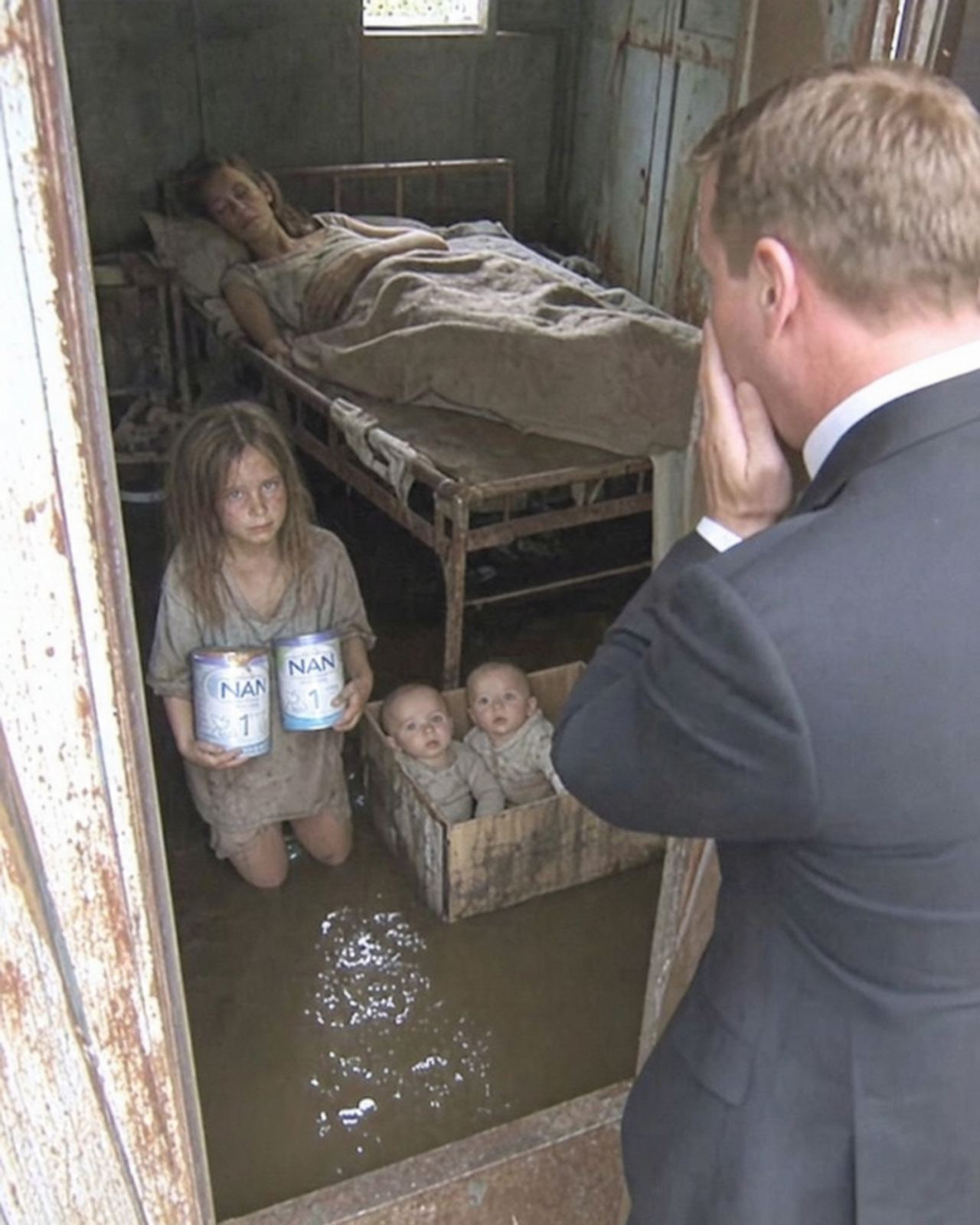
Daniel looked again at the empty pill bottles. He picked one up. Amoxicillin. Another had a faded label. The third had been peeled halfway off and he couldn’t read it.
“When was the last time she saw a doctor?”
Lucy’s silence told him enough.
“We have to call an ambulance,” Daniel said.
“No.” Lucy’s head jerked back in panic. “No, no, we can’t. We don’t have money.”
“That doesn’t matter.”
“It does here,” Lucy said, and for one terrible second the eleven-year-old disappeared and a tired adult stared out from her face. “Everything costs money.”
Daniel drew a slow breath. “Listen to me. If we do nothing, she could die.”
Eli had appeared in the doorway, toy car hanging from his fingers. “Is Mom gonna die?”
The question hit the room like broken glass.
Daniel looked at the little boy, then at Lucy, who seemed to be holding the entire house upright by will alone.
“Not if I can help it,” he said.
He pulled out his phone and dialed 911.
Lucy backed against the wall, trembling. Daniel expected her to cry. She didn’t. Children in houses like this often learned to save tears for later, when nobody needed anything from them.
He gave the dispatcher the address, described Erin’s condition, and asked for EMS as fast as possible.
Then he rolled up his sleeves and got to work.
He sent Lucy to fill a bowl with cool water and bring every blanket in the apartment. He checked the younger boy—Noah, age four, burning with fever but responsive when Daniel touched his forehead. He found a half-empty bottle of children’s acetaminophen under the sink, not expired. He measured a dose with a spoon after washing it himself. He put Eli in charge of holding Noah upright while he swallowed.
“You’re the big man right now,” Daniel told him.
Eli straightened immediately.
By the time sirens approached, Daniel had opened the window a crack for air and gotten Erin to sip two swallows of water without choking.
The paramedics came in fast, efficient, all business. One of them, a broad-shouldered woman with a braid tucked under her cap, looked once at the room and muttered, “Jesus.”
They loaded Erin onto a stretcher. Lucy grabbed Daniel’s jacket. “Can I go?”
“You should.”
“What about my brothers?”
Daniel made the decision before fully thinking it through. Maybe because there was no one else. Maybe because he had already made it the moment he followed her from the store.
“I’ll stay with them,” he said.
Lucy searched his face.
“I promise,” he added.
She climbed into the ambulance with eyes still wide from shock.
As the doors shut, Erin’s head rolled slightly toward the opening. For an instant her half-lidded gaze seemed to snag on Daniel’s face. There was no real awareness there, just fever and fragments. But her lips moved.
“Danny?”
Then the doors closed.
The next twelve hours rearranged Daniel’s life without asking permission.
He took Noah and Eli to the urgent care clinic two neighborhoods over after calling his foreman, Luis, and telling him he wouldn’t make it to the garage. Luis started to ask why, then heard the strain in Daniel’s voice and said only, “Take care of what you need. I’ve got the shop.”
The clinic diagnosed Noah with the flu and an ear infection, Eli with bronchitis heading the same direction. Antibiotics. Rest. Fluids. Clean air, the doctor said, as if such things came standard.
Daniel filled their prescriptions himself.
Then he took them back to the apartment because he didn’t know what else to do. Child services had crossed his mind, of course. So had the police. So had every grim possibility that usually followed households in this condition. But there was a difference between neglect born of cruelty and neglect born of collapse. He had seen enough of both in his life to know the smell of each.
This house smelled of losing, not indifference.
While the boys watched cartoons on Daniel’s phone, he started cleaning. He threw away old takeout containers. He bagged trash. He scrubbed dishes. He opened the curtains. He sorted laundry into piles. He found a broom behind the refrigerator and swept up a civilization of crumbs.
At noon, the hospital finally called back.
Erin had severe pneumonia, dehydration, untreated infection, and what the doctor delicately described as “complications from prolonged medical neglect and malnutrition.” She was being admitted. They asked if he was family.
Daniel looked at the boys on the couch.
“I’m… a friend,” he said.
The doctor hesitated, then lowered his voice. “Off the record? She’s lucky someone called when they did.”
After the call, Daniel stood at the kitchen sink staring out the greasy window at an alley full of wet cardboard and broken pallets. Lucky.
Was that what this was?
Or was it judgment finally catching up to a city that had let a little girl beg on a grocery floor while grown adults called her a thief?
By evening, the apartment looked less like surrender. He had brought over groceries from a larger store, plus soup, cereal, juice boxes, clean towels, and a secondhand electric heater from the garage office. His sister, Claire, dropped off clothes from her sons—sweatpants, hoodies, socks, even a pair of winter boots for Lucy when Daniel guessed her size.
Claire had asked exactly three questions.
“Whose kids are these?”
“Do you need me?”
“Have you eaten?”
When Daniel answered the second with “Probably,” she rolled up her sleeves and started making grilled cheese.
That night Lucy returned from the hospital with dark circles under her eyes and a paper wristband still clinging to one arm. She stopped in the doorway and stared at the apartment as though she had entered the wrong place.
“What happened?”
“Your brothers ate,” Daniel said. “They’ve had medicine. Your mom’s in a room upstairs at St. Mary’s. They’re treating her.”
Lucy looked at the clean dishes drying on a towel. The trash bags by the door. The folded clothes on the couch. She looked at him, and something fragile cracked open.
She burst into tears so abruptly it seemed pain had simply run out of room.
Daniel caught her before she hit the floor.
For a long moment she cried into his jacket, the kind of full-body crying children do only when they finally believe they are allowed. Claire took the boys into the bedroom and closed the door. Daniel stayed where he was, one hand gentle at Lucy’s back, saying nothing.
When she could speak again, it came in pieces.
Their father had left two years earlier. Maybe longer. He sent money twice, then vanished for good. Erin had worked nights cleaning office buildings downtown, then mornings at a motel laundry. She got sick after Christmas but kept working. Then she got weaker. Then she started coughing blood into the sink when she thought the children were asleep.
“Why didn’t you tell anyone at school?” Daniel asked.
Lucy wiped her face with both hands. “Mom made me promise. She said if people found out, they’d split us up.”
That, more than anything, sounded like Erin.
Proud. Scared. Desperate. Certain she could survive one more week if she just held her breath long enough.
“What’s your mom’s real name?” Daniel asked quietly.
Lucy blinked. “Erin Carter.”
“Was it ever Erin Hale?”
Lucy frowned. “She said Hale was her old last name. She doesn’t use it anymore.”
Daniel nodded once. Of course.
Claire set a mug of tea in front of Lucy and waited until the girl wrapped both hands around it.
“Your mom ever mention a man named Daniel Mercer?” Claire asked.
Lucy looked from one to the other. “No.”
Daniel gave Claire a warning look.
Claire ignored him. “Maybe she didn’t want to.”
After Claire left with a promise to return in the morning, Daniel sat with Lucy at the small kitchen table while the boys slept.
“I knew your mother,” he said.
Lucy didn’t answer.
“A long time ago. Before you were born.”
“Were you her boyfriend?”
The bluntness nearly made him laugh, except nothing was funny.
“Something close,” he said. “We weren’t together officially, but… I cared about her. A lot.”
“What happened?”
“She left town.”
“Why?”
“I never knew.”
Lucy stared into her tea. “Maybe she was embarrassed.”
“About what?”
“About us.”
The words landed hard.
Daniel leaned back, studying her face. The gray eyes. Erin’s eyes. The shape of the mouth. He had noticed the resemblance in flashes since morning, but grief and chaos had kept him from touching the thought fully.
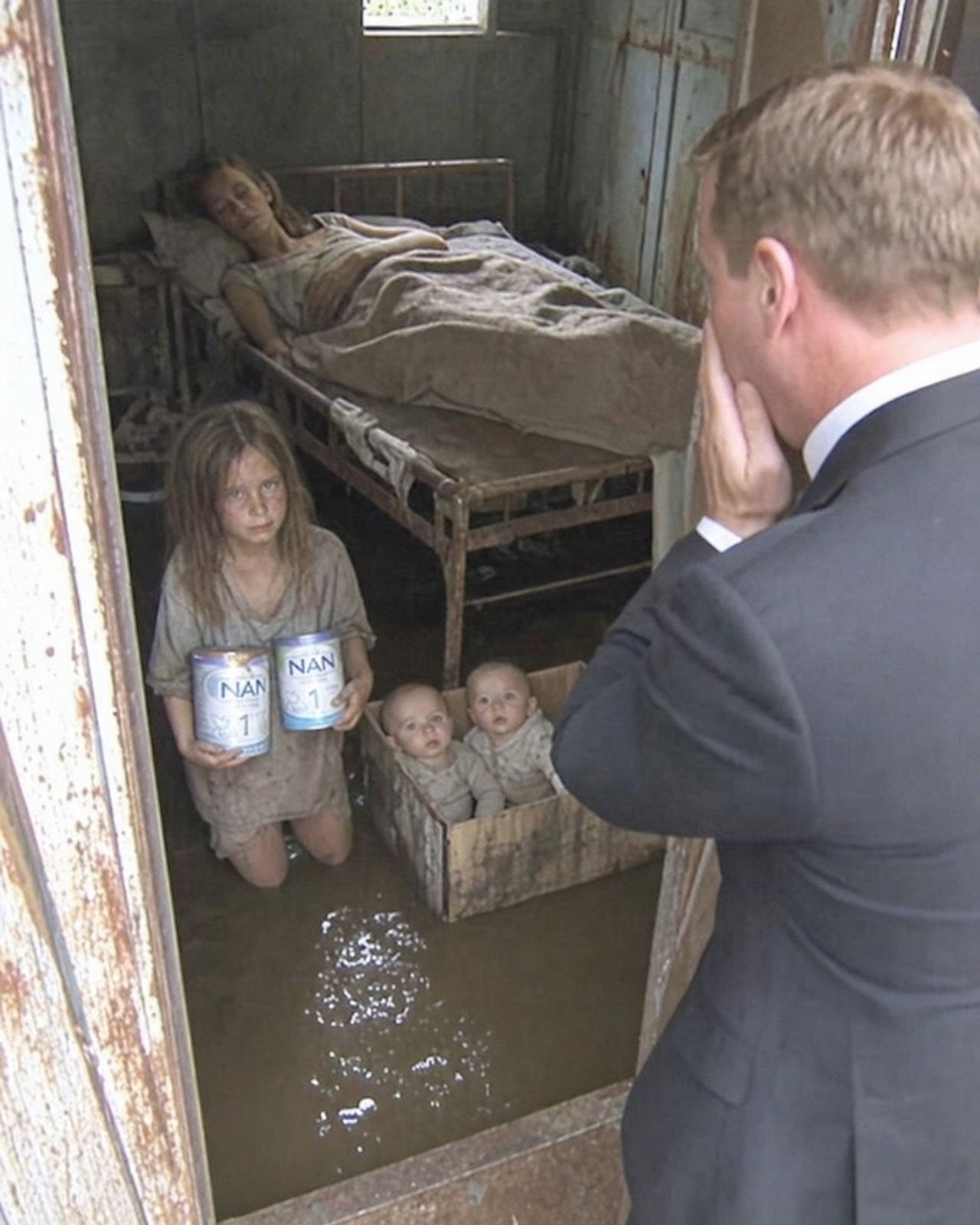
“How old are you, Lucy?”
“Eleven. I turn twelve in June.”
Daniel did the math before he meant to.
Twelve years.
His chest went cold.
No. Plenty of people had gray eyes. Plenty of girls looked like their mothers. He had no right to leap into fantasies stitched from regret. Still, something old and dangerous had woken.
He said nothing more that night.
Erin woke two days later.
Daniel was there.
He had taken the children to school himself that morning after explaining the truth to the principal, who turned pale and immediately assigned a counselor, free meal support, and a district social worker with kind eyes and sensible shoes. Then he drove to St. Mary’s and stood outside Room 614 for a full minute before walking in.
Erin was propped against white pillows, oxygen tubing at her nose, hair brushed back from her face. Clean. Thin. Bruised by illness. Alive.
Her eyes moved to him and widened.
For a second neither of them spoke.
Then Erin whispered, “I knew I was hallucinating.”
“Nope,” Daniel said. “Very real.”
Her lashes fluttered. “You look older.”
“You vanished for twelve years. That tends to happen.”
A strange sound came out of her—half laugh, half sob. She covered her face with trembling fingers.
Daniel stood at the foot of the bed, every rehearsed speech abandoned. Anger was there, yes. But it had been drowned by what he’d seen in that apartment. By Lucy kneeling on a grocery floor. By two sick little boys on a torn couch.
“How bad?” she asked behind her hand.
“Bad enough.”
Her shoulders sagged. “The kids?”
“Safe. Fed. In school today.”
That made her cry for real.
Daniel handed her the tissue box from the bedside table. “Doctor says you’ll recover if you listen to him for once in your life.”
“I was never very good at that.”
“No.”
She dabbed at her eyes, then looked at him again with an expression he remembered too well—one that always came just before she told the truth and hated herself for it.
“You followed her.”
“I did.”
“She looks like me.”
“She does.”
Erin swallowed.
Daniel walked to the chair by the bed and sat down slowly. “I’m going to ask one question, Erin, and I want one answer. No half-answer. No running.” He held her gaze. “Is Lucy my daughter?”
Erin shut her eyes.
He had his answer before she even spoke.
“Yes.”
The room did not tilt or spin. It simply narrowed until the world contained only the woman in the bed and the sound of machines keeping count around them.
Daniel felt twenty-eight and forty at the same time. Furious. Stunned. Protective. Betrayed in ways he could not yet sort.
“How?” he asked, and immediately almost laughed at the stupidity of the word.
Erin let out a ragged breath. “I found out after I left.”
“Why didn’t you tell me?”
She turned her face away. “Because your ex-wife had just taken half your life in the divorce. Because your business was failing. Because you were finally standing back up. Because I had nothing and nowhere stable to offer. Because I was terrified that if I told you, you’d feel trapped.”
“I would have married you.”
“I know,” she whispered. “That’s why I didn’t.”
Daniel stood so abruptly the chair legs scraped the tile.
“You don’t get to make that choice for me.”
“I know.”
“You don’t get to let me spend twelve years thinking you vanished because I wasn’t enough.”
Tears slid into her hairline. “I know.”
He walked to the window and braced both hands on the sill. Below, ambulances idled near the emergency entrance like patient metal animals. He wanted to shout. To break something. To ask every question in the world.
Instead he said, “Does Lucy know?”
“No.”
“Does anyone?”
“No.”
He laughed once, bitter and disbelieving. “So I was just supposed to accidentally discover I have a daughter because she stole milk?”
Erin flinched as if struck.
Instantly he hated himself.
He turned back, rubbed a hand over his mouth, and exhaled hard. “I’m sorry. That was cruel.”
“It was true.”
Silence stretched.
Finally Daniel sat again. “Start from the beginning.”
And she did.
She had left Chicago because her ex-husband, Martin Hale, had found her again. Daniel remembered the name vaguely—a man Erin had once referred to only as a mistake with a wedding ring. Martin had been controlling, violent, and increasingly dangerous when drunk. After the divorce, he’d disappeared. Then one night that summer he showed up behind the diner where Erin worked and told her if she thought she could play house with another man, he’d make her regret it.
“He said he knew where you lived,” Erin said. “He knew your garage. He said accidents happen to men who don’t mind other people’s business.”
So she ran.
“I thought if I disappeared fast enough, he’d lose interest.”
“And when you found out you were pregnant?”
“I was in Milwaukee by then. Working at a motel. Sharing a room with another woman. I wanted to call you every day. I picked up the phone a hundred times.” She looked down at her hands. “But I kept seeing him at your shop with a gun, or setting fire to the place, or following you home. And then months passed, and shame grew roots.”
“Was he after you all those years?”
“Not all. He drifted in and out. He’d find me, then disappear again. He never stayed long. He fathered the boys and left for good after Noah was born.” Her mouth twisted. “He was easier to survive when he didn’t live in the house.”
Daniel stared at her.
She met his eyes and said, without self-pity, “I made stupid choices after I left you.”
He couldn’t argue.
“Why keep my name from Lucy?” he asked.
“Because once I’d hidden it for a year, then three, then five, telling the truth felt bigger and uglier every time. And because I kept thinking I’d fix my life first.” Her voice broke. “I never fixed it.”
Daniel sat with that.
Then, quietly: “You should have trusted me.”
“I know.”
The simplicity of it robbed him of further anger. There was no defense left in her. Only ruin.
When he finally spoke, his voice sounded older than he felt. “I’m not walking away again. Not from her. Not from any of them, until I know they’re okay.”
Erin started to shake her head. “You don’t owe the boys—”
“I know exactly what I owe,” he said. “And I’ll decide the rest myself.”
For the first time since he had entered the room, relief softened her face. It terrified him how hungry she looked for that relief.
“When can I see them?” she asked.
“Tomorrow, probably. Once the doctor clears visitors longer than five minutes.”
“And Lucy?”
“She’s angry you scared her. Also trying very hard not to be.”
That made Erin wince.
“Daniel?”
“Yeah?”
“If she hates me for this, don’t let her.”
He looked at the woman he had once loved, perhaps still did in some battered hidden chamber of himself, and thought: You have no idea how impossible that request is.
Read more stories