
Celebrities & Media
Her Mentally Ill Mom Was Put Away And Her Dad Left Her After She Was Born But Today She’s A TV Legend 0.1
Charlene Tilton reflects on her difficult childhood marked by her mother’s schizophrenia, her father’s absence, and the hardships that shaped her resilience. The article then launches into a long profile of Tom Hanks, tracing how his unstable upbringing helped shape one of Hollywood’s most trusted and enduring stars.

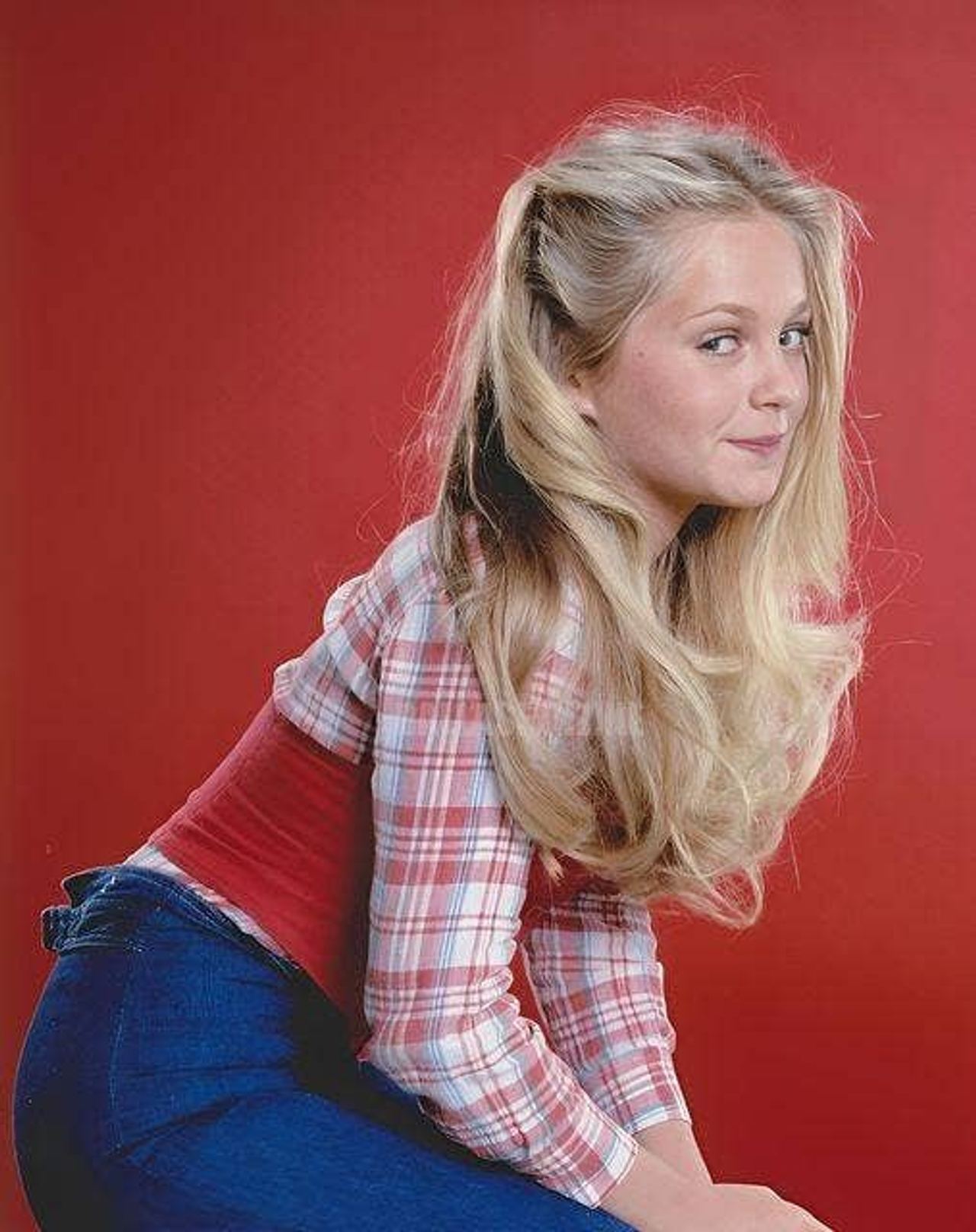
Former “Dallas” star Charlene Tilton is reflecting on the painful experiences that shaped her life long before she became one of television’s biggest stars, revealing how growing up with a mother battling severe mental illness forced her to mature far earlier than most children.
76-Year-Old Grandma Faces Backlash Online For Wearing ‘Inappropriate’ Outfit, Stands Her Ground76-Year-Old Grandma Faces Backlash Online For Wearing ‘Inappropriate’ Outfit, Stands Her Ground
Read More
In a new interview with People, the 64-year-old actress spoke candidly about her difficult upbringing, describing a childhood marked by instability, poverty and uncertainty. Tilton said her mother, Katherine, struggled with schizophrenia for much of her life, and the illness eventually became so severe that she was hospitalized in a psychiatric institution for several years while Charlene was still a young girl.
Charlene Tilton as Lucy Ewing in a 1978 promotional still for the first season of ‘Dallas’, Photo Credit: _ _70 ler 80 ler 90 ların TV Dizileri/Facebook_
Tilton also revealed that she grew up without a relationship with her biological father, an Air Force pilot who left before she was born. She said he never attempted to contact her, even after she became a household name through the hit primetime drama “Dallas.”
Years later, DNA testing connected Tilton with three half-siblings she had never known existed. Although she discovered more about her father’s family, she learned he had died just months before the results came back, leaving no opportunity for a reunion.
Despite the disappointments, Tilton said she has chosen not to dwell on resentment.
Charlene Tilton holding a sign that says “DALLAS” while wearing a vintage red and white tennis outfit, 1978
Instead, she credits her optimistic outlook with helping her survive years of emotional hardship.
Among her earliest memories are frightening episodes involving her mother’s illness, including public breakdowns, police interventions and periods when she was left in unfamiliar places while authorities took her mother away for treatment.
Film became her escape from reality.
She recalled being captivated by classic movies starring Julie Andrews, imagining what it would be like to have the warm, caring mother she watched on screen.
Charlene Tilton wearing a denim overall jumpsuit with a peach-colored t-shirt
After her mother was institutionalized, Tilton spent years moving from one relative’s home to another. Hearing family members debate who would take responsibility for her left a lasting impression and fueled her determination to become independent.
When she eventually reunited with her mother in California, life remained extremely difficult.
Tilton described living in unsanitary conditions and said her mother’s illness made everyday life unpredictable. Because of the circumstances at home, she rarely invited classmates over, fearing they would discover how she lived.
She also remembered the stigma surrounding mental illness during that era, saying few people openly discussed psychiatric disorders, leaving families to cope largely in silence.
Her breakthrough role as Lucy Ewing on “Dallas” in 1978 finally brought financial stability, but it did not erase the challenges at home. Tilton said her mother’s struggles continued, even sending unusual letters to the show’s producers while Charlene focused on building her career.
Charlene Tilton attending the red carpet premiere event for the movie ‘Heaven Sent’
Although the actress earned a substantial television salary, much of it went toward supporting both her daughter and her mother. Financial pressures eventually led to foreclosure on her home, forcing her to start over with very little.
Tilton also endured heartbreak in her personal life, including the collapse of her marriage to country singer Johnny Lee and the unexpected death of her fiancé, cinematographer Cheddy Hart, in 2009.
She admitted that grief briefly overwhelmed her before volunteering with Actors for Autism helped restore her sense of purpose.
Today, Tilton says she enjoys spending time with her grandsons, continues acting in occasional faith-based projects, and embraces this chapter of life with gratitude. Looking back, she believes every hardship ultimately helped shape the resilience that carried her through decades of personal and professional challenges.
Continue reading
Tom Hanks at 70: The Shy California Boy Who Became America’s Most Trusted Movie Star
Tom Hanks has spent much of his career playing ordinary men placed in extraordinary circumstances.
A frightened astronaut struggles to return home. A devoted father searches for his missing child. A soldier crosses a devastated continent because someone must keep a promise. A lonely executive talks to a volleyball to preserve his sanity. A soft-spoken television host listens so carefully that another man finally begins to heal.
Hanks rarely plays the strongest person in the room. His characters are often confused, exhausted or afraid. What distinguishes them is the decision to keep going.
That quality helped turn him into one of the most trusted figures in American popular culture. For more than four decades, Hanks has moved between broad comedy, romantic drama, war films, historical stories and intimate character studies without losing the approachable humanity audiences first recognized in him.
Born on July 9, 1956, Thomas Jeffrey Hanks turned 70 in 2026. He has won two Academy Awards, received the Presidential Medal of Freedom and built a body of work that has become intertwined with the memories of several generations.
Yet the reassuring figure known around Hollywood as a dependable professional emerged from an unsettled childhood marked by divorce, frequent moves and a painful sense of not quite belonging anywhere.
The Boy Who Lived in Ten Houses
Hanks was born in Concord, California, to Janet Marylyn Frager, a hospital worker, and Amos “Bud” Hanks, a traveling restaurant cook.
His parents divorced when he was about four. Tom and his two older siblings went to live with their father, while their younger brother remained with their mother. The arrangement divided the family and began years of movement between homes, communities and new parental relationships.
By the age of 10, Hanks had reportedly lived in 10 different houses. He later described his upbringing as fractured and confusing rather than openly abusive. There was no single dramatic catastrophe—only the repeated experience of packing, leaving and adapting.

For a child, constant movement can create two opposite instincts. One is withdrawal. The other is observation.
Hanks developed both.
He remembered himself as painfully shy and socially awkward, yet capable of making comic remarks during classroom filmstrips. He was not a troublemaker or natural center of attention. He was the boy watching everyone else closely enough to understand what might make them laugh.
That childhood helps explain the particular sensitivity he later brought to outsiders. Whether playing a boy trapped in an adult body in Big or a man completely alone in Cast Away, Hanks understood characters forced to enter unfamiliar environments and learn their rules quickly.
Finding a Home Backstage
Hanks attended Skyline High School in Oakland, where he appeared in school productions. After graduation, he enrolled at Chabot College and later transferred to California State University, Sacramento, to study theater.
College did not transform him instantly into a polished performer. He was still learning how plays were built and how actors sustained a story night after night.
A decisive education came through the Great Lakes Shakespeare Festival in Ohio. Hanks became an intern and worked in nearly every part of theatrical production. He helped build sets, handled props, worked with lighting and watched experienced actors rehearse classical texts.
The experience gave him more than stage training. It taught him that performance depends on an entire crew. Long before he became powerful enough to produce films, Hanks understood how many people were required to place one actor before an audience.
He eventually left college before completing his degree and moved to New York. Like thousands of aspiring actors, he entered a profession that offered little security. There were auditions, minor stage opportunities and long stretches in which a sustainable career remained uncertain.
Then a low-budget horror film opened the first door.
A Horror Movie, a Sitcom and an Unexpected Break
Hanks made his feature-film debut in He Knows You’re Alone, released in 1980. His role was small, and the film gave little indication that he would become one of the defining actors of his generation.
His first major visibility came from television.
Hanks and Peter Scolari were cast in Bosom Buddies, a sitcom about two men who disguise themselves as women to live in an affordable female-only residence. The premise was broad and frequently absurd, but Hanks displayed an important gift: he could commit completely to physical comedy without appearing to ask the audience for approval.
The series lasted only two seasons, yet it gave him experience and introduced him to influential people in the industry.
Director Ron Howard later cast Hanks in Splash, the 1984 romantic comedy about a New York man who falls in love with a mermaid played by Daryl Hannah. The film became a substantial success.
Hanks was charming, funny and vulnerable. He did not look like an invincible leading man. He looked like someone who could be overwhelmed by love and still remain appealing.
Success in Bachelor Party and other comedies followed. For several years, however, Hollywood struggled to understand whether Hanks was a genuine leading actor or simply a likable comic performer.
The answer arrived in 1988.
The Child Inside the Adult
In Big, Hanks played Josh Baskin, a 12-year-old boy whose wish to become an adult is mysteriously granted.
The role could have become a collection of childish mannerisms. Instead, Hanks built the performance around emotional truth. Josh does not merely behave foolishly; he experiences the adult world with the trust, fear and excitement of someone who has entered it too soon.
The famous scene in which Hanks and Robert Loggia dance across a giant floor piano became an emblem of the film’s joy. But the quieter moments made the character memorable: Josh’s homesickness, his confusion about romance and his growing recognition that adulthood carries loneliness as well as freedom.
The performance earned Hanks his first Academy Award nomination for Best Actor.
It also revealed the foundation of his screen appeal. Hanks could protect innocence without turning it into sentimentality. He invited audiences to remember the person they had been before disappointment made them more cautious.
That emotional openness would later become one of his greatest strengths.
First, however, his career stalled.
The Years When Success Was No Longer Guaranteed
After Big, Hanks appeared in a series of films that performed unevenly. Some found audiences, while others disappeared quickly or were poorly received.
The period was important because it demonstrated that early success did not guarantee lasting stardom. Hanks was approaching middle age in an industry that often replaces performers as soon as their commercial value becomes uncertain.
His revival began with A League of Their Own in 1992.
As Jimmy Dugan, a bitter former baseball star assigned to manage a women’s team during World War II, Hanks played a man whose authority had been weakened by alcohol and disappointment. His declaration that there was no crying in baseball became one of the film’s most remembered moments, but the performance worked because Jimmy slowly learns to respect the women he initially dismisses.
The following year brought two films that transformed Hanks permanently.
In Sleepless in Seattle, he became a mature romantic leading man. In Philadelphia, he confronted illness, discrimination and death.
The distance between those performances revealed how far he had traveled.
The Role That Changed How America Saw Him
In Jonathan Demme’s Philadelphia, Hanks played Andrew Beckett, an accomplished attorney who is dismissed from his firm after his employers discover that he has AIDS.
Released during a period when fear and prejudice surrounding HIV/AIDS remained widespread, the film brought the subject into mainstream American theaters through the story of a man seeking legal recognition of the discrimination against him.
Hanks lost weight and allowed the physical deterioration of the character to unfold gradually. More importantly, he played Andrew as a complete person rather than a symbol created only to educate the audience. He was intelligent, proud, frightened, loved by his family and unwilling to accept humiliation quietly.
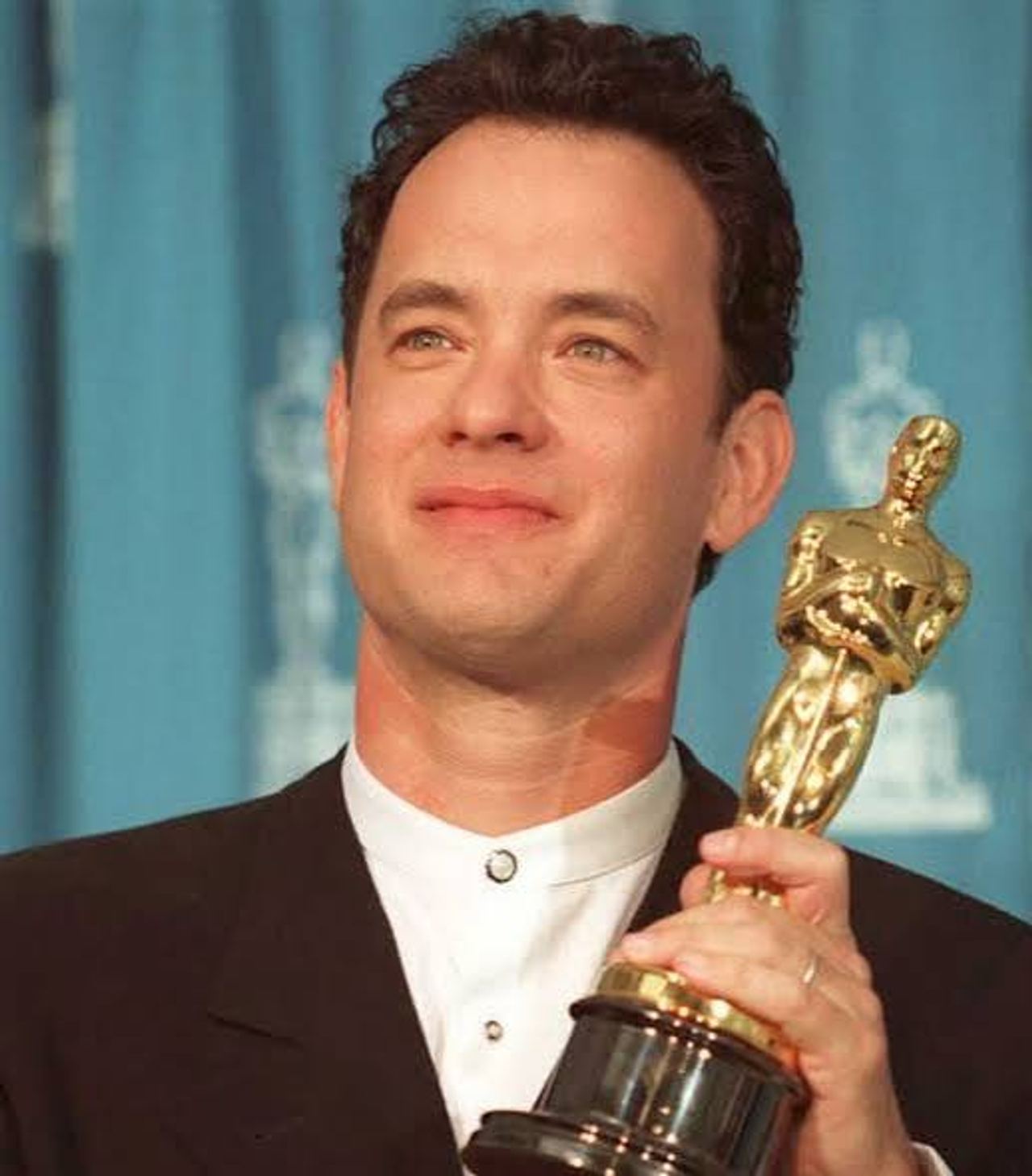
The performance won Hanks the Academy Award for Best Actor.
His acceptance speech became one of the era’s most discussed Oscar moments. Yet the lasting significance came from the film itself. Hanks had moved beyond comic likability and demonstrated that audiences would follow him into grief, injustice and mortality.
One year later, he did something even rarer.
Forrest Gump and the Second Oscar
In Forrest Gump, Hanks portrayed an Alabama man whose life intersects with several major events in postwar American history.
Forrest’s intellectual limitations could easily have been played cruelly or sentimentally. Hanks instead concentrated on honesty, loyalty and the character’s direct way of interpreting the world.
The film became a cultural phenomenon. Its images—the park bench, the feather, the cross-country run and Forrest waiting for a bus—entered American popular memory. It appealed particularly strongly to viewers who recognized the historical periods moving behind the character: Vietnam, political assassination, protest, Watergate and the changing social landscape of the late 20th century.
Hanks won his second consecutive Academy Award for Best Actor. He became the first male performer since Spencer Tracy in the 1930s to win the category in back-to-back years.
The achievement placed him in an elite group. More significantly, the two winning roles defined his public identity.
Andrew Beckett confronted injustice with dignity. Forrest Gump survived history without surrendering decency.
Tom Hanks had become more than a successful actor. He had become a reassuring expression of how Americans wanted to see themselves.
Apollo 13 and Competence Under Pressure
Hanks reunited with Ron Howard for Apollo 13, playing astronaut Jim Lovell.
The film dramatized the 1970 lunar mission that was aborted after an oxygen tank exploded, leaving the crew struggling to return safely to Earth. The outcome was already known, yet the movie generated extraordinary suspense by emphasizing problem-solving, teamwork and disciplined communication.
Hanks’s Lovell is not presented as a swaggering hero. His authority comes from calm preparation. He understands that panic wastes time and that survival depends on specialists trusting one another.
This became another defining Hanks character: the professional who performs his duty while everyone around him recognizes the seriousness of failure.
The actor’s personal fascination with the space program added conviction to the role. He later supported space exploration and helped produce projects about American achievements beyond Earth. The Obama White House cited that advocacy when honoring his broader cultural contributions.
For viewers who remembered the real Apollo era, the film carried the emotional power of shared history. It celebrated a version of America built not on individual dominance, but on engineers, astronauts and controllers working together.
Saving Private Ryan and the Burden of Command
In Steven Spielberg’s Saving Private Ryan, Hanks played Captain John Miller, a schoolteacher turned Army officer leading a dangerous mission through occupied France after the Normandy invasion.
The film’s opening depiction of Omaha Beach shocked audiences with its intensity. Yet Hanks’s performance remained controlled. Miller is exhausted, frightened and aware that every order may send another man to his death.
His hands shake. He conceals personal details from his soldiers. He cannot afford the luxury of explaining every decision.
The character embodied leadership without romanticizing it. Miller’s authority comes from accepting responsibility for consequences he cannot fully control.
Hanks received another Academy Award nomination for the performance.
The film deepened his involvement in preserving and interpreting American military history. Over the years, he helped produce major television projects including Band of Brothers and The Pacific, using long-form storytelling to explore war through the experiences of individual service members.
When President Barack Obama presented Hanks with the Presidential Medal of Freedom in 2016, the White House specifically recognized his respect for veterans and military families as well as the lasting influence of his films.
The Most Famous Friendship With a Volleyball
In Cast Away, Hanks played FedEx executive Chuck Noland, the sole survivor of a plane crash who becomes stranded on an uninhabited island.
Large portions of the film depend almost entirely on him. There are no supporting actors available to create conversation, conflict or comfort. Hanks must show time passing through physical deterioration, practical problem-solving and the gradual alteration of Chuck’s inner life.
He lost significant weight during production, but the transformation mattered because it reflected a deeper stripping away. Chuck begins as a man obsessed with schedules. On the island, the clock becomes meaningless.
His companion is Wilson, a volleyball marked with a bloody handprint. Hanks makes the relationship believable because Chuck is not pretending that the ball is literally alive. He is creating another presence because prolonged isolation without language could destroy him.
When Wilson drifts away, Hanks turns the loss into one of the most emotionally devastating scenes of his career.
The role earned him another Best Actor Oscar nomination.
For audiences entering middle age, the final sections of Cast Away carried a painful truth: survival does not guarantee that the life one left behind will still be waiting.
The Voice Behind Woody
While Hanks was building one of the great live-action careers of his generation, he also helped create one of animation’s most enduring characters.
Beginning with Toy Story in 1995, he voiced Woody, the cowboy doll who fears being replaced when Buzz Lightyear arrives in a child’s bedroom.
Woody is loving but insecure, loyal but capable of jealousy. Hanks’s voice gives the character comic energy while preserving his anxiety about becoming unnecessary.
Across the sequels, Woody’s story evolved into a meditation on parenthood, aging and letting go. His purpose is to care for a child, yet every child eventually grows beyond the toys once considered indispensable.
That theme resonated powerfully with adults who had taken their children to the first film and later returned with grandchildren.
Through Woody, Hanks reached audiences too young to know Big, Philadelphia or Saving Private Ryan. His voice became part of another generation’s childhood.
Producer, Director and Keeper of American Stories
Hanks expanded beyond acting by co-founding the production company Playtone with producer Gary Goetzman.
The company has been associated with films, miniseries and documentaries exploring American history, music, politics and social change. Hanks also directed That Thing You Do!, a warm and sharply observed film about a fictional 1960s pop band experiencing sudden success.
As a producer and writer, he has repeatedly returned to stories about institutions and ordinary people inside major historical events.
That interest reflects a larger characteristic of his career. Hanks is drawn to the machinery behind public mythology: the engineers behind a space mission, the soldiers behind a military victory, the reporters behind an investigation and the crew members whose work makes a national achievement possible.
He often plays individuals, but the films ultimately celebrate collective effort.
Marriage, Family and a Public Image Built on Stability
Hanks married actress Samantha Lewes in 1978. They had two children, Colin and Elizabeth, before divorcing in 1987.
He married actress and producer Rita Wilson in 1988 after they had worked together. They have two sons, Chet and Truman. Hanks is therefore the father of four children, several of whom have developed careers in acting, writing, music or film production.
His marriage to Wilson became one of Hollywood’s most enduring partnerships. Their public image has generally emphasized affection, collaboration and mutual support, though Hanks has acknowledged that no long marriage can be reduced to an effortless fairy tale.
In 2020, Hanks and Wilson became two of the first globally famous people to announce that they had tested positive for COVID-19. Their calm public messages came during the earliest, most uncertain period of the pandemic and made the growing crisis feel immediate to millions of Americans.
The moment demonstrated the unusual degree of trust attached to Hanks. News of his illness felt less like distant celebrity information and more like hearing that a familiar neighbor had become sick.
Mr. Rogers and the Power of Listening
In A Beautiful Day in the Neighborhood, Hanks portrayed Fred Rogers, the beloved children’s television host.
The casting appeared almost inevitable because both men had become associated with kindness. Yet Hanks avoided turning Rogers into a comforting impersonation.
His performance emphasized patience as an active discipline. Rogers listens with complete attention, allowing silence to continue until another person is ready to speak. His gentleness is not passivity. It is a deliberate way of confronting anger without reproducing it.
Hanks received his sixth Academy Award nomination and his first in the supporting-actor category.
The role also clarified why Americans had come to trust him. Like Rogers, Hanks projects familiarity without seeming careless about the responsibility that familiarity creates.
He does not merely appear friendly. At his best, he makes audiences feel that their fears and disappointments have been noticed.
Honors for a National Storyteller
Hanks received the American Film Institute’s Life Achievement Award in 2002. The AFI described the honor as recognition of his commitment to craft, artistic excellence and profound ability to captivate audiences through storytelling.
He later received the Kennedy Center Honors and the Cecil B. DeMille Award, among numerous other career tributes.
In 2016, President Obama awarded him the Presidential Medal of Freedom, the nation’s highest civilian honor. The official citation recognized not only his acting but his advocacy for veterans, social and environmental causes and space exploration.
Such recognition confirmed what audiences had understood for years: Hanks had moved beyond movie stardom and become part of America’s cultural self-image.
Why Tom Hanks Still Matters
For Americans over 50, the career of Tom Hanks forms a personal timeline.
They remember him wearing a dress on Bosom Buddies, dancing across the giant piano in Big and sitting beside Meg Ryan at the top of the Empire State Building. They watched him confront discrimination in Philadelphia, travel through history in Forrest Gump and stand on a shattered beach in Saving Private Ryan.
They heard him promise that Woody would remain loyal and watched him apologize helplessly as Wilson disappeared into the Pacific.
Hanks endured because he never made goodness seem easy.
His characters experience anger, jealousy, terror and despa…
Read more stories
- Mom screamed, “Get out and never come back,” so I left, and weeks later, when my dad asked why I stopped paying the mortgage, I looked at him and said, “I’m not your child.”
- The General Saluted a Truck Driver—Then Saw the Wristband
- “My mom flies an F-22 fighter jet.”
- A Storage Key Revealed the Truth Behind Her Son’s 25-Year Silence