
News
Willie Nelson’s First Home Was Loss—and the Music That Followed
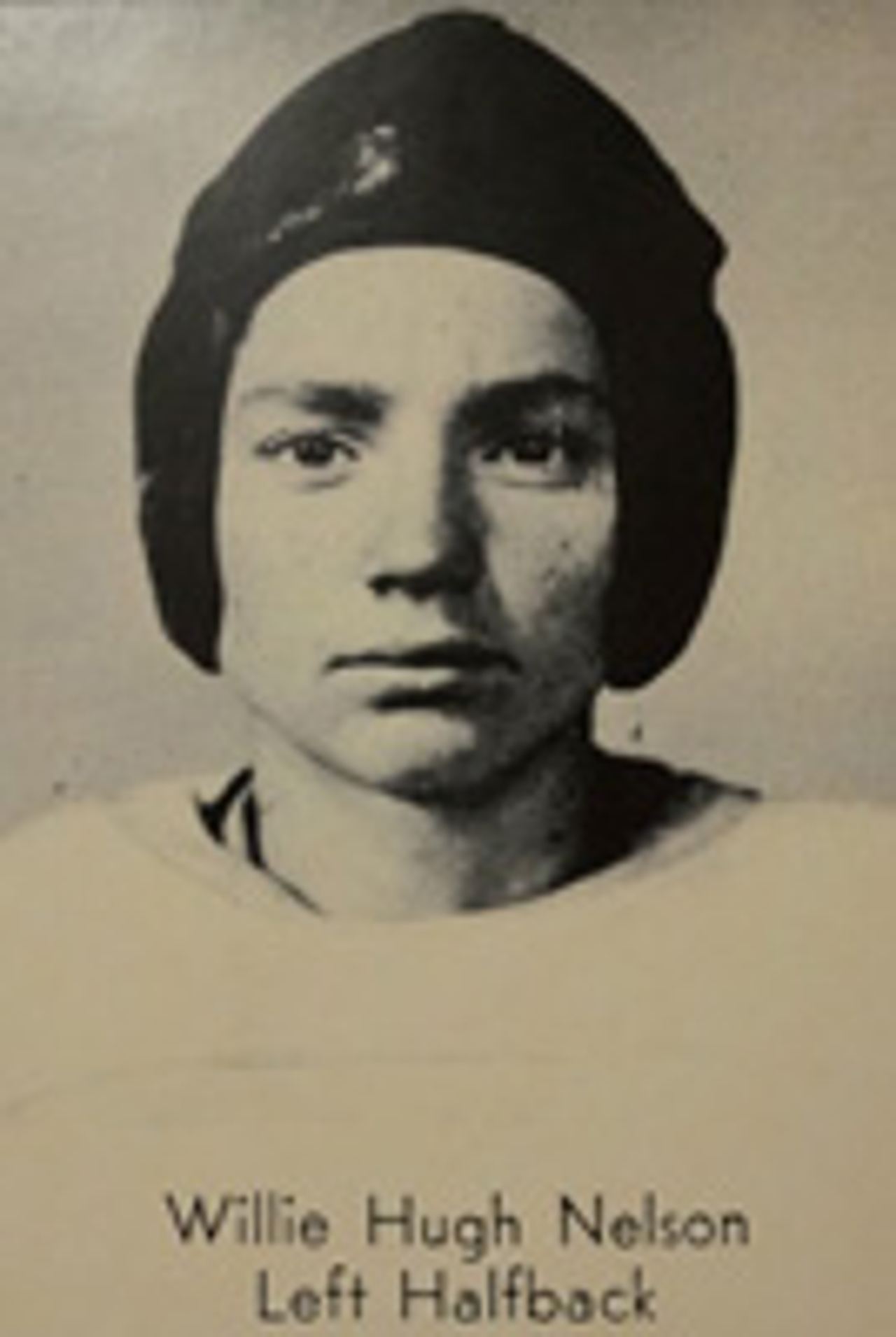
Long before fame turned him into an American institution, Willie Nelson’s childhood in Abbott, Texas, was shaped by abandonment, Depression-era hardship, and the steady presence of his sister Bobbie and their grandparents.


A childhood narrowed by absence
Before Willie Nelson became a symbol of American songwriting and road-worn endurance, he was a baby in a small Texas town where life had already broken open. In Abbott, during the Great Depression, his mother left when he was still an infant. His father was gone soon after. The loss came so early that memory could not hold their faces, but absence has its own way of becoming permanent.
For a child, abandonment is not always dramatic in the moment. Sometimes it arrives as a silence that settles over the house and stays there. For Willie and his older sister, Bobbie, the world quickly contracted to the people who remained, the routines that could be relied on, and the emotional knowledge that the two people meant to anchor their lives had walked away before those lives had even begun.
Abbott, Texas, in the shadow of the Depression
The setting mattered. Abbott was a small Texas town, and the years were hard ones for almost everyone. The Great Depression was not just an economic event but a daily condition, felt in work, food, clothing, and the plain effort of getting through the week. Families made do because they had to, and children learned early that security was fragile.
For two abandoned children, that reality was sharper still. There was no easy cushion against hardship, no sentimental way around what had happened. Survival depended on the adults willing to step in, keep a household going, and offer some kind of steadiness even when money and certainty were scarce.
The grandparents who made a home
That steadiness came from Willie and Bobbie’s grandparents, William and Nancy Nelson, who took the children in and raised them. Their home did not erase the pain of what had happened, but it gave the siblings the essential things abandonment had threatened to take away: shelter, routine, discipline, and care. In practical terms, that meant the unglamorous labor of child-rearing during one of the hardest periods in modern American life.
The significance of that home is easy to miss when looking backward from celebrity. But before there was a legend, there was a pair of grandparents doing the work that needed doing. They offered a structure within which two children could grow, and in that structure Willie found the first conditions that made endurance possible.
Before music became a career, it was something steadier: a place to go when the rest of life felt uncertain.
What does not disappear
Early loss does not simply fade because a child gets older. It changes shape. What begins as abandonment becomes temperament, longing, self-protection, and a lifelong sensitivity to departure. For Willie Nelson, the fact that both parents left before he was old enough to know them was not a detail to be filed away; it was part of the emotional climate of his life.
There is a particular loneliness in being unable to remember the very people whose absence defines you. No vivid scenes, no spoken explanations, no final conversation—only a gap. That kind of emptiness can remain quiet for years, but it does not stop being formative. It becomes one of the hidden facts behind resilience, intimacy, and the search for something lasting.
Music as a refuge before it was a future
Into that space stepped music. Long before audiences, studios, buses, and the accumulated mythology of a life onstage, songs offered something more immediate and more necessary. Music was not yet ambition. It was consolation, order, repetition, expression—a dependable place to return when family itself had proved unreliable.
That helps explain why music could become so central. In a childhood defined by scarcity and rupture, it provided continuity. A melody could be revisited. A song could be learned, repeated, inhabited. Where other parts of life had vanished, music stayed. Its value was emotional before it was professional, rooted in survival before success.
Bobbie, the witness beside him
If music was one pillar of Willie Nelson’s inner life, his sister Bobbie was the other. Older than Willie and marked by the same abandonment, she did not need the family story translated for her. She had lived it too. Shared loss can create a bond unlike any other, especially between siblings whose earliest understanding of the world was shaped by the same departure.
That bond matters because it meant Willie was not entirely alone inside his experience. Bobbie stood as witness to the same beginning, carrying the same knowledge of what had been taken and what had remained. In a life that started with people leaving, her presence was a form of continuity—someone who knew the history without being told, and who remained when others had not.

Quick Facts
- Subject: Willie Nelson
- Hometown: Abbott, Texas
- Sister: Bobbie Nelson
- Grandparents who raised him: William and Nancy Nelson
- Early context: The Great Depression
- Formative anchors: Music and his sister Bobbie
Image credits: Robbiework at English Wikipedia (Original text: Robbiework (talk)) / Wikimedia Commons / CC BY-SA 3.0; Minette Layne / Wikimedia Commons / CC BY-SA 2.0; Abbott High School / Wikimedia Commons / Public domain.

