
News
Why Kenny Rogers Chose Home Over the Road for His Twin Sons
After a lifetime of sold-out tours and global fame, Kenny Rogers found his most meaningful audience in his own living room, where Justin and Jordan Rogers discovered music with their father close by.


A superstar’s favorite band was the one at home
Kenny Rogers spent decades as one of the most recognizable voices in popular music, the kind of artist who could fill arenas and command a stage with ease. But in his later years, the music that mattered most was no longer echoing through stadium sound systems. It was coming from inside his house, where his twin sons, Justin and Jordan, began shaping a small family band of their own.
In the 2010s, the boys’ interest in music deepened in a way that felt both natural and intimate. Justin gravitated to guitar, drawn not just to the instrument itself but to the image and sound of the father he had watched perform. Jordan settled behind a drum kit, giving the duo a pulse to match the melody. In that domestic setting, music stopped being only Kenny Rogers’ profession and became something shared across generations.
Songs the world knew as classics sounded different in the kitchen
Justin and Jordan grew up in unusual surroundings, where soundchecks, backstage routines and tour buses were simply part of life. For many children, the music business is distant and glamorous. For the Rogers twins, it was familiar. They absorbed its rhythms early, not as outsiders peering in, but as boys watching their father work.
At home, though, those famous songs carried a different meaning. The twins would wander through the house singing tunes that millions of listeners associated with country music history. To the public, they were standards from a legendary catalog. To the boys, they were just their dad’s songs. That difference gave the music a tenderness fame could never create.
To millions, they were Kenny Rogers hits. To Justin and Jordan, they were simply Dad’s songs.
A late chapter of fatherhood came with sharper priorities
For Rogers, seeing Justin learn his first guitar chords was not just charming; it was deeply personal. He had spoken candidly over the years about the cost of a life spent on the road. Success had brought acclaim, records and a place in music history, but it had also taken time he could never fully reclaim, especially during the early years of his older children’s lives.
That reality seemed to shape the way he approached fatherhood later on. In his twin sons’ childhood, he appeared determined to be more present, more available and more conscious of the ordinary moments that touring can so easily erase. Listening to a child stumble through the first notes on a guitar became more meaningful than another night of applause from a distant crowd.
Walking away from touring was its own kind of statement
When Rogers eased away from the road, the decision reflected more than age or fatigue. It carried the weight of intention. For an artist whose career had been built in motion, stepping back meant resisting the very machinery that had defined him for so long. It meant choosing stillness over momentum, home over itinerary.
That choice revealed something essential about him. He had already secured the legacy that performers chase for a lifetime. What remained was not another round of proving himself to ticket buyers, but the quieter work of being present. He wanted to be in the room for the first hesitant strums, the household singalongs, the small breakthroughs that never make headlines but shape a family forever.
The living room became a place of redemption
There is a particular poignancy in imagining Kenny Rogers, a man associated with massive audiences, finding peace in a private rehearsal at home. Watching Justin and Jordan make music together offered him something the industry never could: a chance to experience the kind of fatherhood that a relentless career had once interrupted.
Redemption, in this case, did not come through grand gestures. It came quietly. It lived in attention, in time, in the decision to hear those first clumsy notes instead of missing them. For a star who had long lived under the pressure of performance, that kind of ordinary closeness may have been the most profound encore of all.
A legacy measured in more than records
Kenny Rogers left behind one of the most beloved catalogs in country and popular music, and fans still return to those songs for their storytelling, warmth and unmistakable voice. Yet his legacy also includes the more private image of a father making sure his children knew him not only as a star, but as someone who was there.
That may be why this chapter resonates so strongly. It reframes celebrity at the point where it meets real life. Long after chart success and sold-out venues become part of the official record, what endures most vividly is often something smaller: a guitar in a young boy’s hands, a brother at the drums, and a father who decided that being home was the role he most wanted to play.

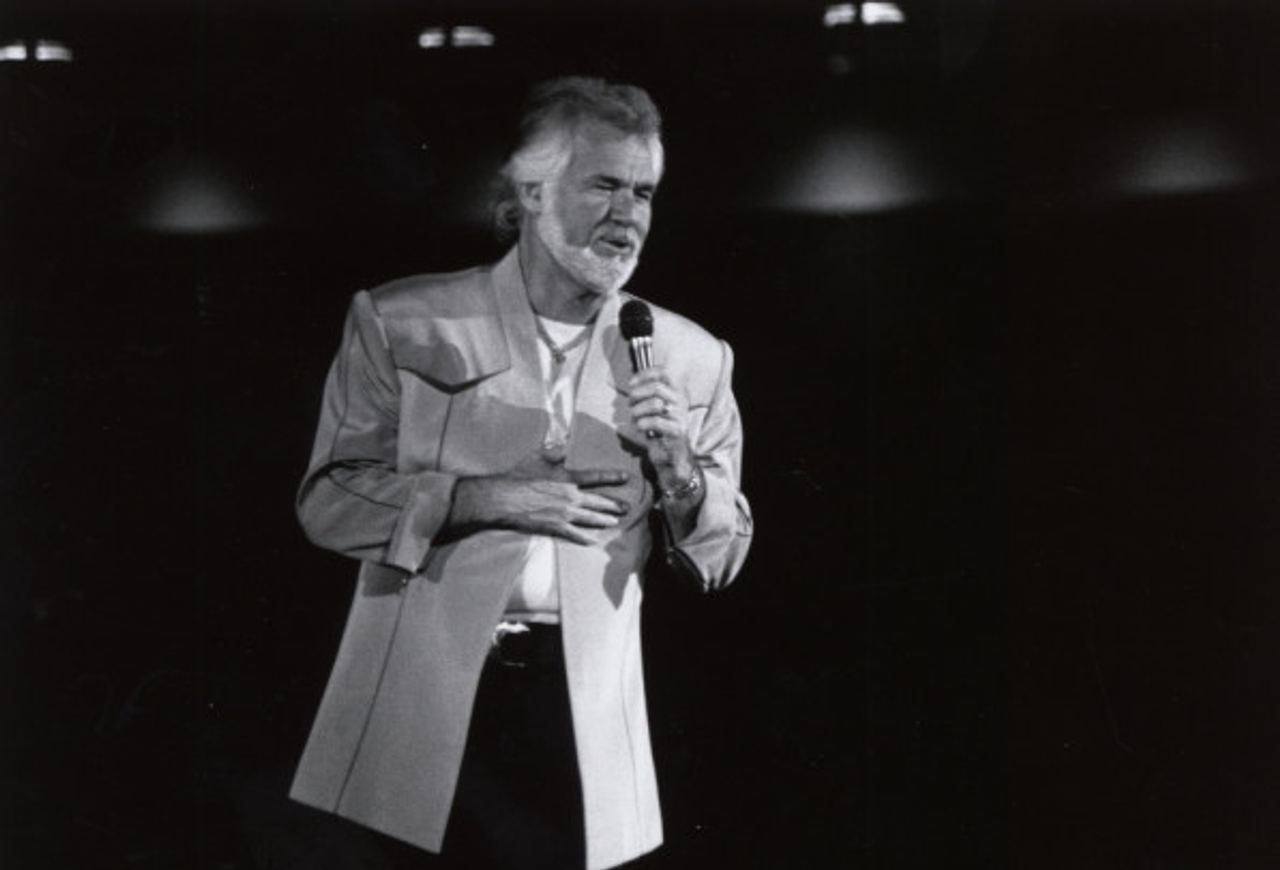
Quick Facts
- Subject: Kenny Rogers
- Children mentioned: Twin sons Justin Rogers and Jordan Rogers
- Justin’s instrument: Guitar
- Jordan’s instrument: Drums
- Core theme: Kenny Rogers stepped back from touring to be present for his sons
- Setting of the family band: Their home living room
Image credits: Philpottm / Wikimedia Commons / CC BY-SA 3.0; User kw111786 on Flickr (Original version) User UCinternational (Crop) / Wikimedia Commons / CC BY-SA 2.0; University of Houston Digital Library / Wikimedia Commons / CC BY-SA 2.0.

