
News
Why Dolly Parton Spoke So Forcefully for Charley Pride
In the 2019 documentary Charley Pride: I’m Just Me, Dolly Parton did more than praise an old friend: she used her stature to insist that country music remember what Charley Pride achieved, and what it cost him to achieve it.

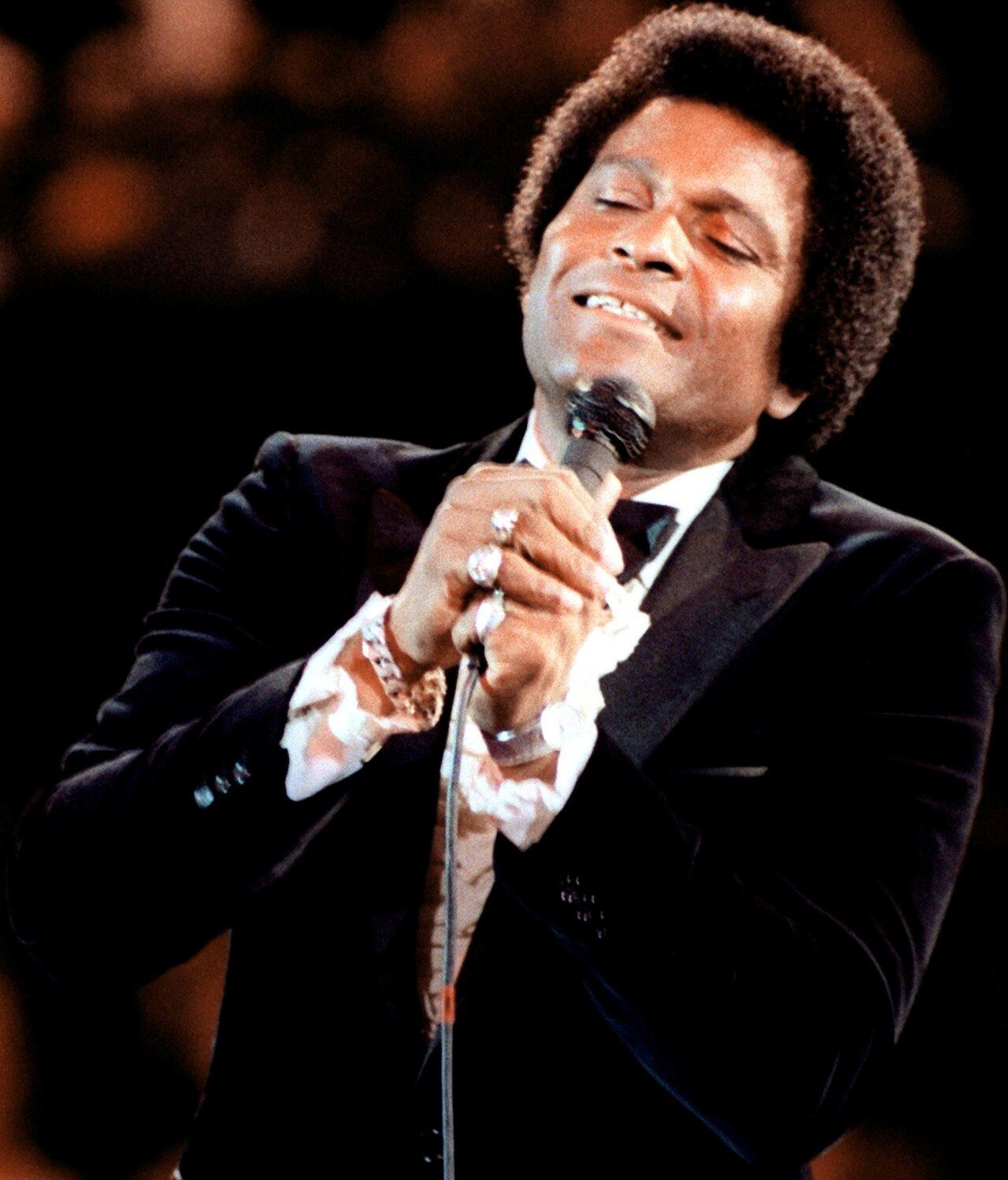
A defense delivered on camera
When Dolly Parton appeared in Charley Pride: I’m Just Me, her message was not vague nostalgia. She spoke with the authority of someone who knew both the man and the machinery of country music, and she made sure the record was plain: Charley Pride was not a symbolic figure to be politely admired after the fact. He was a commercial giant, a relentless worker, and a star who succeeded in an industry that had every reason, and plenty of habit, to keep him at the margins.
What gave Parton’s comments unusual force was their target. She was addressing not just viewers, but the culture of Nashville itself: the gatekeepers, the old myths, the tendency to smooth over hard history once it becomes uncomfortable. By reminding the “white boys” of country music how much Pride sold and how decisively he won over audiences, she reframed him not as an exception but as a central figure in the genre’s modern history.
He had the hits, the voice, and the staying power — and Dolly Parton knew that reminding Nashville of those facts was its own kind of justice.
What Charley Pride had to walk through
Pride’s ascent was remarkable not simply because he became famous, but because of where and how he did it. In the 1960s and 1970s, he took country stages across a segregated South where a Black performer in a white-coded genre could face cold silence before he sang a note. Some crowds did not know how to receive him; some resisted openly. Yet his method was strikingly disciplined. He did not build his career through confrontation or spectacle. He stood there, sang with warmth and precision, and let the songs do the work.
That restraint was not passivity. It was stamina. Before music, Pride had worked in cotton fields and pursued baseball, and both experiences sharpened the qualities that would define his public life: endurance, focus, and an ability to keep moving through rejection. By the time he became one of country music’s dominant hitmakers, the achievement carried a meaning deeper than sales or trophies. He had crossed lines that the business had long treated as fixed.
A catalog too big to minimize
Parton’s insistence on Pride’s stature matters because country music has often remembered him first as a breakthrough and only second as a hitmaker. But his success was not marginal. He built a catalog that placed him among the biggest names of his era, and his 29 number-one Billboard country hits remain one of the clearest arguments against any attempt to reduce him to a historical footnote.
That distinction is important. A pioneer can be celebrated in ways that quietly limit him, as though his value lies mainly in having gone first. A star, by contrast, has to be reckoned with in the hard language of the business: records sold, songs played, crowds won, longevity earned. Parton’s comments pushed Pride firmly into that second category, where he belongs. She was not asking for courtesy. She was demanding accuracy.
Why Dolly Parton understood the cost
Parton recognized something in Pride that went beyond professional admiration. Her own path out of Appalachian poverty required her to navigate a conservative world with rigid expectations about class, gender, accent, image, and ambition. She knew what it meant to be underestimated on sight, to enter rooms where power had a default face and voice, and to survive by being more prepared, more strategic, and more resilient than the people judging you.
That parallel did not make their struggles identical, but it did create a bond rooted in experience rather than sentiment. While Pride was dismantling racial barriers in country music, Parton was carving out her own authority in a male-dominated industry that often tried to package women before listening to them. Each understood the emotional labor hidden beneath public charm. Each knew that grace, in Nashville, could be a hard-won survival skill.
The quiet alliance behind the scenes
The public glimpses of their friendship suggest a loyalty built in the unglamorous spaces of the business: backstage corridors, green rooms, industry functions, long waits before performances, the places where artists size up the room and decide how much of themselves can safely be shown. For performers trying to survive Nashville in earlier decades, those spaces could reveal the real terms of belonging. Respect was often conditional; acceptance could vanish as quickly as it appeared.
That is why Parton’s defense of Pride feels protective rather than ceremonial. She was not discovering his importance in retrospect. She had seen enough of the climate they came up in to understand what his poise concealed. Humble artists are especially vulnerable to being rewritten after the fact, their toughness mistaken for ease. Parton’s intervention corrected that. She spoke for a friend who had rarely centered himself and who had too often let the work speak where others might have demanded recognition out loud.
Her praise landed with the urgency of someone who knew that humility can distort history as much as vanity can.
Legacy, memory, and who gets to tell the story
When a figure like Parton speaks, she does more than offer tribute; she helps shape the archive. Hall of Fame status, longevity, and cultural affection gave her the power to say what some institutions had been slower to say plainly: Charley Pride did not merely survive country music’s exclusions. He beat them on their own terms, then changed the scale of what success in the genre could look like.
That is the larger significance of her appearance in I’m Just Me. It was an act of memory, but also an act of correction. Country music often celebrates individual toughness while sidestepping the structures that made toughness necessary. Parton refused that dodge. By honoring Pride’s songs and the sacrifice behind them at the same time, she made his legacy harder to soften, shrink, or sanitize. She made sure the applause matched the history.
Quick Facts
- Documentary: Charley Pride: I’m Just Me
- Featured defender: Dolly Parton
- Subject of praise: Charley Pride
- Known for: Breaking racial barriers in country music while becoming a major hitmaker
- Billboard country No. 1 hits: 29
- Themes: Friendship, legacy, race, resilience, Nashville history
Image credits: GREG MATHISON / Wikimedia Commons / Public domain; Republic Country Club / Wikimedia Commons / CC BY 2.0; Republic Country Club / Wikimedia Commons / CC BY 2.0.

