
Celebrities & Music
WAYLON WAS AT ROCK BOTTOM, DROWNING IN FAME AND BROKEN MARRIAGES — BUT INSTEAD OF WALKING AWAY FROM THE CHAOS, JESSI COLTER SAT DOWN IN THE RUINS…
The article explores the deep and complex relationship between Waylon Jennings and Jessi Colter, highlighting how Jessi became a stabilizing force in Waylon’s tumultuous life and career.

In the late 1960s, the industry saw Waylon Jennings as an untamable outlaw, reckless and wild. But behind closed doors, he was a walking hurricane of insecurity, crushed by the punishing road and the weight of his own failed marriages.
Jessi didn’t meet a legend. She met a terrified man running from himself. Nashville whispered she wouldn’t last a minute in his crossfire. They said he was too wild, too famously damaged to ever be anchored.
But Jessi didn’t walk away when things got dark. She became the quiet anchor in his deepest waters. When they stood on stage to sing “Storms Never Last,” she wasn’t performing for a crowd. She was making a gritty, real-life vow to a man who had forgotten how to trust, promising him that the morning light would come.
Waylon passed in 2002, but his legendary music only survived because Jessi refused to let him sink back then.
Today, we still get to witness her quiet strength. She is still here, still standing, reminding us that sometimes, the most rebellious thing you can do in country music is simply choose to stay.
WAYLON WAS CALLED AN OUTLAW — BUT JESSI COLTER SAW THE STORM BEFORE THE LEGEND EVER FOUND SHELTER.
To the world, Waylon Jennings looked untamable.
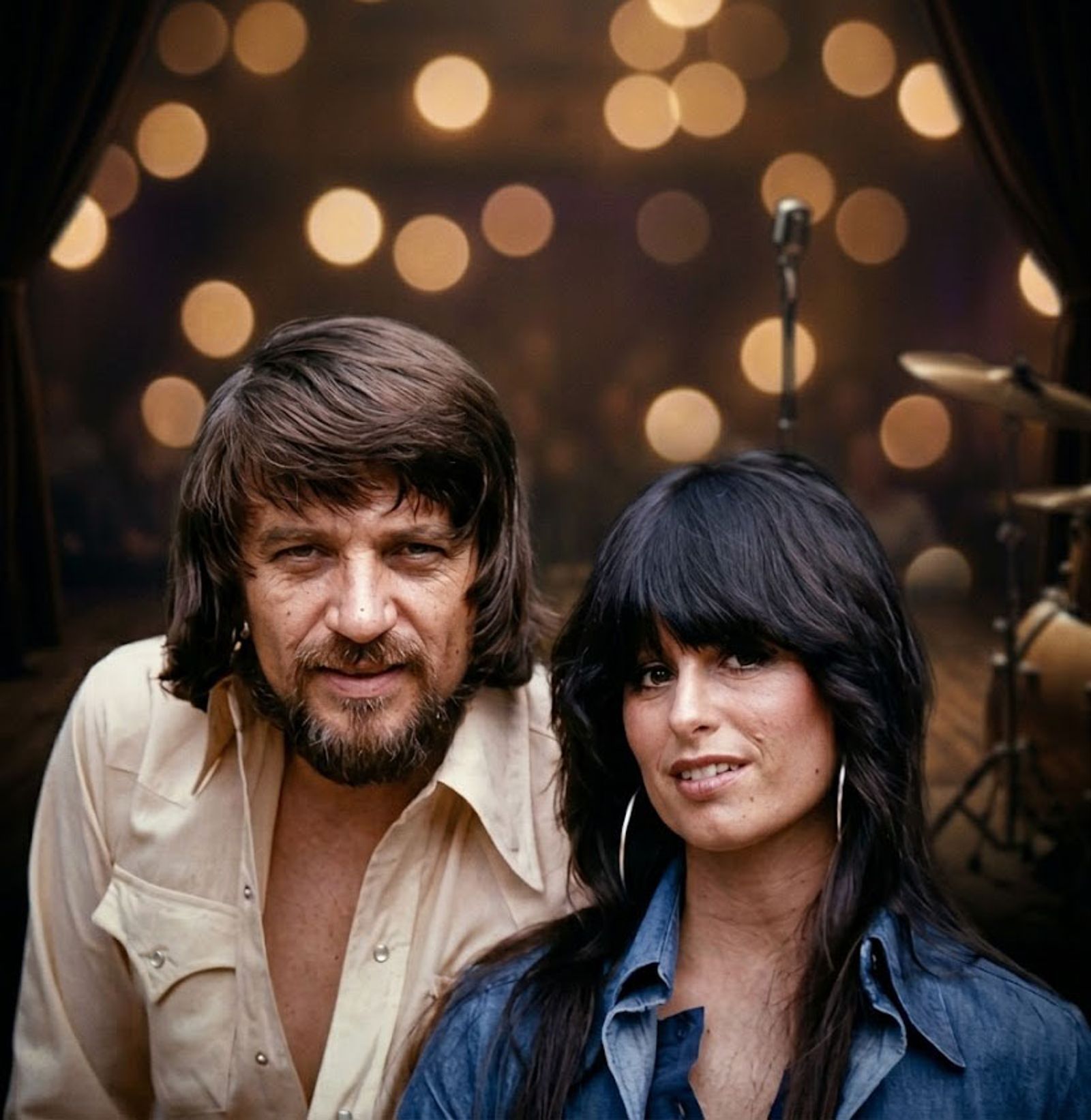
Black hat. Deep voice. A road-worn stare that made Nashville feel too polished for him. He became the sound of rebellion, the man who seemed born to kick down the doors and walk away laughing.
But behind the outlaw image was a man carrying wreckage.
The road had taken its price.
Fame had not made him peaceful.
And love, before Jessi, had not always been a place where he could rest.
That is what makes their story hit so hard.
Jessi Colter did not simply marry a country music legend.
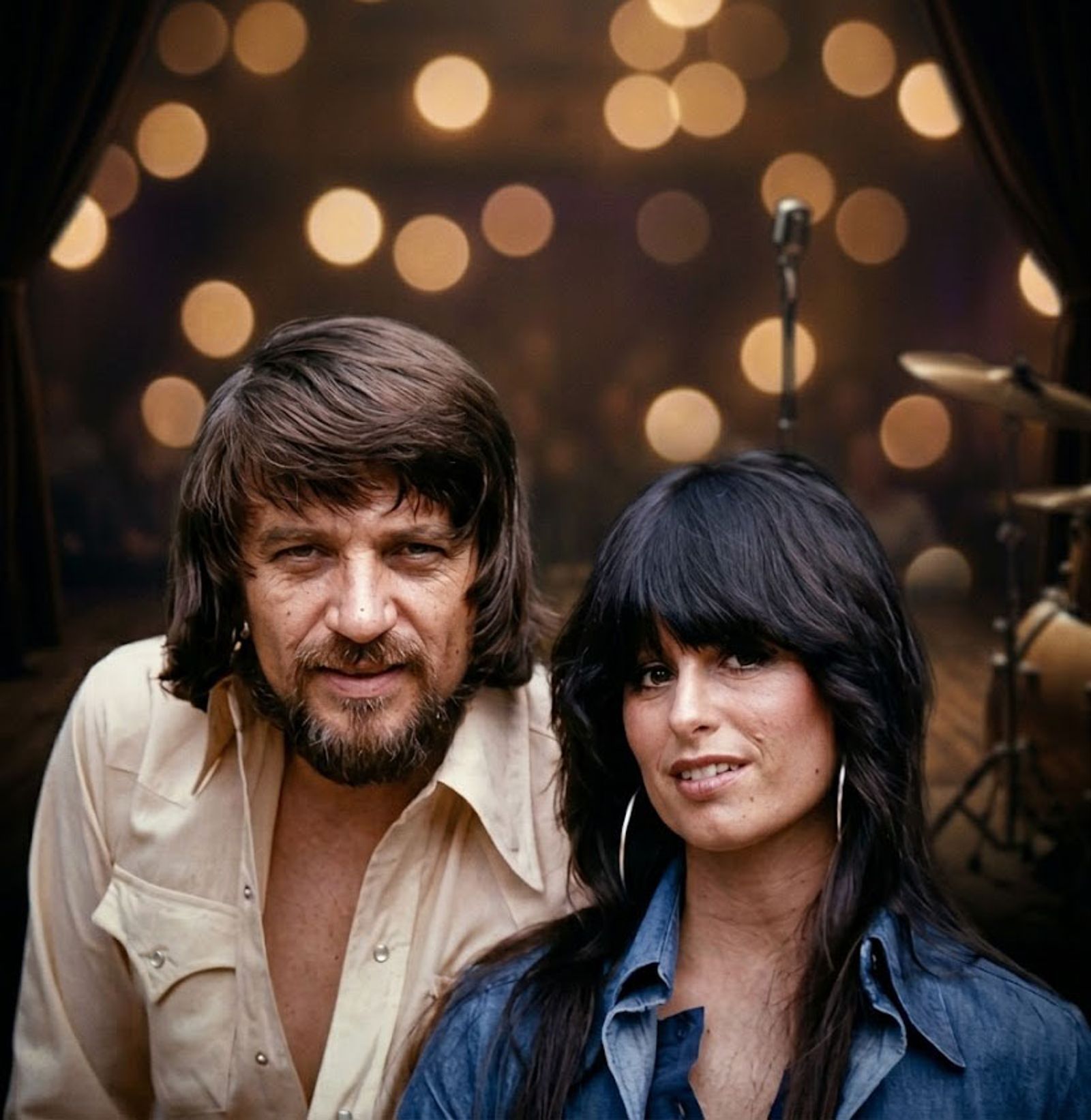
She stayed beside a man who often seemed surrounded by thunder.
People could romanticize the chaos from a distance. They could call it outlaw. They could turn pain into myth and make destruction sound glamorous.
But Jessi saw the human being inside it.
The tired man.
The wounded man.
The man who could command a crowd and still seem unsure where to put his own heart when the lights went down.
And she did not try to out-shout the storm.
She became the quiet place inside it.
When Jessi and Waylon sang “Storms Never Last,” it never felt like just another duet.
It felt like two people standing in the middle of everything they had survived and refusing to pretend it had been easy.
Her voice did not push.
It steadied.
His voice sounded like gravel and regret, hers like a hand reaching through the dark.
That was the beauty of it.
She was not singing at him.
She was singing beside him.
And somewhere inside that song was the kind of promise country music understands best: not that life will stop hurting, not that love will fix every broken place, but that somebody might still be there when the bad weather passes.
Waylon passed in 2002, and the world remembers the outlaw.
The records.
The attitude.
The voice that sounded like it had been dragged across every highway in America.
But Jessi reminds us of something softer and harder to measure.
She reminds us that even the wildest legends are still people who need someone to see past the performance.
Someone to sit down in the ruins.
Someone to stay when staying is not romantic anymore, but brave.
That is why their music still feels alive.
Because “Storms Never Last” was not perfect love dressed up for the stage.
It was weathered love.
Tested love.
Love with its boots muddy and its hands tired.
And the most heartbreaking part is that when you hear them sing it now, you do not just hear a husband and wife.
You hear time.
You hear all the nights they made it through.
You hear the silence after a hard argument, the long ride home, the soft return of faith when both people are too exhausted to say much.
Jessi Colter is still here, still carrying her part of that story with a grace that never needed to be loud.
Waylon gave country music its outlaw fire.
Jessi gave that fire somewhere to rest.
And sometimes, that is the greater rebellion — not running from the storm, but staying long enough to prove it does not get the final word.
Read more stories
- He Was Rejected By His Own Mom And Raised To Think ‘Women Are Evil’ But He Became A Legendary Rockstar
- TOBY KEITH RECORDED SOME OF THE BIGGEST PATRIOTIC ANTHEMS IN COUNTRY MUSIC HISTORY—BUT HIS REAL LEGACY WAS BUILT ON MILITARY BASES WHERE NO CAMERAS WERE ROLLING.
- [Video]: The One-Take Hit That Took Over Rock Radio
- The Box Tops’ “The Letter” Captures Lightning in a Bottle and Redefines Blue-Eyed Soul in 1967-2