
News
The Real Love Story Behind Steve Perry’s Biggest Solo Hit “Oh Sherrie”
Released in 1984 during Steve Perry’s years as Journey’s lead singer, “Oh Sherrie” turned a real-life romance with Sherrie Swafford into the signature single of his debut solo album.

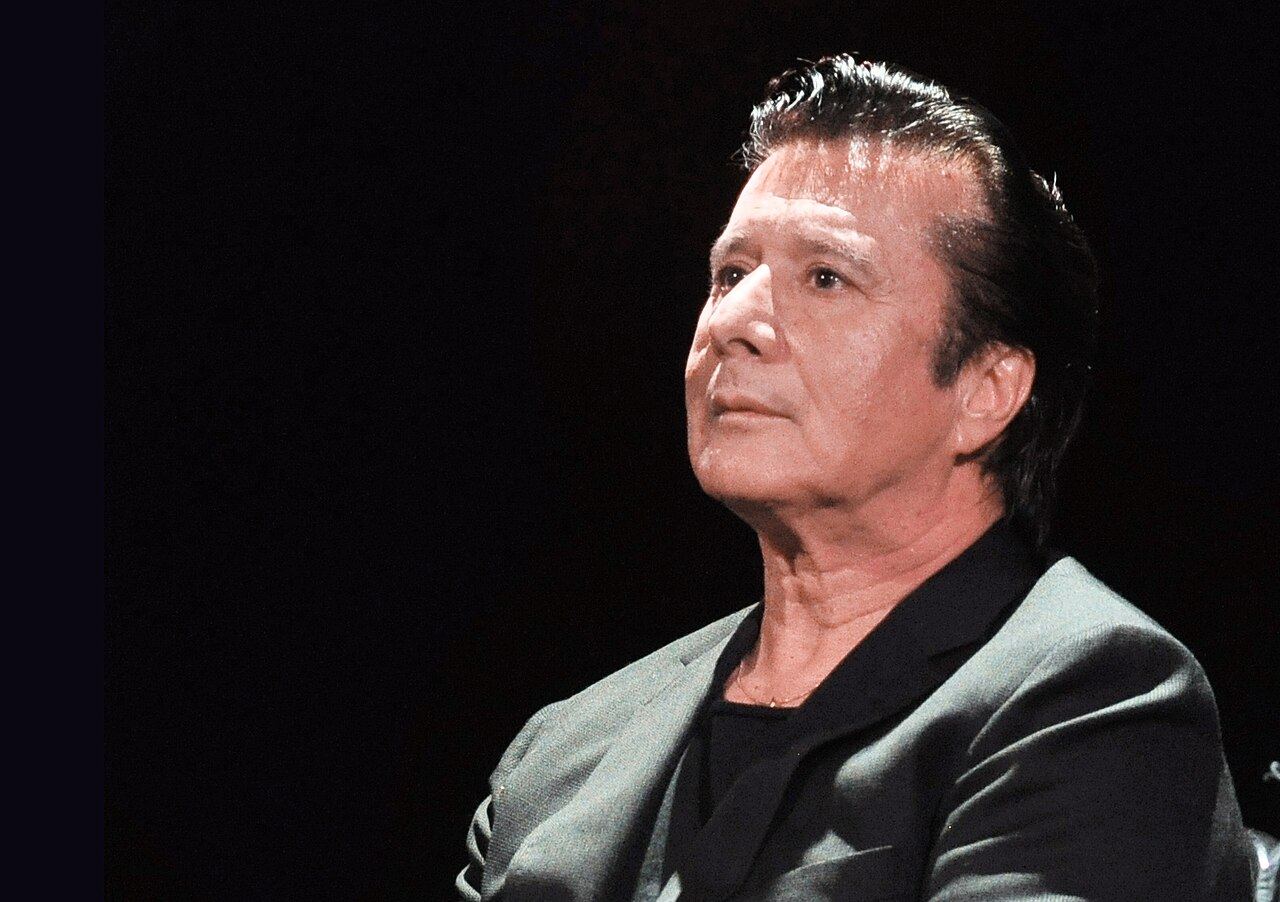
A solo song that arrived at the height of Journey
When Steve Perry released Street Talk in April 1984, he was already one of the most recognizable voices in rock. As Journey’s lead singer, he had helped define arena radio in the late 1970s and early 1980s, but “Oh Sherrie” revealed something more personal: a solo statement built not around the mythology of a band, but around a real relationship.
The song quickly became the defining track from Perry’s debut solo album. Its bright keyboard sheen, big chorus and emotional directness made it instantly memorable, but what gave it lasting fascination was right there in the title. “Oh Sherrie” was not a fictional character or a convenient pop name. It pointed to Sherrie Swafford, Perry’s then girlfriend, and anchored the song in his actual life.
Who Sherrie was to the song
The central fact behind “Oh Sherrie” is also the simplest: Perry named it for Sherrie Swafford, the woman he was dating at the time. That choice gave the single an unusual intimacy for a mainstream rock hit. Even as the production reached for a huge audience, the title suggested a private dedication, as though listeners were being invited into a specific emotional moment rather than a generalized love song.
That personal link became even more visible when Swafford appeared in the song’s music video. Her presence reinforced what fans already suspected from the title: this was not just a catchy single fashioned by image-makers, but a piece of Perry’s real romantic life translated into pop. The video helped cement the connection between the woman and the song, making “Oh Sherrie” one of those rare hits whose muse was publicly identifiable from the start.
What made “Oh Sherrie” resonate was the blend of scale and specificity: a massive radio chorus attached to one real person.
The writers behind the anthem
Although Perry’s voice and personal story sit at the center of “Oh Sherrie,” the song was a collaboration. He wrote it with Randy Goodrum, Craig Krampf and Bill Cuomo, combining his melodic instincts with the craft of experienced songwriters and musicians. That partnership helped shape a track that felt both intimate and polished, a confession streamlined into pop-rock form.
The result was a song with a clean emotional arc and a hook sturdy enough to survive decades of replay. It carries many of the traits listeners associated with Perry at his peak: yearning vocals, crisp production, a singable chorus and a sense of romantic vulnerability delivered at full volume. In that sense, “Oh Sherrie” worked as both a love song and a carefully built crossover single.
Why it became Perry’s defining solo hit
For many artists known primarily for their work in a major band, stepping out alone can feel like an annex to the main story. “Oh Sherrie” did not land that way. It stood on its own, giving Perry an immediately recognizable solo identity without forcing him to abandon the dramatic vocal style fans loved in Journey.
That balance is a large part of the song’s endurance. It sounds of its era, with its 1980s studio gloss and keyboard-forward arrangement, yet the emotional core remains straightforward enough to outlast trends. Perry was not inventing a new persona from scratch; he was narrowing the frame, bringing the spotlight from arena scale down to a named relationship, then turning that personal detail back into something built for radio.
The video and the public romance
Music videos in the 1980s often amplified fantasy, but the clip for “Oh Sherrie” also served a documentary-like purpose for fans: it put Sherrie Swafford in the picture. Her appearance added authenticity to a song already rooted in real life, collapsing the distance between public performance and private inspiration.
That mattered because pop audiences have always been drawn to songs that seem to carry a trace of biography. In Perry’s case, the combination of the title, the timing of his solo debut and Swafford’s presence in the video created a compact love-story narrative. Fans did not just hear the song; they could attach it to a face, a relationship and a moment in Perry’s career when he stepped outside his band and sang in his own name.
What “Oh Sherrie” still represents
Today, “Oh Sherrie” remains the song most closely associated with Steve Perry’s solo career. It captures a very specific intersection: a major rock singer at the height of his fame, a debut solo album arriving while his band career was still active, and a love song openly tied to the woman who inspired it.
Its staying power comes from that combination of craftsmanship and candor. Street Talk introduced Perry as a solo artist, but “Oh Sherrie” gave the album its heart. Decades later, the song still invites listeners to hear more than just a polished 1980s hit. It sounds like a love letter delivered in arena dimensions, aimed at one person but built to echo far beyond the relationship that inspired it.

Quick Facts
- Song: “Oh Sherrie”
- Artist: Steve Perry
- Album: Street Talk
- Release year: 1984
- Relationship behind the title: Sherrie Swafford, Steve Perry’s then girlfriend
- Writers: Steve Perry, Randy Goodrum, Craig Krampf and Bill Cuomo
- Video note: Sherrie Swafford appeared in the music video
Image credits: Joe Mabel / Wikimedia Commons / CC BY-SA 4.0; Joe Mabel / Wikimedia Commons / CC BY-SA 4.0; Joe Mabel / Wikimedia Commons / CC BY-SA 4.0.

