
News
The Bee Gees Nearly Let “How Deep Is Your Love” Go — Until a Film Executive Heard What They Had
Before it became one of the Bee Gees’ signature recordings, “How Deep Is Your Love” was briefly considered for another act, and a key listener helped keep it in the brothers’ hands.

A soft song in the middle of a seismic moment
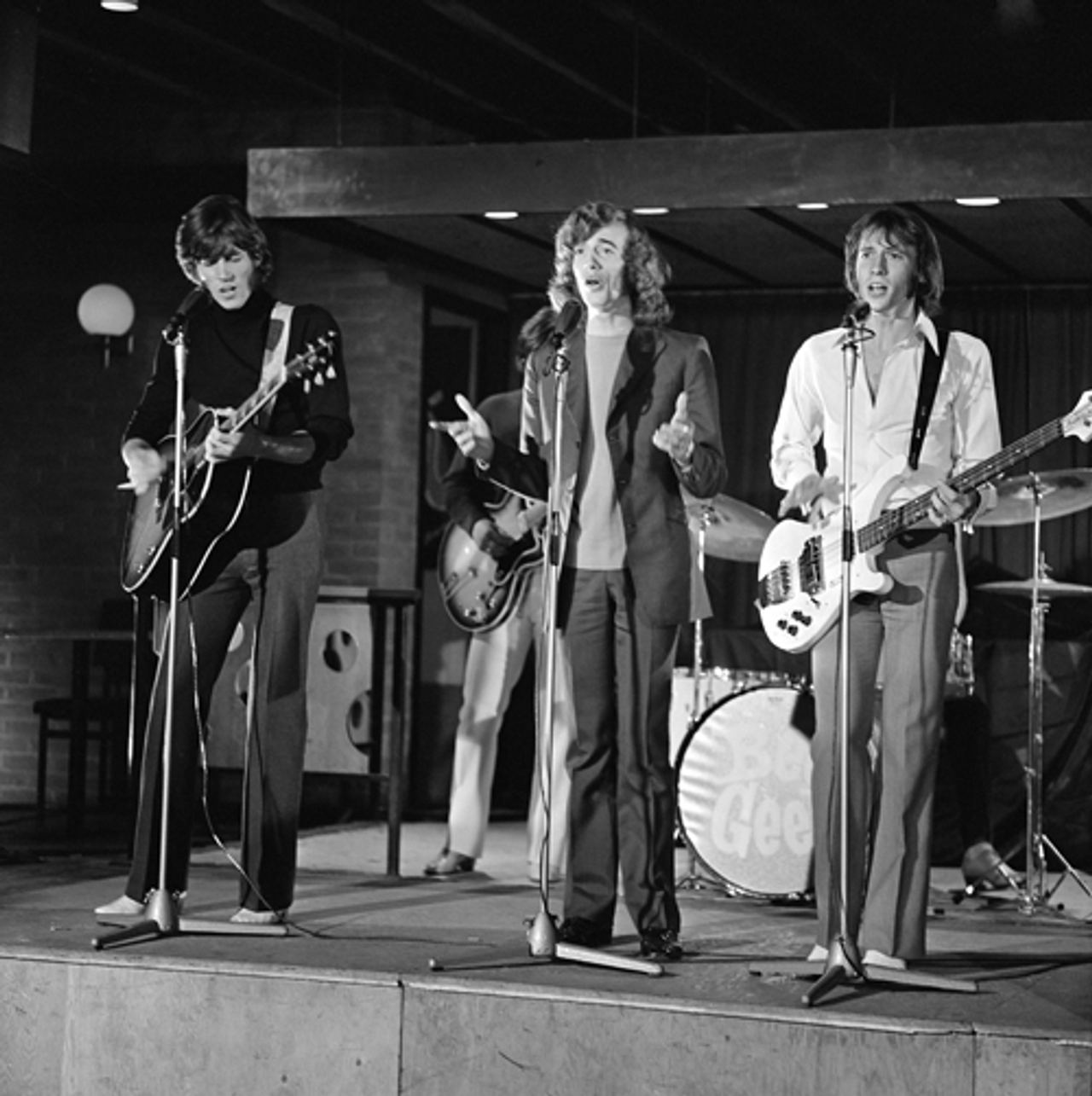
In 1977, the Bee Gees were deep into an extraordinary creative run. Barry, Robin and Maurice Gibb were writing and recording in France, shaping material that would soon be tied to Saturday Night Fever and help redefine their public image. Around them, the pulse of the era was speeding up: dance floors, falsettos, sleek grooves, and the sound that would cement the group as pop royalty.
But among the rhythmic songs and feverish momentum was something quieter. “How Deep Is Your Love” arrived as a tender ballad, built on a warm keyboard foundation and carried by close, intimate harmonies. It did not announce itself with the same glittering force as the Bee Gees’ dance records. Instead, it unfolded gently, almost privately, which may be one reason the group briefly considered whether it belonged with someone else.
A song they thought another singer might take
That possibility now feels startling in retrospect. “How Deep Is Your Love” would become one of the Bee Gees’ defining recordings, the kind of song so closely identified with its creators that it is hard to imagine another voice at the center of it. Yet in the fluid, fast-moving world of 1970s songwriting, passing songs between artists was hardly unusual, especially when writers were generating material at a remarkable pace.
For the Bee Gees, this was a period of abundance. They were not just making singles; they were helping shape a soundtrack, a style and an era. In that context, even a song of unusual beauty could momentarily seem like a composition in search of the right home. The fact that they hesitated says less about doubt than about how differently the track sat beside the high-energy songs surrounding it.
It sounded very different from the songs that would soon make the Bee Gees kings of the disco era.
The intervention that changed the song’s fate
The turn came when one influential listener recognized exactly what was at stake. As the story has long been told around the Saturday Night Fever sessions, producer Robert Stigwood heard the song and understood its importance. He did not hear a spare leftover or a tune better suited to someone else. He heard a centerpiece.
That intervention mattered because Stigwood occupied a rare position in the Bee Gees story: he was close enough to the music and close enough to the film world to understand how a song could function beyond the studio. “How Deep Is Your Love” had emotional depth, melodic immediacy and a softness that could balance the soundtrack’s harder-driving moments. Keeping it with the Bee Gees was not just a creative choice. It was a strategic one.
Why the ballad mattered to Saturday Night Fever
Saturday Night Fever is often remembered for its kinetic side: the beat, the swagger, the white suit, the dance floor. But part of the soundtrack’s enduring power lies in contrast. The Bee Gees’ great run from that period was not simply a streak of uptempo hits; it was a demonstration of range. “How Deep Is Your Love” gave that body of work a heart-on-sleeve tenderness that made the louder songs feel even more electric.
Placed in the orbit of the film, the song widened the emotional register of the Bee Gees’ image. They were not only architects of disco euphoria. They were also master craftsmen of romantic melancholy and melodic understatement. That dual identity is part of why the group’s late-1970s output has lasted so well: the songs worked in clubs, on radios and in quieter, more personal settings.
The sound of intimacy from a famously polished group
What makes “How Deep Is Your Love” so durable is not only its melody but its restraint. The arrangement leaves room for breath and phrasing. The keyboard progression is inviting rather than showy, and the vocal blend feels close enough to whisper. Even in a decade famous for lush production, the song stands out for sounding personal.
That intimacy also reveals a core Bee Gees strength sometimes overshadowed by their disco fame. Long before and long after the Saturday Night Fever phenomenon, the Gibbs were exceptional melodists, gifted at writing songs whose emotional architecture was clear from the first few bars. “How Deep Is Your Love” is a showcase for that skill: gentle, elegant and instantly recognizable without ever sounding overworked.
The near-miss that deepened its legend
Looking back, the idea that the Bee Gees might have given the song away only adds to its mystique. Pop history is full of near-misses, but few are as striking as this one because the eventual recording feels so inevitable. Once heard in the Bee Gees’ own voices, the song seems inseparable from them.
That is often how great records survive the contingencies of their making. They begin as possibilities, subject to second thoughts and shifting plans, before one decision fixes them in cultural memory. In the case of “How Deep Is Your Love,” the crucial decision was simply not to let it go. The result was a ballad that became a signature, a soundtrack pillar and one of the most beloved songs in the Bee Gees catalog.
Quick Facts
- Song: “How Deep Is Your Love”
- Artist: Bee Gees
- Period: 1977, during sessions in France linked to Saturday Night Fever material
- Key figure: Robert Stigwood is widely credited with urging that the Bee Gees keep the song
- Why it stood out: A gentle ballad with warm keyboards and close harmonies, distinct from the group’s disco-era hits
Image credits: NCRV / Wikimedia Commons / CC BY-SA 3.0 nl; Bestgibb / Wikimedia Commons / CC BY-SA 4.0; NBC Television / Wikimedia Commons / Public domain.

