
News
Rozene Pride, the Quiet Force Behind Charley Pride’s Country Dynasty
While Charley Pride became one of country music’s biggest stars, his wife Rozene built the financial firewall, family base, and negotiating discipline that helped make that success durable.

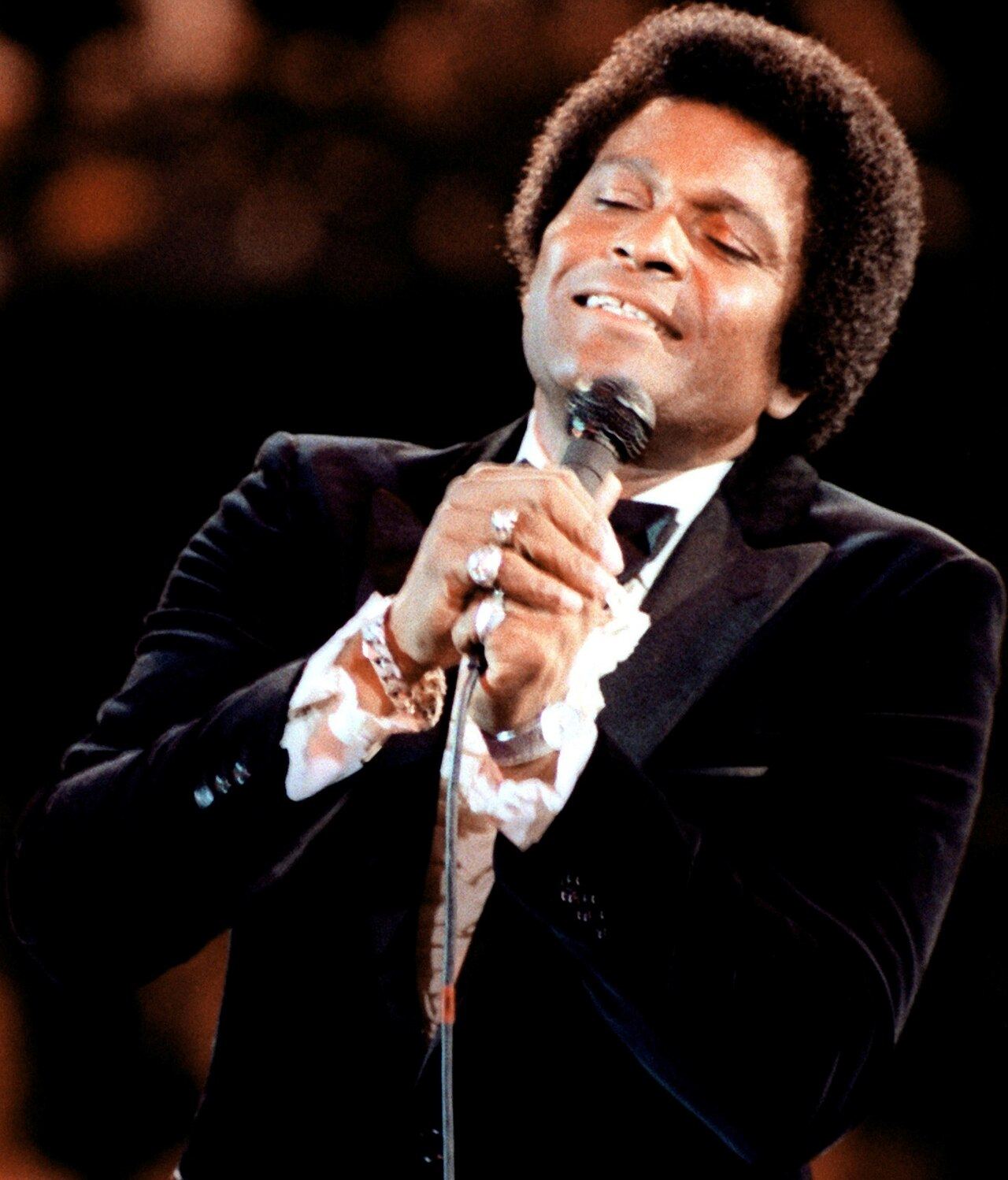
The manager behind the marriage
Shortly after producer “Cowboy” Jack Clement helped bring Charley Pride to RCA Victor in 1966, Rozene Pride stepped into a role that was far bigger than spouse. She took direct control of contracts, ledgers, and the everyday mechanics of a career that was about to explode. In an industry where artists were often separated from their money by opaque accounting and one-sided deals, that decision was not ornamental. It was strategic.
What followed was a division of labor that became central to Charley Pride’s ascent. Charley could concentrate on singing, recording, and touring; Rozene would make sure the business side did not swallow the music. It was a form of guardianship rooted not in glamour, but in vigilance: reading agreements, tracking income, protecting assets, and making sure the family—not outside interests—benefited from the work.
She understood that talent alone was never enough in show business; someone had to guard the books as fiercely as the songs.
A Montana apprenticeship in work and caution
Before the awards and headline billing, the Prides were building a life in East Helena, Montana. In the early 1960s, Charley worked days at a lead smelter and sang in bars at night. Rozene worked as a beautician. Their world was defined by shift work, practical routines, and the kind of financial fragility that leaves no room for romantic illusions about the entertainment business.
Those years sharpened Rozene’s instincts. She had seen how earlier country stars and Black performers could be cheated out of royalties or left with little to show for successful careers. Rather than trust that things would somehow be different, she taught herself accounting, tax law, and banking. It was self-education with a clear purpose: every dollar Charley earned onstage had to remain with their family.
Why Dallas mattered
As Charley’s career accelerated, the Prides made a choice that set them apart from the usual Nashville script. Instead of settling in late-1960s Nashville, they moved from Montana to Dallas, Texas, in 1969. The decision carried both practical and social meaning. Nashville was the center of country music, but it was also a place where racial barriers still complicated life for Black families, including something as basic and consequential as buying a home in affluent neighborhoods.
Dallas offered distance from the daily pressures of Music Row and a stronger sense of control over family life. From their North Dallas home, Rozene created a headquarters that was both domestic and managerial. It was where three children—Kraig, Dion, and Angela—were raised, and where ledgers were reviewed, books audited, and promoters met across negotiating tables. Home was not a retreat from the business; it was where much of the business was disciplined.
The negotiator at the table
Rozene Pride’s work was not limited to bookkeeping in the narrow sense. She acted as a stabilizing force in moments when money, touring, and pressure could easily lead to bad decisions. The seed of her vigilance was not abstract mistrust but lived knowledge: artists, especially Black artists, had long been made vulnerable by contracts they did not fully control and by gatekeepers who assumed they would not challenge the fine print.
Her role also took on added urgency when Charley’s bouts of manic depression left him vulnerable to impulsive decisions. In that context, financial management was inseparable from care. Reviewing contracts, protecting income, and slowing the pace of decisions became forms of protection for both the career and the person at its center. The result was a rare buffer in a business notorious for chaos.
A clear runway for the music
Freed from constant commercial disputes and money worries, Charley Pride was able to approach Nashville differently. He flew in to focus on sessions at RCA Studio B, concentrating on performance rather than getting entangled in every business skirmish around it. That clarity mattered. Country music has always rewarded conviction and consistency, and Pride brought both to the microphone.
He stayed true to the traditional country storytelling he loved from the time he picked cotton in Sledge, Mississippi—music shaped by figures such as Hank Williams, Roy Acuff, and Ernest Tubb. The results were historic. He became RCA’s best-selling artist since Elvis Presley, won the 1971 CMA Entertainer of the Year award, and recorded dozens of number-one hits. The public heard the voice; behind it stood an infrastructure of discipline that made sustained success possible.
An overlooked blueprint for survival
Stories about music stardom often favor the visible figure onstage and flatten everyone else into supporting cast. But the Pride family story suggests a more accurate architecture of fame. Charley’s achievement was extraordinary on its own terms, especially in a genre and era marked by entrenched racial obstacles. Yet part of what made that achievement endure was Rozene’s refusal to let success be accompanied by financial drift, exploitation, or instability at home.
Her legacy is not simply that of a loyal spouse, but of a self-made business manager who recognized the traps around the industry and built defenses against them. In country music history, where legends are often told through producers, labels, and stars, Rozene Pride deserves recognition as something else entirely: a strategist of family survival who made artistic freedom materially possible.


Quick Facts
- Subject: Rozene Pride and her role in Charley Pride’s career
- Key turning point: She took control of contracts and ledgers after Charley Pride came to RCA Victor in 1966
- Early family life: The couple lived in East Helena, Montana, where Charley worked at a lead smelter and sang in bars while Rozene worked as a beautician
- Move: They relocated from Montana to Dallas, Texas, in 1969
- Children: Kraig, Dion, and Angela
- Career outcome: Charley Pride became RCA’s best-selling artist since Elvis Presley and won the 1971 CMA Entertainer of the Year award
Image credits: GREG MATHISON / Wikimedia Commons / Public domain; Republic Country Club / Wikimedia Commons / CC BY 2.0; Republic Country Club / Wikimedia Commons / CC BY 2.0.