
Stories
NTU A Mother Found a Hidden Object in Her Child’s Backpack After a Bite
A exhausted ER nurse picks up her six-year-old daughter from her brother’s house after being told the child’s swollen hand is just a spider bite, only to discover a hidden object, disturbing notes, and evidence of a dangerous secret. The mother’s careful documentation and refusal to dismiss her instincts ultimately expose the truth and protect her daughter.

“Don’t make a big deal out of it, Emily. It’s a spider bite, not a tragedy.”
That was the sentence my brother gave me before everything in our family cracked open.
He said it on a Tuesday night, standing in the doorway of his small suburban house with the garage light buzzing behind him and my six-year-old daughter holding her left hand against her chest.
Emma was not crying.
That was the first thing that scared me.
Children cry when they are tired, hungry, mad, embarrassed, or scared.
Emma cried when her sock seam felt wrong inside her shoe.
She cried when the grocery store ran out of the cereal with the blue marshmallows.
She cried when she saw a dead bird under the mailbox and asked if its mother knew where it was.
But that night, she stepped onto Michael’s porch with wet eyes and no sound at all.
The gravel in the driveway pressed through my work shoes.
My scrubs smelled like sanitizer, old coffee, and the stale air of the ER after a twelve-hour shift.
My body was so tired that even my thoughts felt heavy.
I had planned the rest of the night down to the minute.
Pick up Emma.
Drive home.
Heat soup.
Check her backpack.
Brush teeth.
Bed.
That was the version of the evening I thought I still had.
Then Michael opened his front door halfway, and Emma came out slowly with her backpack sliding off one shoulder.
Her left hand was tucked against her chest.
“Baby,” I said, crouching in front of her, “what happened?”
She held it out carefully, as if the hand belonged to someone else and she had been blamed for it.
The skin between her thumb and index finger was swollen and tight.
There was a raised spot in the center, with a purple shadow spreading under it.
It did not look like a normal bite.
I worked at the county hospital.
I had seen spider bites.
I had seen bee stings, allergic reactions, glass cuts, splinters, burns, infections, and kids who had decided staples were toys.
This looked like pressure from inside.
Michael walked up behind her, wiping his hands on a grease-stained rag.
His garage door was open.
On the workbench, under a tilted lamp, I saw wires, small plastic boxes, tiny tools, cotton pads, tweezers, and thin pieces of metal catching the white light.
At the time, those details were just details.
Later, they became evidence.
“She was playing in the yard,” he said.
Too fast.
“Probably a spider. I washed it and put ointment on it.”
I looked at him.
“Did you see it happen?”
He gave a little shrug.
“Kids get bitten all the time.”
Emma lowered her head.
It was a tiny movement.
The kind a tired mother might miss.
I almost did.
Michael was my older brother.
He was the one who drove across town when my tire went flat in a grocery store parking lot after a double shift.
He was the one who told me to put him on Emma’s emergency contact card because, as he put it, “You shouldn’t have to panic every time your boss changes the schedule.”
He had picked Emma up from school for two years.
He knew the teacher’s name.
He knew which snacks she hated.
He knew she needed the night-light on but not the closet door open.
That was the part that made it so hard to hear my own instincts.
When you are divorced, exhausted, and raising a child on hospital pay and leftover coffee, family can start to feel like the last wall still holding your life up.
So when that wall tells you not to panic, part of you wants to obey.
“It doesn’t look right,” I said.
Michael laughed under his breath.
“Em, you work in the ER. You see awful stuff all day. Don’t turn a rash into a whole medical emergency.”
He knew where to press.
I had spent years trying not to be that mother.
The dramatic one.
The suspicious one.
The one who missed school pickup because a trauma case came in at 4:45 and then overcompensated by treating every bruise like a crime scene.
I was afraid of being unfair.
I was afraid of being tired and wrong.
That fear almost cost me the truth.
I picked Emma up and put her in the back seat of my SUV.
Michael leaned against the porch frame and gave me that same calm look he always used when he wanted me to feel foolish.
“Call me tomorrow,” he said.
I did not answer.
On the drive home, the neighborhood was quiet.
Porch lights glowed over mailboxes.
A dog barked twice behind a fence.
Emma sat in her booster seat with her backpack at her feet and her injured hand pressed to her stomach.
I asked if she had fallen.
She shook her head.
I asked if she saw a bug.
She shook her head again.
I kept my voice soft.
“Did Uncle Michael touch your hand?”
There was a pause long enough to divide my life into before and after.
“Yes,” she said.
My hands tightened on the steering wheel.
“Did it hurt?”
Her mouth folded in on itself.
“Just a little.”
Trust is not always stolen loudly.
Sometimes it is borrowed in small pieces until the day you realize somebody has been using your love as a key.
We got home a little after 8:00 p.m.
I washed Emma’s hand in warm water.
I gave her children’s medicine.
I wrapped ice in a dish towel and set her on the couch with cartoons.
Her backpack leaned against a kitchen chair, still zipped.
I remember that because I walked past it three times.
Once to get her water.
Once to grab the thermometer.
Once to check the front door lock.
Each time, something about that backpack bothered me.
I could not have explained why.
It was just sitting there, pink and scuffed, with a keychain shaped like a glittery cat hanging from the front pocket.
An ordinary first-grade backpack.
That is how danger gets close sometimes.
It hides inside ordinary things.
At 10:30 p.m., I tucked Emma into bed.
She wore yellow pajamas with tiny white stars.
Her hair smelled like strawberry shampoo and the faint greasy ointment Michael had put on her hand.
I kissed her forehead.
No fever.
No red streaks.
No fast breathing.
Nothing on the hospital intake checklist in my head screamed emergency yet.
“Door open?” I asked.
“Just a little,” she whispered.
I left it cracked and stood in the hallway for a long moment.
The house was still.
The refrigerator hummed.
The clock ticked.
Water dripped once in the kitchen sink.
I told myself I was being careful, not afraid.
I told myself I would check again in the morning.
I told myself Michael had been careless, not cruel.
At 2:07 a.m., Emma cried out.
It was not a scream.
It was smaller than that.
That made it worse.
I ran into her room and found her sitting up in bed, knees pulled close, her left hand trembling against her chest.
“Mommy,” she whispered.
I was already reaching for the lamp.
“It burns.”
The light came on.
The swelling had gone down a little.
For one second, relief rose in me.
Then I saw the line.
A tiny straight shape under the skin.
Too straight.
Too clean.
Too perfect.
I touched it with the tip of one finger and felt it through her skin.
Cold.
Hard.
Smooth.
Not a thorn.
Not glass.
Not a stinger.
An object.
My whole body went quiet.
That is the only way I can explain it.
The panic did not disappear.
It compressed.
It became a single cold point behind my ribs.
“Emmy,” I said, keeping my voice lower than my fear, “did Uncle Michael do something to your hand?”
She looked down.
That gesture was enough.
“He told me not to move,” she whispered.
I sat on the edge of her bed.
“Why?”
She swallowed.
“He said it was a robot game. He said it was to protect me.”
For one ugly second, I pictured myself grabbing my keys and driving back to Michael’s house.
I pictured pounding on his door.
I pictured every porch light on his street turning on while I screamed his name loud enough for the whole block to hear.
I did not move.
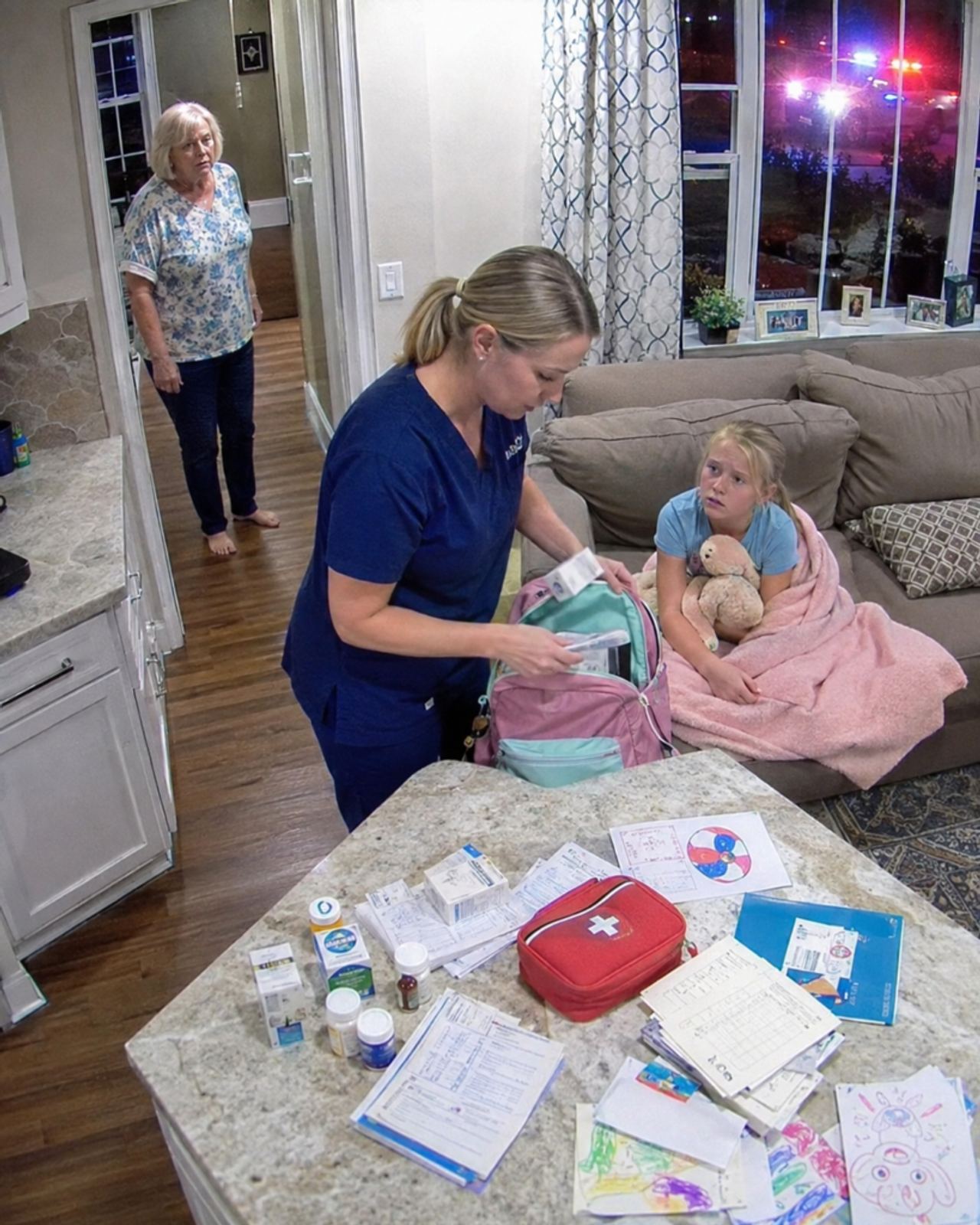
Not because I was calm.
Because my daughter was watching my face.
And I knew whatever I did next would teach her whether the truth was safe.
So I took a breath.
I reached for my phone.
Michael had texted me a picture at 4:18 p.m. that afternoon.
At the time, it had looked like one of those ordinary family updates people send so working mothers do not feel guilty.
Emma at his kitchen table.
A glass of juice in front of her.
Her backpack on the chair beside her.
A little smile that did not reach her eyes.
I opened the picture again.
Then I zoomed in.
Behind Emma, on the counter, was a metal tray.
Cotton.
Medical tape.
Tweezers.
A small folded tag.
Two letters were barely visible on it.
S.N.
Emma saw the screen and curled back into her pillow.
No confession could have been louder.
I went into nurse mode because mother mode would have broken me.
I photographed Emma’s hand from three angles.
I wrote down 2:13 a.m. on the notepad by my bed.
I put my hospital ID in my jacket pocket.
I wrapped Emma in her blanket.
I grabbed her insurance card, my phone charger, my keys, and the bottle of children’s medicine so intake would know exactly what I had given her.
Then I lifted her backpack from the kitchen chair.
Something inside shifted.
A hard thud moved beneath the notebooks.
The sound was small.
It landed in me like a door locking.
I froze with one hand on the zipper.
Then I looked at Emma’s swollen hand.
For the first time in my life, I understood that my brother had not been watching my daughter.
He had been marking her.
The zipper stuck on the second tooth.
I pulled gently, because some irrational part of me still thought moving too fast might make whatever was inside more real.
Emma sat on the couch in her blanket, eyes fixed on my hands.
My mother had been sleeping in the guest room that week because her apartment building was having repairs done.
She appeared in the hallway in her robe, gray hair flattened on one side, blinking against the kitchen light.
“Emily?” she said.
I could not answer yet.
The backpack opened.
First came Emma’s reading folder.
Then a crumpled drawing of a house with three windows and a sun in the corner.
Then her pink pencil box, cracked near the hinge.
Underneath it was a small plastic container wrapped in a paper towel.
On the lid was a strip of medical tape.
The same two letters were written in blue ink.
S.N.
My mother stepped closer.
She saw the container.
She saw Emma’s hand.
She saw my face.
Her mouth opened, but no words came out.
Then both of her hands covered her mouth, and she started crying silently.
I set the container on the kitchen table without opening it.
That was important.
I knew enough not to contaminate what I might need someone else to document.
Under Emma’s library book, I found a folded instruction sheet printed from a home electronics guide.
One line had been circled so hard the paper was almost torn.
I did not read the whole thing.
I did not need to.
The words I caught were enough to make the kitchen tilt.
Tracking.
Signal.
Subcutaneous.
I turned the paper over and saw Michael’s handwriting in the margin.
Small.
Tidy.
Familiar.
The same handwriting that had signed school pickup forms and birthday cards.
The same handwriting that once wrote “Don’t forget milk” on a sticky note he left on my fridge after fixing the loose hinge on the back door.
Emma’s voice came from the couch.
“He said you would be proud if it worked.”
My mother made a sound then.
Not a word.
A broken breath.
I picked up my phone and called the hospital charge nurse.
Her name was Dana, and she had worked nights long enough to hear trouble in silence.
“Dana,” I said, “I’m bringing Emma in. Possible foreign object in left hand. Pediatric. I need imaging and documentation.”
My voice broke on the last word.
Dana did not ask me to explain everything.
She said, “Come now. Use the ambulance bay entrance if you need to. I’ll call ahead.”
I put the plastic container, the instruction sheet, and Emma’s backpack into a clean grocery bag.
I did not open the container.
I did not call Michael.
That part matters too.
People think the first instinct is always confrontation.
It is not.
When your child is hurt, the first instinct is to get proof into the hands of people who cannot be laughed off at a doorway.
We drove to the hospital with my mother in the back seat beside Emma.
The streets were nearly empty.
Gas station lights buzzed over the pumps.
A yellow school bus sat dark behind the elementary school fence.
The small American flag outside the hospital entrance moved in the early morning wind.
I remember all of it because fear makes strange things sharp.
At intake, Dana met us before we reached the desk.
She saw my face and her expression changed.
Not panic.
Focus.
The kind of focus you want from someone in a crisis.
“Room four,” she said.
A pediatric nurse took Emma’s vitals.
Another nurse placed a hospital wristband on her right wrist.
I explained what I knew, and only what I knew.
Tuesday pickup.
Swollen hand.
Michael’s spider-bite explanation.
4:18 p.m. photo.
2:07 a.m. burning pain.
Object felt under skin.
Backpack contents preserved.
Dana wrote everything down.
Not because she did not believe me.
Because documentation matters.
A doctor examined Emma’s hand.
He was gentle.
He asked her if anyone told her to keep a secret.
Emma looked at me first.
I nodded once.
“Uncle Michael said it was a surprise,” she whispered.
The doctor went still in that careful medical way people go still when they do not want to scare a child.
“What kind of surprise?” he asked.
Emma’s eyes filled.
“He said Mommy would know where I was all the time.”
My mother turned away and pressed both hands against the wall.
I heard her crying into her sleeve.
The doctor ordered an X-ray.
I walked beside the bed while they wheeled Emma down the hall.
She kept her good hand wrapped around my fingers.
“Am I in trouble?” she asked.
I leaned close.
“No, baby. You told the truth. That is never trouble with me.”
The X-ray room smelled like cold plastic and disinfectant.
Emma flinched when the tech positioned her hand.
The tech apologized three times.
I stood behind the glass and watched the image appear.
There it was.
A tiny narrow object under the skin between her thumb and index finger.
Clean lines.
Hard edges.
Not a bug bite.
Not an accident.
The room went quiet.
The doctor did not say what he was thinking in front of Emma.
He simply said, “We need to remove it safely, and we need to document everything.”
Dana touched my elbow.
“Emily,” she said softly, “we’re going to have to report this.”
I nodded.
I had known that already.
Knowing it did not make it easier.
The police report was started from the hospital room.
A social worker came in with a clipboard and a voice so gentle it made me want to collapse.
She asked Emma questions slowly.
She never asked the same question twice in a way that would make Emma feel trapped.
She asked what Michael called the game.
She asked where Emma sat.
She asked if he gave her juice.
She asked what he told her after it hurt.
Emma answered in pieces.
Kitchen table.
Orange cup.
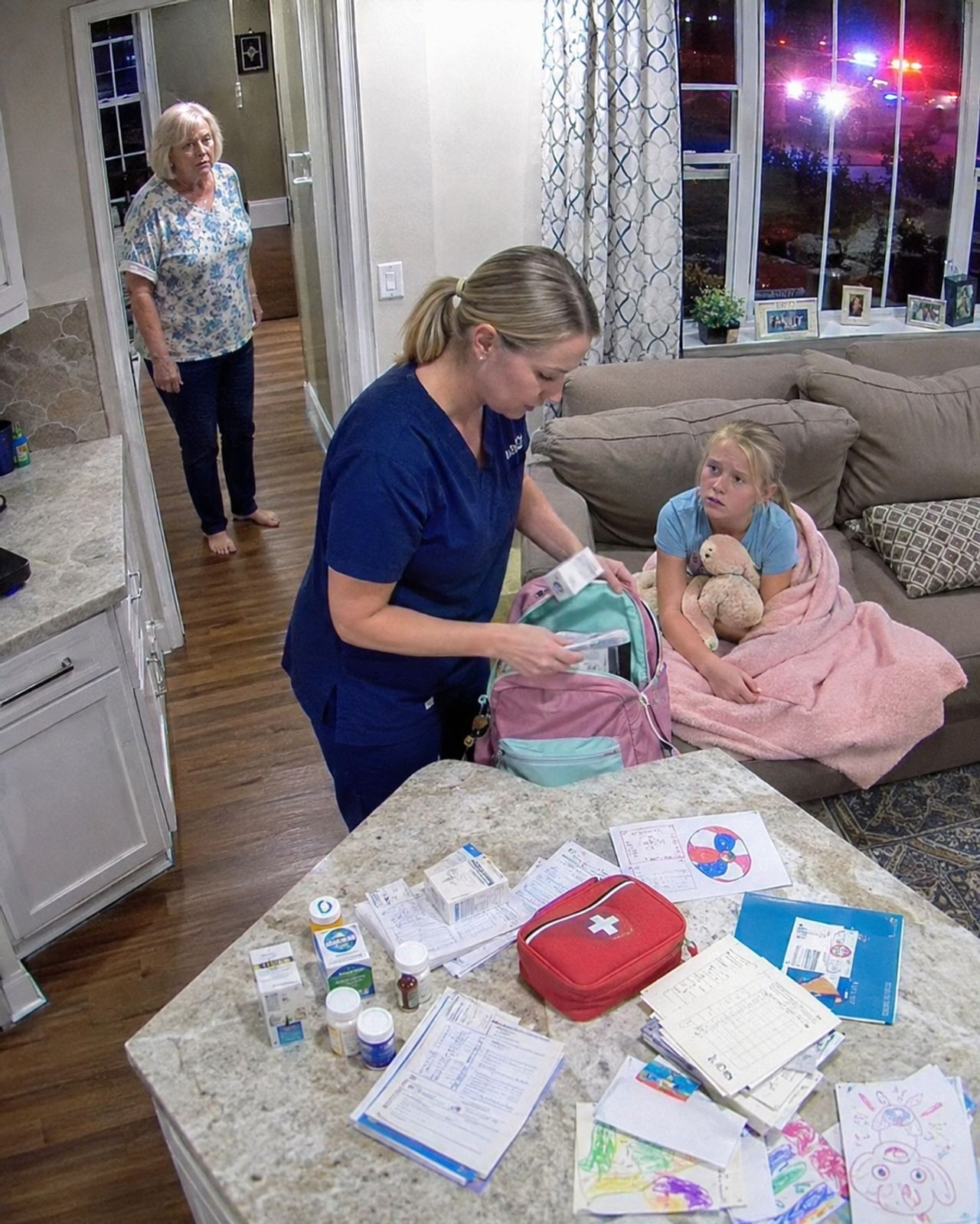
Do not move.
Robot game.
Protect Mommy.
Don’t tell yet.
Every answer felt like another hand closing around my throat.
My phone started ringing at 5:46 a.m.
Michael.
I watched his name light up the screen.
Then disappear.
Then light up again.
Dana saw it.
“Do not answer,” she said.
I did not.
He texted next.
Everything okay?
Then another.
You took her in, didn’t you?
Then another.
Emily, call me before you make this weird.
Before you make this weird.
I stared at those words until they blurred.
That was when the anger finally came.
Not hot.
Not loud.
Worse than anger.
Still.
The doctor removed the object under local care with a specialist present.
I will not describe it in detail because Emma deserves more dignity than that.
I will only say this: when they placed it into a small evidence container, the room changed.
It was no longer a worried mother and a hurt child.
It was a record.
A timeline.
A chain of custody.
A line Michael could not smooth over with a laugh in a doorway.
The object from her backpack was collected too.
So was the folded instruction sheet.
So were the photographs from my phone.
The 4:18 p.m. image mattered.
The 2:13 a.m. notes mattered.
The intake form mattered.
Every small thing I had almost been too tired to do became part of the truth.
Michael came to the hospital at 6:22 a.m.
He did not get past the waiting room.
I saw him through the glass before he saw me.
He looked annoyed first.
That is what I remember most.
Not scared.
Annoyed.
Like I had inconvenienced him.
Then he saw the officer standing near the desk.
His expression changed.
The calm left his face in pieces.
He lifted both hands slightly, as if he could talk the whole room down.
I could not hear every word through the glass, but I saw his mouth form my name.
Emily.
Then he looked past the officer and saw me.
For years, I had been his tired little sister.
The one who needed help.
The one who forgot oil changes and worked late and said thank you too often.
That morning, I was not that person to him anymore.
I was the mother of the child he had hurt.
He tried to step around the officer.
The officer moved once, just enough to block him.
Michael’s face flushed.
My mother came to stand beside me.
She did not say a word.
She just took my hand.
Later, people asked me whether I screamed at him.
I did not.
There are moments when silence is not weakness.
There are moments when silence is the only way to keep from giving someone a performance they can use against you.
I let the report speak.
I let the X-ray speak.
I let Emma’s small, brave answers speak.
And most of all, I let the object in that evidence container speak.
Michael was not arrested in a movie-scene way.
There was no shouting, no dramatic tackle, no crowd gasping.
There were questions.
There were statements.
There was an officer asking him to come with him.
There was my brother realizing, too late, that I had not overreacted.
I had documented.
Emma stayed under observation that day.
The physical wound was small compared with the fear it left behind.
She slept with her hand wrapped in clean gauze and her stuffed rabbit tucked under her chin.
Every time someone entered the room, her eyes opened.
Every time a cart rolled past the door, she flinched.
My mother sat beside her bed and cried over a paper cup of coffee she never drank.
I stood at the window and watched daylight spread across the parking lot.
I thought about all the times I had handed Emma over to Michael because I trusted him.
The school pickup line.
The Saturday errands.
The afternoons when I texted, Running late, can you grab her?
He always answered, Of course.
That was the trust signal.
My exhaustion.
My gratitude.
My belief that family meant safety.
He had used all of it.
In the days that followed, there were interviews, forms, follow-up appointments, and calls I never wanted to make.
The school office removed Michael from every contact list.
The hospital social worker helped me file the right documents.
The police report grew from a few notes into a timeline.
My phone became evidence.
Emma’s backpack became evidence.
The photo from 4:18 p.m. became evidence.
The words “It’s just a bite” became something I heard in my sleep.
Michael’s version changed more than once.
First, he said I misunderstood.
Then he said Emma had asked to play.
Then he said it was harmless.
Then he said he only wanted to help me keep her safe.
That was the ugliest part.
He tried to dress control up as protection.
But protection does not need a child to stay silent.
Protection does not hide under skin.
Protection does not tell a six-year-old that pain is a game.
Emma healed slowly.
Not just her hand.
Her trust.
For weeks, she would not let anyone touch her left side.
She asked if her backpack was safe.
She asked if Uncle Michael knew where we lived.
She asked if telling the truth made people leave.
I answered every question as plainly as I could.
No, baby.
Yes, you are safe.
No, he cannot pick you up.
No, you did not do anything wrong.
Some nights she still asked for the door to be left open just a little.
I left it open.
Every time.
My family split the way families sometimes do when truth walks into the room carrying paperwork.
Some people wanted details.
Some wanted silence.
Some wanted to believe Michael had made a mistake because a mistake is easier to forgive than a plan.
My mother never wavered.
She had seen the container on the kitchen table.
She had seen Emma’s hand.
She had heard her say, “He said you would be proud if it worked.”
There are sentences a family cannot unhear.
The last time Michael tried to contact me directly, he sent one message from a number I did not recognize.
You know I loved her.
I took a screenshot.
I sent it where it needed to go.
Then I blocked the number.
A year later, Emma still carries a backpack with a glittery cat keychain.
A new one.
She picked it herself.
For a while, she wanted me to check every pocket before school.
Then one morning, she zipped it up on her own.
She handed me her lunchbox and said, “I’m okay, Mommy.”
I did not cry until she got on the school bus.
The small American flag outside the school moved in the wind.
Parents stood in the pickup line with coffee cups and phones and tired faces, all of us trusting the world to take our children for a few hours and give them back whole.
I used to think trust was a wall.
Now I know it is a door.
And every person who gets a key should understand what it means to hold one.
My brother told me not to overreact when I saw my six-year-old daughter’s swollen hand.
He called it a bite.
I called it what it was.
A warning.
A record.
A truth my daughter was brave enough to help me uncover.
And in the end, the thing that saved her was not rage.
It was the one thing Michael had counted on me being too tired to do.
I looked closer.
Read more stories
- FOUR GIANTS OF OUTLAW COUNTRY STOOD TOGETHER TO FIGHT THE POLISHED SOUND OF NASHVILLE — AND CREATED AN UNBREAKABLE BROTHERHOOD IN THE PROCESS.
- part 2 Two months after divorcing my wife, I found her sitting alone in a hospital hallway wearing a patient gown
- I found a lost wallet at my mechanic shop and returned it — the next
- JOHNNY RUSSELL CANCELLED A DATE AND JOKED THAT HOLLYWOOD WAS GOING TO MAKE HIM A STAR. TWO YEARS LATER, BUCK OWENS TURNED THAT JOKE INTO HIS FIRST NO. 1 HIT.