
Human Stories
My parents had already finished their anniversary meal when I arrived, Mom smiled, “Oh, you’re late, cover the bill, will you?” My sister laughed, “Still as clueless as ever,” until I realized I had been invited exactly when their meal ended, called the manager, and suddenly their faces turned pale.
Melody Carter has spent years being the “easy” child who quietly subsidizes her family’s luxury dinners and emergencies, but everything changes when her parents use their anniversary dinner to trap her into paying nearly $500 after already finishing the meal without her. After tracking years of financial abuse, she realizes she’s given them over $62,000 and decides to stop the cycle for good.

My name is Melody Carter. I am thirty years old, and I live in a quiet apartment in the city, in one of those older brick buildings with black fire escapes, narrow windows, and a little American flag hanging from the lobby wall during every holiday season.
I walked into the Italian restaurant clutching a gift bag in my hand.
I was exactly on time according to the message I had sent after my meeting ran late. I had warned them I would be fifteen minutes behind. I had rushed across town, parked two blocks away, fixed my hair in the reflection of a dark storefront window, and walked in with a smile already prepared.
But the dinner was already over.
The table was a mess of empty wine glasses, crumpled napkins, scraped dessert bowls, and silverware lying at odd angles across the white tablecloth. The candle in the middle had burned low, leaving melted wax in a cloudy glass cup. A half-empty bottle of red wine stood beside my father’s elbow.
My parents were leaning back in their chairs, full and comfortable.
My sister, Tiffany, was checking her makeup in the reflection of her phone.
They did not stand up to greet me.
They did not ask where I had been.
They did not ask if I was hungry.
I looked at the empty seat they had saved for me. There was no place setting. No water glass. No folded napkin. No menu resting beside the plate.
There was only one thing waiting for me on the white tablecloth.
The check.
It was placed directly in front of my chair, exactly where my dinner should have been.
My mother looked up at me. Her eyes were bright, but not with love. She smiled that soft, gentle smile she always used before asking for something impossible.
“You don’t mind covering the bill, right, Melody?” she asked.
Her voice was casual, as if she were asking me to pass the salt.
Tiffany laughed.
It was not a nervous laugh. It was not even a guilty one. It was an expectant laugh, a careless little sound from someone who already knew how the night was supposed to end.
I stood there, frozen in the middle of the busy dining room.
Soft jazz played from the speakers. Couples whispered over candlelight. A waiter passed behind me carrying a tray of tiramisu and espresso cups. Somewhere near the bar, someone laughed too loudly.
And finally, I saw the truth clearly.
I had not been invited to celebrate my parents’ marriage.
I had been invited to pay for it.
In that quiet moment, looking at their satisfied faces, something inside me finally broke. Not loudly. Not dramatically. There was no shouting in my chest, no storm of tears rising to my eyes.
It was quieter than that.
It felt like a lock turning.
I had always been the easy one.
In every family, roles are assigned before children even understand what a role is. Some children become the stars. Some become the troublemakers. Some become the fragile ones everyone gathers around.
And some, like me, become the background noise.
I was the low-maintenance child. That was the label my mother gave me with a pat on the head and a proud smile.
“Melody is such a breeze,” she would tell her friends. “I never have to worry about her. She just takes care of herself.”
It sounded like praise when I was seven. It felt like an achievement. I thought being easy made me valuable. I thought needing less made me good.
I learned early that my parents’ attention was a limited resource, like water in a drought, and my sister Tiffany drank it all.
Tiffany was two years older than me. She was loud, demanding, beautiful, emotional, and impossible to ignore. If she had a bad day at school, the whole house changed its weather. If she cried, dinner went cold. If she slammed her bedroom door, my mother stood outside it whispering through the wood for half an hour.
If Tiffany wanted a specific toy, my parents drove to three different stores to find it.
If Tiffany wanted new shoes, she got them before the weekend.
If Tiffany wanted comfort, the whole family stopped moving until she felt better.
I learned to be the opposite.
If I was hungry, I made a sandwich.
If I scraped my knee, I washed it in the bathroom sink and put on a bandage.
If I was sad, I went to my room, lay on my bed, and stared at the ceiling until the feeling faded enough to hide.
I thought I was helping.
I did not realize I was training them to ignore me.
The pattern became permanent when we were teenagers.
I remember my sixteenth birthday clearly. I had asked for a small dinner. Nothing expensive. Nothing dramatic. Just the four of us at a pizza place, maybe a cake from the grocery store, maybe one photo where everyone looked like they wanted to be there.
Three days before my birthday, Tiffany had a breakup.
Her high school boyfriend dumped her after football practice. It became a household emergency. She cried in the bathroom. She shouted at my mother. She threw a framed photo into her closet. My father drove around town looking for her favorite ice cream.
My birthday came and went.
No one mentioned it.
My mother was too busy holding cold towels to Tiffany’s swollen eyes. My father was too busy trying to coax her out of her room with promises of a shopping trip.
I sat alone on the porch that evening eating a cupcake I had bought for myself at a gas station.
It had blue frosting and a tiny plastic ring stuck in the top.
I did not say anything.
I did not want to add to their stress.
I swallowed my disappointment like a bitter pill and told myself, “It’s okay. They have a lot on their plate.”
That became my mantra.
They have a lot on their plate.
I said it when they missed my school awards night because Tiffany had a fight with a friend.
I said it when my father forgot to pick me up from debate club because Tiffany needed him to drive her to the mall.
I said it when my mother called me “so mature” while asking me to understand why Tiffany needed more support.
When I graduated from college, the dynamic shifted from emotional space to financial space.
I had always been good with numbers. I liked clean rows, clear patterns, problems that could be solved if you looked at them long enough. I worked hard, earned scholarships, and landed a job in data analysis right out of school.
It was not flashy, but it paid well.
I was careful with money. I saved. I invested. I lived below my means. By the time I was twenty-five, I was comfortable.
Tiffany, on the other hand, was “finding herself.”
She tried acting. She tried fashion design. She tried being an influencer. She moved back home and called it temporary for four years. My parents paid for her car, her phone, her credit card bills, her streaming subscriptions, and every new beginning she announced with dramatic confidence.
The first time I gave my parents money, it was small.
My mother called me sounding frantic. The electric bill was due, and Dad’s paycheck had not cleared yet. Could I spot them two hundred dollars?
“Of course,” I said. “I can help.”
I felt proud.
Finally, I had something to offer.
Finally, I had a way to be valuable to them.
I transferred the money immediately.
They thanked me like I had saved the house from burning down.
“You’re such a lifesaver, Melody,” Mom said. “Thank goodness you’re so responsible.”
That praise was addictive.
It was one of the only times they looked at me with genuine appreciation.
But then it happened again the next month.
And the month after that.
The amounts got bigger.
First electricity. Then a car repair. Then Tiffany needed a deposit for an apartment so she could “finally move out.” Then Dad needed help with an unexpected bill. Then Mom needed help covering groceries before a family party.
I paid it all.
I wanted them to be happy. I wanted Tiffany to succeed. I wanted my parents to feel less stressed.
I also wanted, more than I admitted, to keep that small warm spotlight on me.
The responsible one.
The lifesaver.
The daughter they could count on.
But I also started lying about my own life to keep the peace.
I realized that if they knew how much I actually made, they would ask for more. So I created a simpler version of myself for them.
To my family, I was not a senior data analyst for a major tech company downtown.
I was a clerk.
I told them I did data entry. I told them rent was high and things were tight. I drove a five-year-old sedan even though I could have afforded something nicer. I wore simple clothes to family dinners. I never talked about bonuses, stock options, promotions, or the fact that I had a growing investment account.
I did this because I was afraid.
I was afraid that if they knew the truth, they would stop seeing me as a daughter completely and see me only as a bank account.
I wanted to be loved for myself, not for what I could buy.
But deep down, I think I already knew the truth.
The easy child had become the convenient adult.
I was the safety net.
I was the backup plan.
As long as I kept my mouth shut and opened my wallet, they let me sit at the table.
Over the next five years, family dinners became a ritual, but not the warm, chaotic kind of family dinners people imagine when they think of home. Ours were not casseroles in a kitchen, folding chairs in a backyard, or Sunday meals after church with sweet tea and too many stories.
They were transactions.
The pattern was so predictable I could have written a script for it.
It started with a text message in the family group chat, usually from my mother.
Family dinner this Friday. We need to catch up. 7:00 p.m.
Then she would drop the location.
It was never casual.
Never a diner.
Never pizza.
Never a potluck at their house.
It was always a steakhouse, a high-end seafood place, or a trendy French bistro with valet parking and appetizers that cost more than my weekly groceries used to.
They never asked if I was free.
They never asked if I could afford it.
They just assumed I would come.
As soon as the text arrived, I would feel a knot tighten in my stomach.
I tried to say no a few times in the beginning.
“I’m actually really tired this week,” I would say.
Or, “I have a lot of work.”
The response was always immediate guilt.
“But we never see you, Melody.”
“Don’t be like that.”
“Tiffany is coming. She really wants to see her sister.”
“It’s just dinner. You have to eat, don’t you?”
So I would go.
I would arrive on time. They would already be seated. They often started ordering drinks before I arrived. Expensive cocktails. Bottles of wine for the table. Appetizers they called “just something small.”
The ordering process was torture I learned to endure quietly.
My father would study the menu and say, “I think I’ll have the ribeye. Maybe the lobster tail on the side.”
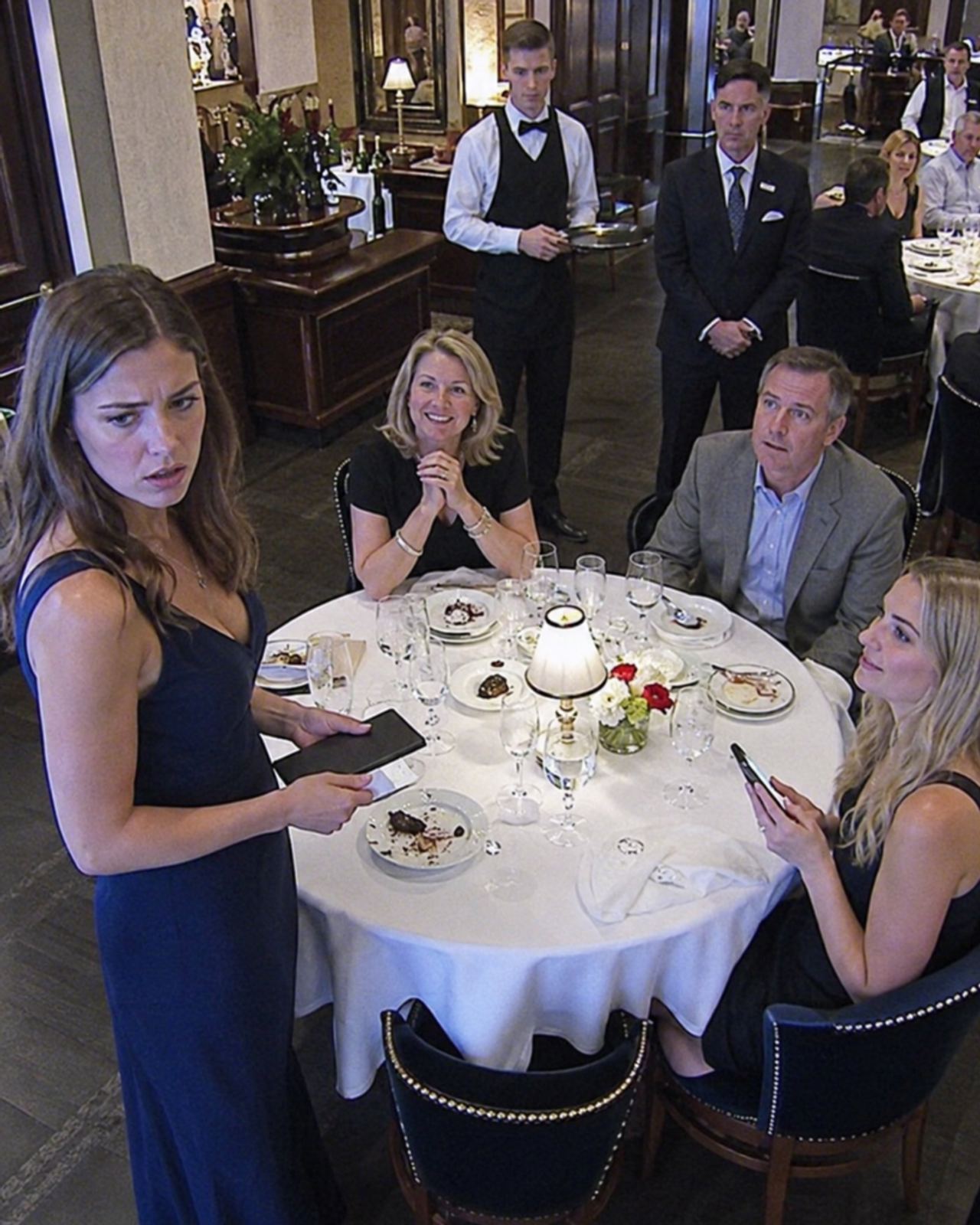
My mother would wave the waiter over for appetizers.
“Oh, we have to try this,” she would say. “The calamari, the shrimp cocktail, and that cheese board.”
Tiffany was the worst.
She would order the most expensive item on the menu, take three bites, then push it away and say she was too full. She would order rounds of specialty martinis and complain that they were not mixed correctly.
I sat there drinking tap water.
I ordered the cheapest salad or a simple pasta dish.
I ate slowly, doing math in my head.
Fifty dollars for wine.
Eighty for steaks.
Thirty for appetizers.
Twenty-four for Tiffany’s cocktail.
The conversation was never about me.
They talked about Tiffany’s latest crisis. They talked about neighbors I barely knew. They talked about Dad’s golf game. If I tried to mention my week, a book I had read, or a project at work, they gave me three seconds.
“That’s nice, honey,” Mom would say.
Then, “Oh, look. The calamari is here.”
At the end of the night, the waiter would clear the plates and ask about dessert. They would order coffees and cakes. Finally, the little black leather folder would arrive.
The silence that followed was always heavy.
Practiced.
My father would pat his pockets.
“Oh, shoot,” he would mutter. “I think I left my wallet in the other jacket.”
Or my mother would look at me with big, innocent eyes.
“Melody, do you have this? We’ll get the next one.”
We’ll get the next one.
That was the lie that held our family together.
There was never a next one.
Or rather, there was always a next one, but they never got that one either.
Sometimes they did not even bother with an excuse. Sometimes Tiffany would just slide the folder toward me without looking up from her phone.
And I would pay.
I would pull out my credit card. I would smile a tight, painful smile and say, “It’s fine. I’ve got it.”
I have asked myself a thousand times why I did it.
I did it because I wanted to be part of the family.
I believed that if I refused, if I made a scene, if I forced them to look at what they were doing, I would be pushed out completely.
I thought paying the bill was the price of admission.
It was the rent I paid to occupy space in their lives.
I told myself I was generous.
I told myself I was lucky I could afford it.
I told myself I was strong.
But it was not generosity.
It was a pattern.
They were not inviting me because they missed me.
They were inviting me because they wanted luxury meals and did not want to spend their own money.
I was an ATM with a pulse.
The worst part was that they stopped saying thank you.
It became expected.
It became my duty.
Six months before the anniversary dinner, we went out for my father’s birthday. I paid nearly six hundred dollars. As we walked into the parking lot afterward, Dad put his arm around Tiffany.
“Great dinner, sweetie,” he said to her. “Thanks for coming.”
He did not look at me.
He did not thank me for the food.
He thanked Tiffany for her presence.
I drove home that night crying so hard I had to pull over on the highway. I sat in the dark, gripping the steering wheel while headlights swept past me, and screamed without making a sound.
That was the first crack in the foundation.
That was when I began to understand that no matter how much I paid, I would never buy their respect.
The night of their thirty-fifth wedding anniversary was supposed to be different.
I told myself it had to be different.
Thirty-five years was a milestone. I had spent weeks thinking about their gift. I wanted to give them something meaningful, not money.
Months earlier, I had found an old box of photos in their attic and secretly scanned them. I hired a digital artist to restore the damaged ones. I compiled them into a beautiful leather-bound photo book.
It told the story of their life together.
Their wedding.
Their first apartment.
Dad in a ridiculous mustache beside a red pickup truck.
Mom holding Tiffany as a baby.
Me in a tiny yellow raincoat standing on the porch of our old house, smiling at a Fourth of July flag hanging behind me.
It was sentimental. It was thoughtful. I was excited to give it to them.
I thought maybe this time we could just talk.
Maybe the focus would be on memories instead of money.
The dinner was at Livetta, the most expensive Italian restaurant in the city. Reservations were almost impossible to get, but Tiffany had insisted on it, so of course they went.
I was coming from work. A meeting ran late, but I texted them.
Running 15 minutes late, so sorry. Please order appetizers without me.
I rushed home, changed into a nice dress, grabbed the heavy gift bag, and drove across town.
I was anxious the whole way.
I checked my watch at every red light. I hated being late. I knew they would comment on it. I knew Tiffany would make a joke. I knew Mom would sigh like my lateness had wounded her personally.
When I finally arrived, it was 7:45 p.m.
The reservation had been for 7:00.
I walked into Livetta, and the smell of truffle oil, roasted garlic, and fresh bread hit me at once. The restaurant was dimly lit and romantic, full of soft chatter, clinking silverware, and the amber glow of candles. A small American flag stood near the host station beside a framed newspaper review, one of those subtle decorations restaurants keep near the front.
I scanned the room and found them at a round table near the back window.
I walked up with a smile plastered on my face, ready to apologize.
“Happy anniversary,” I said, breathless.
Then I stopped.
The table had been cleared.
There were no plates of food in front of them.
Just empty dessert bowls with spoons scraped clean. Empty espresso cups. A half-empty bottle of wine. Napkins twisted on laps and dropped beside plates. They had already eaten everything.
They had not just ordered appetizers.
They had ordered dinner, eaten dinner, ordered dessert, eaten dessert, and finished coffee in forty-five minutes.
They must have raced through the meal.
Or maybe they had started before the time they gave me.
My father looked up, his face flushed with wine.
“Oh, look who decided to show up,” he said.
He did not sound angry.
He sounded bored.
“I’m so sorry,” I said, gripping the gift bag tighter. “Traffic was terrible, and the meeting—”
“It’s fine, Melody,” my mother said. She wiped the corner of her mouth with a napkin. “We were starving, so we went ahead.”
They did not ask if I was hungry.
They did not offer me a menu.
I looked at the empty chair.
There was no silverware.
No water glass.
Only the black leather folder.
The check was sitting squarely on the placemat where my plate should have been.
It was the only thing welcoming me to the table.
My stomach dropped.
The humiliation hit me like a physical slap.
They had not waited five minutes for me.
They had not saved me a breadstick.
“You don’t mind covering the bill, right?” Mom asked.
Her voice was so light, so airy.
Tiffany looked at me and smirked. She was checking her reflection in her phone screen, fixing her lipstick.
“Relax, Mel,” she said. “You’re always good at this.”
“Besides,” Dad said, not looking at me, “I forgot my card.”
“Again,” I whispered.
Tiffany finally looked up.
“Don’t be petty,” she snapped. “It’s their anniversary. Don’t ruin it.”
I looked at the three of them.
My father, the man who taught me to ride a bike, sat there picking his teeth with a toothpick and avoiding my gaze.
My mother, the woman I had spent my whole life trying to please, smiled expectantly at my purse.
My sister, who contributed nothing but criticism, looked bored by my pain.
Then I looked at the gift bag in my hand.
The photo album.
The hours of work.
The love I had poured into it.
Then I looked at the check.
I reached out and opened the folder.
My hand shook slightly.
The total was $485.50.
They had eaten nearly five hundred dollars’ worth of food without me, and they expected me to pay for the privilege of standing beside a dirty table.
They did not see me.
They saw a wallet.
They saw a resource.
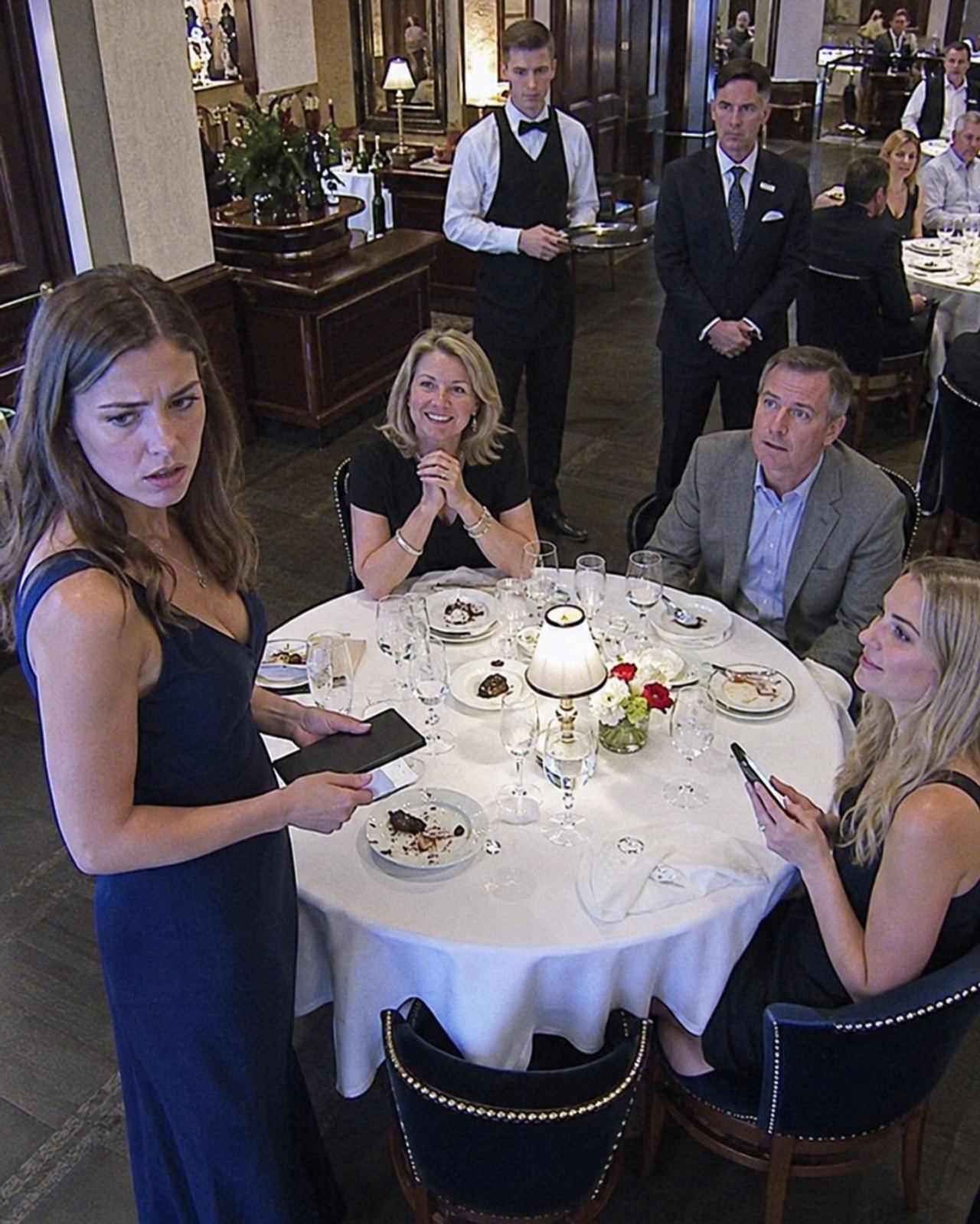
I felt something click in my chest. Not a loud crack. Not a dramatic break.
A quiet final sound.
Like a lock turning.
I looked at the waiter hovering nearby. He looked awkward. He knew he had watched them eat. He knew I had just walked in. He looked almost sorry for me.
I did not want his pity.
“Sure,” I said.
My voice sounded strange to my own ears.
Calm.
Almost robotic.
“I’ll take care of it.”
I was not doing it to be nice.
Not this time.
I was doing it to buy the evidence.
I handed the waiter my card.
I did not sit down.
I stood there while he processed the payment.
“Aren’t you going to sit?” Mom asked. “We can order you a salad or something.”
“No,” I said. “I’m not hungry.”
I was not hungry.
I was nauseous.
The waiter returned with the receipt. I signed it. I did not add the tip on the card. I pulled a twenty-dollar bill from my purse and handed it directly to him so he would get it, not them.
Then I picked up my copy of the receipt.
I folded it carefully and put it in my pocket.
“Happy anniversary,” I said again.
I placed the gift bag on the table.
“Here.”
“Oh, lovely,” Mom said, reaching for it.
She did not say thank you for dinner.
I turned around and walked out.
I did not look back.
I heard them tearing into the gift bag as I walked away.
The drive home was silent.
I did not cry this time.
I did not scream.
Usually, after these dinners, I would spend hours rationalizing what had happened. I would tell myself, It’s okay. They’re family. Money is just money.
But that night, the rationalization did not come.
Instead, a cold, hard logic took over.
It was the data analyst in me.
I needed to see the numbers.
I needed to stop acting on emotion and start looking at the facts.
When I walked into my apartment, my boyfriend Caleb was on the couch reading. He looked up and saw my face.
“You’re back early,” he said. “How was it?”
“It’s done,” I said.
He stood, concerned.
“What happened? Did they fight?”
“No,” I said. “They ate without me. They stuck me with the bill. And I paid it.”
Caleb went still.
He hated how they treated me. He had been telling me for years to stop, but he never pushed too hard. He knew I had to come to the conclusion myself.
“I’m sorry, Mel,” he said softly.
“I need to work,” I said.
I went to my home office, sat at my desk, and opened my laptop.
I did not open my work email.
I opened my personal finance software.
Then I created a new spreadsheet.
I named it Family Tax.
I started going back through my bank statements.
One month.
Six months.
One year.
Five years.
I categorized everything.
Dinners.
Tiffany’s bills.
Emergency loans.
Gifts.
Group vacations where I paid for the rental house.
I worked for three hours.
The list grew longer and longer.
The rows filled up.
Two thousand dollars for Tiffany’s car repair.
Eight hundred for Mom’s dental work.
Three hundred in grocery runs.
Countless four-hundred-dollar dinners.
Fifteen hundred dollars Dad borrowed for a business idea that never became a business.
It was not occasional help.
It was systematic siphoning.
I looked at individual line items and remembered the emotions attached to them.
June 12. One hundred twenty dollars. Mom’s birthday lunch, where she criticized my hair the entire time.
August 4. Three hundred fifty dollars. Tiffany’s concert tickets. She did not even invite me. She just asked me to buy them for her and a friend.
Then I typed the final number from that night.
$485.50.
I hit the sum button for the five-year total.
The number appeared in bold black text at the bottom of the screen.
$62,450.
I stared at it.
Sixty-two thousand dollars.
That was a down payment on a house.
That was a master’s degree.
That was a wedding.
That was a year of travel.
I had given them sixty-two thousand dollars, and they could not wait ten minutes for me to eat dinner.
I felt Caleb’s hand on my shoulder. He had walked in quietly and was looking at the screen.
He whistled low.
“Melody.”
“I know,” I whispered. “I basically bought them a luxury car. Piece by piece.”
“And what did you get in return?” he asked.
It was not a cruel question.
It was an honest one.
I thought about it.
What did I get?
Did I get love?
No.
Respect?
No.
Security?
No.
I got ignored.
I got used.
I got the privilege of being a background character in their lives while financing the show.
Caleb pulled up a chair and sat beside me.
He took my hand. His hands were warm.
“Do you want this to keep going?” he asked. “Look at that number. In another five years, it’ll be over a hundred thousand. Is that what you want your life to be?”
I looked at the number.
Then I looked at the receipt from Livetta, which I had placed on the desk.
“No,” I said.
For the first time, the guilt was gone.
The fear of them leaving me was gone, too, because I realized they were not really with me anyway.
You cannot lose something you never had.
“This ends now,” I said.
My voice was steady.
“Okay,” Caleb said. “How do you want to do it? Do you want to call them? Tell them?”
“No,” I said. “That gives them power. That gives them a chance to play the victim. They’ll cry. They’ll say I’m ungrateful. Tiffany will shout. I’m not going to announce anything.”
I closed the laptop.
“I’m just going to stop.”
“Cold turkey?”
“Cold turkey,” I said. “I’m going to wait for the next invitation, and I’m going to accept it. But the bank is closed.”
A strange sensation moved through my chest.
It was not anxiety.
It was peace.
The feeling of dropping a heavy backpack after carrying it f
Read more stories
- Southern Cornbread Dressing
- In my parents’ eyes, I had always been the family failure. “You’re useless,” my mother sneered, “just like that pathetic old man rotting in the shed.” My blood froze. I tore open the door and found my grandfather—starved, trembling, trapped in the damp darkness.
- Crockpot Cowboy Casserole
- My Husband Chose His Mistress Over Our Family, So I Took Our Three Children to My Parents for Shelter—But My Father Looked at Us, Slowly Closed the Door, My Brother Refused to Help, My Sister Called Me “Impulsive”… So I Picked Up a Garbage Bag and Whispered Three Words That Changed Everything