
Stories
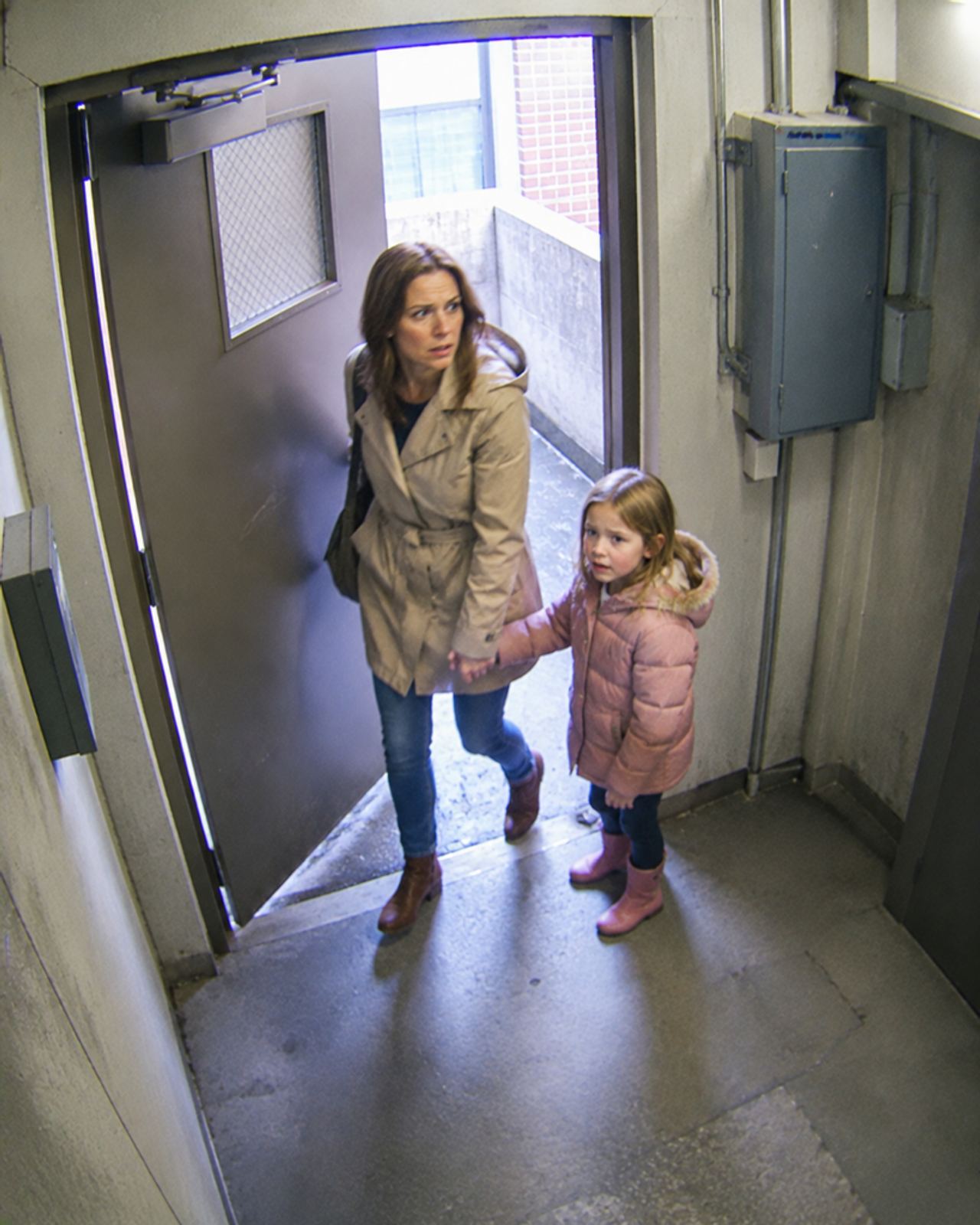
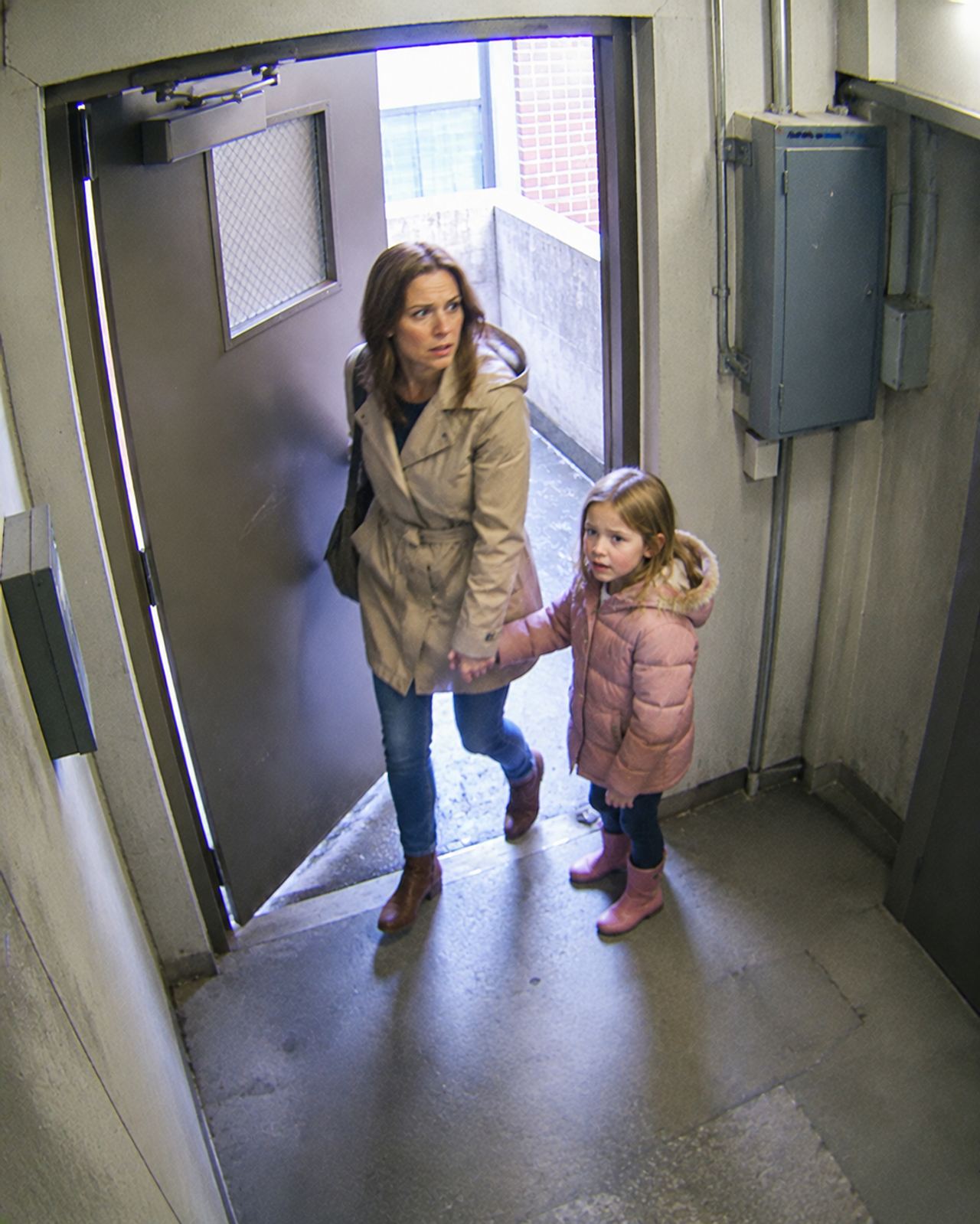
My husband had barely driven away on his “business trip” when my six-year-old daughter grabbed my hand and whispered, “Mommy… we have to run. Now.” I thought she was frightened by a nightmare—until she told me what she’d overheard the night before. By the time I reached for the front door, I realized we were already too late.
A frightened mother and her six-year-old daughter flee their home after overhearing a chilling plan linked to the husband’s fake business trip. With help from a vigilant neighbor and a mysterious outsider, they begin uncovering a dangerous conspiracy that reaches far beyond a family secret.

My Daughter Heard My Husband Say “Make It Look Like an Accident”—But the Person at the Door Changed Everything
“Yes?” I managed to say, though my voice barely sounded like mine.
The whisper came again through the narrow gap between the door and frame.
“Claire. Don’t open it all the way.”
My heart stopped for half a breath.
I knew that voice.
It belonged to Mara Ellis, our neighbor from two houses down, the woman who watered her roses every morning at precisely seven, wore soft cardigans even in summer, and always remembered Lily’s birthday with a homemade cupcake. She was in her late sixties, widowed, and had a way of noticing things without ever making a show of it.
I tightened my grip on Lily’s hand.
“Mara?” I whispered.
“Yes. Listen to me carefully. Is Lily with you?”
I looked down at my daughter. Her eyes were huge, and she had stopped breathing normally, taking shallow little sips of air like she was afraid even the sound of her lungs might give us away.
“She’s here,” I said.
“Good. Don’t come out the front.”
My mouth went dry.
“What’s happening?”
There was a tiny pause on the other side of the door. I pictured Mara standing on my porch in her lavender raincoat, one hand pressed to the wood, her silver hair tucked behind her ears.
“There’s a car parked near the corner,” she said. “Dark blue sedan. It’s been there since before Derek left.”
The kitchen seemed to tilt beneath my feet.
Lily pressed herself against my side.
“Is someone inside it?” I asked.
“I can’t see clearly through the windshield. But I saw a man get out earlier and walk around your driveway. He looked at your back gate, then went back to the car.”
I closed my eyes.
For one dizzy second, I was back at our wedding, standing under white lights in my parents’ backyard while Derek promised to protect me, cherish me, build a life with me. He had held my hands in both of his, smiling like I was the only person in the world.
Now my daughter was trembling beside me because she had heard that same man speak of us as if we were something to erase.
“Claire,” Mara whispered. “You need to come to my house. Use your back door, cut through the side yard, and go through the gap behind the hedges. I unlocked my kitchen door.”
I looked toward the hallway that led to the back of the house.
The back door.
The mudroom.
The small fenced yard where Lily had learned to ride her scooter in lopsided circles.
It suddenly felt like crossing a battlefield.
“How do you know all this?” I asked.
Mara exhaled softly.
“Because your mother called me last night.”
My mother.
The blue emergency folder suddenly felt heavier beneath my arm.
“What?”
“She was worried. She said you hadn’t answered her last two messages. She asked me to keep an eye out this morning. I thought she was being overly cautious.” Her voice tightened. “I don’t think that anymore.”
A sound came from somewhere outside.
Not loud.
Not even close.
A single dull thump, like someone shifting weight on wooden porch boards.
Mara fell silent.
So did I.
Lily’s little fingers dug into my wrist.
Then Mara whispered, “Go now.”
I didn’t answer. I couldn’t.
I lifted Lily into my arms, though she was getting too big for that, though her knees bumped awkwardly against my hip, though my purse slipped from my shoulder and the blue folder pressed against my ribs. She wrapped both arms around my neck and buried her face there, her breath hot and uneven against my skin.
I backed away from the front door one slow step at a time.
The lock remained still.
No knock came.
No one called my name again.
And somehow that silence was worse.
I moved through the kitchen, past the coffee mug Derek had left in the sink, past the chair he had pushed in too neatly, past the life I had been trying to convince myself was only strained, not dangerous.
At the mudroom, I set Lily down and crouched in front of her.
“We’re going to play the quiet game,” I whispered. “Remember how Grandma plays it in church?”
Lily nodded, tears collecting on her lower lashes but not falling.
“I need you to be brave for just a few minutes.”
“I am brave,” she whispered.
My throat tightened so sharply I nearly made a sound.
“Yes,” I said. “You are.”
I unlocked the back door as quietly as I could. The deadbolt slid with a metallic scrape that sounded, to my terrified mind, loud enough to wake the entire street. I paused, listening.
Nothing.
I turned the knob.
The cold morning air slipped in immediately, damp and gray, carrying the smell of wet leaves and distant rain. The backyard looked exactly as it always did: Lily’s pink scooter leaned against the fence, a plastic bucket sat overturned near the sandbox, and the wind stirred the branches of the maple tree where Derek had hung a tire swing two summers ago.
That swing moved slightly.
Back and forth.
Back and forth.
There was no wind strong enough for that.
I pulled Lily close and stepped outside.
Every ordinary thing became suspicious. The open trash bin. The dark garage window. The narrow path along the fence. My own breath felt too loud.
We crossed the patio. Lily’s bare feet touched the cold stone, and she winced, but she did not complain. I realized then that I hadn’t even put shoes on her.
A mother should remember shoes.
A mother should remember a coat.
A mother should know when the danger in her house has become bigger than any argument, any apology, any carefully polished excuse.
I swallowed the guilt and kept moving.
At the side gate, I paused.
The latch was on the other side.
Derek had “fixed” it last month after claiming it was loose. He had turned the mechanism around, saying it would keep raccoons from pushing it open.
Now I saw the truth of it.
From inside the yard, the gate could not be opened without reaching over.
My hands were shaking so badly I nearly dropped the folder.
“Mommy,” Lily breathed.
“I’ve got it.”
I stretched my arm over the gate, fingertips searching for the latch. My shoulder burned. The purse slid down to my elbow. Lily stood pressed against my thigh, staring toward the back of the house.
Then she whispered, “The curtain moved.”
I froze.
Across the yard, inside our kitchen, one of the white curtains shifted behind the glass.
A face appeared there.
Not clearly.
Just the shadow of someone standing inside our home.
For one impossible second, I thought it was Derek, that he had come back, that this was all some misunderstanding about a delayed trip and a frightened child’s half-heard dream.
Then the shadow raised a hand and pressed it against the window.
A man’s hand.
Too broad to be mine.
Too still to belong to anyone harmless.
My fingers found the latch.
The gate clicked open.
“Run,” I whispered.
We slipped out and into the narrow strip between our fence and the neighbor’s hedge. The earth was wet beneath Lily’s feet, and I could feel every second passing like a door closing behind us.
Mara’s yard was hidden by tall boxwood hedges that had grown wild since her husband died. There was a gap near the old birdbath, one I had seen Lily crawl through once while chasing a runaway balloon.
Now I pushed the branches apart with one hand and guided my daughter through.
Thorns scratched my wrist. A branch tugged at my hair. The folder bent in my grip. My purse caught, and for a horrible second I was stuck, trapped between two safe-looking yards with danger behind me and no clear path ahead.
Then Mara’s hands appeared through the leaves.
“Give me the child.”
I lifted Lily through, and Mara gathered her in a hug that was gentle but firm. Then she reached for me.
I stumbled into her yard, panting, with mud on my knees and leaves clinging to my sweater.
Mara didn’t ask questions. She didn’t waste time staring at my bare feet or Lily’s pajamas or the terror written across both our faces.
She guided us through her back door into a kitchen that smelled like chamomile tea, cinnamon toast, and old wood.
The warmth nearly broke me.
For one dangerous second, I wanted to collapse into one of her chairs and sob.
Instead, Mara locked the kitchen door, drew the curtain, and turned to me.
“Phone,” she said.
I handed it to her.
She looked at the screen, frowned, and powered it off.
“What are you doing?”
“Derek can track you through it?”
“I don’t know.”
“Then we assume he can.”
That sentence, so practical and calm, steadied me more than any reassurance would have.
Mara took a small notepad from beside the landline phone and wrote something down.
“You’re going to call your mother from my phone. Not your cell. Tell her you and Lily are safe for the moment. Then we call the police.”
The word police should have made me feel better.
It didn’t.
Because once spoken aloud, everything became real.
I looked at Lily, who sat at Mara’s kitchen table with her stuffed rabbit clenched in her arms. Mara had draped a quilt around her shoulders and placed a pair of knitted socks over her muddy feet. My daughter looked very small inside all that softness.
“Sweetheart,” I said. “Are you okay?”
She nodded too quickly.
Children do that when they know adults need the answer to be yes.
Mara set a mug of warm milk in front of her, then guided me into the small hallway outside the kitchen.
“You need to breathe,” she said softly.
“I don’t have time.”
“You won’t help her if you faint.”
I pressed my hand to the wall. It was covered in framed photographs of Mara’s life: her wedding picture, her children when they were young, grandchildren on bicycles, her late husband grinning beside a lake with a fish in his hands. Proof everywhere of ordinary years survived.
“I should have known,” I whispered.
Mara’s expression softened, but not with pity. With recognition.
“People are very good at hiding the worst parts of themselves from the people who love them.”
“He’s her father.”
“I know.”
“He makes her pancakes shaped like hearts.”
“I know.”
“He taught her to spell her name.”
Mara touched my arm.
“Both things can be true, Claire. That is what makes it so hard.”
Her words settled somewhere deep and painful.
In the kitchen, Lily sniffled once.
I straightened.
“Where’s your phone?”
Mara pointed to the counter.
My hands shook as I dialed my mother’s number from memory, something I had not done in years because my phone remembered everything for me. It rang twice.
“Hello?” Mom answered, voice tight and alert.
“Mom.”
She gasped.
“Claire? Thank God. Where are you?”
“At Mara’s. Lily’s with me.”
The sound my mother made was not quite a sob and not quite a prayer.
“What happened?”
“I don’t know yet. Lily heard Derek say something last night. Something about making it look like an accident.”
There was a pause.
Too long.
“Mom?”
“I’m here.”
But her voice had changed.
I gripped the receiver harder.
“You’re not surprised.”
Mara turned toward me.
The kitchen clock ticked loudly over the stove.
My mother inhaled. “I didn’t know that, exactly.”
“What did you know?”
Another pause.
“I knew Derek lied about his trip.”
The room narrowed.
I looked toward the blue emergency folder on Mara’s table, where Derek’s printed itinerary stuck out from beneath the flap like a piece of evidence begging to be read.
“How?”
“Because I called the hotel listed on the confirmation you sent me last week.”
I had forgotten about that. I had forwarded the itinerary to my mother out of habit, asking whether the address was near the conference center because she knew the city better than I did.
“They had no reservation under his name,” she continued. “I tried the airline, too. I couldn’t get much information, but enough to know the flight number didn’t match the city he claimed he was going to.”
My stomach rolled.
“Why didn’t you tell me?”
“I tried. You didn’t answer. Then Derek answered your phone.”
A chill moved through me.
“What?”
“Last night. Around ten. I called you. He picked up and said you were sleeping. He sounded… wrong. Too cheerful. He told me not to worry, that everything was handled.”
Everything was handled.
My legs weakened.
Mara pulled out a chair, and I sank into it.
“What else?” I asked.
My mother hesitated.
Then she said, “Claire, there’s something I should have told you a long time ago.”
The back of my neck prickled.
“What?”
“Not over the phone. Not now. Get to the police. I’m coming.”
“You’re two hours away.”
“I’ve already left.”
Of course she had.
I pictured her in her old blue sedan, glasses low on her nose, white-knuckling the steering wheel, refusing to cry until the crisis was over. My mother, who had always seemed cautious to the point of annoyance. My mother, who insisted on emergency folders, spare keys, backup cash, and memorized phone numbers.
I had rolled my eyes at her for years.
Now her caution might be the thing that saved us.
“Mara said there’s a car outside,” I told her.
“Do not leave with anyone you don’t know.”
“I won’t.”
“And Claire?”
“Yes?”
“Don’t trust Derek’s friends. Not Ray. Not Martin. Not anyone from that office.”
I sat up.
“You know Ray?”
My mother went quiet again.
That silence frightened me more than everything she had already said.
“Mom,” I whispered. “How do you know Ray?”
“Go to the police,” she said, and this time her voice broke. “Please.”
The line clicked dead.
I stared at the receiver.
Mara watched me carefully.
“What did she say?”
I repeated the conversation as best I could. With every sentence, Mara’s face grew more serious, though never panicked. There was a steadiness to her that felt almost practiced.
When I finished, she glanced toward the front window.
“We need to call the police from here. Then we wait inside with the doors locked.”
But before she could dial, Lily spoke from the table.
“No.”
Her voice was small but clear.
Both of us turned.
She clutched her rabbit to her chest.
“Daddy said not the police.”
My blood turned cold.
“What do you mean, sweetheart?”
Lily’s lower lip trembled.
“Last night. He said if you got scared, you’d call Grandma or the police. He said that was okay.” She swallowed. “He said the police wouldn’t come fast enough.”
Mara’s hand hovered over the phone.
I could hear my own pulse.
“What else did he say?” I asked gently.
Lily looked at Mara, then at me.
“He said there was a lady who always watches from the window.”
Mara’s face drained of color.
“He meant me,” she whispered.
Lily nodded.
“He said she was nosy but useful.”
Mara stepped back from the counter as if the phone had burned her.
The kitchen seemed to shrink around us.
Derek had expected my fear.
Expected my call.
Expected Mara.
He had planned for the ordinary instincts of ordinary people: run to a neighbor, call your mother, call the police, seek safety where safety has always looked familiar.
“What do we do?” I asked.
For the first time since she opened her kitchen door, Mara looked uncertain.
Then a sound split the silence.
The doorbell.
Not our doorbell.
Mara’s.
A bright, polite chime echoed through the little house.
Lily slid off her chair and rushed to me. I pulled her close, one hand over the back of her head.
Mara lifted one finger to her lips.
The bell rang again.
Then a voice called from the porch.
“Mrs. Ellis? It’s Officer Hale with county police. We received a call about a disturbance.”
Mara did not move.
I whispered, “You haven’t called them yet.”
“No,” she whispered back.
The voice came again, calm and professional.
“Mrs. Ellis, are you inside? We just need to check that everyone is okay.”
I felt Lily shaking against me.
Mara crossed silently to the small front window and moved the curtain no more than an inch.
Her face tightened.
“What?” I mouthed.
She let the curtain fall.
“It’s a uniform,” she whispered. “But I don’t recognize him.”
“Would you know every officer?”
“In this town? Most.”
The doorbell rang a third time.
Then another voice spoke, lower than the first.
“Maybe she’s in the back.”
Mara’s eyes snapped to mine.
Without another word, she pointed toward the basement door.
I grabbed the folder, Lily’s backpack, and my purse. Mara took a ring of keys from a hook shaped like a sunflower, then ushered us down the narrow stairs.
The basement smelled of laundry soap, cardboard, and dust. A single bulb glowed overhead, casting long shadows over shelves stacked with holiday decorations, paint cans, and labeled boxes.
At the bottom, Mara pulled a string to turn on a second light near the old freezer.
“There’s a cellar door behind those shelves,” she said. “It opens into the side yard.”
I stared at her.
“Why do you have a hidden cellar door?”
“It isn’t hidden. It’s just old.”
She said it with such brisk practicality that I almost laughed.
Almost.
Above us, footsteps moved across Mara’s porch.
Then came a knock.
Harder this time.
“Mrs. Ellis?”
Mara was already shifting two storage bins aside. Behind them stood a low wooden door with an iron latch, painted the same dull gray as the wall. She opened it, and wet morning air rushed into the basement.
Beyond it was a narrow set of stone steps leading up to the side of the house.
“Where do we go?” I whispered.
“My garage. My old station wagon is inside. It’s not parked in front, so they may not know it’s there.”
The word “may” lodged like a stone in my chest.
But it was the only path.
Mara led us through the cellar door into a narrow side passage between her house and the tall hedge. The rain had begun, fine and cold. It dotted Lily’s hair and turned the shoulders of her pajamas dark.
We crept along the side path toward the detached garage.
Behind us, at Mara’s front door, someone knocked again.
This time, the voice changed.
No longer polite.
“Mrs. Ellis, open the door.”
Lily whimpered.
I bent close to her ear. “Almost there.”
Mara unlocked the side door of the garage and pushed it open. Inside, the air smelled like motor oil, potting soil, and old canvas. Her station wagon sat under a thin layer of dust, pale green and long-bodied, with a cracked leather steering wheel and a bumper sticker that read: I Brake for Book Sales.
Under any other circumstances, it would have been charming.
Mara opened the back door, and I helped Lily climb in. There was an old blanket on the seat. I wrapped it around her legs and kissed her forehead.
“You’re doing so well,” I whispered.
Her eyes searched mine.
“Is Daddy bad?”
The question pierced me with such clean, unbearable pain that for a second I forgot the men at the door, the dark sedan, the fake business trip, everything but the child looking at me and asking me to explain the impossible.
“I don’t know everything yet,” I said carefully. “But I know Daddy made choices that aren’t safe for us right now. And my job is to keep you safe.”
She looked down at her rabbit.
“Did I do wrong listening?”
“No.” I took her face gently in my hands. “You did the bravest thing. You told me the truth.”
Her eyes filled.
“Will he be mad?”
I kissed her hair.
“That is not your worry.”
Mara slid into the driver’s seat and turned the key.
Nothing happened.
She tried again.
The engine coughed once, then died.
Mara’s lips pressed into a thin line.
“Come on, Edith,” she muttered.
“Your car has a name?” I whispered.
“My husband named her. She’s always been dramatic.”
She turned the key a third time.
The engine sputtered, groaned, then caught with a loud rumble that seemed to shake the entire garage.
So much for quiet.
Mara hit the button for the garage door.
It began to rise slowly.
Too slowly.
Every inch revealed more of the alley behind her house: wet gravel, trash bins, a leaning fence, the gray morning sky.
And then, at the far end of the alley, I saw the dark blue sedan.
Waiting.
Its headlights were off.
Its windshield was black with rain.
Mara saw it too.
She didn’t curse. She didn’t panic.
She put the car in reverse.
“Mara,” I said.
“I see it.”
The garage door rose high enough.
She backed out fast, gravel spraying under the tires.
The sedan’s headlights snapped on.
Lily cried out.
Mara spun the wheel, and the old station wagon lurched backward into the alley, then forward toward the opposite end. The engine roared louder than something that old should have been capable of, and for one wild second, I thought we might actually get away.
Then a white utility van turned into the alley ahead of us.
Blocking the exit.
Mara hit the brakes.
My purse flew off my lap.
Lily slammed lightly into the seat belt and gasped.
The sedan idled behind us.
The van idled in front.
Rain tapped softly on the roof.
No one moved.
Mara gripped the steering wheel.
I looked from one vehicle to the other, my mind racing through options that collapsed as quickly as they appeared. We were trapped in a narrow alley with a child in pajamas, an elderly neighbor, and no functioning phone.
The van’s driver door opened.
A man stepped out.
Not Derek.
Not someone I recognized.
He wore jeans, a dark jacket, and a baseball cap pulled low over his forehead. He lifted both hands slowly, palms outward, as if approaching a frightened animal.
“Claire Bennett?” he called.
I didn’t answer.
He glanced toward the sedan behind us, then back at Mara’s wagon.
“My name is Jonas Reed,” he said. “I’m not with Derek.”
“Then move your van,” Mara shouted through the cracked window.
“I can’t. Not yet.”
“That is a very poor way to prove you’re helping,” she snapped.
The man almost smiled, but not quite. He looked tired. Not cruel, not smug. Tired in a way that made his face seem older than it probably was.
“I know how this looks,” he said. “But there’s no safe road out from here. They’re covering both ends of the block.”
My stomach tightened.
“They?”
He looked past us toward the sedan.
“Derek’s people.”
The phrase struck me as absurd.
Derek’s people.
Derek sold commercial insurance. Derek complained about printer toner and golfed badly with clients. Derek forgot to take the trash out and kept protein bars in his glove compartment.
Men like that were not supposed to have people.
The sedan door opened behind us.
Mara hissed, “Claire.”
A man in a dark coat stepped out, holding something at his side. Not a weapon that I could see. A phone, maybe. Or a folded paper. The rain blurred his outline.
Jonas’s expression changed immediately.
“Claire,” he called, louder now. “Your husband is not on a business trip. He’s meeting a woman named Elise Harper at a private airfield thirty miles north. The itinerary you have is fake. The flight number belongs to a charter service, not a commercial airline.”
My breath caught.
The blue folder sat open on my lap. I could see the edge of Derek’s printed itinerary.
“How do you know that?”
“Because I helped create it.”
Mara made a sharp sound.
Jonas took a step closer.
“I know that doesn’t make me look trustworthy. But I am trying to fix what I helped start.”
The man from the sedan began walking toward us.
Jonas turned his head slightly, then spoke faster.
“Derek was supposed to scare you into leaving the house. That was the plan. You were supposed to run to your mother’s. There would be a report later that you were unstable, that you panicked, that you drove too fast in bad weather.”
I went cold from scalp to fingertips.
Mara reached blindly for my hand.
Jonas continued, “But the plan changed last night. Someone found out about Lily.”
My arms went around my daughter automatically.
“Found out what about Lily?” I demanded.
He stared at me.
“You don’t know.”
The man from the sedan was close enough now that I could see his face.
And then I recognized him.
Ray Calder.
Derek’s friend.
The one my mother had named.
He was broad-shouldered, clean-shaven, and always smelled faintly of expensive cologne. He had eaten at our table twice. He had once brought Lily a puzzle shaped like the United States and taught her how to find Michigan.
Now he stood in the rain behind Mara’s car, smiling like we had bumped into each other at the grocery store.
“Claire,” Ray called. “You’re making this harder than it needs to be.”
I felt Lily shrink against me.
Jonas shouted, “Do not listen to him.”
Ray’s smile faded.
“Jonas, you should have stayed out of this.”
“I tried,” Jonas said quie…
Read more stories
- How “Unchained Melody” Became a Quiet Song With an Immortal Echo
- Badfinger’s ‘Come and Get It’ Helped Open a New Chapter for British Rock Pop in 1969
- My mother called the cops on my five-year-old daughter over a toy. “Keep paying your
- RILEY GREEN WROTE A SONG WHERE THE MAN HAS ALREADY RUN OUT OF PRIDE.