
Human Stories
My Brother Let His Wife Blame Our Injured Mother—But One Message From Me Changed Everything
When a woman’s injured mother is falsely arrested and humiliated at a police station, one message triggers a swift investigation that begins exposing family betrayal, financial abuse, and possible police misconduct. As the truth surfaces, long-buried secrets about the brother, his wife, and the family’s past come to light.

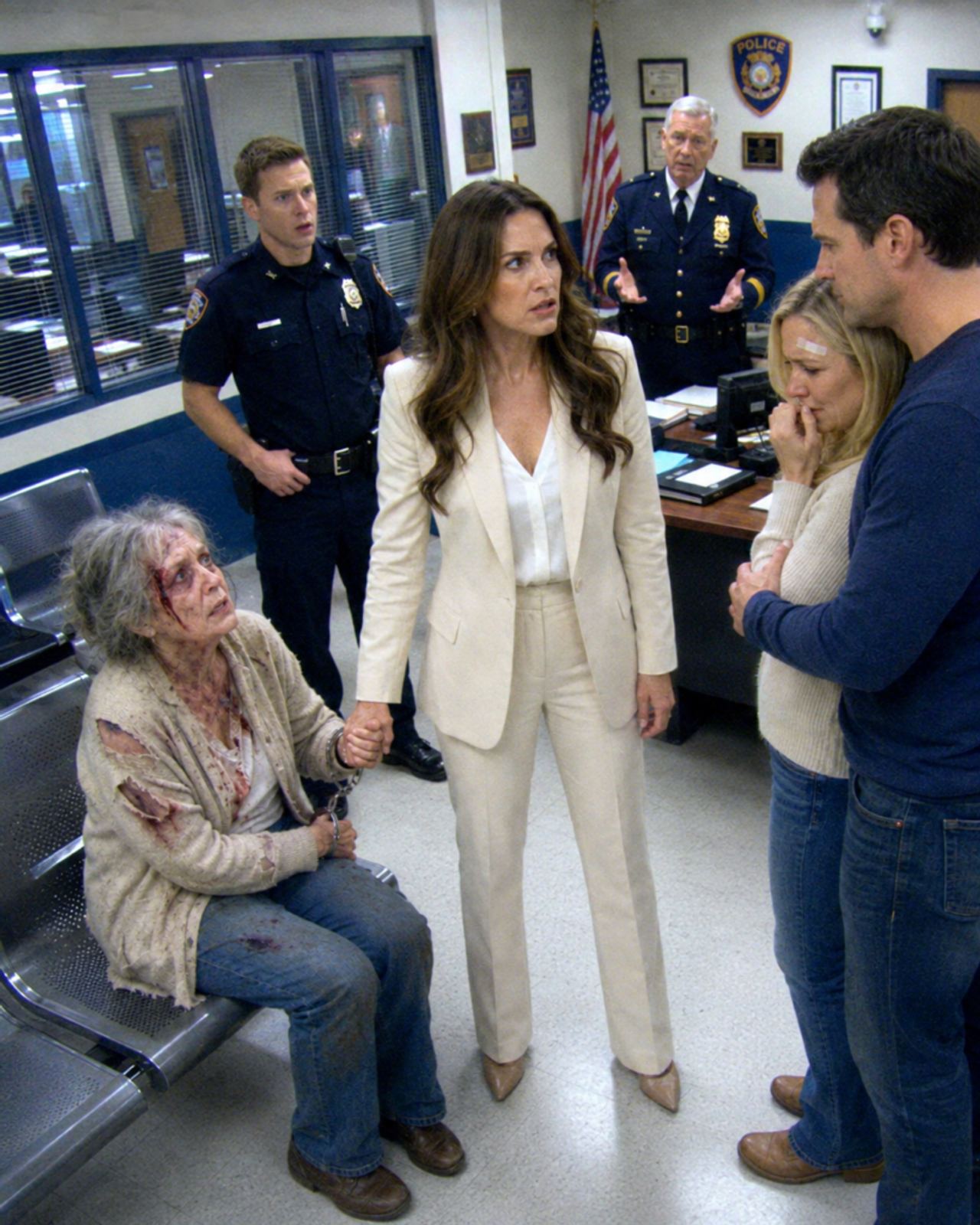
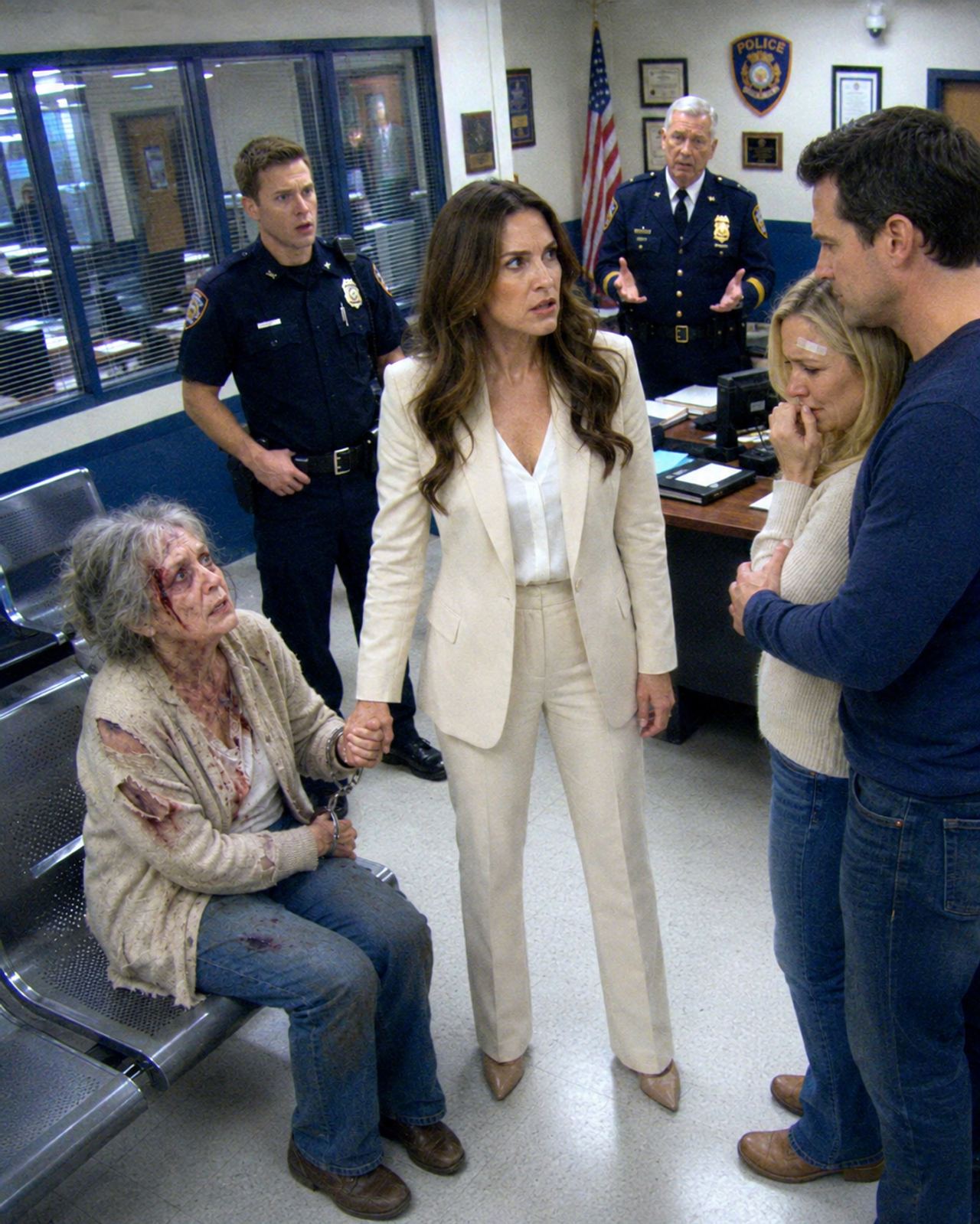
Rain tapped steadily against the windows, soft and persistent, the kind of rain that made the whole building feel smaller. The fluorescent lights hummed overhead. Somewhere in the back, a printer clicked, fed paper, and fell silent again. Every ordinary sound seemed suddenly too loud.
Chief Enzo stared at me with his jaw tight.
“What exactly do you think you’re doing?” he asked.
I looked at my mother before answering.
Her shoulders were trembling, though she was trying hard not to let anyone see. Even sitting there injured, handcuffed, humiliated, she kept her chin lifted. That was my mother. Eleanor Peterson could be frightened, but she would not beg.
“I’m asking again,” I said quietly. “Who authorized the arrest?”
The room remained still.
The desk officer swallowed. “Chief Enzo approved it.”
Chief Enzo’s eyes snapped toward him.
The young officer immediately looked down.
I nodded slowly. “And the probable cause?”
“Victim statement,” Enzo said. “Witness statement.”
“From Dana,” I said, “and from Colton.”
Dana pressed a hand to her chest, her lips parting with theatrical offense. “I am the victim here.”
I turned toward her. “Then you won’t mind if your injuries are properly photographed, your statement is recorded, and your clothing is preserved.”
Her expression flickered.
It was subtle. Most people would have missed it. A tightening around the mouth. A quick glance toward the chief. A half-step back toward my brother.
Colton noticed too. His fingers curled around her arm, not in comfort, but warning.
My mother saw it, and her face changed.
Not relief. Not anger.
Recognition.
That hurt me more than anything.
My mother had known for a long time that something was wrong in that house. She had simply convinced herself it could still be repaired with patience, forgiveness, and silence.
“Casey,” Colton said, his voice low enough that only those nearby would hear, “you need to stop. You’re turning this into something it isn’t.”
I studied my brother.
He was wearing the gray sweater Mom had bought him last Christmas. I remembered her wrapping it carefully, smoothing the paper with her palm, writing his name in her graceful handwriting. She had asked me three times whether gray was too plain. She had wanted him to feel seen.
Now he stood across from her as though she were an inconvenience.
“What is it, then?” I asked.
His eyes hardened. “Mom is confused. She gets agitated. Dana tried to calm her down, and Mom lashed out.”
My mother made a small sound from the bench.
I looked at her. “Don’t answer him.”
“I didn’t lash out,” she whispered anyway. “I only asked where my bank card was.”
That sentence moved through the room like a cold current.
Dana’s face sharpened. “That is not true.”
Mom looked at her with quiet devastation. “I asked because the pharmacy called. They said my prescription was declined.”
Colton closed his eyes briefly, as though inconvenienced by the detail.
Chief Enzo stepped forward. “This is not a courtroom.”
“No,” I said. “It’s a police station. Which means evidence matters.”
I turned back to the desk officer. “Release the cuffs.”
He hesitated.
I lowered my voice. “Officer, I am not asking you to decide the case. I am asking you whether you want your name attached to keeping an injured seventy-two-year-old woman restrained after no medical care was provided and no evidence was collected.”
His face went pale again.
A second later, the key ring rattled in his hand.
“No one touches those cuffs,” Chief Enzo barked.
The officer froze.
I did not raise my voice. “Chief, if you interfere with medical care for a detainee after being informed of injuries, that decision will belong to you alone.”
For the first time, uncertainty crossed his face.
It was gone quickly, hidden beneath annoyance, but I saw it.
The room had shifted. Everyone felt it.
The young officer unlocked the handcuffs.
My mother winced when the metal slid away from her swollen wrist. I crouched beside her and took her hands gently. Her right wrist was already puffed and discolored. She tried to smile at me, but her mouth trembled.
“I’m sorry,” she whispered.
Those two words broke something open in me.
Not because she owed anyone an apology. Because she had been trained by years of family disappointment to offer one before asking for help.
“You have nothing to be sorry for,” I said.
Her eyes filled again. “I didn’t want to cause trouble.”
“You didn’t.”
Across the room, Dana gave a bitter little laugh. “This is exactly what she does. She makes herself look helpless so everyone feels sorry for her.”
My mother flinched.
I stood.
“Dana,” I said, “don’t speak to her again tonight.”
The front doors opened behind me.
Cold air swept in, carrying the smell of wet pavement. Two state investigators entered first, followed by my deputy, Marisol Vance, her black coat beaded with rain and her expression unreadable.
Marisol had worked with me for five years. She did not rush. She did not perform. She had the gift of making a room feel smaller simply by standing in it.
Behind her came a paramedic team.
Chief Enzo’s irritation returned instantly. “Who called them?”
“I did,” Marisol said.
He looked from her to me. “This is outside your jurisdiction.”
Marisol removed a leather folder from inside her coat and opened it just enough for him to see the seal.
“Not tonight.”
The station went quiet again.
Marisol’s gaze swept over the room, missing nothing: my mother’s bruised face, Dana’s carefully placed bandage, Colton’s rigid posture, the blanket under Enzo’s desk, the officers avoiding eye contact.
“Mrs. Peterson,” she said gently, kneeling beside my mother, “my name is Marisol Vance. The paramedics are going to examine you now. You are not required to answer questions from anyone in this room.”
Mom nodded, exhausted.
The paramedics moved with calm efficiency. One checked her wrist. Another took her blood pressure. When the woman pressed lightly along Mom’s ribs, Mom gasped and gripped my hand.
My brother looked away.
That was when anger finally rose in me—not hot and loud, but quiet and steady. The kind that could survive a long night.
“Colton,” I said.
He did not answer.
“Look at her.”
His eyes lifted reluctantly.
“Look at what happened.”
His face tightened. “I know what happened.”
“No,” I said. “You know what you agreed to say.”
Dana stepped between us. “He told the truth.”
But her voice had lost its polish.
Marisol turned toward Chief Enzo. “We’ll need all body-camera footage, dispatch logs, intake notes, surveillance video from the lobby and holding area, and radio traffic from the call.”
Chief Enzo folded his arms. “You’ll need a warrant.”
Marisol looked at him for one measured second. “For internal departmental records in an active integrity review?”
His mouth opened, then closed.
He had known about the scheduled audit. He had known enough to be careful. But he had not known the woman in handcuffs was my mother.
That was the mistake. Not the first one. Just the one that exposed the others.
One of the state investigators moved toward the evidence-room door.
“Stop,” Enzo snapped.
The investigator paused and looked to Marisol.
Marisol said, “Chief, preserve the scene.”
“This is not a crime scene.”
“Then you should have no objection to preservation.”
A faint sound escaped from the back corner.
Not speech. A breath.
I turned.
A rookie officer stood near the hallway, a young woman with dark hair pulled into a tight bun. Her nameplate read R. HALL. She looked barely old enough to have stopped being surprised by cruelty. Her eyes were fixed on the blanket under Enzo’s desk.
Dana saw me notice her.
So did Chief Enzo.
“Officer Hall,” he said sharply. “Return to patrol.”
She stiffened. “Yes, sir.”
But she didn’t move.
Marisol noticed.
“Officer Hall,” she said, “were you present when Mrs. Peterson was brought in?”
The rookie’s throat worked.
Chief Enzo’s voice turned cold. “Officer.”
Hall stared at the floor.
My mother watched her with a strange, pleading softness. Not asking the young woman to save her. Asking her not to lose herself.
Finally, Hall said, “Yes.”
Dana’s grip tightened on Colton’s arm.
Marisol nodded. “Did Mrs. Peterson receive medical care?”
Hall shook her head. “No.”
“Did she request it?”
The rookie hesitated.
Then, very quietly, she said, “Twice.”
The air changed.
Chief Enzo took one step toward her. “That is enough.”
Hall’s eyes filled, but she kept speaking. “She said her wrist hurt. She said she couldn’t breathe right. I asked if we should call EMS.”
“And?” Marisol asked.
Hall looked at the chief.
He said nothing.
“And I was told it wasn’t necessary,” Hall finished.
The desk officer shifted uncomfortably.
Dana’s face had gone still.
I looked at my brother. “Did you hear her ask for help?”
His jaw flexed.
“Colton.”
He gave a short, humorless laugh. “You don’t understand what it’s been like.”
There it was.
The door he had been waiting to open.
“She calls constantly,” he said. “She worries about every little thing. She forgets things. She accuses Dana of moving her purse, her pills, her bills. You weren’t here, Casey. You left.”
My mother closed her eyes.
I felt the old accusation land exactly where he intended it to. For years, Colton had shaped himself into the abandoned son and me into the daughter who escaped. It made everything easier for him. Every missed appointment, every ignored call, every holiday where Mom cooked too much food for too few people—somehow it became my fault because I lived two hours away and had a job that swallowed my life.
“You’re right,” I said. “I wasn’t here every day.”
Colton blinked, surprised by the admission.
I continued, “But I was here enough to notice that Mom stopped driving after Dana borrowed her car and brought it back with a dent. I was here enough to notice that her bank statements stopped coming to her house. I was here enough to notice that she started asking permission before buying groceries with her own money.”
Dana’s eyes narrowed.
“And I was here enough,” I said, “to know that confusion doesn’t leave bruises shaped like fingerprints.”
Mom lowered her head.
That hurt too. There was more I had missed. More she had hidden.
Marisol stepped closer to Dana. “Mrs. Peterson, we’ll need you to remain available for a formal statement.”
Dana lifted her chin. “I already gave one.”
“Tonight?”
“Yes.”
“Recorded?”
Dana looked to Enzo.
He answered, “An initial statement was taken.”
Marisol’s brows rose slightly. “Recorded?”
The chief’s silence was answer enough.
The paramedic nearest my mother looked up. “We need to transport her. Possible wrist fracture, possible rib injury, contusions, elevated blood pressure.”
“I’m going with her,” I said.
Chief Enzo moved as if to object, then seemed to think better of it.
Marisol touched my arm lightly. “I’ll stay here.”
I understood what she meant.
She would secure what she could before it disappeared.
As the paramedics helped Mom onto the stretcher, she reached weakly for my hand.
“Casey,” she whispered, “my purse.”
I glanced around. “Where is it?”
Her eyes shifted toward Dana.
Dana smiled faintly. “I have no idea.”
Officer Hall spoke again, almost too softly. “It was brought in.”
Everyone looked at her.
She swallowed. “Mrs. Peterson had a brown purse when she arrived. Mrs. Peterson—Dana Peterson—took it from the bench.”
Dana’s voice went brittle. “I was protecting her belongings.”
“Where is it now?” I asked.
“I don’t know,” Dana snapped.
Mom’s fingers dug into mine. “There’s a notebook inside.”
That caught Colton’s attention.
Not fear exactly.
Recognition.
“What notebook?” I asked.
Mom shook her head, tears leaking from the corners of her swollen eyes. “Not here.”
The paramedics wheeled her toward the door.
As we passed Colton, Mom turned her face toward him.
For one terrible second, I thought she would ask him why.
Instead, she said, “I hope someday you remember who you were before you became afraid of her.”
Colton’s face crumpled, just slightly.
Dana saw it and immediately pulled him closer. “Don’t listen to that.”
But he had listened.
I saw it.
So did she.
Outside, the rain had softened into mist. The ambulance lights flashed red over the slick parking lot, painting every puddle with uneasy color. I climbed in beside Mom and held her hand while the paramedic fitted an oxygen tube beneath her nose.
For a few minutes, no one spoke.
The ambulance moved through the dark streets of Maplewood, past sleeping houses and closed storefronts, past the old library where Mom used to take us on Saturdays. My brother and I had once fought over who got to push the elevator button. Mom would laugh and tell us there was enough joy for both of us.
Enough joy for both of us.
I looked down at her bruised hand in mine and felt the ache of all the years between then and now.
“I should have seen more,” I said.
Her eyes opened. “No.”
“Mom—”
“No, Casey.” Her voice was weak but firm. “That is how they keep you quiet. They make everyone carry a piece of blame until no one knows where the truth belongs.”
I stared at her.
Even injured, even frightened, she still had the ability to say something so clear it stopped me cold.
The paramedic pretended not to listen, but his expression softened.
“What happened tonight?” I asked.
Mom looked toward the ambulance ceiling. “I found the letter.”
“What letter?”
“In Dana’s drawer. I wasn’t snooping. I was looking for my insurance card. She told me she had put it somewhere safe.” Her mouth trembled. “There was a letter from the bank about the house.”
My hand tightened around hers. “Your house?”
She nodded. “A home equity line. My signature was on it.”
I felt the old legal instincts rise, organizing facts, timelines, questions.
“Did you sign it?”
“No.” A tear slipped into her hair. “I asked Colton. He wouldn’t look at me. Dana got angry. She said I was ungrateful, that they had done everything for me. Then I said I was calling you.”
Her voice broke there.
The paramedic glanced at me.
“And that’s when she picked up the bat?”
Mom closed her eyes. “It was by the back door. Colton uses it when he hears noises at night.”
“Did he try to stop her?”
For a long moment, I thought she would protect him.
Then she whispered, “No.”
The word was small, but it filled the ambulance.
At the hospital, everything became bright corridors, clipped questions, and the antiseptic smell of early morning. Nurses moved around Mom with practiced gentleness. X-rays confirmed a fractured wrist and two bruised ribs. No internal bleeding. No head fracture. The doctor said she was lucky.
Lucky.
I had to turn away when he said it.
Mom watched me from the hospital bed. “Don’t make that face.”
“What face?”
“The one you made when you were little and someone cut in front of you in line.”
Despite everything, I almost laughed.
She smiled faintly. “You never could stand unfairness.”
“You taught me that.”
“I taught you to be kind too.”
“I remember.”
Her gaze searched mine. “Do you?”
The question landed softly but deeply.
I pulled a chair close and sat beside her. “I’m not going to use my position to punish anyone.”
“I know.”
“But I am going to make sure no one buries what happened.”
She nodded. “That’s all I want.”
But I wasn’t sure it was.
Her eyes kept drifting toward the door. Every time footsteps passed in the hallway, her fingers moved as though searching for the missing purse, the missing notebook, the missing piece of the night she had not yet trusted me with.
At 5:18 a.m., Marisol called.
I stepped into the hall.
“We have a problem,” she said.
My stomach tightened. “What disappeared?”
“The bat hasn’t been recovered. The purse is missing. Lobby footage from 1:41 to 2:09 a.m. is unavailable.”
“Unavailable?”
“System error, according to Enzo.”
I closed my eyes.
Marisol continued, “But Officer Hall gave a voluntary statement. She says Dana arrived first in Colton’s truck, speaking privately with the chief for several minutes before your mother was brought in.”
“That means they separated them before intake.”
“Yes. And Hall says your mother had visible injuries before anyone took Dana’s statement.”
I leaned against the wall, watching rain streak down the hospital window at the end of the corridor.
“What about Dana’s injuries?”
“Minor scratch on her forearm. No swelling. No defensive bruising documented yet. She refused additional photos once we requested standard evidence handling.”
“Of course she did.”
“There’s more,” Marisol said.
I heard a rustle of paper.
“Chief Enzo’s department issued three welfare-check calls to your mother’s address in the last year. All three reports describe her as confused, agitated, possibly unstable.”
My chest tightened. “I never heard about those.”
“They were all called in by Dana.”
I stood very still.
Marisol’s voice softened. “Casey, this may have been prepared over time.”
A nurse passed carrying folded blankets. Somewhere nearby, a child coughed. The normal sounds of the hospital made the words feel even colder.
Prepared over time.
Not one lie told in panic.
A trail.
A foundation.
A story built carefully enough that, when the night came, people would already know which version to believe.
“Send me everything,” I said.
“Already did. Also—Casey?”
“Yes?”
“Officer Hall said something odd.”
“What?”
“She said your mother asked for you by name when they brought her in. Enzo told her, ‘That won’t help her anymore.’”
My hand curled around the phone.
Marisol waited.
I forced myself to breathe. “Document it.”
“I did.”
I ended the call and stood in the hallway until my face felt calm enough to return.
Inside the room, Mom was pretending to sleep.
I knew because her breathing was too careful.
“Mom,” I said.
Her eyes opened.
“We need to talk about the notebook.”
She turned her face toward the window.
The sky outside had begun to lighten, not with sunrise exactly, but with that pale gray before dawn when everything looks undecided.
“It was your father’s,” she said.
That was not what I expected.
Dad had been gone eleven years. A quiet man, patient and funny in a dry way, he had worked as an accountant for small businesses around Maplewood. He had believed in ledgers, sharpened pencils, and never buying anything on credit unless the roof was leaking.
“What does Dad’s notebook have to do with this?”
Mom looked at me with tired eyes. “I didn’t know for a long time.”
“Know what?”
She swallowed. “Before he died, your father was worried about Colton.”
A familiar sadness moved through me. “Colton was struggling then.”
“He was more than struggling.”
I said nothing.
Mom continued, “There were missing deposits at the dealership where he worked. Your father found irregular payments. He thought Colton had gotten involved with someone dangerous.”
“Why didn’t he tell me?”
“You were in law school. He didn’t want to burden you.”
I almost smiled at the painful irony. My father had protected me from the truth so I could become someone whose entire life was built around uncovering it.
“What was in the notebook?”
“Dates. Names. Amounts. Things your father copied before he confronted Colton.”
My throat tightened. “Did he confront him?”
Mom nodded.
“And?”
“They argued.” Her eyes glistened. “I heard Colton say Dad didn’t understand what he owed.”
“What he owed to whom?”
“I don’t know. Your father wouldn’t tell me. He said the less I knew, the safer I was.”
A cold thought moved through me.
“Mom,” I said carefully, “Dad’s accident…”
She closed her eyes.
My father had died after his car left an icy road and struck a tree. A terrible accident, everyone said. Winter roads. Bad visibility. No mystery.
For eleven years, I had believed that.
Mostly.
Mom’s voice was barely audible. “I don’t know, Casey.”
But that wasn’t the same as no.
The door opened before I could ask more.
Colton stood there.
He looked smaller than he had at the station. His hair was damp from the rain. His gray sweater clung darkly at the shoulders. Without Dana beside him, he seemed less certain where to put his hands, his anger, himself.
I stood immediately.
“You shouldn’t be here.”
His eyes moved past me to Mom. “I wanted to see if she was okay.”
Mom looked at him.
For a moment, the hospital room held three versions of our family at once: the one we had been, the one we pretended to be, and the one lying broken beneath fluorescent lights.
“Are you alone?” I asked.
He nodded. “Dana’s at home.”
“With Mom’s purse?”
His face changed.
There it was again. Recognition.
“Colton,” I said, “where is it?”
“I don’t know.”
“Don’t do this.”
He looked at Mom then, and something in him wavered. “You don’t understand what Dana’s been dealing with.”
I stepped closer. “No. You don’t get to make Dana the center of this room.”
His eyes flashed. “You always do that.”
“Do what?”
“Talk like everything is evidence. Like people are files.”
That struck closer than I wanted it to.
Mom watched us silently.
Colton continued, “You left, Casey. You got your title, your office, your important work. I stayed. I handled the calls, the bills, the appointments, the loneliness.”
“Did you?” I asked softly.
His mouth tightened.
“Because Mom says her prescription was declined. Her bank card was missing. Her house has a loan she didn’t sign. So tell me what you handled.”
He looked away.
The silence was enough.
Mom’s voice broke it.
“Colton, did you sign my name?”
His face went pale.
“I didn’t mean for it to go this far,” he said.
The words seemed to pull the floor out from under her.
I closed my eyes briefly.
When I opened them, Mom was staring at him as if she had been waiting all night for denial and received confession instead.
“Why?” she whispered.
Colton rubbed his hands over his face. “Dana’s brother needed help. It was supposed to be temporary. We were going to pay it back before you ever knew.”
“Dana’s brother?” I asked. “Or Dana?”
He shot me a look. “You don’t know her family.”
“I know enough.”
“No, you don’t.” His voice dropped. “They don’t ask. They collect.”
The room seemed to grow colder.
Mom’s hand moved toward mine.
“What does that mean?” I asked.
Colton stared at the floor.
“Colton.”
He shook his head. “I can’t.”
“You can.”
“No,” he said, with sudden force. “You don’t know what happens when people say no to them.”
The words did not excuse him. Nothing could. But they opened a door into a darker hallway.
Mom began to cry silently.
Colton saw it and looked shattered for the first time that night.
“Mom,” he whispered.
She turned her face away.
He flinched as if she had struck him.
Good, I thought, and then hated myself for thinking it.
The doctor entered then, saving all of us from whatever came next. His polite smile faded when he felt the tension in the room.
“Mrs. Peterson needs rest,” he said.
Colton stepped backward. “I’ll go.”
I followed him into the hallway.
He stopped near the vending machines, shoulders hunched.
“Where is the notebook?” I asked.
“I told you, I don’t know.”
“But you know what’s in it.”
He did not deny it.
“Dad kept records, didn’t he?”
Colton’s face twisted. “Dad thought records could fix everything.”
“Sometimes they can.”
“No, Casey. Sometimes they get people hurt.”
His eyes flicked toward Mom’s door.
I lowered my voice. “Was Dad’s crash an accident?”
Colton stared at me.
For one second, the hallway vanished. The years vanished. We were children again, hiding under the dining room table while our parents laughed in the kitchen. He was my big brother, the boy who used to walk on the outside of the sidewalk because he said cars were more likely to hit him first.
Then the man he had become returned.
“I don’t know,” he said.
But he looked terrified.
Before I could press him, his phone buzzed.
He glanced down.
Whatever he read drained the last color from his face.
“Is it Dana?” I asked.
He shoved the phone into his pocket. “I have to go.”
I grabbed his sleeve. “Colton.”
He looked at my hand, then at me.
“Don’t go back there and destroy evidence for her.”
His laugh was quiet and bitter. “You still think Dana is the worst person in that house.”
Then he pulled free and walked away.
By midmorning, the hospital room had become a strange little command center. Marisol sent updates. A victim advocate arrived with clean clothes and a calm voice. A social worker helped arrange a safe place for Mom to stay after discharge. Officer Hall’s statement had triggered a formal preservation order, and the state team remained at Maplewood Police Department.
Mom slept in short, uneasy bursts.
I sat beside her, reading documents on my phone, each one making the shape of the past year …
Read more stories
- Her Sister-In-Law Drained the Pool, but Forgot the Digital Trail
- My Sister Wrecked My Audi, and My Parents Chose Her
- John Denver and Cass Elliot live duet on Leaving on a Jet Plane (1972)
- After Two Weeks With His Mistress, My Husband Finally Came To See Our Son. The Nurse Looked At Him And Said, “Your Wife Left Two Weeks Ago.