
Human Stories
My Brother-in-Law Changed the Locks—Then the Deed Came Out
When Daniel changes the locks on his in-laws’ coastal home and tries to pass it off as a family arrangement, a county investigator and a lawyer uncover forged signatures, stolen payments, and an attempted property takeover. The confrontation ends in arrest, divorce, and a slow, hard-earned restoration of trust within the family.

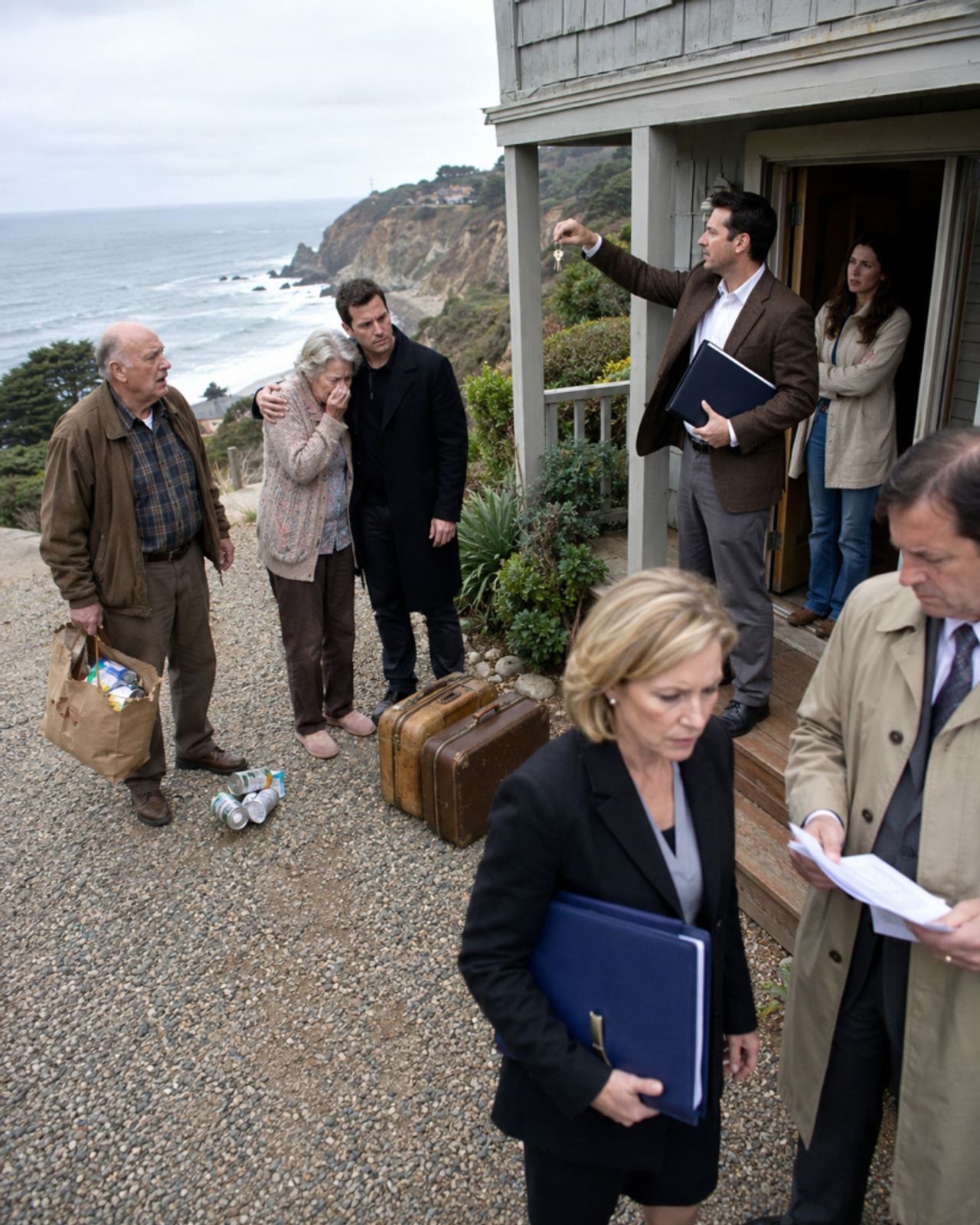
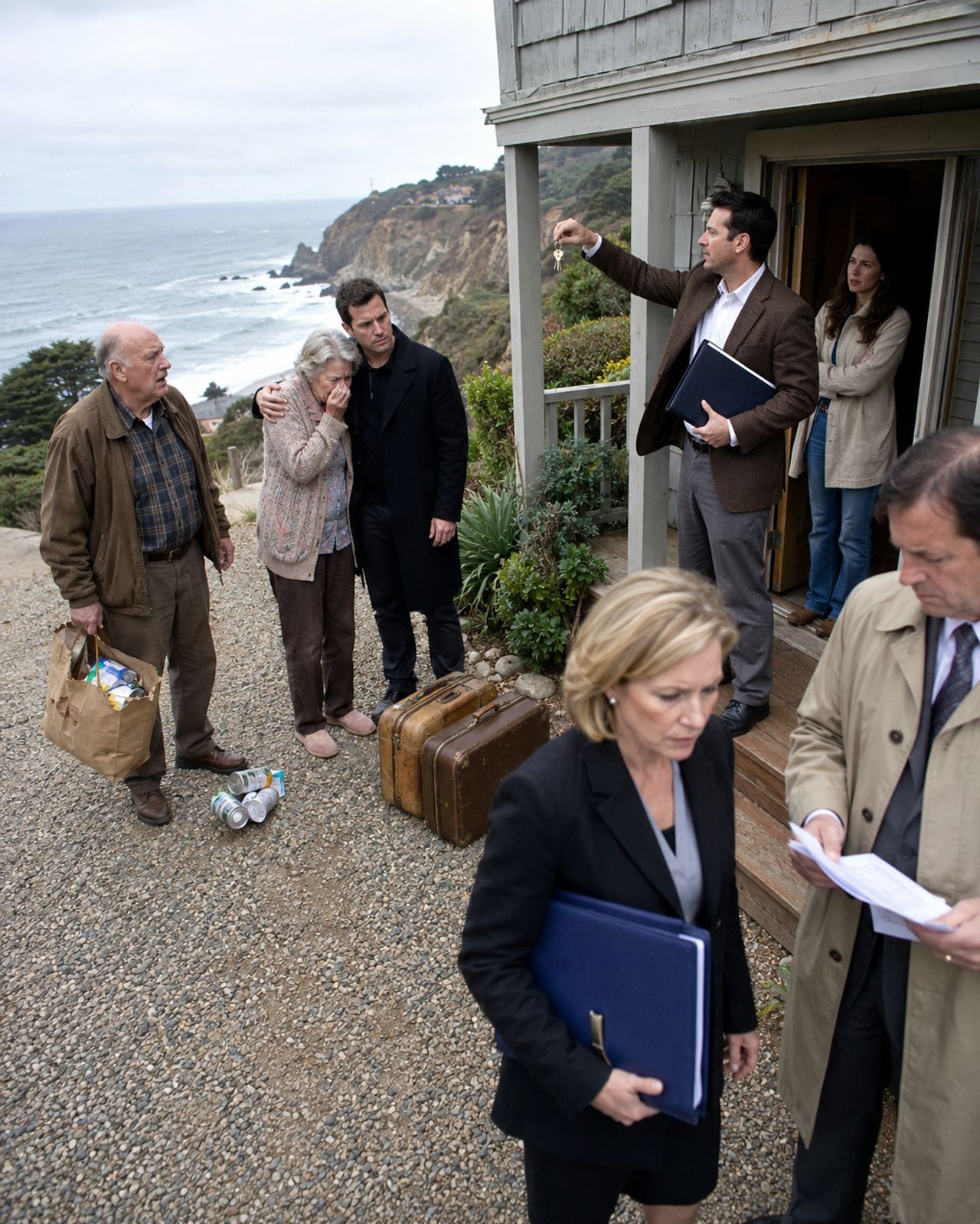
Daniel’s hand slipped from the new brass doorknob as Mara Ellison placed the certified deed on top of his folder.
The county investigator beside her, Victor Salazar, did not look at the house first.
He looked at the lockbox hanging beside the door, then at my parents’ suitcases in the gravel, then at the keys in Daniel’s hand.
“Mr. Mercer,” Victor said, “set the keys on the table.”
Daniel gave a short laugh, but it contained none of the confidence he had shown when I arrived.
“You can’t just come onto private property and start issuing orders.”
Mara tapped the deed with one finger.
“You’re right.
This is private property.
It belongs solely to Robert and Linda Hayes.
You are neither an owner nor an authorized property manager.”
My mother stood close to me, shivering despite the cardigan wrapped around her shoulders.
My father had not moved from the bottom step.
The torn grocery bag still hung from his hand.
Claire stared at the deed.
“Daniel said Dad had signed an authorization.”
“He did not,” Mara replied.
She opened the blue file and removed the original limited property authorization my parents had signed after receiving the house.
The arrangement had been my suggestion.
They owned the property completely, but because they were unfamiliar with real estate paperwork, they had given me limited authority to intervene if anyone attempted to lease, mortgage, transfer, or encumber the home without their verified consent.
The document required both parents to approve any long-term or short-term rental.
Their signatures had to be witnessed, notarized, and confirmed through a recorded call with Mara’s office.
No such call had ever occurred.
Daniel lifted his folder against his chest.
“Robert signed my form.
Maybe your office lost track of it.”
My father climbed one step.
“I have never signed anything for you.”
Daniel turned toward him with open irritation.
“You sign papers all the time.
Insurance forms, delivery receipts, medical paperwork.
You probably don’t remember.”
I saw my father’s face change.
The humiliation from being locked out disappeared, replaced by something steadier.
“I remember every paper you put in front of me,” he said.
“I refused the one you brought to dinner.”
Claire looked sharply at her husband.
“What paper at dinner?”
Daniel’s eyes moved toward the driveway.
Victor noticed.
“Keys on the table,” he repeated.
This time Daniel obeyed.
He placed them beside the lockbox with an exaggerated shrug, as though he were humoring an unreasonable stranger.
Mara picked up the document I had photographed and compared it with the signature page in her file.
My father’s real signature leaned slightly upward, with a narrow loop in the R and a heavy final stroke.
The signature on Daniel’s form was flatter and carefully drawn.
“This is not a rushed signature,” Mara said.
“It’s a traced one.”
Daniel scoffed.
“You’re a lawyer, not a handwriting expert.”
“Correct.
That’s why the original will go to one.”
Victor opened his tablet.
“We may also have something simpler.
The notary number printed on your document belongs to a woman in Sacramento who retired eighteen months ago.
She has already confirmed she did not witness this signature.”
The wind pushed salt air across the porch.
Somewhere below the cliffs, a wave struck rock with a sound like distant thunder.
Claire took the folder from Daniel before he could stop her.
He grabbed for it.
“Give me that.”
She stepped away and opened it.
The top page was a vacation-rental agreement.
Beneath it were reservation confirmations, cleaning schedules, and copies of messages sent to guests under the name Cypress Point Executive Retreat.
My parents’ home had been advertised as a luxury rental with private coastal access.
The listing promised that the owners did not live on-site.
My mother read that sentence twice.
“But we do live here.”
Daniel rubbed both hands over his face.
“It was marketing language.
Guests want privacy.”
“You put our suitcases outside to make the advertisement true,” my father said.
Daniel did not answer.
Victor turned the tablet toward us.
Three payments appeared on the screen.
One was a deposit for a family arriving the next afternoon.
Another came from a couple who had booked two weeks in August.
The third was a corporate retreat deposit large enough to cover several months of my parents’ expenses.
All three payments had gone into an account registered only to Daniel Mercer.
Claire stared at the total.
“You told me no one had paid yet.”
“I said the money hadn’t cleared.”
“You said there was no money.”
“Because I was organizing it.”
She looked through the pages faster now.
Her hands began to tremble.
Daniel moved closer and lowered his voice.
“Claire, stop.
You don’t understand how this works.”
“Then explain it.”
“We were going to manage the place, pay expenses, and give your parents whatever was left.”
My mother flinched at the phrase whatever was left.
The taxes were already paid.
I had prepaid the insurance and arranged a maintenance fund when I bought the cottage.
Daniel knew that.
He had attended the anniversary dinner when I explained it.
“There were no expenses for you to cover,” I said.
His face hardened.
“There are always expenses.”
“Name one you paid.”
Daniel looked toward Mara instead of answering.
She removed another sheet from the file.
“The lock company invoice was charged to Linda Hayes’s credit card.
So were the linens, the wine, and the cleaning service.”
My mother’s mouth opened slightly.
“My card disappeared last week.”
Claire turned on Daniel.
“You said Mom must have misplaced it.”
“She leaves things everywhere.”
My father took another step toward him.
I placed a hand lightly against Dad’s arm.
Daniel had spent the morning trying to provoke him into looking unstable or aggressive.
I would not let him create that story now.
“Let the documents speak,” I said.
Daniel heard the calm in my voice and mistook it for hesitation.
“Fine,” he said.
“Let them speak.
Claire is their daughter.
She has every right to help manage family property.
Ethan doesn’t get permanent control because he paid for one house.”
“I don’t control the house,” I replied.
“They do.
That’s the point you keep refusing to understand.”
A patrol car turned into the driveway.
Daniel’s shoulders tightened.
Officer Jenna Park stepped out and spoke briefly with Victor before joining us on the porch.
She asked my parents whether they lived at the property.
They both said yes.
She asked whether they had given Daniel permission to change the locks or remove their belongings.
They both said no.
Then she asked Daniel why the suitcases were outside.
“They were leaving for a few days,” he said.
My father looked directly at the officer.
“We came home from the grocery store and our keys didn’t work.
Our clothes were already packed.”
Officer Park’s expression changed.
“Who packed them?”
Daniel pointed toward Claire.
My sister recoiled.
“I packed one overnight bag because you told me Mom and Dad had agreed to stay with us during repairs.
I did not put their suitcases in the driveway.”
“You knew guests were coming.”
“You said they were potential guests.
You said we were showing them what the property could earn.”
Daniel’s control began to fracture.
“Don’t pretend you weren’t part of this.
You complained for years that Ethan was the favorite.
You said he used money to make every family decision.”
Claire’s face went white.
The accusation was cruel because part of it was true.
She had resented the gift.
At the anniversary dinner, she had smiled for our parents, but later she asked why I had not consulted her.
I told her the cottage was not an inheritance decision.
It was a gift from me to Mom and Dad.
Daniel had taken her resentment and turned it into permission.
Claire swallowed.
“I was angry,” she said.
“I never agreed to steal their house.”
“No one stole anything.”
Mara removed one final packet from the blue file.
“Then perhaps you can explain this.”
She placed a loan application on the porch table.
The cottage appeared as collateral for a $280,000 business loan.
Attached to the application was a forged copy of the deed showing Claire and Daniel as partial owners.
Claire’s name appeared at the bottom.
She stared at it for several seconds.
“I didn’t sign this.”
Daniel’s response came too quickly.
“It never went through.”
Silence fell over the porch.
Officer Park looked at him.
“That wasn’t the question.”
Claire flipped to the signature page.
Her name had been written in a smooth, confident hand.
It looked more natural than the imitation of my father’s signature because Daniel had likely seen hers thousands of times.
“You forged mine too,” she whispered.
Daniel stepped toward her.
“I was trying to save us.”
For the first time, his real motive entered the conversation.
Not my parents’ age.
Not maintenance.
Not family responsibility.
Himself.
Claire asked what he meant.
Daniel stared at the ocean and said nothing.
Victor answered for him.
His office had received complaints about the rental listing because the license number belonged to another property.
When investigators traced the payment account, they found recent transfers to a company called Mercer Coastal Holdings.
The company had been created six weeks earlier.
Its account was nearly empty.
Most of the rental deposits had been used to cover overdue payments connected to Daniel’s failed restaurant investment.
The proposed loan against the cottage would have paid the remaining debt and supplied capital for another project.
Claire sat down hard on the porch bench.
“You told me that investment was closed.”
“It could still work.”
“You lost our savings.”
“Temporarily.”
“How much?”
Daniel did not answer.
Victor read the figure from his notes.
It was more than $190,000.
My sister covered her mouth.
My mother moved toward her instinctively, then stopped.
Claire had helped Daniel enter the house.
She had believed his story about repairs and packed an overnight bag.
She had also stood in the doorway while our father was told to leave.
Love did not erase that.
Claire lowered her hands.
“Mom, I didn’t know.”
My mother’s voice was quiet.
“You knew enough to see us standing outside.”
Claire began to cry.
Daniel turned on all of us.
“This is exactly why I handled it myself.
Everyone panics.
Nobody thinks ahead.
That house is worth hundreds of thousands of dollars, and they’re just sitting in it.
Ethan gets to play hero while the rest of us struggle.”
My father looked at him with a sadness deeper than anger.
“You could have asked for help.”
“I didn’t want charity.”
“So you took our home instead?”
Daniel pointed at me.
“He took control first.
He bought the house so everyone would owe him.”
I had wondered whether my gift might make my parents uncomfortable.
That was why the deed contained no right of return, no repayment requirement, and no ownership interest for me.
The cottage was theirs even if they became angry with me the next day.
I told Daniel that.
He laughed bitterly.
“And yet your lawyer appears the second there’s a problem.”
“Because they asked me to come.”
That was the difference he could not understand.
Protection was not possession.
Help was not ownership.
Love did not require someone else to become powerless.
Officer Park asked Daniel to turn around and place his hands behind his back.
His face changed from anger to disbelief.
“You’re arresting me over a family disagreement?”
“I’m detaining you while we investigate suspected forgery, fraudulent use of a credit card, attempted unlawful eviction, and financial fraud.”
Daniel looked at Claire.
“Tell them this was your idea too.”
She stared at the false signature on the loan application.
“No.”
“Claire.”
“I said no.”
Officer Park secured his wrists.
As she led him down the steps, Daniel twisted toward me.
“You think you won? Those guests are still coming.
They’ll sue your parents when their reservations are canceled.”
Mara closed the file.
“The rental platform froze the account this morning.
The guests will be refunded from its fraud reserve while investigators trace the deposits.”
Daniel stopped struggling.
That was the moment he finally understood that there was no remaining piece of the scheme he controlled.
After the patrol car left, Victor photographed the lockbox, the new locks, the suitcases, and every page in Daniel’s folder.
A locksmith arrived and replaced the cylinders again, this time handing every key directly to my parents.
My father tested his key twice.
When the door opened, he remained on the threshold.
The house looked familiar, but someone had rearranged it for strangers.
Family photographs had been removed from the shelves.
My mother’s knitted blanket was stuffed into a closet.
My father’s old radio had been placed in a cardboard box labeled OWNER ITEMS.
My mother found their wedding portrait facedown beneath a stack of rental brochures.
She picked it up and brushed dust from the glass.
My father stood beside her.
Neither of them spoke.
I began carrying their suitcases inside, but Dad stopped me.
“Not yet,” he said.
He took his own suitcase from my hand and carried it through the doorway.
Then he returned for Mom’s.
It was a small act, but I understood.
Daniel had tried to turn them into helpless old people who could be moved whenever convenient.
Dad needed to walk back into his home under his own strength.
Claire stayed near the porch.
She asked whether she could come inside.
My mother looked at my father.
He looked toward the hallway where their belongings had been boxed.
“Not today,” he said.
Claire nodded as if the words physically hurt.
“I understand.”
She left without asking me to defend her.
The criminal investigation lasted several months.
The handwriting analysis confirmed that both my father’s and Claire’s signatures had been forged.
Records from Daniel’s laptop showed he had copied the signatures from old tax and insurance documents.
Messages to the locksmith proved he had falsely claimed my parents were tenants who had abandoned the property.
He eventually pleaded guilty to multiple fraud and forgery charges.
The attempted loan had not been approved, which limited the financial damage, but the rental deposits, stolen credit-card charges, and forged documents were enough to bring serious consequences.
He was ordered to repay the losses, placed under strict supervision after serving a custodial sentence, and prohibited from managing financial accounts belonging to anyone else.
Claire filed for divorce.
That did not instantly repair what had happened between her and our parents.
She had not known about the forgery, but she had allowed envy to make Daniel’s story believable.
She had watched him speak to our father with contempt and asked me not to make a scene.
For a long time, my parents kept their distance.
Claire respected it.
She began meeting with a counselor, found work separate from Daniel’s businesses, and sent our parents a handwritten apology that did not blame her husband or ask for forgiveness.
Months later, my mother invited her for coffee on the porch.
It was not a reunion filled with tears and instant healing.
It was cautious.
Honest.
Claire listened more than she spoke.
My father told her that trust would return through behavior, not promises.
She accepted that.
A year after the lockout, we gathered at the cottage for my parents’ 41st anniversary.
The rental linens were gone.
The family photographs were back on the shelves.
My father’s radio played softly near the kitchen window while my mother cut a lemon cake.
Before dinner, Dad walked outside carrying the navy envelope.
The stolen copies had been returned as evidence, but he had placed the certified deed and authorization inside a new envelope.
He handed it to me.
“I think you should keep this in your safe,” he said.
I shook my head.
“The originals are already protected.
That one belongs here.”
He looked at the envelope, then at the house.
“For a while, every time I saw it, I remembered standing outside.”
“And now?”
He slid the envelope into the drawer beside his chair.
“Now I remember coming back in.”
As the sun lowered over the Pacific, my parents sat together on the porch.
Claire helped my mother carry out the coffee, careful not to assume she was forgiven simply because she had been invited.
My father handed her a cup and moved his chair slightly so she could sit beside them.
No one announced that the family was healed.
Healing rarely arrives with an announcement.
It appears in smaller things: a chair moved closer, a door opened without fear, a key turning smoothly in a lock that finally belongs to the right hands.
Daniel had looked at the cottage and seen an asset waiting to be taken.
My parents looked at it and saw forty years of sacrifice reflected back at them.
And when my father locked the door that night, the keys did not swing from the hand of a man trying to control him.
They rested quietly in his own.
Read more stories
- She Faked a Seizure to Expose the Man Who Controlled Her Life
- He Paid For Mom’s 70th, Then His Kids Were Sent To The Flowerpots
- She Refused To Give Up Her Apartment. Then Dinner Turned Violent
- My Parents Sued Me for My $1.5 Million Dream Home—Then Their Own Sworn Testimony Exposed the Crime That Destroyed Them