
Celebrities & Music
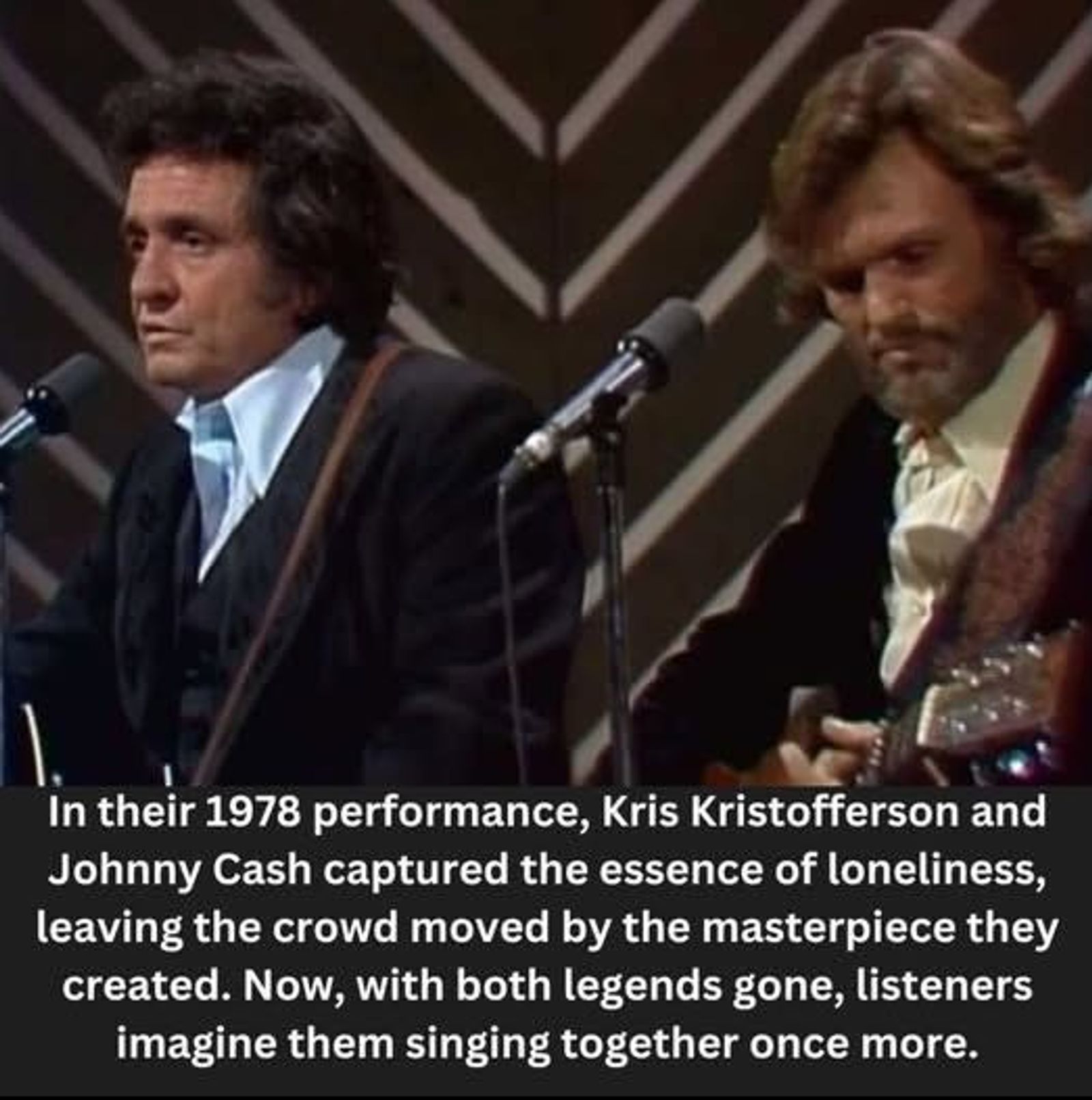
In their 1978 performance, Kris Kristofferson and Johnny Cash captured the essence of loneliness, leaving the crowd moved by the masterpiece they created. Now, with both legends gone, listeners imagine them singing together once more.
The article reflects on the 1978 performance of Kris Kristofferson and Johnny Cash, highlighting the emotional depth and authenticity of their duet “Sunday Morning Coming Down.” It emphasizes how their shared experiences and storytelling resonate with listeners, even decades later.

Some performances become unforgettable not because of dazzling production or perfect staging, but because they capture two legendary artists sharing a moment of complete honesty.
When Kris Kristofferson joined Johnny Cash to perform “Sunday Morning Coming Down” on The Johnny Cash Christmas Show in 1978, the result was far more than another television appearance.
It became a meeting of two storytellers who understood the triumphs and failures that shape an ordinary human life.
By then, both men had already earned legendary status through songs that spoke directly to working people, dreamers, wanderers, and those carrying invisible burdens.
Neither artist relied on polished perfection to reach an audience.
Instead, they trusted sincerity, lived experience, and carefully chosen words to do what flashy performances never could.
“Sunday Morning Coming Down,” written by Kris Kristofferson, had already established itself as one of country music’s finest examples of storytelling.
Its narrator awakens to the lonely silence of a Sunday morning, surrounded not by celebration but by the lingering weight of yesterday’s choices.
There is no dramatic confession or emotional outburst.
Instead, every verse quietly unfolds like pages from a personal diary.
That restrained honesty gives the song extraordinary emotional power.
Johnny Cash understood those emotions better than almost anyone.
Throughout his career, he became the voice of outsiders, prisoners, struggling families, and ordinary people searching for redemption.
His deep baritone carried the unmistakable sound of experience rather than performance.
Every lyric seemed to come from someone who had genuinely lived the stories he was singing.
Sharing the stage with the song’s writer added another layer of meaning.
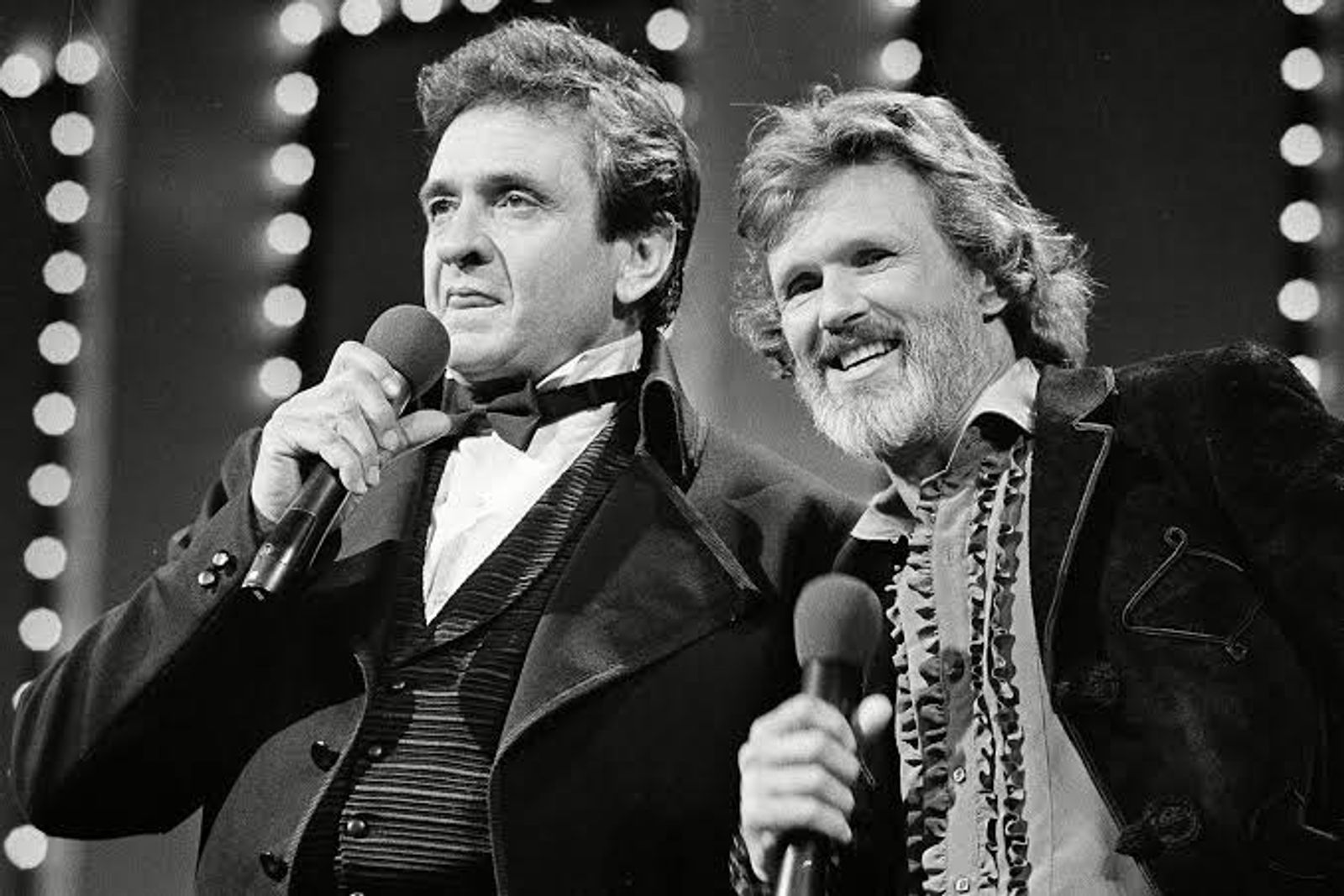
Kris Kristofferson brought calm reflection and poetic sensitivity, while Cash contributed strength, gravity, and unmistakable warmth.
Their voices differed in texture but blended beautifully through mutual respect.
Neither attempted to outshine the other.
Instead, they allowed the song itself to remain the true centerpiece.
Watching the performance today feels remarkably intimate.
There are no elaborate visual effects competing for attention.
No overwhelming orchestra distracts from the lyrics.
Everything centers upon two musicians and one unforgettable story.
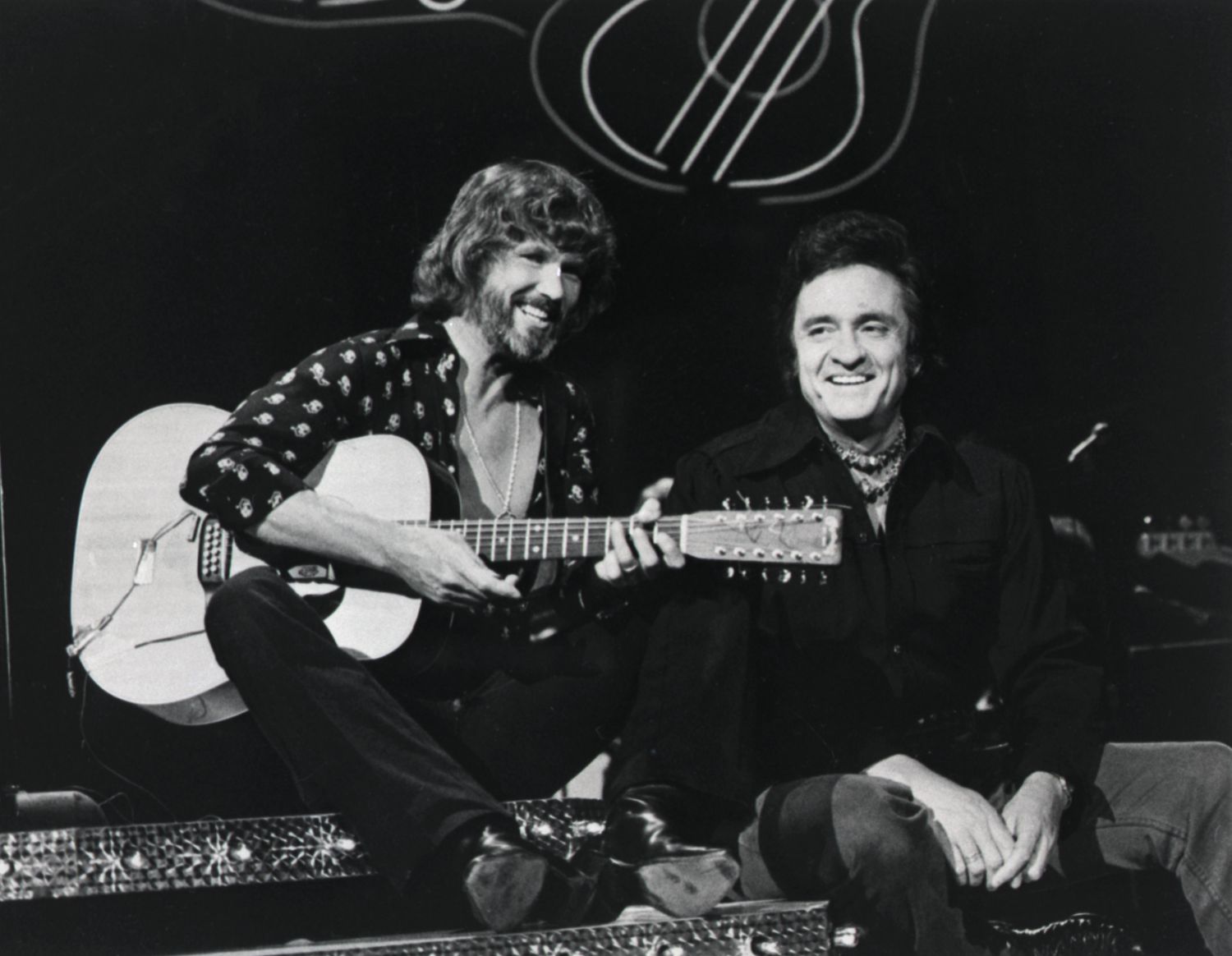
That simplicity allows every word to carry its full emotional weight.
The lyrics describe familiar sights that most people have experienced at one time or another.
Church bells ring somewhere in the distance.
Children laugh while families gather together.
Meanwhile, the lonely narrator quietly observes life continuing without him.
Those ordinary images become powerful because they highlight emotions almost everyone eventually understands.
Regret rarely arrives with dramatic music playing in the background.
More often, it appears during quiet mornings when memories become impossible to ignore.
That timeless truth explains why the song continues to resonate decades after it was first written.
Listeners recognize themselves inside moments they hoped no one else had ever experienced.
Johnny Cash never rushed those emotions.
His phrasing leaves space for silence, allowing listeners to absorb every thought before the next line begins.
Kris Kristofferson responds with equal restraint, creating the feeling of two old friends sharing hard-earned wisdom.
Their chemistry comes not from rehearsed perfection but from genuine understanding.
Both men knew that life’s greatest lessons usually arrive through hardship rather than comfort.
Perhaps that shared experience gives the performance such remarkable authenticity.
It feels less like entertainment and more like quiet conversation.
The setting of a Christmas television special creates an especially meaningful contrast.
While many seasonal programs focus on celebration and joy, this performance reminds us that holidays can also awaken memories of loneliness, reflection, and hope.
That emotional honesty makes the moment feel even more human.
For longtime fans, the performance recalls an era when television occasionally paused its spectacle long enough to let a great song simply breathe.
Viewers gathered around living room televisions, discovering unforgettable moments that required nothing more than gifted artists and meaningful lyrics.
Those memories remain inseparable from the music itself.
Even younger audiences discovering the recording online often recognize something refreshingly genuine.
Its emotional power does not depend on nostalgia alone.
The themes of regret, compassion, resilience, and quiet redemption remain just as meaningful today.
Great storytelling never becomes outdated because human nature changes very little.
Johnny Cash and Kris Kristofferson understood that truth throughout their remarkable careers.
They never sang merely to impress audiences.
They sang to remind people that nobody walks through life without carrying both victories and scars.
That timeless compassion continues to define their greatest work.
Whenever this unforgettable performance begins, listeners are invited to slow down, set aside distractions, and spend a few quiet minutes reflecting alongside two men who had seen enough of life to recognize both its darkness and its extraordinary grace.
Nearly five decades later, the 1978 performance of “Sunday Morning Coming Down” remains one of those rare musical moments where honesty speaks louder than perfection, leaving behind not simply a memorable duet, but a lasting reminder that even our loneliest mornings can still lead us toward understanding, forgiveness, and hope.
Read more stories
- He Was Rejected By His Own Mom And Raised To Think ‘Women Are Evil’ But He Became A Legendary Rockstar
- TOBY KEITH RECORDED SOME OF THE BIGGEST PATRIOTIC ANTHEMS IN COUNTRY MUSIC HISTORY—BUT HIS REAL LEGACY WAS BUILT ON MILITARY BASES WHERE NO CAMERAS WERE ROLLING.
- [Video]: The One-Take Hit That Took Over Rock Radio
- The Box Tops’ “The Letter” Captures Lightning in a Bottle and Redefines Blue-Eyed Soul in 1967-2