
Celebrities & Music
In October 1970, the music world was rocked by the death of Janis Joplin. The twenty-seven
In October 1970, the music world was rocked by the death of Janis Joplin. The twenty-seven-year-old Queen of Psychedelic Soul was found dead from a heroin overd

In October 1970, the music world was rocked by the death of Janis Joplin. The twenty-seven-year-old Queen of Psychedelic Soul was found dead from a heroin overdose on the floor of her room at the Landmark Motor Hotel in Hollywood. For Kris Kristofferson, a rugged former Rhodes Scholar who was only beginning to make a name for himself as a Nashville songwriter, the news was a crushing, deeply personal blow.
He and Janis had shared a brief but fiercely intense romance. They were two wild, restless spirits colliding in the hazy, whiskey-fueled atmosphere of the late sixties. Their bond was profound but fleeting, built on a shared understanding of loneliness and a mutual rebellion against the world. When she died, Kris was left trying to make sense of the wreckage of a sudden, senseless loss.
But the real devastation came a few days later. Still reeling from the shock, Kris was called to an office in Los Angeles. A producer who had been working with Janis on her final album, Pearl, sat him down. There was a track, he said, that Kris needed to hear. Kris had no idea what was waiting for him on the magnetic tape.
During their time together, Kris had played Janis a song he had written a few years earlier called “Me and Bobby McGee.” It was a rambling, dusty country tune about a pair of drifters hitchhiking through the American South, going their separate ways, and realizing the agonizing cost of total independence. He had written it on a whim, inspired by a Federico Fellini film and the name of a Nashville secretary. It was a good song, but still just a song. Janis had liked it. But she had never said anything about wanting to take it into a recording booth.
The producer hit play. The soft strum of an acoustic guitar drifted through the speakers. Then Janis Joplin’s unmistakable, sandpaper-and-whiskey voice filled the room. Kris froze. He was listening to a ghost.
Janis had secretly recorded the song just days before her heart stopped beating. But as the tape played on, Kris realized she had done something far more profound than simply cover his track. She had transformed it. She flipped the gender, making Bobby a man. She stripped away the polite Nashville melancholy and filled the lyrics with her own raw, desperate soul.
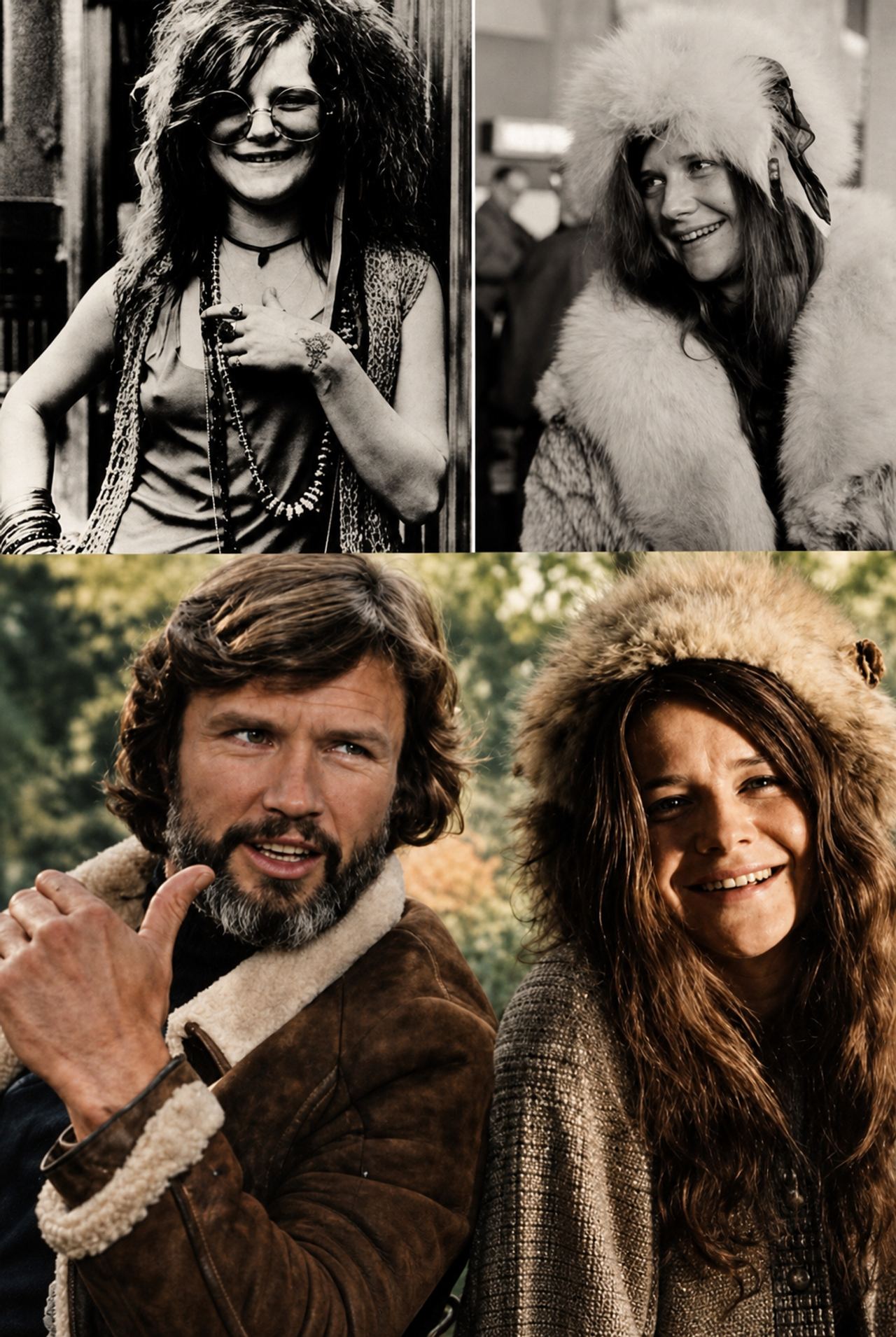
As the song unfolded, it stopped being a fictional story about two drifters. It became Janis’s autobiography. It became a roaring, agonizing wail about her own desperate search for connection, her own profound loneliness, and her own tragic inability to hold onto love.
When the track reached its climax—a chaotic, horn-blaring crescendo where Janis abandons the lyrics entirely to scream, plead, and wail into the microphone—the emotional weight completely crushed Kris. He could not keep it together. The towering songwriter physically collapsed. He dropped his head onto the desk in front of him, buried his face in his arms, and wept uncontrollably.
The sheer force of her vocal delivery was overwhelming. But what truly broke him was the agonizing realization of what she had left behind. She had taken his words and weaponized them with her own pain, turning his fictional lyric into a devastatingly real suicide note of a performance. And she had done it as a surprise for him, a gift he only received after she was already gone.
Released posthumously, “Me and Bobby McGee” shot to the top of the Billboard charts, becoming Janis Joplin’s only number-one hit. It became her signature anthem, forever cementing her legacy and permanently intertwining her spirit with Kris Kristofferson’s pen.
For the next fifty years, Kris would play the song at thousands of concerts. He would sing the words he wrote, but the song no longer belonged to him. It belonged to the woman who stole it, bled into it, and left it for him in the dark.
The most famous lyric in the song was a simple observation: “Freedom’s just another word for nothing left to lose.”
Kris Kristofferson wrote that line on a piece of paper. But as he sat weeping over that desk in 1970, listening to the tape hiss into silence, he understood the heartbreaking truth. He only wrote it. Janis lived it.
Read more stories
- How Adoption Reshaped John Denver’s Private World
- Buck Owens was known across America for the sharp twang of a Fender Telecaster, but in the autumn of 1970, he stepped away from his usual driving tempo to share a quieter stage.
- Why Kenny Rogers Finally Walked Away From the Road
- The Day Dottie West Walked Into the Studio and Found a Second Act