
Celebrities & Music
In 1980, when the childhood elementary school they attended in Staunton, Virginia went up
In 1980, when the childhood elementary school they attended in Staunton, Virginia went up for auction, The Statler Brothers purchased the building and turned it

There is something deeply fitting about a group returning to the very place where their story began. In 1980, when the childhood elementary school they had attended in Staunton, Virginia went up for auction, The Statler Brothers bought the building and transformed it into their headquarters. For a group whose identity was always rooted in home, memory, and friendship, the decision said everything about who they were.
Over nearly four decades of hit records, CMA awards, and popular television shows, Harold Reid, Don Reid, Phil Balsley, Lew DeWitt, and later Jimmy Fortune built a remarkable career without moving their operation to Nashville. While many artists would have seen Music Row as the obvious center of business, The Statler Brothers stayed in the Shenandoah Valley. From the small town where they were raised, they ran a national entertainment operation and proved that success did not require giving up the place that shaped them.
A schoolhouse filled with history
The building they purchased was Beverley Manor Elementary, the same red-brick school where the original members had once walked the halls as boys. That detail alone gives the story unusual emotional weight. This was not just a practical real estate purchase. It was a way of preserving a personal landmark, a place woven into their earliest memories, and making it part of their adult lives in a whole new way.
Rather than buying anonymous office space, they reimagined their former school as a working headquarters. Old classrooms became management offices, fan mail rooms, and a museum filled with hundreds of trophies and stage clothes. It is easy to picture the contrast: rooms once meant for lessons and schoolwork now serving as the center of a major music career. The walls that had once held alphabet charts and geography maps came to display routing schedules for sold-out arenas across the country.
That image captures the spirit of the story better than almost anything else. Their beginnings were never erased by their success. Instead, success was literally placed inside the frame of their beginnings. The very spaces where they had once learned, played, and imagined the future became the rooms where albums and tours were planned.
Success without leaving home
One of the most striking parts of this story is not simply that The Statler Brothers bought their old school, but that they kept their business rooted in Staunton through their biggest years. They had hit records, major industry honors, and television success, yet each morning they could still drive a few minutes along familiar streets, greet old neighbors, and head into the office.
That daily routine feels almost unheard of in the entertainment world. So often, success is associated with relocation, reinvention, and distance from one’s hometown. The Statler Brothers chose another path. They remained connected to the place and people who knew them before fame arrived. There is a quiet confidence in that choice. It suggests they never felt pressure to become something other than themselves.
Their headquarters also reflected the practical realities of a touring career. On the old school grounds, they built a large garage for their tour buses. That detail brings the whole picture to life. Beverley Manor was not preserved as a museum piece alone. It was a functioning hub of a busy entertainment business, with the infrastructure needed to support life on the road while still keeping the heart of the operation close to home.
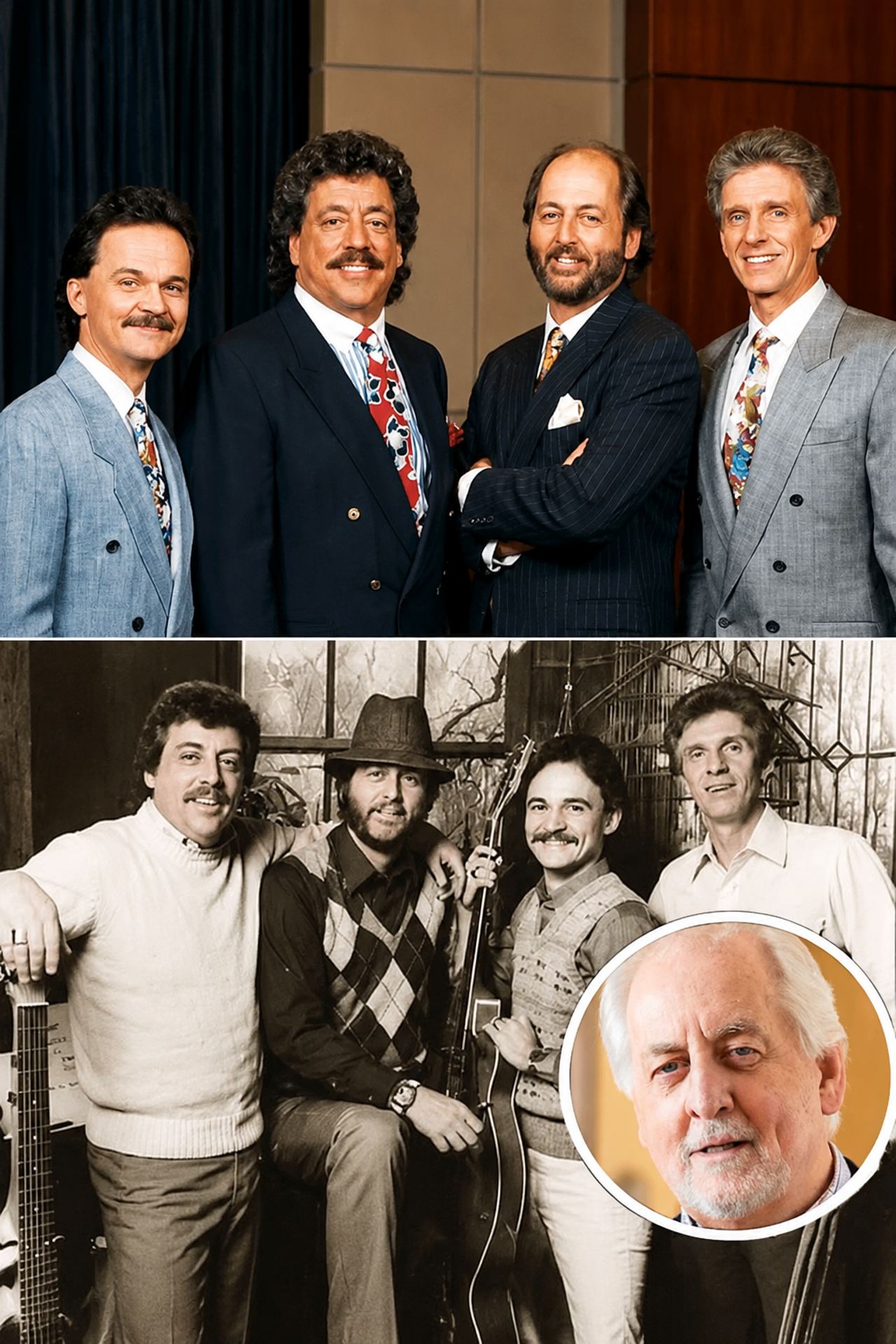
Childhood memories inside a working headquarters
What makes the story especially touching is the human side of it. Walking through those wooden doors as adults, they could still point to where their childhood desks had once stood and recall the playground corners where their friendship first began. That kind of memory cannot be duplicated in a modern office complex. It belongs only to a place that has witnessed the earliest version of your life.
There is a special resonance in the idea that the same boys who once sat in those classrooms grew into men planning albums and tours from those rooms. The transformation of space mirrors the transformation of their lives. Yet even as the purpose of the building changed, its meaning deepened. It became a bridge between childhood and accomplishment, between local roots and national recognition.
For more than two decades, fans from all over America came to visit the building. That says a great deal about the bond between The Statler Brothers and their audience. People were not just interested in the music; they were interested in the story, the place, and the authenticity of a group that never severed its hometown ties. A visit to Beverley Manor was more than a stop at an office. It was a glimpse into the world that helped shape the group.
A full-circle ending
The Statler Brothers continued to run their career from that schoolhouse until retiring after their 2002 farewell tour. By then, Beverley Manor had served for decades as the center of an extraordinary chapter in American music. It had housed fan mail, schedules, memorabilia, and the day-to-day work behind a beloved career. Just as importantly, it had stood as a symbol of continuity in a fast-changing business.
When the group finally packed up their offices, the building returned to its original purpose as a school for local youth. That ending feels almost perfect. The place that had first nurtured them was given back to the community’s children after helping sustain their finest professional years. There is generosity in that circle, and also a sense of respect for the town that had always remained central to their identity.
In many ways, the story of Beverley Manor says as much about The Statler Brothers as any chart success or award. Four Virginia boys left those classrooms, sang for the nation, and then kept the old school alive while building a career that reached far beyond Staunton. They did not just remember where they came from; they worked there, day after day, for more than two decades.
That is why this story continues to resonate. It is about loyalty, memory, friendship, and the rare comfort of staying grounded while achieving something large. The schoolhouse was more than a headquarters. It was a living reminder that home can remain part of the journey, not just the beginning of it.
If this story brings back memories for you, or if The Statler Brothers’ connection to Staunton means something special, share your thoughts and favorite memories with others.
Read more stories
- In Little Time, William Lee Golden Faced the Loss of a Son and a Brother in Song
- How Rex Linn’s Solitary Life Changed After Reba McEntire’s Daily Calls
- In 1982, serious complications from Crohn’s disease forced founding tenor Lew DeWitt to le
- Reba McEntire and Rex Linn: How a Pandemic Phone Call Became a Late-Life Love Story