
Stories
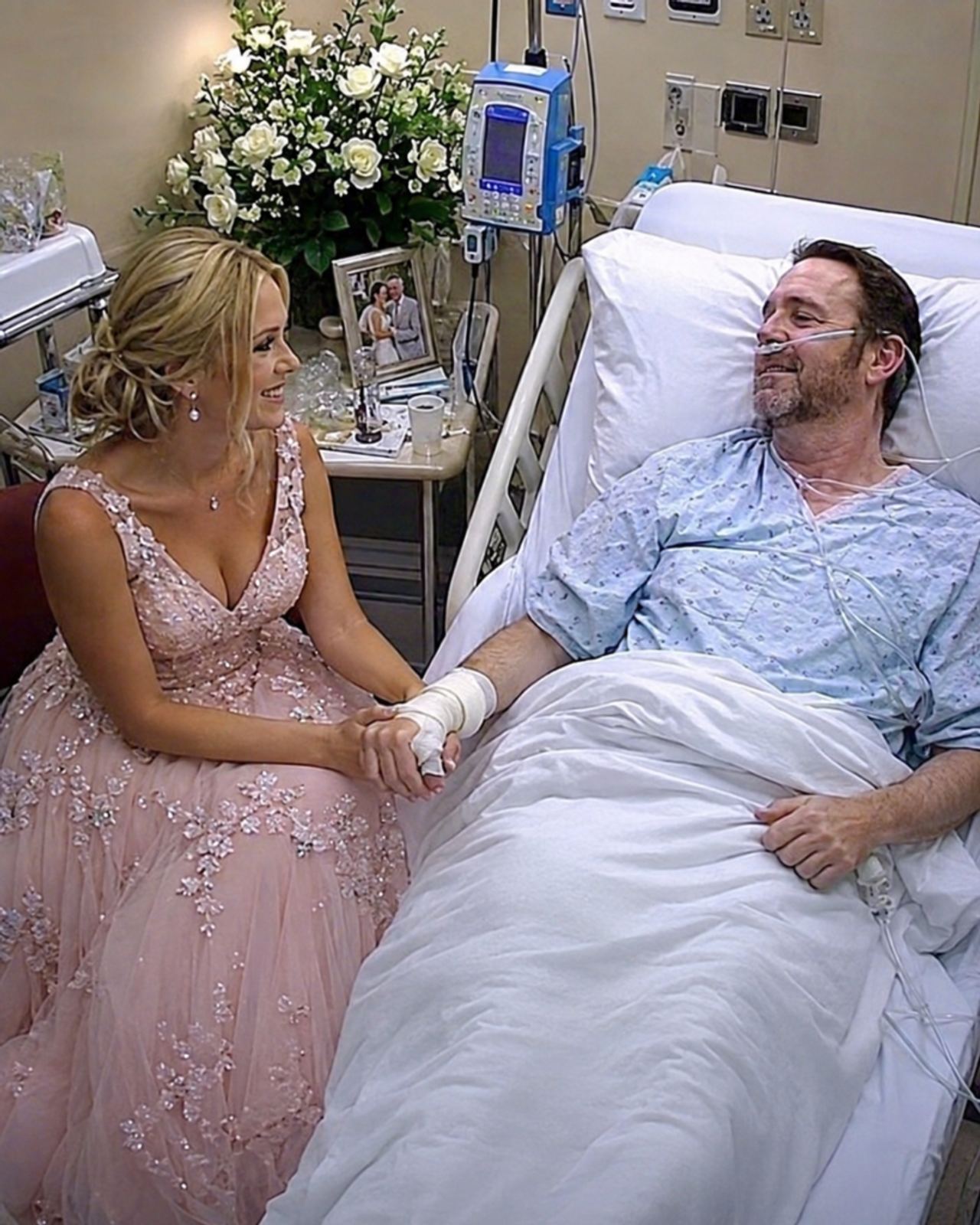
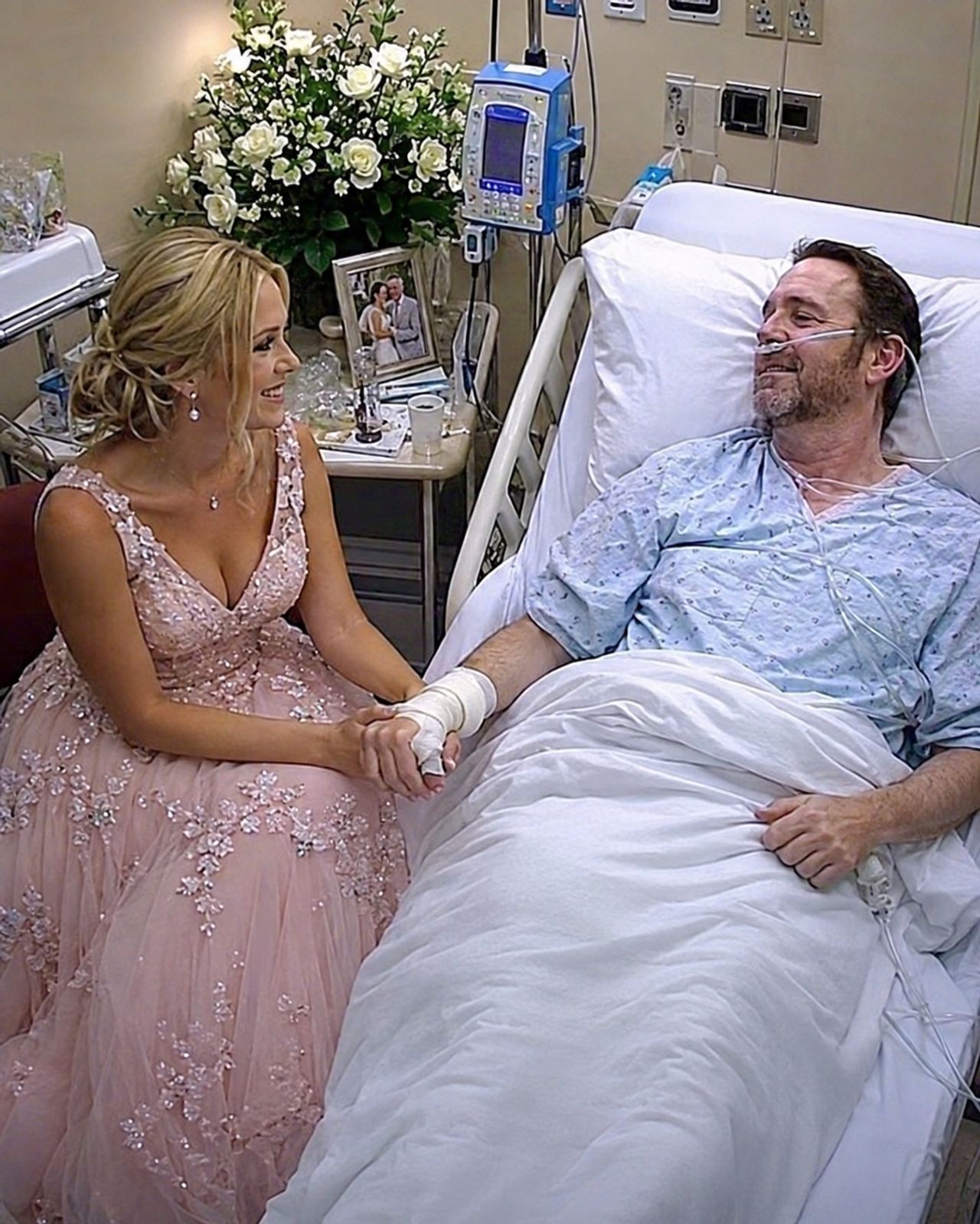
I married a dying man because it was his final wish — after his funeral, his lawyer knocked on my door and said: “He made me wait until today to tell you WHO HE REALLY WAS.
After her husband Carl’s funeral, Anna receives a letter revealing he had secretly watched over her entire life and leaves her a key to a lakeside cabin. In the cabin, she uncovers long-buried family secrets, including the truth about her parents, betrayal by trusted relatives, and a hidden plot involving the lawyer who delivered Carl’s final instructions.

PART 2
The Promise Beneath the Floorboards
The words blurred before my eyes as tears filled them. I forced myself to read again, convinced I had misunderstood.
If you’re reading this, it means I’ve already said goodbye. But before you decide what to believe about me, you deserve to know the truth.
The letter trembled between my fingers.
Across the polished mahogany desk, Carl’s lawyer sat in silence. Mr. Bennett was a narrow-faced man with silver hair and a habit of folding his hands as though every conversation were a negotiation. Yet there was no calculation in his eyes now. Only patience—and something that looked strangely like pity.
Outside his office, the city continued without us. Cars moved through wet streets. Elevators chimed. Somewhere in the building, a telephone rang twice before falling silent.
Inside that room, my entire life had stopped.
I lowered my eyes to the next paragraph.
Carl wrote that decades earlier, someone had saved his life. He never explained exactly what had happened, only that he had been young, frightened, and trapped by circumstances he believed would destroy him. The person who helped him had asked for nothing in return except one promise.
If anything ever happened to her, Carl was to watch over her little girl.
That little girl was me.
I read the sentence three times.
Then a fourth.
“No,” I whispered.
Mr. Bennett did not move.
“This can’t be right.”
“I assure you,” he said quietly, “Mr. Whitmore chose every word carefully.”
Carl Whitmore.
The quiet old man who had lived in the private room at St. Agnes Care Center. The man whose visitors had been so rare that the nurses assumed he had no family. The man I had spoken to only because I happened to find him staring through the window one rainy afternoon.
I had been volunteering at St. Agnes for less than a month. I still remembered our first conversation.
“You look as though you’re waiting for someone,” I had said.
Carl had turned from the window. His face was thin from serious i/llness, but his eyes were sharp.
“Everyone is waiting for someone,” he replied. “Most of us simply pretend otherwise.”
I had laughed awkwardly.
He had not.
After that, I began visiting him every Thursday.
He asked about my work, my apartment, my childhood, and the small dreams I had abandoned because adulthood had made them seem foolish. He remembered everything I told him. My favorite books. The name of my first teacher. The fact that I hated cinnamon but loved apple pie.
At the time, I thought he was simply lonely.
Now I understood that he had already known most of the answers.
I returned to the letter.
Carl described moments from my life that no stranger should have known.
The unsigned birthday cards that arrived every year until I turned eighteen.
The anonymous scholarship that appeared two weeks before I planned to leave college.
The unexpected internship offered by a company to which I did not remember applying.
The rent payment marked “administrative correction” during the winter I lost my first job.
None of them had been coincidences.
Carl had been there all along.
Not beside me. Never close enough to be seen. But always near enough to keep me from falling too far.
A chill moved through me.
My childhood had been filled with unanswered questions. My mother, Evelyn, had disappeared when I was six. My aunt Nora raised me afterward, insisting that Evelyn had been restless, unreliable, and incapable of remaining in one place.
“She loved you in her way,” Nora used to say. “But some people are born with open roads inside them.”
For years, I had imagined my mother driving beneath endless skies, changing her name whenever the past came too close.
Then, when I was sixteen, Aunt Nora told me Evelyn had likely d/i/ed somewhere far away.
There had been no funeral. No grave. No official explanation.
Only absence.
I looked at Mr. Bennett. “Who was the person who saved Carl?”
He glanced at the letter.
“You should continue.”
“You know, don’t you?”
“I know what Mr. Whitmore permitted me to know.”
“That isn’t an answer.”
“No,” he agreed. “It isn’t.”
Anger rose through my grief.
Carl had entered my life disguised as a stranger, listened to my memories, accepted my trust—and never once told me he had been shaping my future from the shadows.
I wanted to be grateful.
Instead, I felt watched.
Every triumph suddenly belonged partly to him. Every narrow escape had invisible fingerprints on it. Even my failures felt suspicious, as though he might have arranged those too.
I read faster.
Carl admitted that he never intended for me to discover his identity. He believed the safest way to honor his promise was to remain distant.
Then his i/llness changed everything.
Knowing he had little time left, he wanted only one thing: to leave this world certain that I finally understood I had always been loved and protected.
You may be angry with me, he wrote. You have every right to be. Protection without truth can become another kind of prison. I see that now.
My breath caught.
It was as though he had anticipated the exact shape of my fury.
I told myself that silence kept you safe. Perhaps, in the beginning, it did. Later, silence became a habit, and habits become walls. By the time I understood that, I no longer knew how to stand before you without the wall between us.
A tear struck the page.
I wiped it away quickly, afraid the ink might run.
At the bottom of the final sheet was one last instruction.
Go to the old lakeside cabin at sunrise. Open the wooden chest beneath the floorboards. Mr. Bennett has the key. What you find there belongs to you—and it will answer the one question I could never explain in this letter.
I looked up.
Without speaking, Mr. Bennett reached into his coat and placed a small antique key on the desk.
Its brass surface had darkened with age. A faded blue thread was tied through the round opening at its top.
I recognized that thread.
My mother had owned a blue scarf with the same unusual silver stitching. In the only photograph I had of her, she wore it around her hair.
I snatched up the key.
“Where is the cabin?”
Mr. Bennett slid an envelope toward me.
Inside was a hand-drawn map.
“You should arrive before sunrise,” he said.
“Why?”
“Because that is what Carl requested.”
“That isn’t good enough.”
His expression changed. For the first time, his professional calm slipped.
“Miss Hale, there are truths people hide because they are ashamed. Others they hide because telling them would place someone in d/@/nger. Carl’s truth may have been both.”
“Is someone going to hurt me?”
“I don’t believe so.”
“You don’t believe so?”
He stood and walked toward the window.
“Mr. Whitmore spent thirty years preparing for almost every possible outcome. Your visit to the cabin was the only part he could not control.”
“What does that mean?”
“It means the moment you open that chest, the decision becomes yours.”
I left his office before he could offer another carefully incomplete answer.
The rain had stopped, but the streets shone beneath the lamps. I walked without direction until I found myself standing outside St. Agnes.
Carl’s window was dark.
Two nights earlier, a nurse had called to tell me he had passed away peacefully. I had expected sorrow. What I felt instead was a hollow disbelief, as though he had stepped out of a room and might return at any moment with one of his dry observations.
Now the dark window seemed less like an ending than an accusation.
He had known me my entire life.
I had known him for eleven Thursdays.
I pressed my palm against the cold glass of the entrance door.
“What did you do, Carl?” I whispered.
The building gave no answer.
At three in the morning, I drove north.
The map led away from the highway, through sleeping towns and stretches of forest where my headlights seemed too weak against the darkness. Carl’s cabin stood beside Lake Verity, a place I had never heard mentioned by either him or Aunt Nora.
Yet the name troubled me.
Verity.
Truth.
The road narrowed until branches scraped the sides of my car. Fog drifted between the trees. My phone lost its signal twenty minutes before I reached the lake.
The cabin appeared shortly before dawn.
It was smaller than I imagined, built from dark logs and set among tall pines. A stone chimney leaned slightly toward the roof. The lake behind it was perfectly still, its surface covered by pale mist.
I parked beside a rusted iron gate.
For several minutes, I remained in the car.
Mr. Bennett’s warning repeated in my thoughts.
The moment you open that chest, the decision becomes yours.
I almost turned back.
Then I noticed something hanging from the cabin porch.
A blue scarf.
My mother’s scarf.
I left the car running and hurried across the wet grass.
The scarf moved gently in the wind. Its fabric was faded, but the silver stitching was unmistakable. I touched it, half expecting it to vanish.
A memory returned.
I was five years old, standing in our old kitchen while my mother wrapped the scarf around my shoulders.
“Now you’re a queen,” she said.
“Queens need crowns.”
“Only ordinary queens.”
Her voice came back so clearly that I nearly turned, certain she was behind me.
But the porch was empty.
The front door was unlocked.
Inside, the cabin smelled of cedar, dust, and cold ashes. Furniture stood beneath white covers. An old clock rested above the fireplace, stopped at 4:17.
On the table sat a lantern, a box of matches, and another envelope bearing my name.
I opened it.
Dear Anna,
Before you search beneath the floorboards, light the lantern. The electricity was disconnected years ago, and dawn will not reach this room immediately.
You were always afraid of dark rooms when you were little, though you pretended otherwise.
My hands tightened around the note.
That was not something I remembered telling Carl.
I lit the lantern.
Warm light spread across the cabin, revealing framed photographs along the walls.
Most were landscapes.
The lake in winter.
The lake during a storm.
The dock beneath autumn leaves.
Then I saw a picture near the fireplace.
My mother stood on the porch, smiling into the sunlight. She looked no older than twenty-five. Beside her was Carl.
He was young too, with thick dark hair and a grin I had never seen during my visits.
Between them stood Aunt Nora.
On the back, someone had written:
Evelyn, Carl, and Nora—summer of 1989. Before everything changed.
I stared at the date.
I was born the following spring.
A floorboard creaked beneath my foot.
I looked down.
One plank near the fireplace was darker than the others. Its edge bore a small crescent-shaped mark.
I found an iron tool beside the hearth and lifted the board.
Beneath it was a narrow compartment.
The wooden chest waited inside.
It was not large, but it was heavy enough that I struggled to pull it free. A brass lock secured the front. The antique key entered smoothly.
For a moment, I could not turn it.
My heart beat so hard that I heard it above the wind outside.
Then I forced my hand to move.
The lock opened.
Inside lay several bundles of letters, a leather journal, a cassette recorder, and a sealed folder stamped with the name of a private investigation firm.
There was also a photograph of me as a baby.
Carl held me in his arms.
My mother stood beside him.
On the back, in Evelyn’s handwriting, were six words:
She has your eyes, Carl.
The room tilted.
I lowered myself to the floor.
“No,” I said.
My voice sounded very far away.
I studied the photograph again. Carl’s face held an expression I had never seen—not pride exactly, and not fear, but something deeper. Something tender and terrified at once.
I thought of his eyes.
Gray with a faint ring of green.
My eyes.
I grabbed the first bundle of letters.
They were written by my mother to Carl.
Some were affectionate. Some furious. Some desperate.
The earliest letters spoke of plans to leave the city together. Later ones mentioned threats, hidden money, and a man named Victor Hale—my legal father, whom I had been told d/i/ed in an accident before I was born.
According to the letters, Victor had not been my father at all.
He had been Aunt Nora’s husband.
And he had known about Carl.
One letter was dated three days before my mother disappeared.
Carl, Victor found the photographs. He knows Anna is yours. He says he will ruin all of us if I try to leave. Nora begged me to wait, but I don’t trust her anymore. She says she is protecting Anna. I think she is protecting herself.
If something happens, take care of our daughter.
Do not come for me. Promise me.
My vision blurred.
Our daughter.
Carl had not been fulfilling a promise to a mysterious friend.
He had been watching over his own child.
Me.
A sound escaped my throat, half laugh and half sob.
All those Thursdays.
All those hours sitting beside him.
He had known.
When I complained that I had inherited my stubbornness from a father I never met, he had smiled and looked away.
When I told him I had no family left after Aunt Nora’s d/e/@/th, he had reached for my hand and then stopped himself.
He had been my father.
And he had allowed me to call him Carl.
My grief transformed into something jagged.
“You coward,” I whispered.
The word struck the empty cabin.
“You absolute coward.”
I wanted to throw the letters into the fireplace. I wanted to preserve every one. I wanted to drive back to the city and demand answers from a man who could no longer give them.
Instead, I reached for the cassette recorder.
A tape was already inside.
A small label read:
For Anna—play after reading Evelyn’s final letter.
I searched through the bundle until I found an envelope marked Final.
The paper inside had yellowed.
My dearest Anna,
One day, people may tell you I abandoned you. Believe them if believing makes your childhood easier. Hate me if hatred hurts less than waiting.
But understand this: I did not leave because I stopped loving you.
I left because Victor discovered evidence that could send several powerful men to prison. Carl wanted to expose them. Victor wanted to sell the evidence back to them. Nora wanted silence.
I tried to take you with me. I failed.
Carl promised to protect you. I made him promise never to reveal himself unless there was no other choice.
If you are reading this, then either the d/@/nger has passed—or Carl has decided you are strong enough to face it.
There is something else you must know.
The letter ended there.
The bottom half of the page had been torn away.
I searched the envelope, then every bundle in the chest.
The missing section was gone.
My frustration erupted. I scattered the letters across the floor, examining each one, but none completed the message.
At last, I pressed play on the recorder.
Static filled the cabin.
Then Carl’s voice emerged.
“Anna, if you have reached this point, you know I was your father.”
Hearing him say it broke something inside me.
“I wish I could ask your forgiveness in person,” he continued. “But I suspect I would not deserve it, and you would not offer it easily. That stubbornness is mine, I’m afraid.”
Despite everything, I almost smiled.
“I stayed away because Evelyn believed you would be used against me. At first, I agreed. Later, when I realized the threat had faded, I told myself you were happy with Nora. By the time I understood the truth, you were old enough to hate me for my silence.”
The tape clicked softly.
“There is one question you will ask. Why did Evelyn disappear?”
I leaned closer.
“The answer is that she didn’t.”
My breath stopped.
“Evelyn was placed in protective custody after giving evidence in a financial c/rime investigation. Her identity was changed. Contact with you was forbidden until the case ended.”
I stared at the recorder.
“The case ended twenty-two years ago,” Carl said.
Cold moved through me.
“She should have returned. She did not. I spent years searching for her. Every investigator reached the same conclusion—that Evelyn had vanished from the new life provided to her.”
A pause followed.
Then his voice became quieter.
“Three months ago, I found her.”
I stood so quickly that the recorder nearly fell.
“She has been living under the name Elise Ward. She knows who you are. She has followed your life from a distance, just as I did.”
The cabin seemed to close around me.
“Why didn’t she come back?” I demanded, forgetting the voice was only a recording.
Carl answered as though he had expected the question.
“She claimed returning would place you in d/@/nger. I did not believe her. Not entirely. There was fear in her voice, but also guilt.”
The tape hissed.
“I asked her to meet me here. She refused. Then she sent me the missing half of her final letter.”
I searched the chest again.
Nothing.
“I placed it inside the lining of the lid,” Carl said.
My fingers found a loose strip of fabric beneath the chest’s cover. I tore it open and pulled out a folded page.
The handwriting matched Evelyn’s.
There is something else you must know.
Victor did not discover Carl’s secret by accident.
Nora told him.
She believed Carl would take you away from her. She gave Victor the photographs and helped him find the evidence. When his plan collapsed, she arranged my disappearance and convinced Carl I had chosen never to return.
But Nora was not acting alone.
Beneath those words was a name.
Mr. Bennett.
I felt the room turn cold.
Carl’s recording continued.
“If Bennett gave you the key, then he decided to follow my instructions. That means he still believes the chest contains only the version of the truth I allowed him to see.”
Footsteps sounded on the porch.
Slow.
Measured.
Real.
I froze.
The recorder played on.
“Anna, Bennett was never merely my lawyer. He worked for Victor. Later, he worked for Nora. I kept him close because it was the only way to watch him.”
The doorknob moved.
I looked toward the entrance.
“Do not trust him,” Carl warned. “And do not let him know about the second compartment.”
The door opened.
Mr. Bennett stood on the porch.
He no longer wore his dark suit. A raincoat hung from his shoulders, and mud covered his shoes. His expression remained calm, but the gentleness had disappeared from his eyes.
“I was hoping,” he said, “you wouldn’t play the tape.”
My gaze dropped to the chest.
Second compartment.
Bennett stepped inside and closed the door behind him.
“Give me the recorder, Anna.”
“Why?”
“Because Carl was confused near the end.”
“He said you would claim that.”
A faint smile crossed Bennett’s face.
“Of course he did.”
The first light of sunrise appeared through the window, turning the lake silver.
Bennett moved closer.
I backed toward the fireplace.
Then a loose letter shifted beneath my shoe, revealing a tiny metal latch at the bottom of the chest.
The second compartment.
I knelt and pulled it open before Bennett could stop me.
Inside was a modern phone connected to a portable battery.
Its screen lit immediately.
A live call was already in progress.
The contact name displayed only one word:
MOTHER.
Bennett went pale.
From the phone’s speaker came the sound of someone breathing.
Then a woman’s voice said, “Anna, listen carefully. Bennett is not the person you should fear.”
Bennett turned toward the window.
A figure stood at the end of the dock.
The woman wore a faded blue coat. Her silver-streaked hair moved in the wind, but even from a distance, I recognized her face.
It was the face from every photograph I had carried since childhood.
My mother raised one hand.
Behind her, beneath the clearing mist, a second figure emerged from a small boat.
A man stepped onto the dock.
He was older and thinner than the photographs in the chest, but there was no mistaking him.
Victor Hale.
The man everyone had told me was d/e/@/d.
He looked directly at the cabin and smiled.
Then my mother’s voice whispered through the phone:
“Carl lied about one final thing.”
The line went silent.
PART 3 — THE CHEST BENEATH THE FLOOR
The antique key felt strangely warm in my palm.
For several seconds, I remained on the floor of my apartment, staring at it while Carl’s lawyer stood silently in the doorway. Outside, rain slid down the windows in silver threads. The entire world appeared normal—cars moving along the street, neighbors carrying groceries, someone laughing beneath an umbrella.
But nothing inside me was normal anymore.
Carl had known me my entire life.
He had paid for my education.
He had quietly protected me.
And somewhere beneath the floorboards of an old lakeside cabin, he had left the answer to a question he had refused to explain in his letter.
“What question?” I whispered.
The lawyer’s expression tightened.
“My instructions were very specific, Mrs. Bennett.”
The name startled me.
Mrs. Bennett.
I had been Carl’s wife for only ten days. Hearing his surname attached to mine felt like touching something precious that had already disappeared.
“What were the instructions?” I asked.
“I was to deliver the letter after the f/u/neral, give you the key, and accompany you to the cabin if you wished.”
“And if I don’t go?”
“Then I’m required to wait.”
“For how long?”
“As long as necessary.”
Something in his answer made me study him more closely. He was perhaps sixty, with silver hair, an immaculate charcoal suit, and tired eyes that suggested he had carried other people’s secrets for too many years.
“What is your name?”
“Daniel Mercer.”
“Were you Carl’s friend?”
A shadow crossed his face.
“For thirty-two years.”
The number struck me.
“You knew him before he knew me?”
“Yes.”
“Then you know what’s in the chest.”
Daniel looked toward the envelope in my hand.
“I know part of it.”
“And the rest?”
“Only Carl knew.”
I wanted to demand answers. I wanted to shout that Carl had no right to turn my life into a trail of clues after his d/e/@/th. Yet beneath the anger was something else—a desperate need to understand.
I looked down at the key again.
“When do we leave?”
Daniel glanced at his watch.
“Sunrise is in seven hours.”
The cabin stood nearly two hours north of town, beyond a village called Bellmere. I had never heard of it, yet the name caused an inexplicable ache in my chest, like remembering the melody of a childhood song without recalling the words.
We left while the sky was still black.
Daniel drove an old navy sedan. Neither of us spoke much. The highway gradually narrowed into a winding country road surrounded by pine trees. Fog hovered between the trunks, and the car’s headlights illuminated only a few yards ahead.
I held Carl’s letter in my lap.
Every few minutes, I unfolded it and read the same lines.
Our meeting was not an accident.
I’ve known you your entire life.
You have always been loved and protected.
Those words should have comforted me. Instead, they opened a hollow place inside me.
My childhood had not felt protected.
My mother, Elaine, had raised me alone. She worked long hours at a laundromat and rarely spoke about the past. There had been no photographs of my father, no stories about relatives, no family gatherings at Christmas. Whenever I asked where we came from, she gave me the same answer.
“We came from each other. That’s enough.”
When I was fourteen, she became seriously i/ll. Within a year, she was gone.
Afterward, I lived with a foster family until I finished school. I had spent most of my life believing that every person connected to my past had vanished with her.
But Carl had been there.
Watching.
Helping.
Never stepping into the light.
“Why didn’t he introduce himself sooner?” I asked.
Daniel kept his eyes on the road.
“He believed distance was the only way to keep you safe.”
“Safe from what?”
He said nothing.
“Daniel.”
“I’m not permitted to tell you before you open the chest.”
“He’s gone. Who is stopping you?”
Daniel’s hands tightened around the steering wheel.
“A promise.”
I almost laughed, but there was no humor in me.
“Carl built my whole life around promises I knew nothing about.”
“Yes,” Daniel said quietly. “And he regretted that more than you understand.”
We arrived at Bellmere just before dawn.
The village consisted of a general store, a church, a row of narrow houses, and a diner with a flickering red sign. Beyond it, the road curved around a dark lake surrounded by hills.
The cabin stood alone at the end of a gravel path.
It was smaller than I had imagined,
Read more stories
- My Neighbor Drove My Father, Who Was Blind, to Every ‘Doctor’s Appointment’ for 8 Years – After Dad’s Funeral, He Said, ‘He Made Me Promise to Tell You Where We Really Went’
- My husband’s mistress sent me his intimate video to humiliate me… and I showed it
- “I Told My Son It Wasn’t His Fault” — But The Boy Under The Hospital Blanket Carried A Secret That Broke Every Adult In The Room
- This tiny first-grader grabbed the mic, and transformed into Johnny Cash! No one saw it coming, but the second he opened his mouth, jaws DROPPED, His deep, soulful voice sent chills through the crowd, Is he even human?! You have gotta hear it to believe it, This pint-sized legend just broke the internet