
Celebrities & Music
I Can’t Tell You Why: The Quiet Heartbreak Behind One of Their Most Emotional Songs
The article explores the emotional depth of the Eagles’ song “I Can’t Tell You Why,” highlighting its themes of relationship struggles and the quiet heartbreak that resonates with listeners.

Released in the early 1980s, this ballad isn’t loud or dramatic — yet it quietly leaves millions of listeners stunned by the feeling of a relationship slowly falling apart with no clear explanation.
Released in 1980 as part of The Long Run, “I Can’t Tell You Why” stands apart from the Eagles’ catalog as one of their most intimate, emotionally restrained songs—quiet on the surface, yet heavy with unspoken tension beneath.
In an album shaped by internal fractures and the slow unraveling of a once-unified band, this track feels less like a performance and more like a confession whispered too late.
By the time The Long Run was recorded, the Eagles were no longer the smooth, sunlit symbol of West Coast harmony they had been in the early 1970s.
Fame, pressure, and creative clashes had taken their toll, turning studio sessions into long, exhausting standoffs.
Against that backdrop, “I Can’t Tell You Why” emerges not as a grand statement, but as a moment of emotional honesty—one that feels almost accidental in its vulnerability.
Unlike many of the Eagles’ biggest hits, the song was written and sung by bassist Timothy B. Schmit, the band’s newest member at the time.
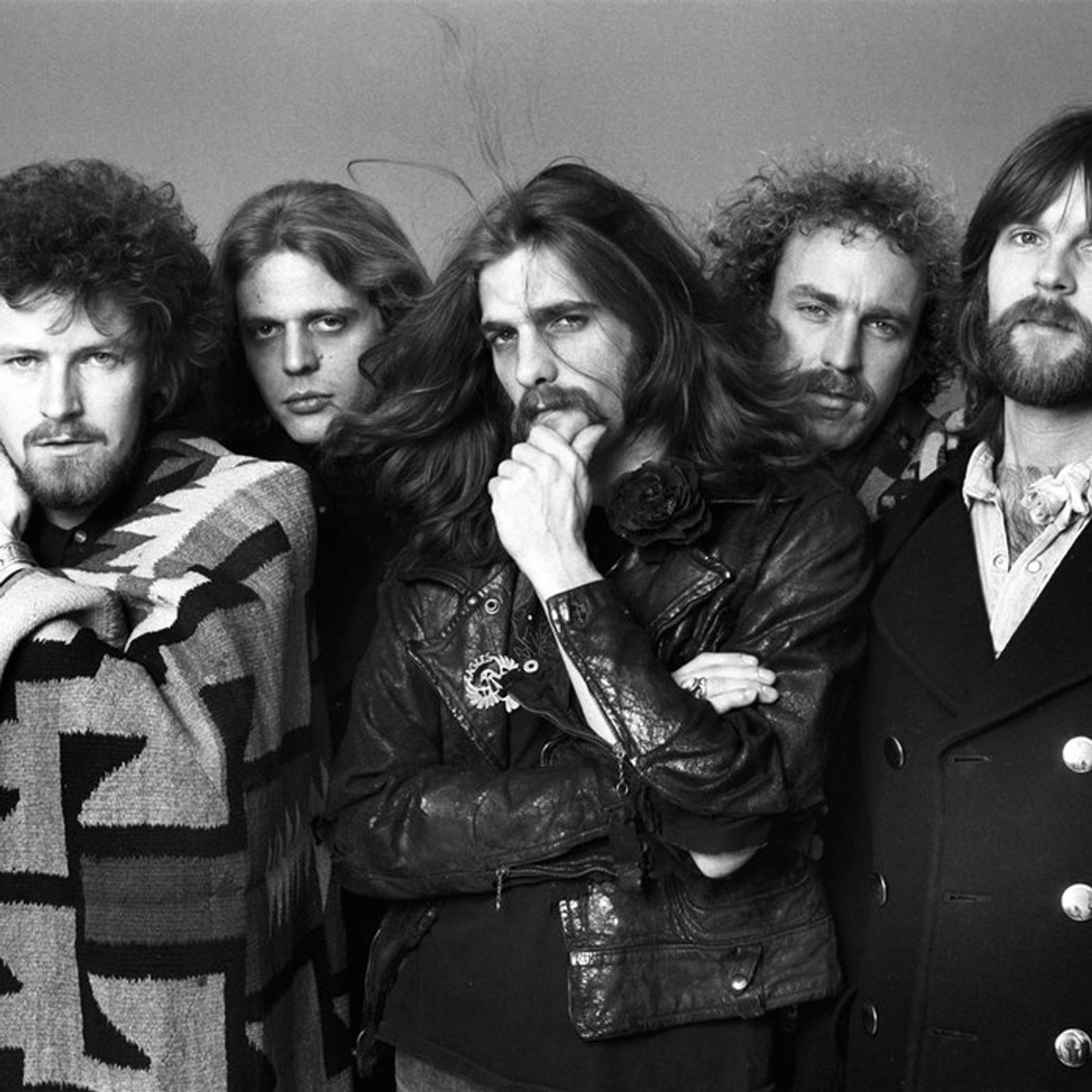
Schmit had replaced Randy Meisner in 1977, inheriting not only a vocal role but also the unspoken expectation to fit into a group already straining at its seams.
That outsider perspective gives the song much of its quiet power.
It doesn’t sound like a band speaking with one voice—it sounds like one person admitting something he can’t quite explain, even to himself.
Lyrically, “I Can’t Tell You Why” is built on restraint.
There’s no dramatic accusation, no clear betrayal, no explosive ending.
Instead, the song circles around emotional distance—the slow realization that something essential has changed, and that love can fade without a clear reason.
The title itself is the thesis: not I won’t tell you, but I can’t.
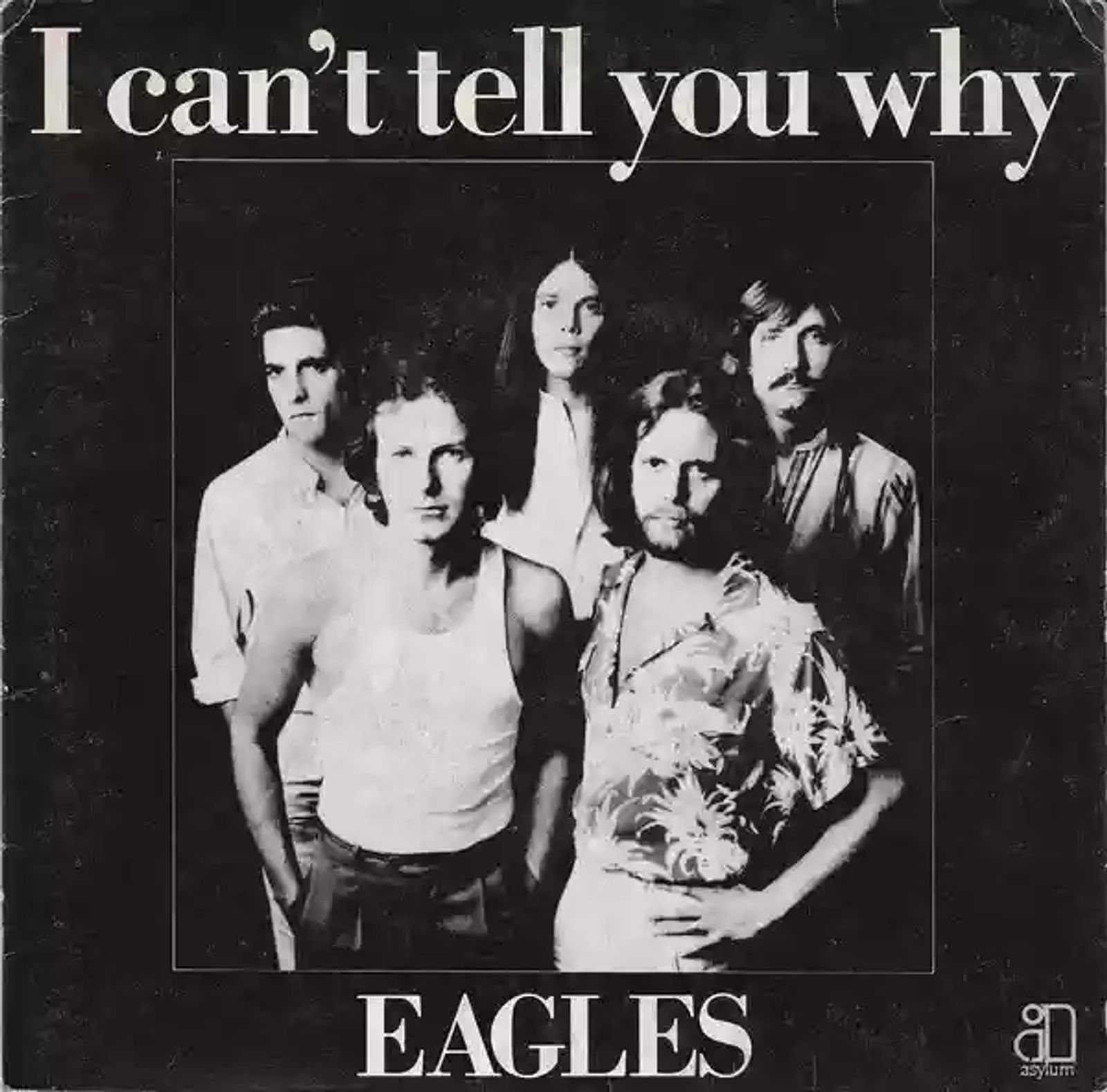
The inability to articulate what went wrong becomes the heartbreak.
That ambiguity is what keeps listeners leaning in.
The song doesn’t offer closure or clarity; it mirrors real relationships, where explanations are often incomplete and feelings slip away without a single moment to blame.
Lines like “Every time I try to make it right / You turn around and tell me I was wrong” suggest exhaustion rather than anger—a couple stuck in a loop neither can escape.
Musically, the arrangement reinforces that emotional stalemate.
The track unfolds gently, driven by a smooth electric piano, soft percussion, and one of the Eagles’ most understated grooves.
There’s a sense of floating, of being suspended in unresolved feeling.
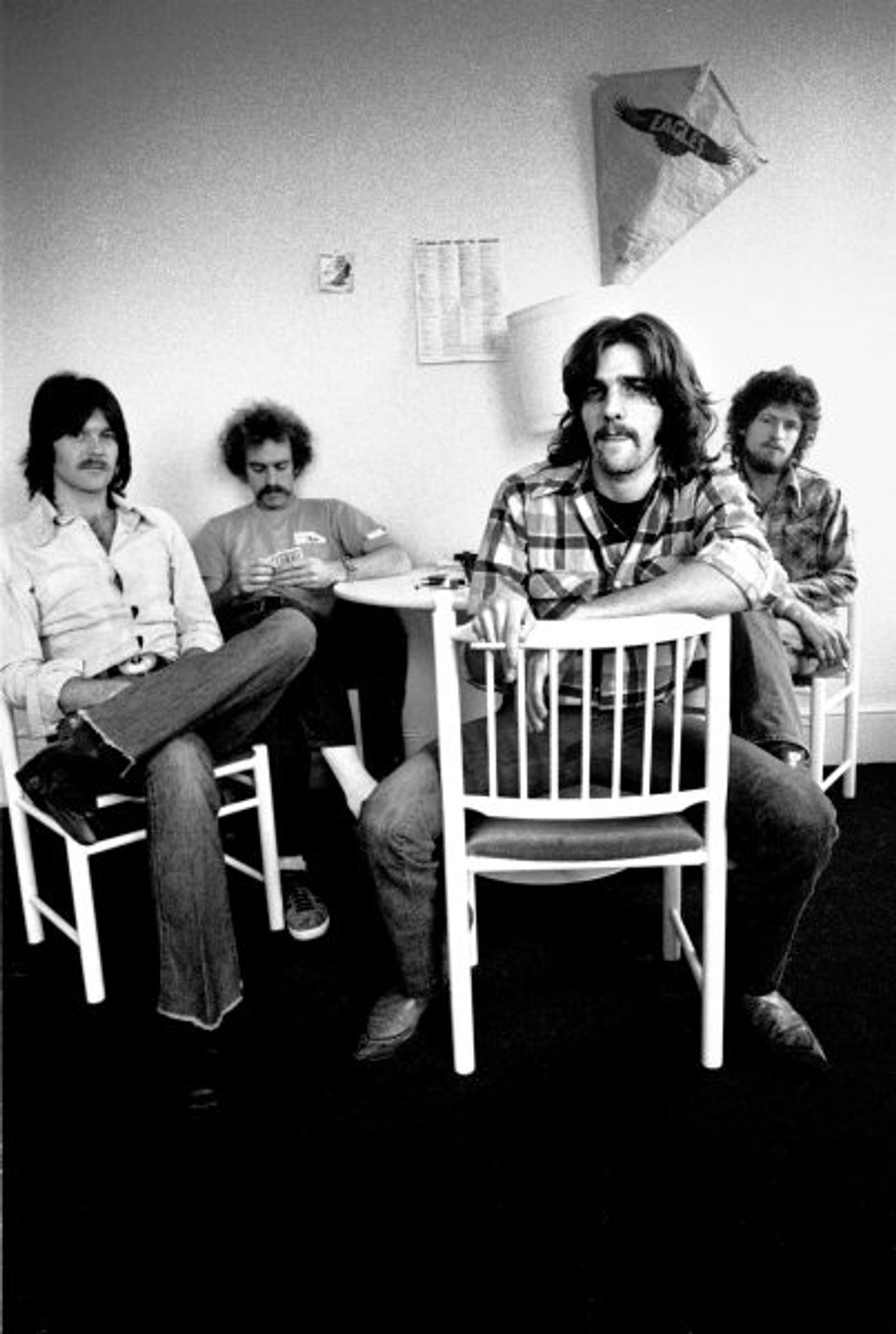
Don Felder’s guitar solo—often cited as one of his most lyrical—doesn’t burst in; it glides, almost sighing its way through the middle of the song, saying what the lyrics won’t.
Schmit’s vocal performance is the quiet centerpiece.
His high, airy tenor carries a fragility that contrasts sharply with the band’s more authoritative voices.
He doesn’t sound defiant or wounded—he sounds tired, confused, and honest.
That tonal choice is crucial.
The song works because it never oversells its emotion; it trusts the listener to feel the weight between the lines.
Within the context of The Long Run, “I Can’t Tell You Why” feels almost prophetic.

The album would become the Eagles’ last studio release for fourteen years.
Soon after, tensions boiled over, culminating in the band’s infamous breakup in 1980.
In hindsight, the song reads not just as a personal relationship unraveling, but as an emotional parallel to the band itself—a group that could no longer explain what had gone wrong, only that something had.
Commercially, the song was a quiet success.
It reached the Top 10 on the Billboard Hot 100, proving that a subdued, introspective ballad could still resonate in an era leaning toward bigger sounds and sharper edges.
But its true longevity has come from repeat listening rather than instant impact.
This is a song people return to late at night, not one that demands attention on first play.

Over the decades, “I Can’t Tell You Why” has taken on a life of its own.
It’s been embraced by soft rock fans, adult contemporary listeners, and younger audiences discovering the Eagles beyond their anthems.
Covers and live performances often strip it down even further, emphasizing how little the song needs to work—just a melody, a voice, and a feeling most people recognize immediately.
What makes the song endure is its emotional maturity.
It doesn’t frame love as something explosive or dramatic.
It presents heartbreak as something quieter: the slow erosion of connection, the frustration of wanting to explain but lacking the words.
That realism feels increasingly rare, which is why the song continues to find new listeners across generations.

For Timothy B. Schmit, “I Can’t Tell You Why” became a defining moment.
In a band dominated by strong personalities and iconic voices, he delivered one of the Eagles’ most human songs—one that didn’t try to compete for dominance, but simply existed in its truth.
It proved that sometimes the softest voice in the room can leave the deepest impression.
Ultimately, “I Can’t Tell You Why” survives because it understands something fundamental about relationships—and about people.
Not every ending comes with answers.
Not every love story ends in flames.
Some simply drift apart, leaving behind confusion, regret, and questions that never quite resolve.
The song doesn’t pretend to fix that discomfort.
It sits with it.
Read more stories
- He Was Rejected By His Own Mom And Raised To Think ‘Women Are Evil’ But He Became A Legendary Rockstar
- TOBY KEITH RECORDED SOME OF THE BIGGEST PATRIOTIC ANTHEMS IN COUNTRY MUSIC HISTORY—BUT HIS REAL LEGACY WAS BUILT ON MILITARY BASES WHERE NO CAMERAS WERE ROLLING.
- [Video]: The One-Take Hit That Took Over Rock Radio
- The Box Tops’ “The Letter” Captures Lightning in a Bottle and Redefines Blue-Eyed Soul in 1967-2