
News
How Kenny Rogers Used the MacShayne Set to Reconnect With His Son
In the early 1990s, Kenny Rogers turned a television soundstage into something more personal: a place to work, mentor and make up for time lost with his son, Kenny Jr.


A career built on the road, and a cost paid at home
By the early 1990s, Kenny Rogers had already spent years living the rhythm of a major music career: tours, television appearances, recordings and the constant travel that comes with staying in demand. For an artist of his stature, success often meant long stretches away from home, and he was candid about the fact that a life built in public can leave private gaps behind.
Those gaps are often measured not in dramatic moments but in the ordinary ones: dinners missed, routines interrupted, the kind of everyday closeness that forms naturally when a parent is simply present. Rogers understood that reality. Rather than pretending his career had not created distance, he looked for ways to narrow it while still working in the field that had made him famous.
The entertainment business had taken time away from his family, but on the MacShayne set, Rogers found a way to give some of that time back.
Why bringing Kenny Jr. to work mattered
Instead of stepping back from the industry, Rogers made a more intimate choice. In 1993 and 1994, he deliberately brought his son, Kenny Jr., into his professional world, most visibly by casting him alongside him in the MacShayne television movies. It was a practical decision, but it was also an emotional one.
That move changed the meaning of the set. A production environment is usually defined by schedules, lighting setups, marks on the floor and pressure to finish the day. For Rogers, it also became a place where father and son could share time with intention. The collaboration offered something touring never could: extended hours in the same place, working toward a common goal.
MacShayne as a family bridge
The MacShayne films gave Rogers more than another screen credit. They created a structure in which he and Kenny Jr. could be side by side, not just briefly, but in the ongoing rhythm of production. Between takes and rehearsals, during the waiting that is part of any shoot, they had access to something precious and often scarce in show business: unhurried proximity.
That is what makes the story resonate. This was not only about a famous father opening a door for his son. It was about using work itself as a bridge back to family. In that sense, the collaboration carried a beautiful irony. The same entertainment world that had once pulled Rogers away from home became the setting in which he tried to repair the distance it had helped create.
More than a credit: mentorship in real time
Rogers’s decision appears most meaningful when seen as hands-on mentorship rather than simple nepotism or a gesture for appearances. Bringing Kenny Jr. onto a set meant he could guide him through the mechanics and culture of the business directly: how to carry himself professionally, how to handle the pace of production and how to move through an industry that can be glamorous from the outside and demanding from within.
There was also an element of protection in that closeness. Rogers knew the business from the inside. He understood both its opportunities and its costs. By standing with his son in that environment, he was doing more than sharing a screen. He was helping him navigate a world that had shaped his own life, while trying to spare him at least some of the isolation that can come with it.
The healing power of ordinary time together
Stories about celebrity families often focus on premieres, headlines and milestones, but the emotional center here is quieter. Healing did not happen only in the finished films. It happened in the in-between moments: conversations under bright studio lights, the easy familiarity that grows from repeated days together, the chance for a son to see his father not as a distant star but as a working parent who wanted to be present.
That kind of shared time can matter as much as any grand declaration. A set is busy, technical and often exhausting, yet it can also be strangely intimate. For Rogers and Kenny Jr., it offered a place where work and family no longer had to compete so sharply. The result was not merely a professional collaboration but a personal record of a father making a visible effort to close the gap.
How Rogers stayed connected in the 1990s
The larger significance of the MacShayne collaboration is that it reflects a broader instinct in Rogers’s life during that period: to stay connected to his son not in the abstract, but through direct involvement. He did not erase the years of absence by one gesture, and there is no simple way for any parent to recover lost time. What he could do was choose presence where he had it, and use his working life more deliberately.
That choice gives the story its lasting emotional force. Kenny Rogers remains widely remembered for his voice, his songs and his remarkable longevity in entertainment. But this chapter reveals something more private and human: a father recognizing what success had cost, then trying, in the most practical way available to him, to bring his child back into the center of his daily world.

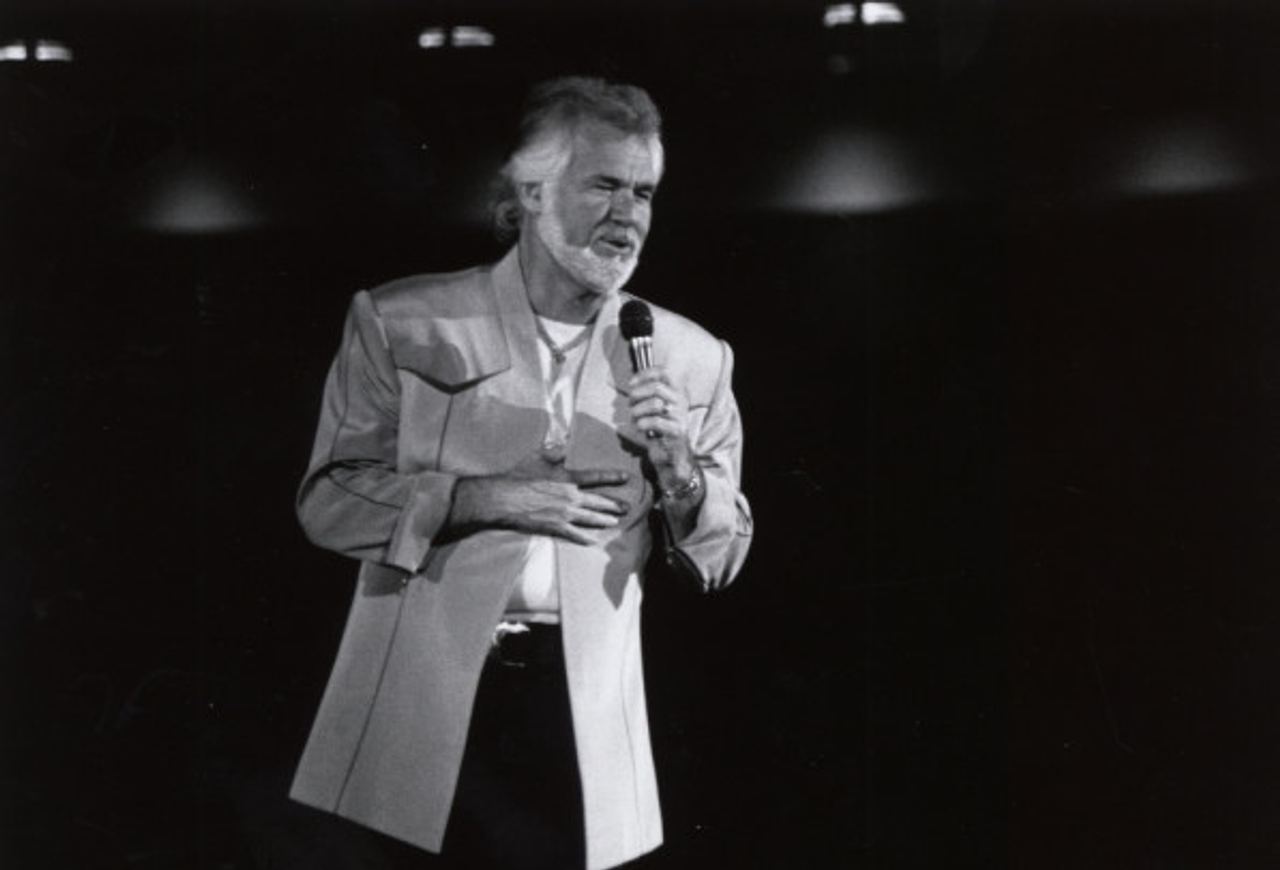
Quick Facts
- Father: Kenny Rogers
- Son: Kenny Jr.
- Key collaboration period: 1993 and 1994
- Shared project: MacShayne television movie series
- Main theme: Using work to rebuild family closeness
Image credits: Philpottm / Wikimedia Commons / CC BY-SA 3.0; User kw111786 on Flickr (Original version) User UCinternational (Crop) / Wikimedia Commons / CC BY-SA 2.0; University of Houston Digital Library / Wikimedia Commons / CC BY-SA 2.0.