
News
How Charley Pride Broke Country Music’s Color Line—and How Faron Young Helped Force the Door Open
Before country radio knew Charley Pride was a Black singer from Mississippi, his voice was already winning over listeners, and when backlash came, one established star chose to stake his own career on the newcomer’s future.

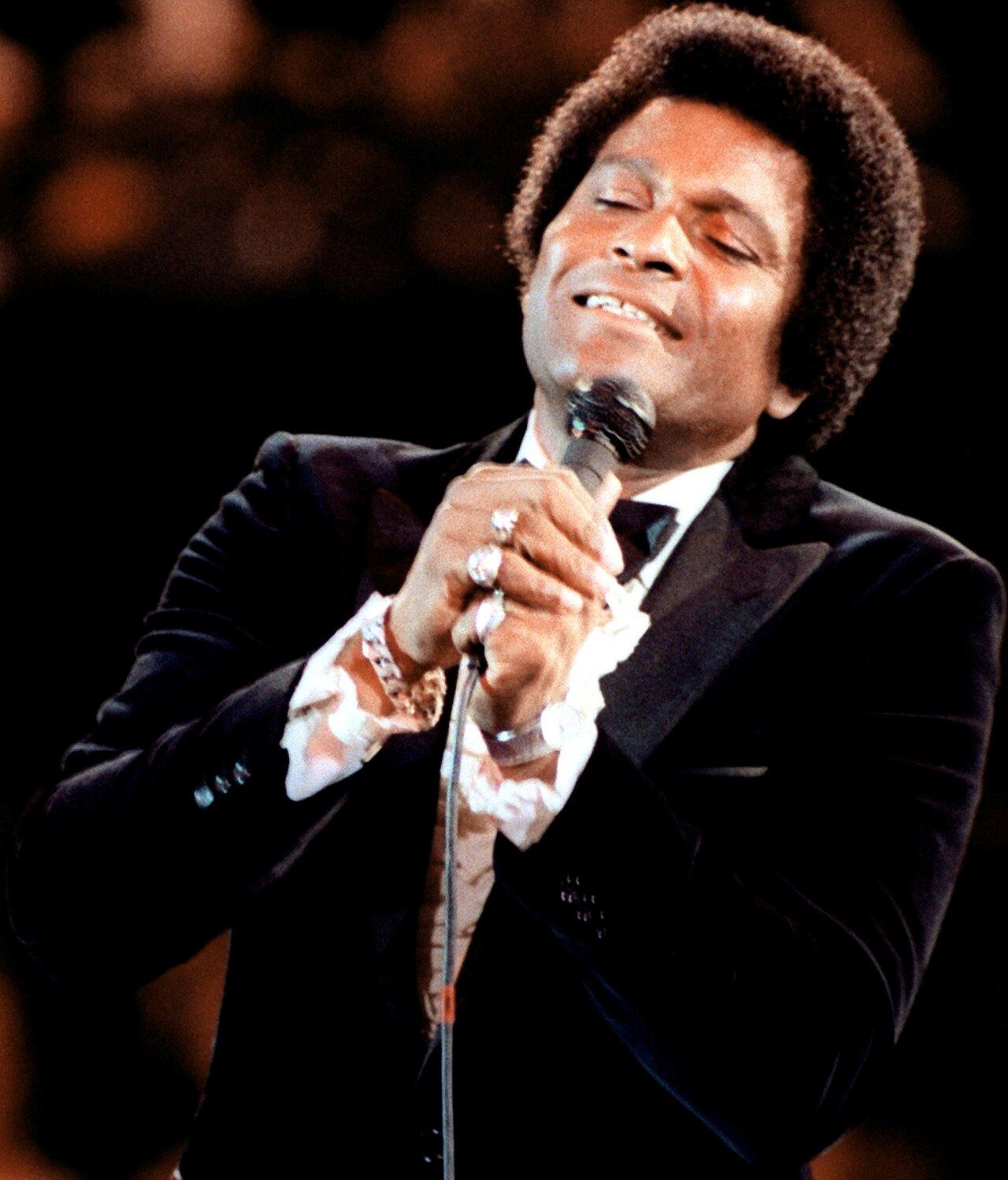
A voice arrives before a face
In 1966, RCA Victor made a shrewd and revealing decision with Charley Pride’s debut single, The Snakes Crawl at Night: send it to country radio without a publicity photo. The gamble worked because the record did what great country records are supposed to do. Program directors heard a rich, assured baritone and slotted it alongside the familiar sounds of honky-tonk and hard country. For a moment, the industry listened with its ears instead of its prejudices.
That first response matters because it exposed a truth Nashville often preferred to avoid. Pride’s voice fit comfortably within the core traditions of the format—plainspoken, emotionally direct, rooted in the same country vocabulary audiences already loved. Listeners responded before they knew anything about the man behind the microphone. By the time some gatekeepers realized the singer was a Black man from Mississippi, the song had already begun making its case on the radio.
When the tours began, the backlash followed
The problem began when promotion moved from studio and mailer to the flesh-and-blood world of station visits and personal appearances. Once radio staff saw Pride in person, some stations in the South recoiled. The record that had sounded perfectly acceptable over the air suddenly became, in their view, a risk. Rather than confront the racial assumptions of local audiences, several chose the safer path and pulled back.
That reaction captured the ugly mechanics of segregation-era entertainment. Nothing about the song had changed. The singer had not changed. Only the visual fact of his identity had. In that gap between what audiences heard and what gatekeepers feared, Pride found himself confronting the central barrier of his career: not whether he could sing country music, but whether the country business would allow the public to keep hearing him.
Faron Young makes it personal
At that moment, Faron Young intervened. This was no minor gesture from a marginal figure. Young was a major country star, a man with chart power, drawing power and enough clout to make station managers think twice. He did not frame his support as a vague plea for fairness. He issued a threat with commercial teeth: if stations dropped Charley Pride, they could lose Faron Young too.
That mattered because it translated principle into leverage. Country radio could ignore a newcomer. It could not so easily shrug off one of its established hitmakers. Young had a reputation in Nashville for being hardheaded and hot-tempered, traits that could make him difficult—but in this case also made him formidable. He was willing to turn personal influence into protection for an artist who had barely entered the national conversation.
By doing so, Young challenged one of the oldest habits in the music business: silence in the face of injustice when silence is more profitable. He risked his own commercial standing to insist that Pride be judged by the same measure as everyone else—whether the records connected with listeners.
If they pulled Charley Pride’s records, Faron Young warned, they could pull his too.
The night the room went quiet
Support from inside the business helped keep Pride’s momentum alive, but public acceptance still had to be won in real time, in rooms charged with suspicion. One of the defining moments came in 1966 at Detroit’s Olympic Stadium, where Pride stepped onstage before ten thousand white fans. The initial reaction was not warm curiosity. It was silence—stiff, watchful, uncertain.
Then he sang. That was the essential drama of Charley Pride’s career compressed into a few minutes: disbelief yielding to attention, attention yielding to recognition. The same voice that had slipped past prejudice on the radio now had to conquer it in person, out in the open. By the time he finished, the hesitation had broken into a standing ovation. The audience did not simply hear a novelty or a provocation. They heard a country singer who could command a room.
That scene remains powerful because it shows both the burden Pride carried and the method by which he overcame it. He was forced, again and again, to disarm bias through performance. The stakes were higher for him than for his white peers, and the margin for error was smaller. Yet the instrument he had was undeniable: a voice of warmth, gravity and authority.
More than a breakthrough, a transformation
Pride’s rise did not erase the racism that shaped the industry around him, but it did alter what country stardom could look like. He went on to become the first Black superstar in modern country music, a breakthrough earned not through symbolic placement but through sustained success with audiences who embraced his singing. His career became a rebuke to the idea that country music’s traditions belonged to only one kind of American.
What made Pride’s achievement especially significant was how firmly he stood inside the genre rather than at its edges. He was not presented as an outsider borrowing country aesthetics. He was a country singer, full stop. That distinction matters. It meant his success pushed directly against the industry’s assumptions about who could embody country authenticity, who could headline country shows, and who listeners would accept as one of their own.
The lesson in who speaks up
The story also endures because it is not solely about one man’s talent. It is about what happens when someone with power decides to use it. Faron Young did not end racism in country radio, and Charley Pride still had to do the bruising work of winning over crowds and programmers one performance at a time. But Young’s intervention helped create room for Pride to keep going at a fragile moment when retreat would have been easy for the industry and devastating for the artist.
In retrospect, Pride’s success can feel inevitable because it is now part of country music history. It was not inevitable then. It depended on a label strategy that briefly bypassed prejudice, on songs strong enough to force recognition, on a performer capable of turning silence into applause, and on an established star willing to make his own popularity part of the fight. That combination is what pushed a door open in 1966—and what made Charley Pride’s career one of the most important in the history of country music.

Quick Facts
- Debut single: The Snakes Crawl at Night
- Label: RCA Victor
- Key ally: Faron Young
- Defining early moment: A 1966 performance at Detroit’s Olympic Stadium before ten thousand white fans
- Historical significance: Charley Pride became the first Black superstar in modern country music
Image credits: GREG MATHISON / Wikimedia Commons / Public domain; Republic Country Club / Wikimedia Commons / CC BY 2.0; Republic Country Club / Wikimedia Commons / CC BY 2.0.

