
Celebrities & Music
HIS FAILING HEART FINALLY GAVE OUT IN DECEMBER 1982 — BUT FOR 23 YEARS, THE WORLD NEVER KNEW WHY HE ALWAYS SPENT HIS FINAL SECONDS BEFORE “EL PASO” LOOKING INTO THE DARK WING OF THE STAGE…
The article explores the profound connection between Marty Robbins and his wife, Marizona, as he performed his iconic song ‘El Paso,’ revealing the emotional depth behind his music and the rituals he maintained throughout his career.

For over two decades, everyone who worked with Marty Robbins witnessed the exact same ritual. Just before the opening notes of his signature masterpiece, “El Paso,” the legendary singer would stop. He would turn his head slightly toward the left wing of the stage, hold his gaze in the darkness for a few agonizingly quiet seconds, smile softly, and only then approach the microphone.
Stagehands assumed he was waiting for an audio cue. Musicians thought it was just a quirky habit developed after singing the same song thousands of times. The roaring crowds never even noticed.
It wasn’t until after his sudden death from heart complications in December 1982 that his son, Ronny, shattered the illusion and revealed the devastatingly beautiful truth.
Marty wasn’t looking at a stagehand. He was looking at his wife, Marizona.
She had been standing in that exact spot since 1948—long before the fame, the sold-out arenas, and the terrifying heart attacks. “El Paso” is a tragic ballad about a cowboy bleeding to death in the dirt for the woman he loved. Marty Robbins never sang those words without finding Marizona first. When Ronny once asked him why, Marty simply smiled and said, “That song’s a love letter, son. And a love letter needs somebody to read it to.” For 3,000 nights, while thousands of strangers cheered for a superstar, a man was quietly singing a love letter to his wife.
But the most heartbreaking chapter of this secret happened during one of his final concerts, just weeks before his exhausted heart finally stopped beating. As always, Marty turned to the left wing. But this time, Marizona wasn’t just standing there. She was holding up an old, faded black-and-white photograph of the two of them from 1948, back when they were just two kids in Arizona with nothing but each other.
When Marty saw the photo, he froze. The entire arena waited in dead silence. Then, Marty smiled wider than anyone had seen in years, gently tipped his cowboy hat toward the shadows, and began to sing.
He sang it softer that night. More carefully. Because in that moment, he wasn’t a fading legend singing his final shows to a massive crowd. He was just a boy from Arizona, using his final days to sing to the only woman who mattered.
HIS HEART GAVE OUT IN 1982 — BUT LONG BEFORE THE FINAL SURGERY, MARTY ROBBINS HAD BEEN SINGING LIKE A MAN REACHING FOR HOME.
Marty Robbins knew how to turn a stage into open country.
A single guitar line could appear, and suddenly the walls were gone. You were no longer in a theater or a dance hall or a living room with the radio on. You were somewhere near the border, under a hard sky, watching a lonely rider move toward the one place he knew might destroy him.
That was the power of “El Paso.”
It was not just a Western ballad.
It was a whole movie made out of longing.
Marty had always understood that the greatest cowboy songs were not really about guns. They were about the heart beneath the gun belt. The fear beneath the swagger. The terrible things a man will do when love, pride, and regret begin pulling him in different directions.
And “El Paso” gave him the perfect landscape for that truth.
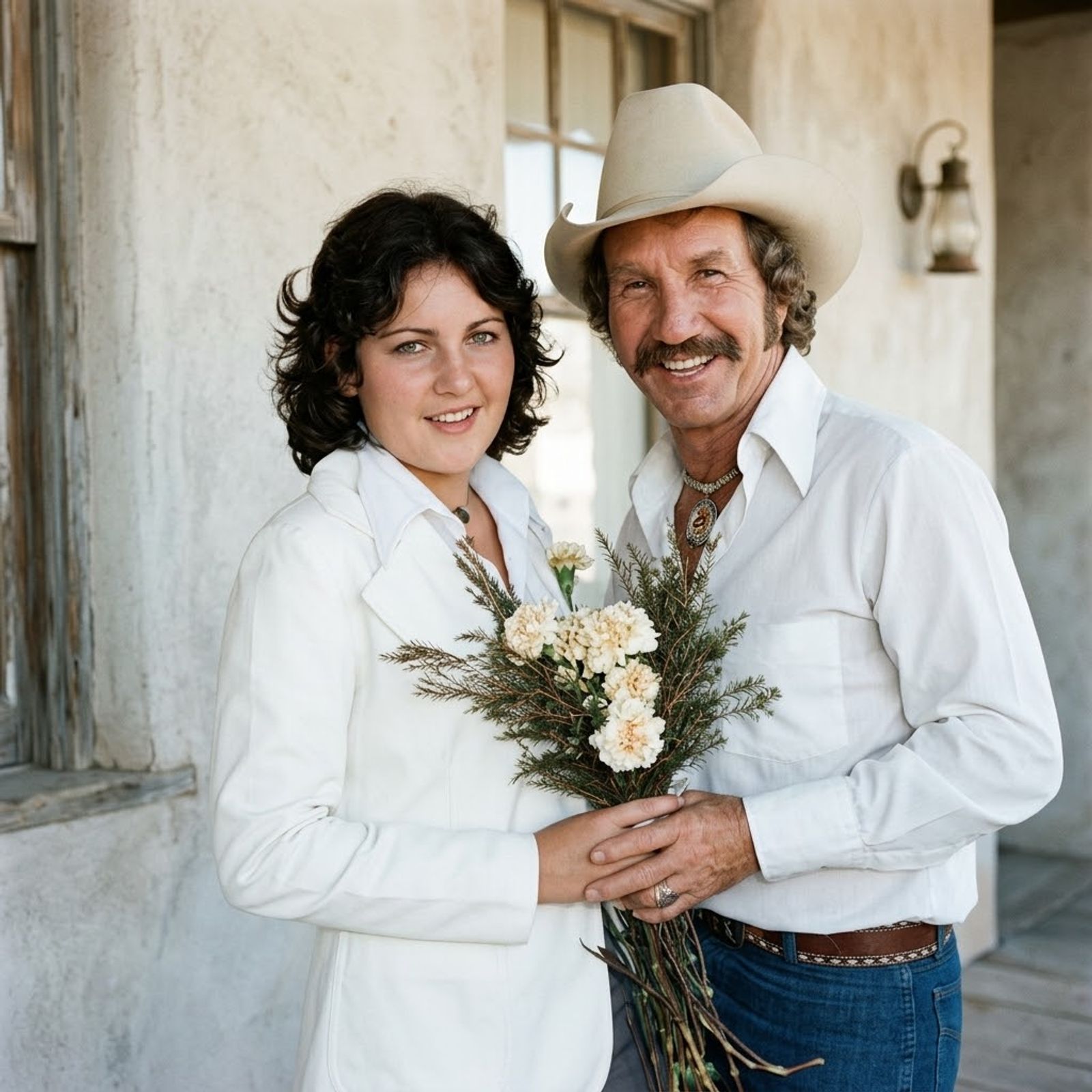
A cantina. A woman named Felina. A flash of jealousy. A killing. A ride into exile. Then the part that still breaks the listener: the doomed return. The man knows he should keep running, but his love is stronger than his survival. He rides back toward the very place where death is waiting, because the heart does not always obey the body’s wish to live.
That is why the song never felt like simple fiction.
It felt personal, even when it was cinematic.
Marty Robbins married Marizona Baldwin in 1948, and they remained married until his death in 1982. They raised two children together, Ronny and Janet, while Marty’s career carried him from Arizona clubs to the Grand Ole Opry, national fame, and one of the most distinctive catalogs in country music.
There are stories fans tell about Marty looking toward the wings before singing “El Paso,” as if searching for the woman who knew him before the applause. Whether every detail of those stories can be documented or not, the emotional truth behind them feels easy to understand.
Because Marty was never only singing to strangers.
A voice like his always seemed to be singing toward someone.
That was part of his genius. He could stand in front of thousands and still make a song feel private. “El Paso” was huge, dramatic, and violent, but Marty never let it become empty spectacle. He sang the dying cowboy with tenderness. He made the fatal wound feel less like a bullet than a broken promise the man could not outrun.
The public heard the legend.
But beneath it, there was always a love letter.
Maybe not a literal one folded in a pocket, not a scene that needs to be exaggerated into myth, but something deeper: a man using melody to reach the place where fame could not follow. Home. Memory. The woman who had known him before the cowboy hat became a symbol, before the charts, before the stadiums, before the heart trouble that would eventually take him away.
Marty suffered serious heart problems later in life, including a heart attack in 1969 and a third heart attack in December 1982. After quadruple bypass surgery, he died on December 8, 1982, at St. Thomas Hospital in Nashville. He was 57.
That ending makes “El Paso” feel different now.
The dying man in the song is not Marty, and Felina is not Marizona. Art is not that simple. But great songs have a way of gathering new meaning after the singer is gone. The line between performance and prophecy becomes softer. The final ride feels heavier. The return to love feels less like drama and more like a prayer.
Because Marty’s own life also kept circling back to what mattered.
Music.
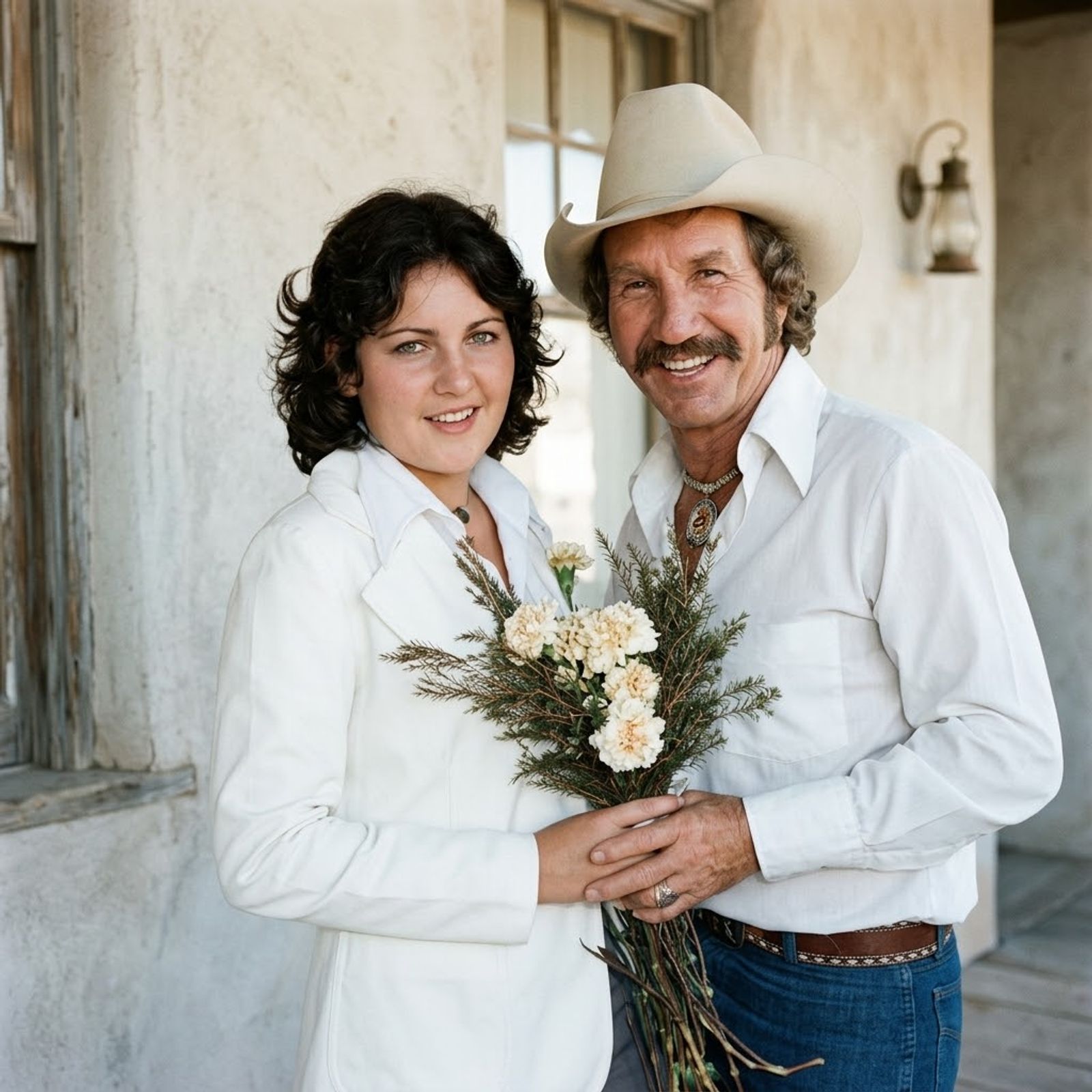
Family.
The stage.
The road.
The fragile privilege of one more song.
It is tempting to remember him only as the master of Western storytelling, the man who made cowboys immortal in three or four unforgettable minutes. But his deeper gift was intimacy. Even when the story stretched across desert dust and gun smoke, he made you feel the human being underneath.
The man was not dying for legend.
He was dying because he loved.
That is why “El Paso” still stops rooms.
Not because of the shootout.
Because of the return.
Because every listener knows some version of that pull — the place you should not go back to, the name you cannot forget, the memory that keeps calling from the dark even when survival tells you to ride away.
Marty Robbins left this world in 1982, but the old song still rides on.
The guitar begins, the dust rises, the cantina appears, and somewhere inside the story, a man turns toward love one last time.
Not toward applause.
Not toward fame.
Toward the one heart in the shadows that made the whole song worth singing.
Read more stories
- He Was Rejected By His Own Mom And Raised To Think ‘Women Are Evil’ But He Became A Legendary Rockstar
- TOBY KEITH RECORDED SOME OF THE BIGGEST PATRIOTIC ANTHEMS IN COUNTRY MUSIC HISTORY—BUT HIS REAL LEGACY WAS BUILT ON MILITARY BASES WHERE NO CAMERAS WERE ROLLING.
- [Video]: The One-Take Hit That Took Over Rock Radio
- The Box Tops’ “The Letter” Captures Lightning in a Bottle and Redefines Blue-Eyed Soul in 1967-2