
Celebrities & Music
GEORGE JONES WAS SO NERVOUS PLAYING GUITAR FOR HANK WILLIAMS THAT HE BLEW THE SOLO. HANK WAS STILL THE REASON HE NEVER LEFT MUSIC.
The article recounts the early experiences of George Jones, highlighting his nervousness while playing guitar for Hank Williams and how that moment influenced his musical journey. It emphasizes the importance of perseverance in finding one’s unique voice in music.

Before George Jones became the voice people called country music’s greatest, he was a skinny teenager trying to stay close to a radio microphone in Beaumont, Texas.
He had already been singing for tips on street corners. He had already learned that a guitar could do more for a poor kid than most people around him expected. By the late 1940s, he had found work around KRIC Radio, playing wherever there was a slot, a local show, or a singer who needed another guitar.
Then Hank Williams came through town.
For George, Hank was not just another guest on the program. He was the man whose records had taken over his head. George later said he could barely think about anything else when Hank had a new song on the radio. Hank Williams was the sound he wanted to become before he had any idea that a singer needed his own sound to last.
In 1949, Hank appeared live at KRIC. George was asked to play lead guitar on “Wedding Bells.” The moment came, and George froze. He was so excited about standing near Hank Williams that he blew the solo. The notes went wrong. The part he had probably practiced in his mind a hundred times came apart in front of the one person he wanted to impress most.
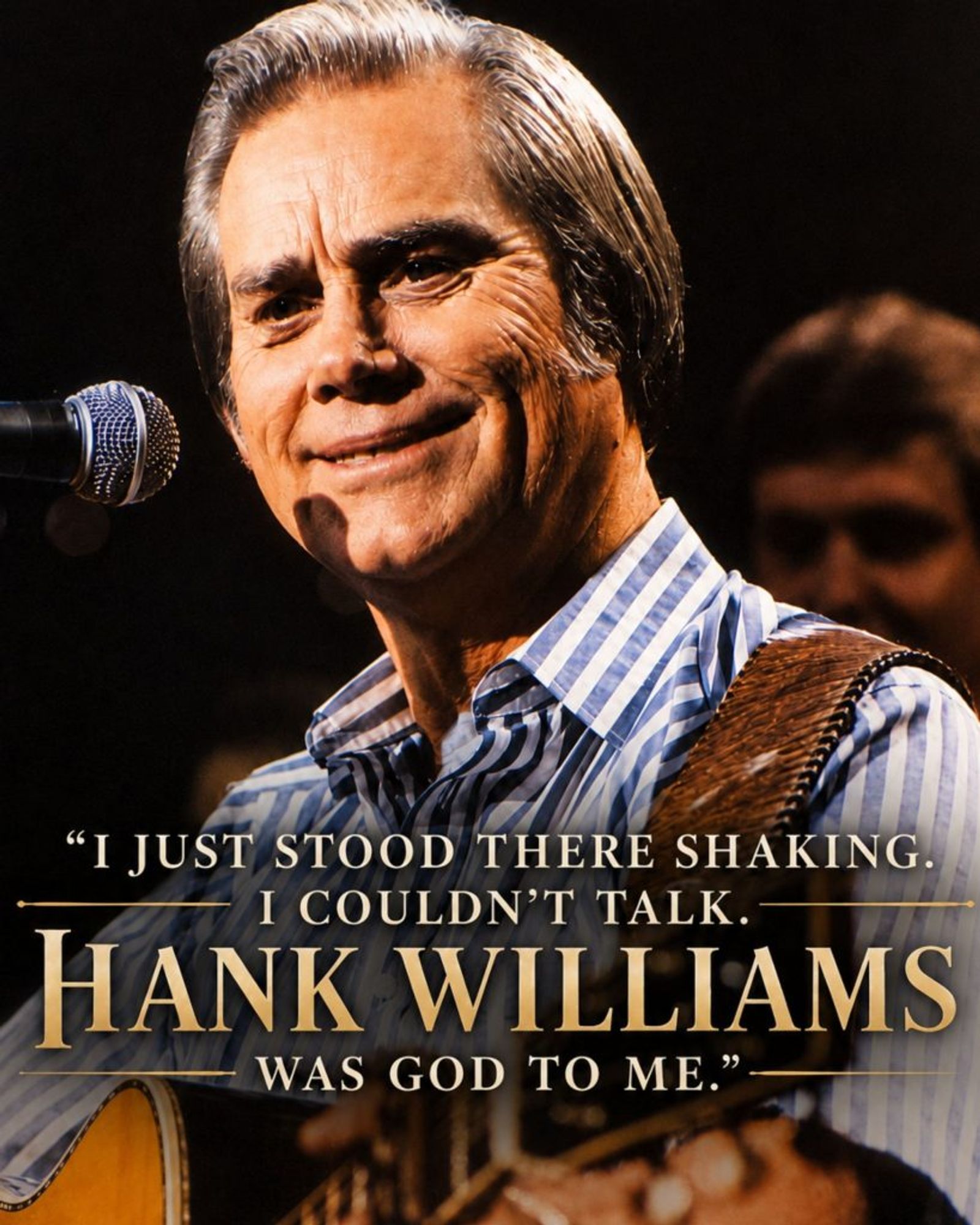
But Hank did not make George forget the night. He made him remember it forever. George kept playing. He went into the Marines. He came back to Texas. He made records nobody bought at first. He sang too much like Hank, too much like Lefty Frizzell, too much like every hero whose voice had filled his childhood radio.
Then, slowly, George Jones found the break in his own voice. The one that could hold a note until it sounded like a man had nowhere left to hide. Years later, George would become one of the few singers country music placed beside Hank Williams instead of behind him. But before all of that, he was just a nervous kid in a Beaumont radio studio, missing a guitar solo because Hank Williams had walked into the room.
Then Hank Williams Came Through Town
For George, Hank was not just another guest on the program. He was the man whose records had taken over his head. George later talked about hearing Hank on the radio and feeling like nothing else mattered when a new Hank Williams song came on. That was the sound he wanted. Before he understood that a singer had to find his own voice to last, he wanted Hank’s. The ache. The timing. The way one plain line could sound like a whole life coming apart.
The Night Came In 1949
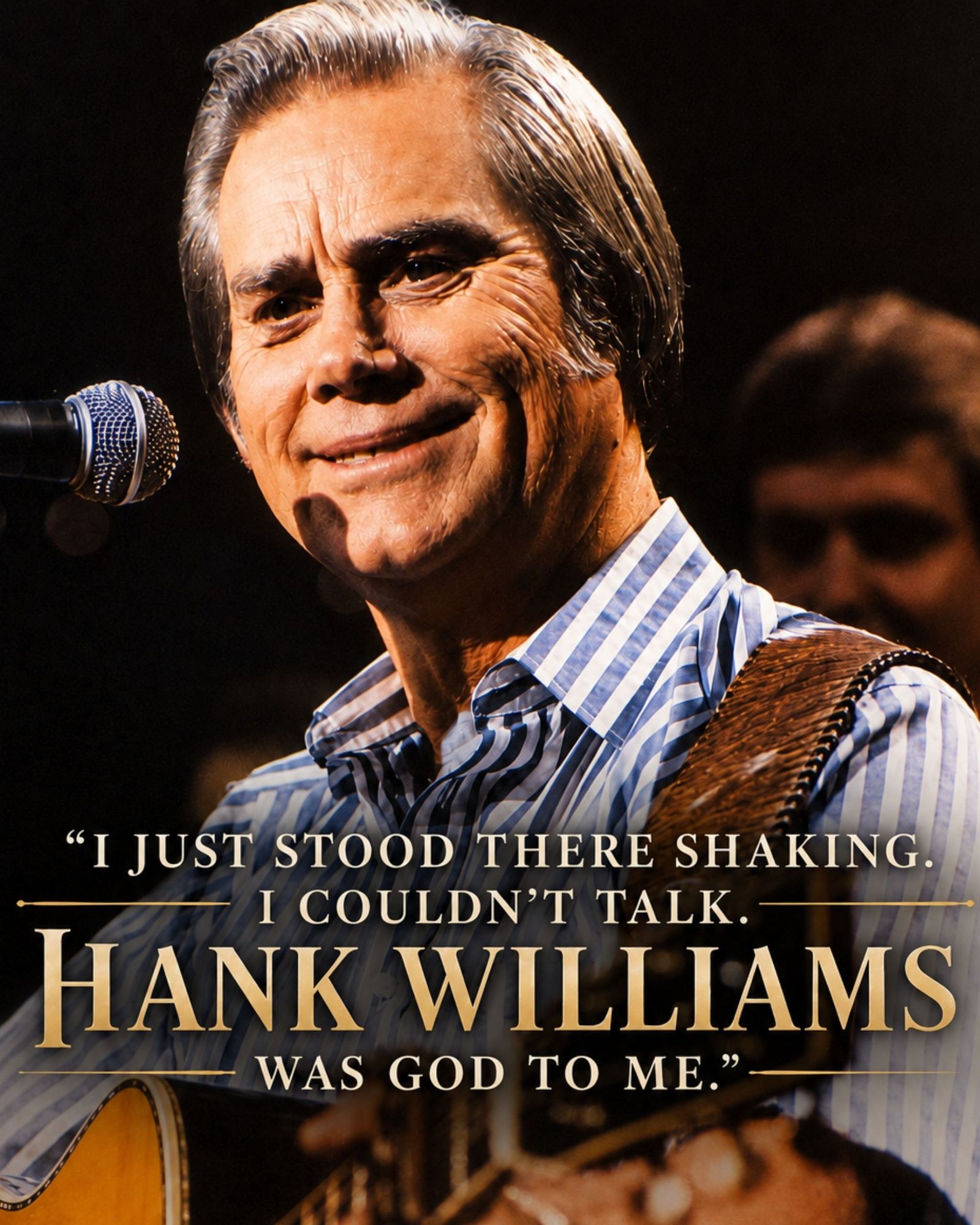
Hank Williams appeared live at KRIC. George was asked to play lead guitar on “Wedding Bells.” For a teenage musician in Beaumont, that was not just another number on a radio program. It was the moment. The man he wanted to impress most was suddenly standing within arm’s reach. Then the solo came. George froze. He was so excited about playing beside Hank Williams that he blew it. The notes went wrong. The part he had probably played perfectly in his head came apart in the room. A bad solo in front of the one singer he most wanted to impress.
But The Moment Did Not Send Him Away
It stayed with him. Not as proof that he could not do it. As proof that he wanted it too badly to quit. George kept playing. He went into the Marines. He came back to Texas. He made records nobody bought at first. He sang too much like Hank. Too much like Lefty Frizzell. Too much like every hero whose voice had filled the radio of his childhood. That is how it begins for many singers. You borrow the sounds you love until life finally gives you a wound no one else can sing for you.
Then George Jones Found The Break In His Own Voice
Slowly, he found it. That high, breaking edge. The place where a note could hang in the air long enough to sound like a man had nowhere left to hide. He stopped being a boy trying to sound like Hank Williams. He became George Jones. And years later, country music would place him among the few singers mentioned beside Hank instead of behind him.
What That Missed Solo Really Became
The deepest part of this story is not that George Jones blew a guitar solo. It is what stood behind it. A poor kid from Beaumont. A radio studio. A borrowed chance. Hank Williams in the room. A few wrong notes. And a teenager too nervous because he cared too much. George Jones did not become great because he never failed in front of his hero. He became great because one bad solo did not make him leave the music. It made him stay close enough to find the voice nobody else had.
Read more stories
- He Was Rejected By His Own Mom And Raised To Think ‘Women Are Evil’ But He Became A Legendary Rockstar
- TOBY KEITH RECORDED SOME OF THE BIGGEST PATRIOTIC ANTHEMS IN COUNTRY MUSIC HISTORY—BUT HIS REAL LEGACY WAS BUILT ON MILITARY BASES WHERE NO CAMERAS WERE ROLLING.
- [Video]: The One-Take Hit That Took Over Rock Radio
- The Box Tops’ “The Letter” Captures Lightning in a Bottle and Redefines Blue-Eyed Soul in 1967-2