
Stories
FOUR YEARS AFTER I DISAPPEARED, MY HUSBAND MET THE SONS HE NEVER KNEW
Four years after leaving Chicago, Emily has built a quiet life in Briar Glen with her twin sons when her estranged husband Nathan unexpectedly reappears at the inn where she works. His arrival exposes long-buried truths about their marriage, their children, and a hidden connection involving Chloe and Emily’s late mother.

PART 2
Four years after I left Chicago, I had learned to live without looking over my shoulder.
Not because I believed Nathan had stopped searching for me. For the first year, I assumed every unfamiliar car outside our rented cottage belonged to someone he had hired. Every unexpected phone call made my pulse quicken. Every time my mother paused before saying hello, I wondered whether he had found a way through her silence.
But time has a way of turning fear into habit, and habit into something resembling peace.
By the spring the boys turned four, our life in Briar Glen felt almost ordinary.
The town sat between wooded hills and the edge of Lake Champlain, quiet enough that the church clock could be heard from nearly every street. I worked as the events manager at the Willowmere Inn, a restored nineteenth-century property with white porches, green shutters, and gardens that bloomed so brightly in June that guests often stopped speaking when they first saw them.
My sons believed I owned the place.
“You have all the keys,” Oliver explained whenever I corrected him.
“And everybody asks you questions,” his brother, Henry, added.
They were identical in appearance but opposite in spirit. Oliver entered every room as if it had been waiting for him. Henry preferred to study people from a safe distance before deciding whether they deserved his trust. Both had Nathan’s gray-blue eyes, the same dimple in the left cheek, and the same habit of tilting their heads when they suspected someone was hiding something.
That habit unsettled me more than I admitted.
On the morning Nathan Cole returned to my life, the boys were beneath my desk building a city from folded banquet menus.
“Mommy,” Oliver said, “Henry says the ballroom is a hospital.”
“It needs to be,” Henry replied. “Your people keep falling off the chairs.”
“They’re dancing.”
“They’re injured.”
I smiled despite the spreadsheet glowing on my computer. “Could the hospital and ballroom possibly share the building?”
Both boys considered this.
“No,” they answered together.
Before I could negotiate further, my office door opened and my assistant, Priya, stepped inside. Her expression carried the particular tension reserved for disasters involving important guests.
“Emily, do you have a minute?”
“That depends. Is the kitchen flooding again?”
“No.”
“Has Mr. Talbot released another goat near the ceremony lawn?”
“Not yet.”
Priya glanced toward the boys, then lowered her voice. “The owner of Cole Meridian Hotels is in the lobby.”
For one confused second, the words meant nothing.
Then the room narrowed.
The clock above the filing cabinet grew unnaturally loud. My fingers went cold against the edge of the desk.
Priya continued speaking, unaware that the name had opened a sealed room inside me.
“Apparently, his company is considering acquiring several independent properties in the region. He arrived early and asked for a tour. Daniel wants you to handle it because you know the inn better than anyone.”
I stood too quickly, striking my knee against the desk.
Henry crawled out first. “Are you hurt?”
“I’m fine.”
I was not fine.
Nathan’s company had changed names twice since I left. I knew because I had followed his career during sleepless nights, telling myself I was only checking whether he was still looking for me. Cole Meridian had recovered from its losses and expanded across the Northeast. Recent photographs showed Nathan older, leaner, and more reserved. The easy confidence he once wore had sharpened into something quieter.
But photographs were not a person.
Photographs could not look back.
“Tell Daniel I’m unavailable,” I said.
Priya blinked. “He specifically requested you.”
“He doesn’t know me.”
“He read the guest reviews. Your name appears in several.”
Of course it did.
I had spent four years building a life sturdy enough to shelter my children. I had never imagined that competence might become the trail Nathan followed to my door.
“Mommy,” Oliver said, tugging my sleeve, “who’s Nathan?”
My heart stumbled.
Priya’s eyes shifted toward me.
I had spoken his name aloud without realizing it.
“An old acquaintance,” I said carefully.
Before anyone could ask another question, laughter drifted from the lobby. A man’s voice followed, low and familiar enough to erase four years in an instant.
I moved toward the office window.
Through the glass partition, I saw him.
Nathan stood beside the reception desk speaking with Daniel Mercer, the inn’s owner. His dark suit looked too formal against the sunlit lobby, but he carried himself differently than before. There was no impatient glance toward his phone, no restless air suggesting the conversation was merely delaying something more important.
Then he turned.
Even through the glass, his gaze found mine.
All expression left his face.
Daniel continued speaking for another moment before noticing that Nathan was no longer listening.
Nathan stared at me as if I were an impossible thing made real.
“Emily,” he said.
I could not hear the word, but I saw it form.
Oliver slipped past me before I could stop him.
He ran into the lobby holding a paper tower above his head.
“Mommy, look! It’s the tallest hotel in the world.”
Henry followed, carrying the collapsing hospital.
Nathan’s gaze moved from me to the boys.
The change in his face was almost imperceptible, yet I felt it like thunder.
He looked at Oliver’s eyes.
Then Henry’s.
Then back at me.
Daniel smiled, unaware of the storm gathering between us. “Mr. Cole, these are Emily’s sons. Oliver and Henry.”
Nathan did not move.
Oliver walked directly to him. “Are you the hotel man?”
After a long pause, Nathan lowered himself to one knee.
“I suppose I am.”
“We made one,” Oliver said, presenting the paper tower.
Nathan accepted it with both hands, though it was little more than folded menus and tape. “This is impressive.”
“It keeps falling,” Henry said.
Nathan looked at him. “Most important things do, at first.”
Something in his voice made my throat ache.
Henry studied him with solemn curiosity. “Your eyes are like ours.”
The lobby fell silent.
Priya looked at me.
Daniel looked at Nathan.
Nathan remained kneeling, the paper tower trembling slightly between his fingers.
“Yes,” he said at last. “They are.”
I crossed the lobby and placed a hand on each boy’s shoulder.
“Priya is going to take you to the kitchen for muffins.”
“Before lunch?” Henry asked.
“Just this once.”
They cheered and followed her without argument. Oliver glanced back, waving to Nathan as though they had simply met a new neighbor.
Nathan watched them disappear down the corridor.
When he stood, the warmth he had shown them remained in his face, but disbelief had settled behind it.
“How old are they?”
Daniel shifted awkwardly. “Perhaps we should continue the tour later.”
“Yes,” I said. “We should.”
Nathan’s eyes never left mine. “How old are they, Emily?”
I could have lied.
I had prepared lies for years. I had invented a late husband, an anonymous donor, a brief relationship after Chicago. Each explanation had seemed possible while Nathan existed only in newspapers and memory.
Standing before him, none survived.
“They turned four in March.”
His breath left slowly.
Our anniversary had been in June.
He calculated the months. I watched the answer reach him.
“Are they mine?”
The question was quiet, stripped of accusation.
That made it harder.
“Not here.”
Nathan looked around the lobby, finally noticing the employees pretending not to listen. He nodded once.
Daniel offered us the use of his office, but I led Nathan outside instead. We crossed the rear terrace and followed the stone path toward the lake. The air smelled of pine and damp earth. Somewhere beyond the gardens, the boys’ laughter floated from an open kitchen window.
I stopped beside an empty gazebo.
Nathan remained a few steps away, as if he understood that coming closer without permission would be a mistake.
“Are they my sons?” he asked again.
“Yes.”
The word changed him.
He closed his eyes.
For several seconds, neither of us spoke. I had imagined this moment many times. In some versions, Nathan raged. In others, he demanded lawyers and tests and explanations. Sometimes I told him everything with perfect composure. Sometimes I walked away before he could respond.
I had never imagined him standing motionless, looking as though joy and grief had arrived together and he could not separate them.
“Twins,” he whispered.
“Yes.”
“Why didn’t you tell me?”
I wrapped my arms around myself. “I found out after I left.”
“That isn’t what I asked.”
His voice remained controlled, but pain moved beneath it.
“I know.”
“Did you ever intend to tell me?”
“I intended to protect them.”
“From me?”
“From uncertainty. From promises made out of guilt. From becoming another obligation on your calendar.”
His jaw tightened, then relaxed.
“I deserved that.”
The admission caught me off guard.
The Nathan I had known defended every mistake until the other person apologized for noticing it.
He looked toward the inn. “Do they know anything about their father?”
“They know he lives far away.”
“Do they think he abandoned them?”
“No. I told them he didn’t know they existed.”
Nathan lowered his head.
I could see him trying to absorb four missing birthdays, first words, illnesses, bedtime stories, scraped knees, and mornings when the boys climbed into my bed before sunrise.
“I would have come,” he said.
“I didn’t know which version of you would come.”
He met my eyes.
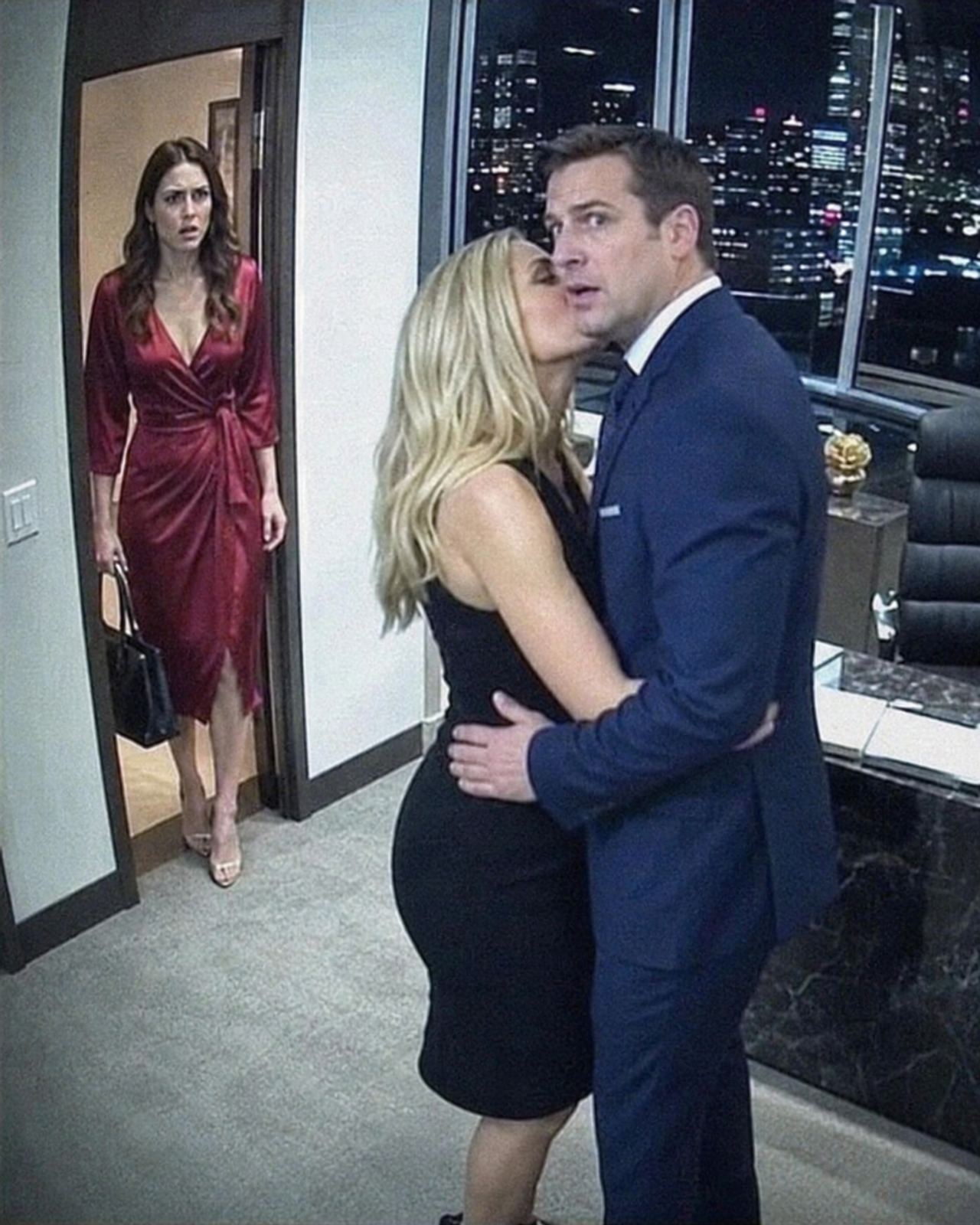
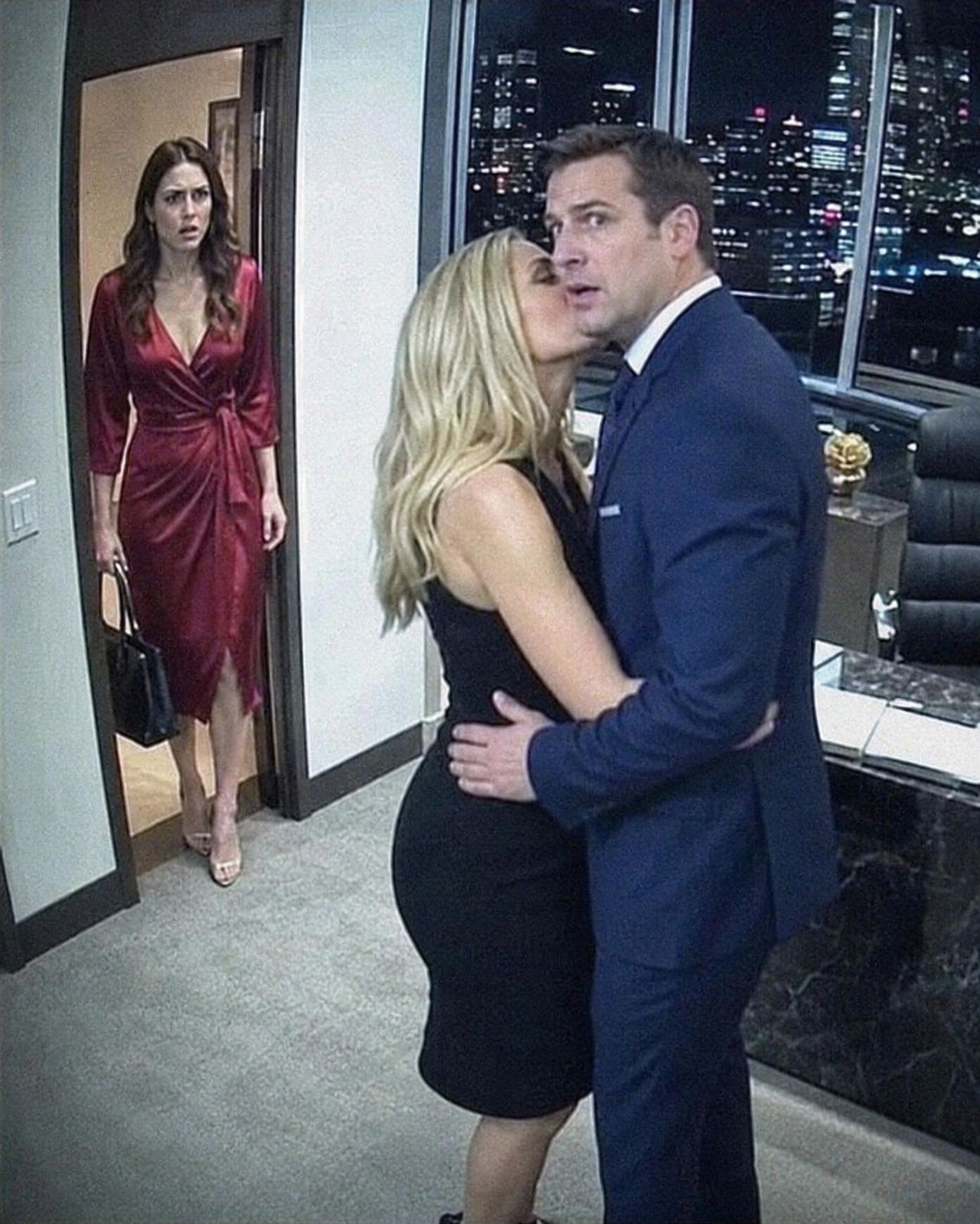
“The man who kissed Chloe,” I continued, “or the man who sent flowers because he believed enough money and persistence could erase what happened? Maybe you would have wanted us for a month. Maybe you would have loved the idea of being a father and hated the reality. I couldn’t gamble their hearts while you decided.”
“You decided for all of us.”
“Yes.”
It was not an apology.
For a moment, anger flashed across his face. Not the explosive anger I once feared, but the helpless anger of someone confronting time that could not be reclaimed.
Then it faded.
“I need to know them.”
My pulse quickened. “Nathan—”
“I’m not asking you to hand them over. I’m not threatening court or making demands.” His expression tightened at the thought. “I’m asking for a chance to meet my sons as more than a stranger in a lobby.”
“They already met you.”
“You know what I mean.”
I did.
The boys deserved truth, but truth had consequences. Once Nathan entered their lives, there would be no simple retreat. He would bring his history, his wealth, his public name, and every complicated thread between us.
“What happened with Chloe?” I asked.
He seemed surprised by the question.
“Nothing.”
“You were kissing her.”
“I mean nothing happened afterward. She resigned two weeks later. I haven’t seen her in years.”
“That doesn’t change what I saw.”
“No.” His eyes held mine. “Nothing changes that.”
The old instinct to protect him stirred inside me, and I resented it. I had once loved the boy hidden beneath his ambition, the one who admitted he hated empty houses and slept with the television on during business trips. That boy had gradually disappeared behind hotel openings, investor dinners, and a life where affection was postponed until convenient.
Perhaps he had returned.
Perhaps I was only seeing what grief wanted me to see.
“I need time,” I said.
“How much?”
“I don’t know.”
His mouth curved into a sad, brief smile. “You always hated vague answers.”
“And you always demanded deadlines.”
“I’m trying not to.”
Before I could respond, the back door opened. Henry emerged, carrying two muffins while Oliver followed with three.
They spotted us and hurried across the lawn.
“We brought you one,” Oliver told Nathan.
Henry frowned. “That was supposed to be mine.”
“You have two.”
“One is for later.”
Nathan crouched as Oliver handed him a blueberry muffin wrapped in a napkin.
“Thank you.”
“Are you staying at our hotel?” Oliver asked.
Nathan glanced at me. “I’m not sure yet.”
“You should. Room twelve has a window seat.”
“Room twelve also has a broken lamp,” Henry said.
“It’s not broken. It flickers.”
“That means broken.”
Nathan smiled.
It was the smile I remembered from before his company, before the penthouse, before he learned to measure his days by profit margins. Seeing it directed at our sons loosened something inside me that I had spent four years tying shut.
He broke the muffin in half and offered part to Henry.
After considering the gesture, Henry accepted.
Nathan sat with them on the gazebo steps. Within minutes, Oliver was explaining the paper hotel while Henry corrected every detail. Nathan listened without checking his phone once.
I watched from a few feet away, telling myself attention was easy for ten minutes.
Fatherhood was not.
That evening, Nathan checked into room twelve.
Daniel postponed the business tour without explanation. Priya asked no questions, though she squeezed my hand before leaving. By dinner, half the staff had guessed the truth.
I took the boys home to our cottage at the edge of town. They talked about Nathan throughout the meal.
“He knows hotels,” Oliver said.
“That is his job,” I replied.
“He said buildings remember people.”
Henry stirred peas into his potatoes. “Do buildings remember babies?”
“I don’t think so.”
“People remember babies.”
“Usually.”
He looked up. “Does Nathan remember us?”
The fork slipped in my fingers.
Oliver laughed. “He didn’t know us before today.”
Henry continued watching me. “But he looked sad.”
“He was surprised.”
“Why?”
I set down my fork.
There was no perfect way to tell children that the stranger they had just met was their father. Every possible sentence seemed too large for the kitchen, too large for their small faces and half-finished plates.
“Because Nathan knew me a long time ago,” I said.
“Before us?” Oliver asked.
“Yes.”
“Was he your friend?”
“He was my husband.”
Both boys became still.
They understood husbands through picture books, neighbors, and Priya’s cheerful fiancé. A husband was someone who lived in the same house, reached things from high shelves, and appeared beside a mother in family photographs.
Henry spoke first. “Where did he go?”
“I went away.”
“Why?”
“Because we stopped making each other happy.”
Oliver considered this. “Can you be friends now?”
“I don’t know.”
Henry’s eyes narrowed with Nathan’s familiar intensity. “Is he our daddy?”
Silence filled the room.
I had planned to speak with a child therapist. I had imagined careful language and a calm setting. Instead, the truth stood between peas and cooling potatoes.
“Yes,” I said. “Nathan is your father.”
Oliver’s mouth opened.
Henry looked toward the dark window, as though Nathan might be standing outside.
“Did he know?” he asked.
“No.”
“Now he does?”
“Yes.”
Oliver climbed down from his chair. “Can we go tell him?”
“He already knows.”
“Can we see him tomorrow?”
The hope in his voice frightened me more than anger would have.
“We’ll talk about it in the morning.”
Henry did not ask another question until bedtime. While Oliver arranged stuffed animals along the pillow, Henry sat beside me holding the faded blue blanket he had slept with since infancy.
“Did Daddy lose us?” he asked.
The question nearly broke me.
“No, sweetheart.”
“Then why is he sad?”
“Because sometimes adults miss things they never knew they were missing.”
Henry leaned against my shoulder. “That sounds worse than losing.”
I kissed his hair.
“Yes,” I whispered. “Sometimes it is.”
After they slept, I sat alone on the porch.
At nine fifteen, headlights appeared beyond the trees. Nathan’s rental car stopped near the gate, but he did not approach the house. He stepped out, leaned against the hood, and looked toward the porch.
I should have gone inside.
Instead, I crossed the yard.
“I told them,” I said when I reached him.
His face changed. “What did they say?”
“Oliver wants to see you tomorrow. Henry asked whether you lost them.”
Nathan looked away toward the dark road.
“What did you tell him?”
“That you didn’t know.”
“I should have known.”
“How?”
“I should have known you might be pregnant. We were trying for a child.”
“We had stopped talking about it.”
“I hadn’t stopped wanting one.”
The words landed painfully.
During our last year together, we had spoken of children less and less. Every postponed conversation had felt like another quiet rejection. I had assumed Nathan’s desire for a family had vanished beneath his ambition.
“I thought you changed your mind,” I said.
“I thought you did.”
“Why would you think that?”
“Because you stopped mentioning it.”
“I stopped because you were never home.”
“And I stayed away because every time I came home, I could feel how disappointed you were.”
The truth sat between us, simple and devastating.
Neither of us had asked the question that might have saved us.
Nathan rubbed a hand across his face. “That doesn’t excuse Chloe.”
“No.”
“I was angry after our phone call that night. You said you didn’t know why we were still pretending.”
“I remember.”
“Chloe brought documents into the conference room. She told me I deserved someone who believed in me.” He stared at the gravel beneath our feet. “I wanted to feel admired for five minutes. She kissed me, and I let her.”
“You kissed her back.”
“Yes.”
The honesty hurt, but not in the old way. Four years had worn the sharp edges from the memory. What remained was sadness for the people we had been and the conversation we never had.
“Did you love her?” I asked.
“No.”
“Did you love me?”
“I never stopped.”
I exhaled slowly. “Love wasn’t enough.”
“I know that now.”
The porch light cast a pale circle across the yard. Moths gathered around it, striking the glass again and again.
Nathan reached into his coat and removed a small envelope.
“I carried this for three years.”
I did not take it.
“What is it?”
“The last letter you wrote me.”
“I didn’t leave a letter.”
“Not when you left. Two weeks before.”
He opened the envelope and unfolded a page creased from repeated handling.
I recognized the stationery from my desk in the penthouse.
Nathan read quietly.
“Sometimes I think we are becoming strangers in the same beautiful rooms. I don’t need another vacation or necklace. I need you to ask whether I am all right and stay long enough to hear the answer.”
My throat tightened.
“I never gave you that.”
“I found it in your desk after you left.”
“I must have decided it wouldn’t matter.”
“It would have.”
“But you didn’t know it existed.”
“No.” He folded the letter carefully. “That’s the tragedy of us, Emily. We kept hiding the words that mattered, then blamed each other for not hearing them.”
I looked back toward the cottage.
Through the upstairs window, Oliver’s night-light glowed like a small moon.
“What do you want from me?” I asked.
“The truth?”
“Yes.”
“I want everything I lost.”
My body stiffened.
“But I know wanting it doesn’t make it mine,” he added. “I want to know Oliver and Henry. I want to earn whatever place you believe I can have in their lives. As for you…” His voice softened. “I don’t have the right to ask.”
“Then don’t.”
He nodded.
The absence of argument unsettled me.
“You can have breakfast with them tomorrow,” I said. “At the inn. One hour.”
Relief moved across his face. “Thank you.”
“This isn’t forgiveness.”
“I understand.”
“And you won’t make promises you can’t keep.”
“I won’t.”
“If they become attached to you and you disappear—”
“I won’t.”
“Nathan.”
He met my eyes.
“I will not disappear,” he said. “Even if you never forgive me. Even if they never call me Dad. I will be where I say I’ll be.”
The next morning, he arrived at seven twenty for an eight o’clock breakfast.
I found him in the garden holding three paper bags from the bakery.
“You’re early,” I said.
“I didn’t sleep.”
“What did you buy?”
“Everything the woman behind the counter recommended. I realized I don’t know what they like.”
“Henry likes cinnamon. Oliver claims he likes everything, but raisins offend him personally.”
Nathan smiled. “I’ll remember.”
The boys came running across the terrace.
Oliver hugged him without hesitation.
Nathan froze before gently placing one hand against his back.
Henry stopped several feet away. “Mommy said you’re our father.”
“Yes.”
“Did you know yesterday?”
“Not until I saw you.”
Henry thought about this. “Do you want to be?”
The question silenced the garden.
Nathan set down the bags and knelt.
“More than anything.”
Henry’s expression remained serious. “Even when we’re difficult?”
“Especially then.”
“Oliver wakes up early.”
“I’ve heard.”
“And I don’t like loud places.”
“Neither do I.”
Henry studied him a moment longer, then held out the blue blanket he had carried downstairs.
“You can sit beside me.”
Breakfast lasted nearly two hours.
Nathan told them about the first hotel he opened, leaving out the investors and financial risk and focusing instead on a broken elevator that trapped him with a wedding cake. Oliver asked whether he could own a hotel one day. Henry wanted to know how fire alarms worked.
When Nathan finally checked his phone, he frowned.
“Something wrong?” I asked.
“My board chairman has called six times.”
“You’re here for an acquisition.”
“I was.”
The distinction made me uneasy.
Nathan stepped away to return the call. His voice remained low, but I heard fragments.
“No, postpone it.”
“I understand the consequences.”
“I’m not leaving today.”
When he returned, he looked resigned rather than worried.
“You’re staying?” Oliver asked.
“For a few more days.”
Oliver cheered.
I said nothing.
Later, while the boys helped Priya arrange flowers for an afternoon wedding, Nathan and I walked through the empty ballroom.
“You can’t abandon your company,” I said.
“I’m postponing meetings.”
“You once missed my surgery because of a postponed meeting.”
His expression tightened. “I remember.”
“I don’t want the boys becoming another reason you punish yourself.”
“That isn’t why I’m staying.”
“Then why?”
“Because my sons are here.”
The word sons still sounded new in his voice.
He stopped beneath the chandelier.
“There’s something else you should know,” he said. “The Willowmere acquisition wasn’t my idea.”
“What does that mean?”
“My board received a proposal from an outside consultant three months ago. The report described this property as strategically valuable, but the financial projections made no sense. I came because I wanted to understand why someone was pushing us toward an inn we had never considered.”
A chill moved across my skin.
“Who was the consultant?”
“The proposal came through a private firm.”
“What firm?”
Nathan watched me carefully. “Bennett Strategic.”
The name struck like a hand against a closed door.
“Chloe?”
“She founded it two years ago.”
I stepped back.
“You said you hadn’t seen her.”
“I haven’t.”
“Then why would she send you here?”
“I don’t know.”
The ballroom doors opened.
Daniel entered carrying a folder. His friendly expression vanished when he saw us standing together.
“Emily,” he said, “there’s a woman asking for you.”
My pulse quickened. “Who?”
“She wouldn’t give me her name.”
Nathan moved toward the door, but I remained still.
Through the tall windows, a black sedan waited beside the front steps.
A woman stood in the lobby wearing a cream coat, her dark hair cut shorter than I remembered.
Chloe Bennett looked older, composed, and frightened.
When she saw Nathan beside me, she closed her eyes briefly, as though confirming something she had hoped not to find.
Then her gaze moved toward the garden, where Oliver and Henry were laughing beneath the maple trees.
She pressed one hand to her mouth.
Nathan’s voice hardened. “Why are you here?”
Chloe did not answer him.
She walked directly to me and held out a sealed envelope.
“I’m sorry,” she said. “I tried to find another way.”
I stared at the envelope.
My full name was written across the front in my mother’s handwriting.
“That’s impossible,” I whispered.
My mother had died eleven months earlier.
Chloe’s eyes filled with tears.
“She gave this to me before she died,” she said. “She made me promise I wouldn’t deliver it unless Nathan found the boys.”
Nathan looked from her to the letter.
I could barely breathe.
“My mother knew you?”
Chloe nodded.
“For four years.”
The lobby seemed to tilt beneath my feet.
I tore open the envelope.
Inside was a single page and an old photograph.
The photograph showed my mother seated at a café table across from Chloe. Between them lay copies of the twins’ birth certificates.
On the back, my mother had written six words.
Emily, Nathan was never the secret.
I unfolded the letter with shaki
Read more stories
- Three young children stand on a stage in front of a crowd, clapping joyfully and sharing a playful performance moment together.
- The Wedding Ended Before Anyone Reached the Altar
- A young child dressed in a cowboy hat and overalls holds a small guitar, standing on stage ready to perform.
- Her Mother-in-Law Smirked, “My Son Finally Taught Her How a Proper Wife Behaves.” Then Her Husband Added, “She Knows Better Than to Disobey Me Now.” I Didn’t Raise My Voice.