
Celebrities & Music
FOUR OUTLAW KINGS SHARED ONE STAGE IN 1990—BUT BENEATH THE WILD REPUTATIONS, ONE THREE-HOUR SHOW REVEALED THE QUIET BROTHERHOOD THEY CARRIED TO THE END.
Johnny Cash, Waylon Jennings, Willie Nelson, and Kris Kristofferson joined forces for a landmark 1990 Highwaymen performance at Nassau Coliseum. The show captured their brotherhood, solo legacies, and enduring outlaw spirit in a nearly three-hour live archive.

In 1990, Johnny Cash, Waylon Jennings, Willie Nelson, and Kris Kristofferson brought their Highwayman 2 tour to the Nassau Coliseum. It was a rare convergence of country music’s Mount Rushmore, captured on film for what would become one of the genre’s most important live archives. For nearly three hours, the four men stood side by side, trading verses and stepping back to let their brothers shine. They did not just play the group’s established anthems; they dove into each other’s solo catalogs, turning the arena floor into a living history of American music. Between songs, they stripped away their tough exteriors, trading jokes and laughing like old friends on a front porch. Under the stage lights, the silver in their hair and the lines on their faces stood in sharp contrast to the unbroken, wild energy in their voices. They had all survived decades of personal battles, temptations, and hard roads. When they harmonized on “Desperados Waiting for a Train,” they exchanged knowing glances. They were no longer just outlaws proving themselves to the industry; they were survivors enjoying the pure privilege of playing music together. The Nassau Coliseum show cemented their legacy as a band of brothers who outlasted their own myths. How that specific recording was preserved—and the backstage conversations that built that historic three-hour setlist—remains a deeper chapter of the Highwaymen story.
In 1990, Johnny Cash, Waylon Jennings, Willie Nelson, and Kris Kristofferson brought their Highwayman 2 tour to the Nassau Coliseum. It was a rare convergence of country music’s Mount Rushmore, captured on film for what would become one of the genre’s most important live archives. For nearly three hours, the four men stood side by side, trading verses and stepping back to let their brothers shine. They did not just play the group’s established anthems; they dove into each other’s solo catalogs, turning the arena floor into a living history of American music. Between songs, they stripped away their tough exteriors, trading jokes and laughing like old friends on a front porch. Under the stage lights, the silver in their hair and the lines on their faces stood in sharp contrast to the unbroken, wild energy in their voices. They had all survived decades of personal battles, temptations, and hard roads. When they harmonized on “Desperados Waiting for a Train,” they exchanged knowing glances. They were no longer just outlaws proving themselves to the industry; they were survivors enjoying the pure privilege of playing music together. The Nassau Coliseum show cemented their legacy as a band of brothers who outlasted their own myths. How that specific recording was preserved—and the backstage conversations that built that historic three-hour setlist—remains a deeper chapter of the Highwaymen story.
FOUR MEN WHO REWROTE THE RULES OF COUNTRY MUSIC SHARED A NEW YORK STAGE IN 1990—BUT BENEATH THE OUTLAW MYTH, ONE MASSIVE SHOW REVEALED A QUIET BROTHERHOOD.
On March 14, 1990, the Nassau Veterans Memorial Coliseum in Uniondale, New York, hosted an event that felt more like a summit of American music history than a standard concert. Johnny Cash, Waylon Jennings, Willie Nelson, and Kris Kristofferson had brought their Highwayman 2 tour to the Northeast.
By this point in their lives, the four men had survived decades of industry battles, personal demons, and shifting musical trends. They were no longer trying to prove they belonged on a stage. They had already built the very foundation the genre was standing on.
For nearly three hours, they stood shoulder to shoulder in a sprawling arena, turning a massive production into something that felt as intimate as a living room gathering. They traded verses, shared microphones, and navigated a setlist that spanned half a century of songwriting.
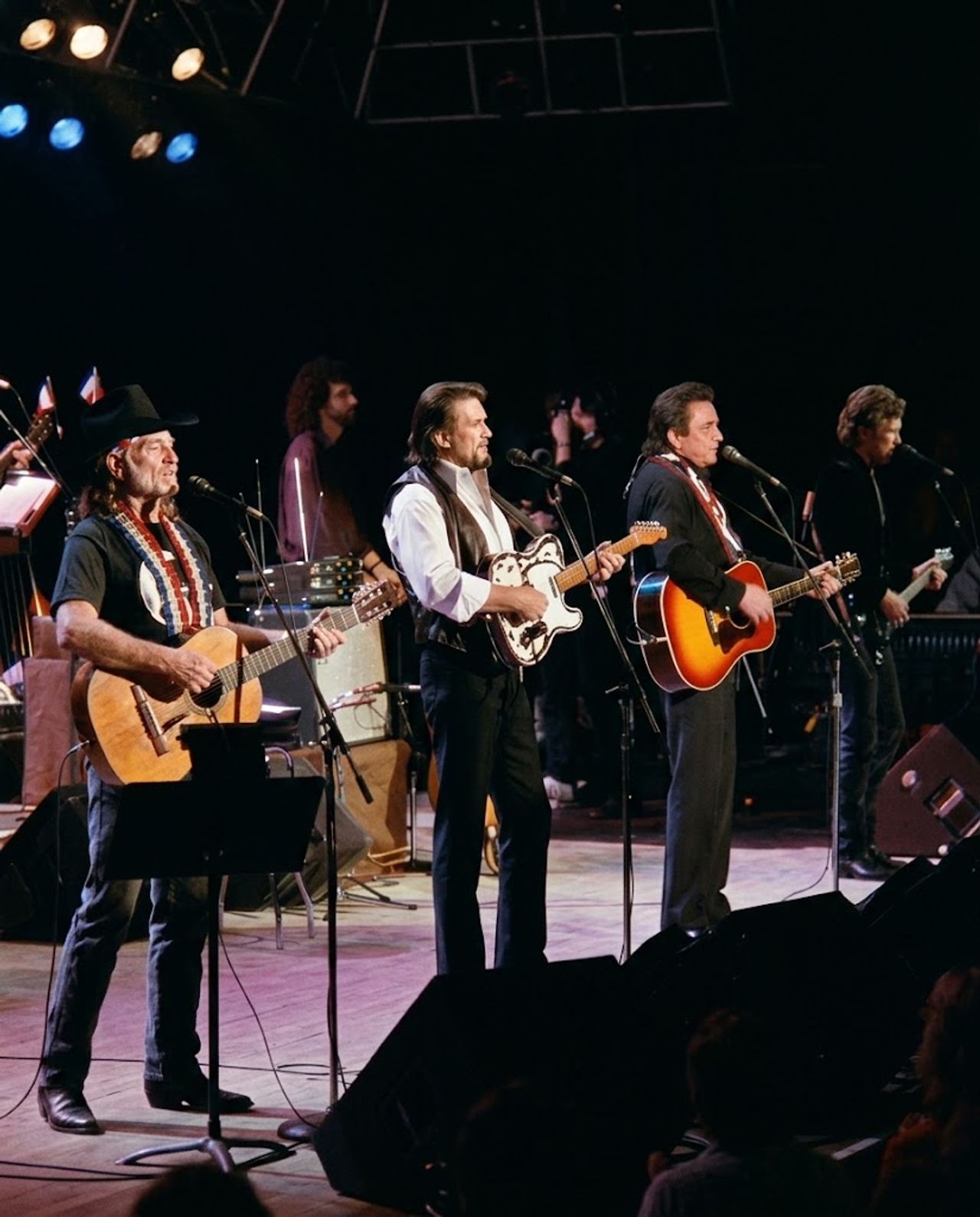
Building a show of that magnitude could have been an ego-driven battle over stage time, but the reality backstage was entirely different. The massive setlist was born from organic, dressing-room guitar pulls where the men simply passed an instrument around, tossing out suggestions and digging deep into each other’s catalogs until a three-hour run naturally took shape.
Fortunately, the results of those conversations were not left solely to the memories of the crowd. The entire Nassau Coliseum performance was captured on professional multi-track audio and 35mm film, ensuring that one of the most comprehensive nights of their prime touring years was preserved and later meticulously restored for history.
Out under the arena lights, the setlist became a living archive. The crowd did not just hear the collective anthems of The Highwaymen; they were given a masterclass in individual legacies. Cash delivered the booming authority of “Ring of Fire,” while Nelson offered the jazz-tinged phrasing of “On the Road Again.”
Jennings brought the driving, unapologetic rhythm of “Are You Sure Hank Done It This Way,” and Kristofferson anchored the night with the gritty, poetic weight of “Me and Bobby McGee.”
Yet the most compelling moments happened when the spotlight was not on the singer. When one man took the lead, the other three simply stepped back. They strummed rhythm on battered acoustic guitars, watched each other with genuine admiration, and laughed easily between verses.
The silver in their hair and the deep lines on their faces stood in sharp contrast to the unbroken energy in their voices. They were marketed to the world as outlaws and rebels, men who broke the rules and paid the price.
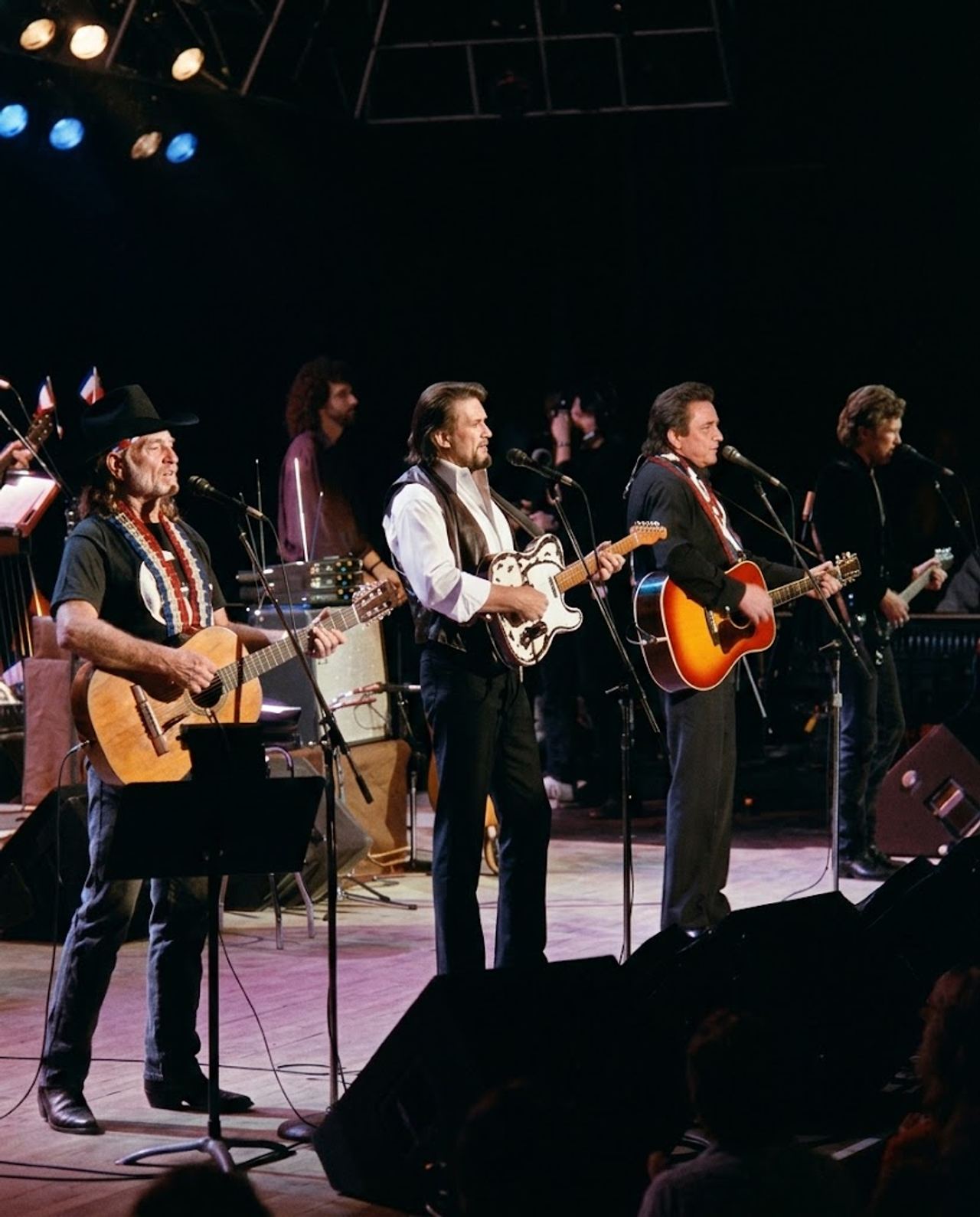
But on that stage, they were simply survivors. The competitive edge of their younger years had entirely faded, replaced by a profound respect for the craft and the shared privilege of still being able to do the work.
The emotional center of the night arrived when their voices merged on Guy Clark’s “Desperados Waiting for a Train.” As they harmonized on the chorus, they exchanged knowing glances, fully aware that they were standing in the twilight of their physical youth but at the absolute peak of their collaborative power.
The 1990 tour proved that The Highwaymen were never just a novelty act or a marketing concept. They were a necessary institution, a gathering of the last true architects of a golden era.
They did not just share a stage that night in New York. They shared the weight of the miles they had traveled, proving that the greatest rebellion of all was simply outlasting the road together.
Video can’t be loaded because JavaScript is disabled: The Highwaymen – Big River (American Outlaws: Live at Nassau Coliseum, 1990)
Video can’t be loaded because JavaScript is disabled: The Highwaymen – Highwayman (American Outlaws: Live at Nassau Coliseum, 1990)
Read more stories
- At my younger sister’s wedding, my mother looked at my dress uniform in front of two hundred guests and sneered, “What is a lowly soldier doing back here?”
- Stepmother Tried to Take My Beach House. Dad’s Secret Broke Us
- MERLE HAGGARD DROVE ALL NIGHT TO RECORD WITH THE MAN WHO HAD TAUGHT HIM EVERYTHING. BY THE TIME HE ARRIVED, BOB WILLS HAD SUFFERED A MASSIVE STROKE — AND WOULD NEVER WAKE UP AGAIN.
- I wrote a $500,000 check for my son’s wedding.But his pregnant bride didn’t look at my son when I handed her the deed. She looked straight at my wife. Two days later, the restaurant manager called me, and whispered, “You need to see this immediately. Come alone. And whatever you do, do not tell your wife.” My blood ran cold. And the secret behind it shattered my world.