
Human Stories
Five Days After Giving Birth, I Came Home To Find My House Sold. My Husband Had Taken Everything And Run Off With His Mistress. I Sold My Wedding Ring To Buy Tickets Home. At The Station, I Used My Last Dollar To Buy A Stranded Old Man A Ticket. Two Weeks Later, A Black Limo Pulled Up Outside My Parents’ House… And The Driver Said My Name.
After giving birth, Natalie returns home to find her life shattered by her husband’s betrayal, fraud, and disappearance. With the help of her mother, a sharp attorney, and an unlikely ally named Walter, she uncovers the truth and begins fighting to reclaim her future.

The second she noticed the diaper bag hanging off one shoulder and the exhaustion written all over my face, she hurried toward me. She didn’t ask a single question.
She wrapped one arm around me as carefully as she could without bumping my incision. “Oh, sweetheart.”
That was all. There was no lecture and no “I warned you”—just those two words.
Sometimes that’s enough to keep a person standing. Mom’s little ranch house hadn’t changed much since Dad passed away.
The same wind spinner turned lazily in the backyard. The same faded blue recliner sat beside the living room window where Dad used to read the Sunday paper.
Now it was covered with folded baby blankets. She’d been preparing for Emma’s first visit for weeks.
Neither of us imagined it would become our new home. That first week blurred together.
I fed Emma, changed diapers, took pain medication, and tried not to cry where Mom could see me. Then I slept for 45 minutes and repeated the cycle.
One afternoon, I caught Mom sitting at the kitchen table with a yellow legal pad. She was adding numbers with an old calculator.
When she noticed me, she quietly turned the paper over. “What are you doing?”
“Oh, nothing.” I smiled weakly.
“You’ve never been good at pretending.” She sighed.
“I was figuring out how long my Social Security check could cover groceries for three people.” That broke me more than losing the house.
My mother had worked 38 years as an elementary school secretary. She deserved a peaceful retirement.
Instead, at 69, she was wondering how to stretch canned soup and frozen vegetables because her daughter had nowhere else to go. “I’ll go back to work.”
She looked at me like I’d lost my mind. “You can barely climb the porch steps.”
“I’ll figure something out.” “You just had major surgery.”
“I know.” “You have a newborn.”
“I know.” She reached across the table and squeezed my hand.
“For once in your life, Natalie, let someone else carry you for a little while.” I wanted to.
I just didn’t know how. A few days later, I met Rebecca Keller.
Mom’s church friend had recommended her. Rebecca’s office overlooked Monument Circle in downtown Indianapolis.
She looked exactly how you’d expect a lawyer with 40 years of experience to look. She had a gray bob, comfortable shoes, and sharp eyes.
She listened without interrupting while I explained everything. Then she opened a yellow legal pad.
“I have good news and bad news.” I laughed.
“I don’t suppose the good news comes first.” “It does.”
She smiled. “I think your husband committed several felonies.”
I blinked. “And the bad news is that proving it won’t be fast.”
She explained that whoever handled the closing had relied on documents appearing to carry my authorization. Some signatures looked suspicious.
Others were probably copied electronically. “The sale itself may be difficult to undo,” she said carefully.
“The new owners appear to have purchased in good faith.” “So they’re victims, too?”
“I’m afraid so.” I rubbed my forehead.
“So Logan gets away with it?” “No.” She leaned forward.
“But we have to prove intent, fraud, and where the money went.” Then she asked a question that stayed with me.
“Natalie, during your pregnancy, did your husband ever ask you to sign stacks of paperwork?” I thought about it.
There had been dozens of documents, maybe hundreds: insurance forms, hospital admission packets, leave-of-absence documents, mortgage insurance updates, and life insurance beneficiary forms. I signed whatever he put in front of me.
Rebecca nodded slowly. “I was hoping you wouldn’t say that.”
The following week became a strange routine. Every morning I’d feed Emma.
Mom would rock her while I gathered paperwork, tax returns, retirement statements, old mortgage documents, hospital records, anything Rebecca asked for. The deeper we dug, the worse it looked.
Money hadn’t disappeared overnight. It had been draining away for months. $5,000 here, $8,000 there.
Always explained by Logan as market adjustments, temporary investments, moving funds for better interest. I had believed every word, not because I was foolish, because he was my husband.
One rainy Thursday afternoon, Rebecca called. “I found something.”
My heart raced. “What?”
“The house wasn’t listed after you went into labor.” “It wasn’t?”
“It went on the market almost three months earlier.” “Three months?”
I stopped breathing. That was when Logan insisted I stop checking our finances because stress wasn’t good for the baby.
That was when he started bringing me breakfast in bed. That was when he began telling everyone, “My wife deserves to relax.”
I sat there staring through the kitchen window while rain rolled down the glass. None of it had been spontaneous.
He hadn’t snapped. He hadn’t panicked.
He’d planned every step while pretending to love me. That realization hurt far more than the affair.
2 weeks after I bought the old man’s bus ticket, someone knocked on Mom’s front door. She looked out the window.
“Natalie, there’s an older gentleman asking for you.” I opened the door.
There he was. Same canvas jacket, same worn suitcase, same gentle smile.
For a second, I couldn’t place him. Then I noticed his eyes.
“The bus station.” He nodded.
“I hope I’m not disturbing you.” “Not at all.”
He held out an envelope. “I came to repay what you spent.”
I laughed softly. “You drove all the way here for $23?”
“No.” He smiled. “I came because my wife would have been very disappointed if I hadn’t thanked you properly.”
His voice caught ever so slightly when he mentioned her. I stepped aside.
“Would you like some coffee?” “I’d like that.”
Mom had already started a fresh pot. Within minutes, the three of us were sitting around her old oak kitchen table.
Walter admired Emma sleeping in her portable bassinet. “She’s beautiful.”
“Thank you.” He reached into his pocket and pulled out a small photograph.

A smiling woman with silver hair stood beside him on a lakeshore. “My Evelyn.”
“You were married a long time.” “Fifty-two years.”
“I’m sorry.” “So am I.”
For a while, we simply talked. Nothing extraordinary.
We talked about gardening, Indiana winters, hospital cafeterias, the Cubs, and life. He never mentioned money.
Neither did I. Then headlights swept across the kitchen window.
One black Lincoln Navigator pulled into the driveway. Another stopped behind it.
Mom frowned. “Were you expecting company?”
Walter quietly set down his coffee cup. “I suppose they finally found me.”
Before I could ask what he meant, two professionally dressed men stepped onto the porch. One of them hurried to the door the moment I opened it.
Relief flooded his face. “There you are, Mr. Bennett.”
The room fell completely silent. The younger man looked embarrassed.
“We’ve been trying to reach you for days. Your daughter is worried sick.” Walter gave him an apologetic smile.
“I imagine she is.” The second man glanced toward me, then back at Walter.
“The board meeting has already been postponed.” “Board meeting?”
I looked from one face to the other. Walter stood slowly.
He turned toward me with an expression somewhere between gratitude and regret. “I’m afraid I haven’t been entirely honest.”
“You said someone stole your wallet.” “They did.”
“You said you were traveling alone.” “I was.”
“So?” He smiled gently.
“I simply forgot to mention that my family owns Bennett Industrial.” I stared at him.
Everyone in Indiana knew that name. The Bennett name appeared on factories, scholarships, hospitals, and businesses employing thousands of people.
The quiet old man sitting in my mother’s kitchen wasn’t just wealthy. He was one of the most respected businessmen in the entire state.
He looked at me the same way he had at the bus station. He appeared neither proud nor embarrassed, only sincere.
Then he said something I never expected. “I didn’t come here to change your life with money.”
He paused. “I came to ask if you will let me help you get your life back.”
I didn’t answer Walter right away. Not because I wasn’t grateful, because I was scared.
I’d spent the last two weeks learning what it felt like to have the ground disappear beneath my feet. When something unbelievable landed in front of me, every instinct told me to question it.
“I don’t need charity,” I finally said. Walter smiled almost as if he’d expected that answer.
“I wouldn’t respect you if you did.” He looked around my mother’s modest kitchen before continuing.
“My wife used to say that the hardest people to help are the ones who deserve it most.” Mom chuckled softly.
“Your wife sounds like she would have fit right in around here.” Walter laughed for the first time since I’d met him.
“Oh, Evelyn would have loved this kitchen.” That little moment broke the tension.
Then Walter reached into his leather folder and slid a business card across the table. It wasn’t a check or cash, just a name.
Michael Ames, forensic financial consultant. “I’d like you to meet someone,” Walter said.
“You decide what happens after that.” I looked at Mom.
She gave the smallest nod. “Okay.”
Two days later, I found myself sitting in a conference room overlooking downtown Indianapolis. Michael Ames looked more like a retired accountant than someone who unraveled financial crimes.
He wore a gray sport coat and reading glasses and carried a coffee mug that read, “World’s Okayest Grandpa.” He smiled warmly.
“Natalie, Mr. Bennett asked me to review your records.” “I don’t want anyone doing anything illegal.”
He almost looked offended. “My dear, I’ve spent 40 years putting people in prison for breaking the law.”
That earned my first genuine laugh in weeks. For the next three hours, we spread bank statements, mortgage paperwork, hospital admission forms, and retirement records across the conference table.
Michael rarely spoke. He simply highlighted dates with a yellow marker.
Finally, he leaned back. “This wasn’t impulsive.”
“I know.” “No.” He tapped the timeline.
“I mean, this began nearly nine months ago.” “Nine?”
He nodded. “The first suspicious transfer happened three days after you announced the pregnancy online.”
The room suddenly felt smaller. I remembered that evening perfectly.
We’d celebrated with barbecue from City Barbecue. I’d posted one ultrasound photo on Facebook.
Logan had toasted with sparkling cider because I couldn’t drink wine. Apparently, that same week, he’d opened a separate business account.
Over the next month, more people quietly joined the investigation, including a retired title attorney, a digital document specialist, and Rebecca Keller. Nobody promised we’d win.
That actually made me trust them more. Every meeting ended with the same two reassurances: “We need another piece. We’re close.”
They also warned me, “Don’t rush.” It was frustrating.
Some mornings I wanted to scream. Instead, I folded baby laundry, changed diapers, and learned how to soothe Emma through colic while answering questions about wire transfers.
Life became strangely divided between motherhood and legal paperwork. One afternoon, Michael called.
“I need you downtown.” His voice sounded unusually serious.
When I arrived, he projected a timeline onto a large screen. Colored lines connected dozens of transactions in red, blue, and green.
He said quietly, “Here’s what your husband actually did.” He’d slowly moved money into shell investment accounts, taken loans against assets I’d never known existed, hidden losses from previous clients, used our retirement savings to cover those losses, and sold the house to keep creditors from finding equity.
“The affair?” Michael looked almost annoyed. “Honestly, Natalie, the mistress was probably the least expensive mistake he made.”
I stared at the screen. For months, I’d imagined Logan destroying our marriage because he loved someone else.
Now, I realized something even uglier. He loved money more than either of us.
Walter called every Sunday evening, never to ask about the lawsuit or discuss evidence, but only to ask one question: “How’s Emma?” Sometimes he’d make ridiculous faces over a video call.
My daughter would giggle. He’d grin like he’d won the lottery.
One Sunday, he proudly announced that he’d learned how to install a car seat. “My daughter apparently didn’t trust me. I installed it backward.”

I laughed. “I was wondering why the baby looked so surprised.”
Even Mom laughed at that. Those little conversations reminded me that not every older man disappeared when life became inconvenient.
Some stayed. By early October, we believed we had enough evidence to request an emergency court order freezing Logan’s remaining assets.
Rebecca warned me not to celebrate. “The judge may want more.”
“I understand.” I didn’t—not really.
I walked into the hearing convinced justice was finally arriving. Forty-three minutes later, we lost.
The judge denied the emergency request. It wasn’t because he believed Logan; the evidence, while troubling, wasn’t complete enough for that specific order.
Outside the courthouse, reporters surrounded Logan. He smiled—actually smiled.
“I’ve always believed the truth would come out,” he told them. I stood twenty feet away holding my lawyer’s briefcase while photographers snapped pictures.
To anyone watching, it probably looked like he’d won. The drive back to Bloomington was the longest hour of my life.
Nobody spoke. Rain tapped softly against the windshield.
Halfway home, I whispered, “What if this is it?” Rebecca kept her eyes on the road.
“It isn’t.” “What if he gets away with everything?”
She didn’t answer because she couldn’t honestly promise otherwise. That night, after Mom had gone to bed and Emma was finally asleep, I sat alone on the back porch.
October air carried the smell of fallen leaves. Walter quietly stepped outside holding two mugs of hot chocolate.
“I guessed you wouldn’t be sleeping.” “I feel stupid.”
“You aren’t.” “I trusted him.”
“You loved him.” “Same difference.”
“No.” He handed me a mug. “Those are two very different things.”
For several minutes, neither of us spoke. Finally, I said the words I’d been trying not to think.
“Maybe I should stop.” He looked genuinely confused.
“Stop what?” “The lawsuit, the investigation, everything. I’m tired.”
Walter nodded slowly. “I know.”
Then he said something so simple that I’ve never forgotten it. “Natalie, if you quit because you’re exhausted, he’ll spend the rest of his life believing decent people always give up.”
I stared into my mug. “I don’t know if I’m strong enough.”
He smiled. “I’ve buried the love of my life.”
“I promise you, strength isn’t something you wake up with. It’s something you discover because quitting hurts even more.”
Three evenings later, Rebecca called. “Can you come to my office first thing tomorrow?”
“Did something happen?” “Yes.”
“Good or bad?” “I honestly don’t know yet.”
The next morning, a woman was already sitting inside Rebecca’s conference room. She had perfect makeup, a designer handbag, and red eyes.
I recognized her immediately from photographs. Monica, Logan’s girlfriend.
She stood awkwardly. “I’m not here because I’m a good person.”
I appreciated the honesty. “I’m here because Logan lied to me, too.”
Nobody spoke. She slowly placed a flash drive on the table, then another, then a thick envelope.
“I thought he was divorced. He told me your marriage ended years ago.” She swallowed hard.
“He also convinced me to invest nearly $400,000.” Rebecca looked up sharply.
“What?” Monica nodded.
“He stole that, too.” Inside the envelope were printed emails, wire transfer confirmations, property contracts, voice recordings, even handwritten notes Logan had made during meetings.
Michael flipped through the first dozen pages, then the next dozen. His eyebrows kept climbing higher.
Finally, he looked at Rebecca, then at me. A slow smile spread across his face.
“For the first time,” he said quietly, “I think we finally have everything.” The courthouse in Hamilton County had never looked so intimidating.
I’d worked in hospitals for more than 20 years. I could stay calm during emergency deliveries, comfort frightened families, and make life-or-death decisions without panicking.
But walking through those courthouse doors that morning, my hands were shaking so badly, I almost dropped Emma’s diaper bag. She was 4 months old by then, happily chewing on the corner of a teething toy as if this were any other Tuesday.
I envied her. Outside, television vans lined the curb.
Most weren’t there because of my divorce. They were there because word had spread that federal investigators had begun looking into several of Logan’s investment accounts.
Apparently, once one thread started unraveling, a lot of people realized they’d been holding the same sweater. Rebecca leaned toward me before we entered the courtroom.
“One more thing.” “What?”
“No matter what happens today, don’t react to Logan.” “I won’t.”
“I mean it.” “I know.”
“He’ll probably try.” She was right.
The moment Logan walked in, he smiled. It was neither warm nor sad, but the kind of smile someone wears when convinced they’re still the smartest person in the room.
He looked thinner than I remembered. His expensive navy suit had probably cost more than my first car.
Monica arrived a few minutes later with her own attorney. She didn’t even look at Logan.
He noticed. His smile faded just a little.
That tiny crack gave me more confidence than I expected. The hearing lasted almost 6 hours.
At first, it felt painfully ordinary. The proceedings began with legal arguments, procedural motions, and questions about property records, dates, wire transfers, and corporate filings.
Then, Michael Ames took the stand. Watching him testify reminded me why Walter trusted him.
He wasn’t dramatic. He wasn’t angry.
He simply explained numbers, one chart at a time. “This transfer occurred on January 14.”
“This account was opened without Mrs. Whitmore’s knowledge. Funds moved through three separate entities before returning to Mr. Whitmore’s control.”
Even the judge leaned forward. Michael never exaggerated.
He didn’t have to. Facts are persuasive when they’re organized.
Next came the title company manager. She admitted that Logan had insisted on handling nearly all communication himself.
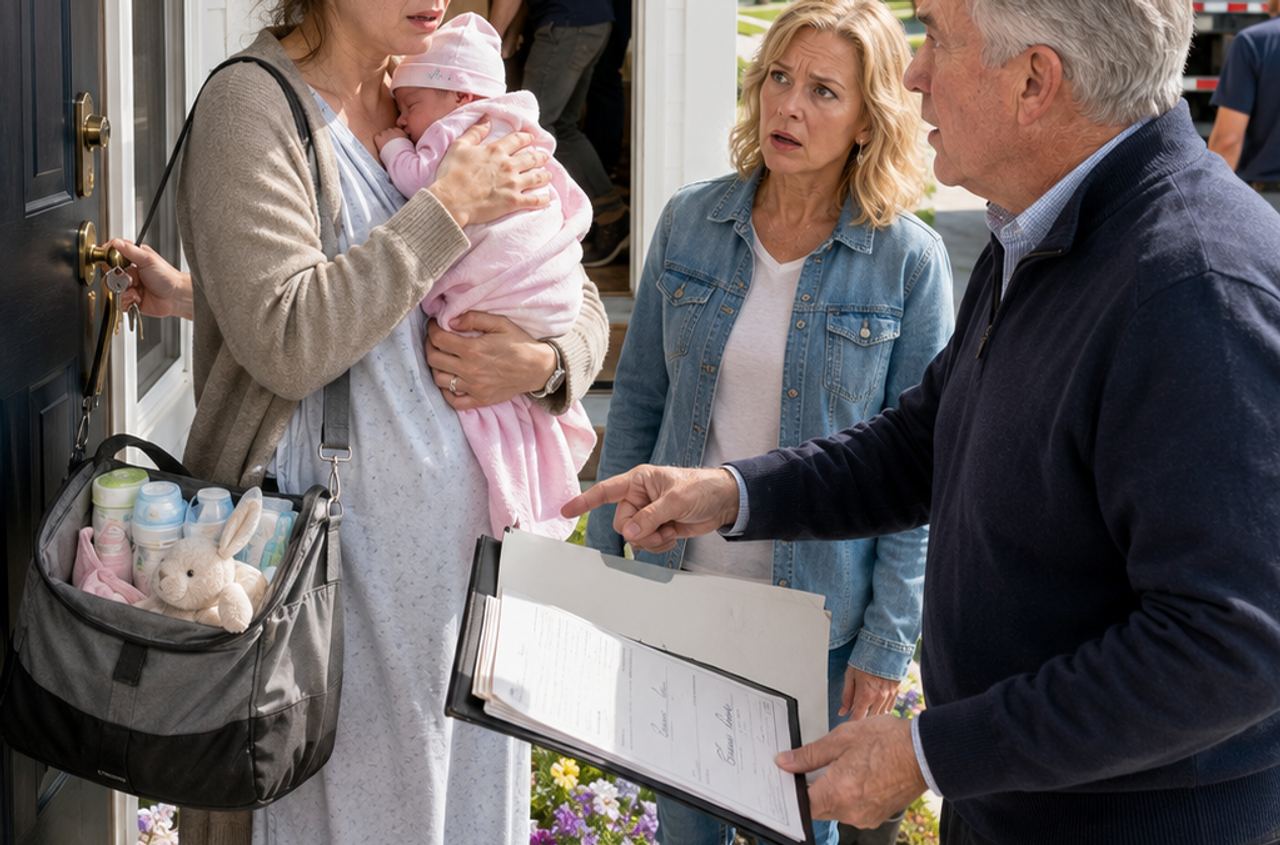
He claimed I was recovering from pregnancy complications and didn’t want to be disturbed. “Did you ever personally speak with Mrs. Whitmore?”
Rebecca asked. “No.” “Did you ever verify her identity?”
“We relied on notarized documents.” “Were those documents later determined to contain forged signatures?”
“Yes.” The courtroom became noticeably quieter.
The manager looked genuinely embarrassed. “I wish we’d caught it.”
“I believe you do,” Rebecca replied. No grandstanding, just truth.
By lunchtime, Logan looked uncomfortable for the first time, not frightened, just irritated, as though the day wasn’t going according to schedule. Then, Detective Daniel Ellison testified.
He explained that his financial crimes unit had begun reviewing multiple complaints involving Logan’s investment practice, former clients, retirement funds, misrepresented accounts. The judge raised an eyebrow.
“This investigation is ongoing?” “Yes, Your Honor.”
“Independent of today’s proceedings?” “Correct.”
Logan whispered something urgently to his attorney. His attorney didn’t whisper back.
After a short recess, Rebecca called Monica. She walked slowly to the witness stand.
For a brief second, I almost felt sorry for her. She looked exhausted.
The polished confidence I’d seen in old social media photos was gone. She answered every question directly.
“Did Mr. Whitmore tell you he was divorced?” “Yes.”
“Did you believe him?” “I did.”
“Why?” “He showed me paperwork.”
Rebecca held up one document. “Was this the paperwork?”
“Yes.” Michael later confirmed it had been fabricated.
Monica took a slow breath. “I wasn’t having an affair with a married man.”
She glanced toward me for the first time. “I was being lied to.”
The room stayed silent. She continued, “He convinced me to invest almost $400,000 into what he called a private opportunity.”
“Did you ever receive those funds back?” “No.” “When did you realize something was wrong?”
“The day I learned Natalie still thought she was happily married.” You could almost hear people shifting in their seats.
Not because Monica had become a hero, because everyone suddenly understood Logan’s pattern. Different lies, same victim.
Rebecca asked permission to play one final recording. The judge agreed.
Logan’s own voice filled the courtroom. It sounded clear, calm, and confident.
“Once the house closes, everything else gets easier.” Another voice, Monica’s, followed.
“What about Natalie?” Logan laughed.
“She signs whatever I put in front of her.” The recording stopped.
Nobody spoke. Not even Logan.
For the first time since I’d met him, he looked genuinely afraid. The judge called another recess.
While everyone filed into the hallway, Walter quietly sat beside me. He hadn’t spoken much all day.
Finally, he smiled. “You doing all right?”
“I think so.” “You know,” he said, looking toward Emma, who was sleeping peacefully in Mom’s arms, “I’ve sat through hundreds of board meetings. This is much more stressful.”
I laughed. “I thought wealthy executives didn’t get nervous.”
“Oh, Natalie,” he said with a grin. “We’re professionals. We simply pretend better.”
That little joke somehow loosened the knot in my chest. When court resumed, Logan’s attorney surprised everyone.
He requested additional time to review newly submitted evidence. Rebecca objected.
The judge denied the request. “The evidence was properly disclosed.”
Then he turned toward Logan. “Mr. Whitmore, you remain under oath.”
The judge asked several questions himself—simple, direct ones. “Where did the sale proceeds go?”
“Why were the signatures inconsistent? Why did multiple accounts receive identical transfers?”
Logan answered fewer and fewer. Several times he simply said, “On advice of counsel.”
Eventually, the judge nodded. “I understand.”
He understood more than Logan realized. Near the end of the hearing, the judge looked toward Rebecca.
“Does your client wish to make a statement?” Rebecca turned to me only once.
She said nothing, offering only a small nod. I stood slowly.
Every eye in the courtroom followed me. I looked at Logan, then at Emma, sleeping against my mother’s shoulder.
For months, I’d imagined this moment and rehearsed angry speeches in my head, thinking about exposing every lie. Instead, none of that seemed important anymore.
I took one steady breath. “The day our daughter was born, you believed I’d lost everything.”
I paused and looked at Emma again. “The truth is, she was the only thing worth keeping.”
I let the silence settle before finishing. “Everything else was replaceable.”
There was no applause and no dramatic gasp, only the kind of quiet that fills a room when everyone already knows what the right outcome should be. The judge adjusted his glasses and began reading his findings.
He ruled that substantial evidence supported Natalie’s claims of fraud, forgery, and financial misconduct. He authorized broad financial discovery, issued orders preserving the remaining disputed assets, and referred key evidence to the appropriate criminal authorities for further investigation.
Logan remained motionless. The confidence he’d carried into the courtroom had disappeared.
When the hearing ended, two investigators waiting outside approached his attorney and quietly asked to speak with him regarding the ongoing fraud investigation. I didn’t stay to watch.
There was nothing left to prove. As we walked toward the parking lot, Mom gently rocked Emma, who had just woken from her nap.
Walter caught up beside me. “So?” he asked with a smile.
“How about we celebrate?” “With champagne?” I laughed.
He looked horrified. “Young lady,” he said, glancing at Emma, “I was thinking pancakes.”
For the first time in months, the future sounded sweeter than the past. People sometimes assume that once you win in court, life suddenly becomes easy again.
It doesn’t. Court orders don’t tuck a baby into bed.
They don’t heal betrayal. They don’t erase the habit of reach…
Read more stories
- My husband abused me every day. I was 5 months pregnant, fighting internal bleeding and three broken ribs, while my husband wept at my bedside: “She fell down the stairs, Doctor! Please save her!” He expected sympathy. Instead, the surgeon stared at my injuries with cold, piercing eyes. He didn’t ask a single question. He simply looked at my husband, pressed the alarm, and commanded: “Lock the doors. Call the police.”
- Wyatt had always been tall, broad-shouldered, with a presence that filled any room even when he wasn't saying a word.
- When my grandfather came in after I gave birth, his first words were, “Honey, weren’t the $250,000 I sent you every month enough?”
- Chasing Sunshine: The Timeless Longing of ‘California Dreamin” by The Mamas & The Papas