
News
Dolly Parton and Carl Dean: The Private Marriage Behind a Public Legend
For nearly sixty years, Dolly Parton’s marriage to Carl Dean endured not in the glare of celebrity but in the deliberate shelter of ordinary rituals, mutual respect, and a fiercely guarded private world.

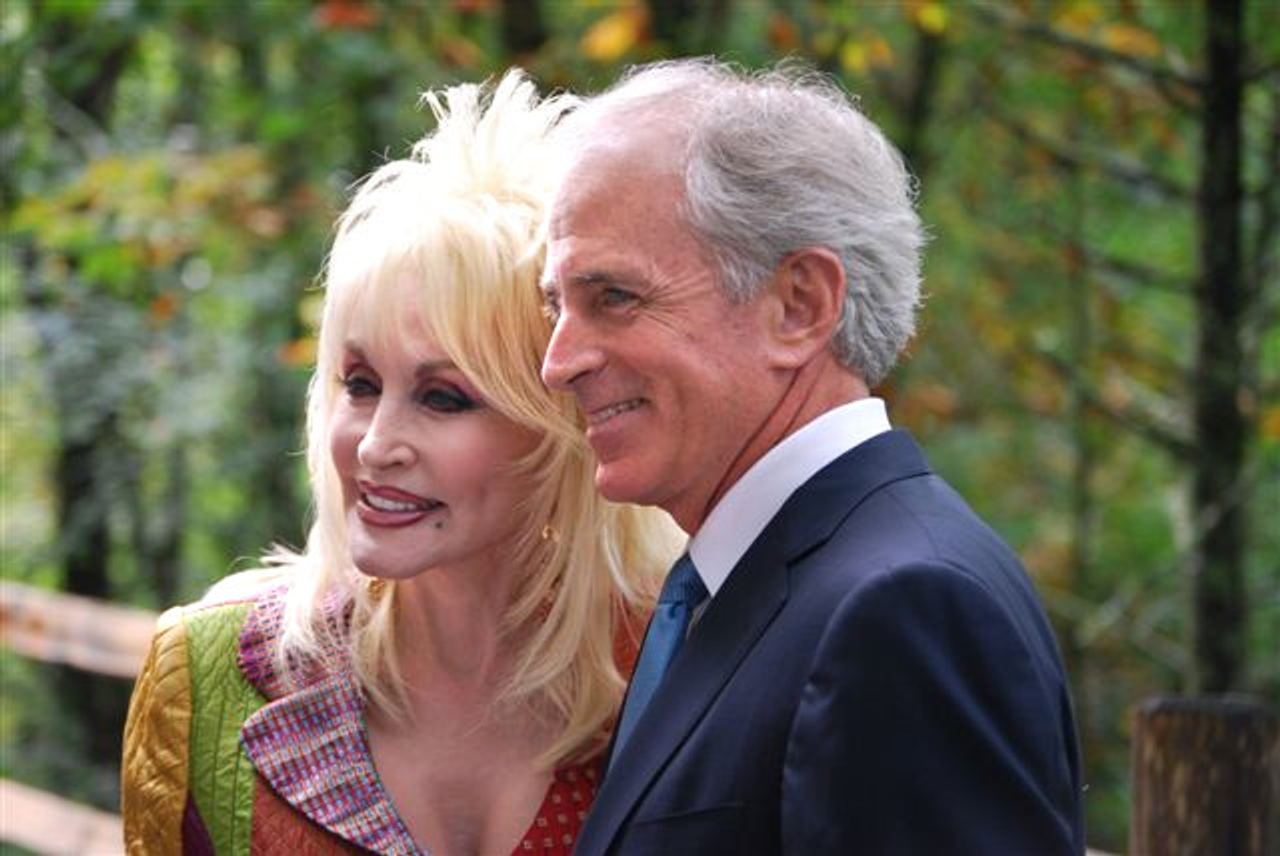
A chance meeting on a first day in Nashville
On her first afternoon in Nashville in 1964, Dolly Parton passed by the Wishy Washy Laundromat and met Carl Dean, a young asphalt contractor. It is the kind of origin story that feels almost too neat for someone whose life would become so mythic: a rising singer newly arrived in Music City, and a man with no interest in the machinery of fame, meeting in the plain daylight of an ordinary errand.
What followed was not a celebrity romance shaped by publicity or industry strategy, but a relationship that formed at the edge of everyday life. Long before the rhinestones, arena crowds, and global recognition hardened into the image of Dolly Parton, there was this quieter beginning — local, accidental, unvarnished, and rooted in the kind of setting that says more about real life than any red carpet ever could.
A wedding kept deliberately small
Two years later, on May 30, 1966, they crossed the state line into Ringgold, Georgia, to marry. The decision to keep the wedding private was not just personal preference. Her record label had warned that marriage could damage her career, a revealing reminder of the pressures placed on young women in country music and the image calculations that often shadow ambition.
So the ceremony was stripped to its essentials. Only Dolly, Carl, her mother Avie Lee, and the pastor stood together in that little church. There were no industry guests, no press photos, no fanfare. In hindsight, the wedding now reads less like a compromise than a declaration: that some of the most important parts of their life together would remain protected from the commercial demands gathering around her rising career.
Only Dolly, Carl, her mother Avie Lee, and the pastor stood together in that little church.
A life built away from the spotlight
As Dolly Parton became one of the most recognizable entertainers in America, Carl Dean moved in the opposite direction. For decades, he remained almost entirely absent from the public rituals that define celebrity life: no red carpets, no award-show appearances, no visible hunger to be folded into her brand. His privacy was not a gimmick. It was a way of life.
That separation from spectacle helped define the marriage. Dolly belonged to the stage for millions of listeners, but home operated by a different logic. Their bond was not performed for an audience. It existed in the space beyond cameras, in routines and choices that would have looked almost stubbornly modest beside the scale of her fame.
Campers, backroads, and roadside meals
Rather than luxury getaways, their private life often unfolded inside a small camper. They took quiet road trips along backroads, stopping in small towns where nobody paid much attention, making simple roadside meals and picking up pastries along the way. There is something deeply revealing in those details: not escapism through extravagance, but freedom found in anonymity, movement, and small pleasures.
These images endure because they run so clearly against the expected picture of celebrity marriage. The appeal was not distance for distance’s sake. It was the chance to inhabit a simpler tempo together, one in which a parked camper, a roadside stop, or a bakery counter could offer what fame rarely does — calm, privacy, and the feeling of being answerable only to each other.
The habits that held them together
Their marriage appears to have rested less on grand declarations than on repeatable acts of care. Before long tours, Carl would quietly leave handwritten notes on kitchen counters or tuck them into her luggage. Those gestures mattered not because they were dramatic, but because they were intimate and timed to the moments when distance was about to open between them.
When conflict came, they relied on an unspoken habit of stepping away before anger could sharpen into cruelty. It is a modest principle, but a powerful one: protecting each other’s dignity in the middle of disagreement. Alongside health challenges and a life without children, that everyday restraint helped shape a partnership built on friendship, room to breathe, and an unusually steady kind of respect.
A vow renewed, and a legacy clarified
In 2016, on the occasion of their 50th wedding anniversary, Dolly and Carl finally held the ceremony they had not had when they were young. The vow renewal carried the emotional force of a delayed public acknowledgment, not because their commitment had ever needed validation, but because it gave visible form to a union that had mostly chosen invisibility.
Even then, they kept the moment aligned with their values, donating every dollar from the photographs to children’s charities. The gesture fit the larger pattern of their life together: if attention had to come, it should do some good. Their story remains compelling precisely because it offers a counter-image to celebrity culture — a marriage sustained not by performance, but by boundaries, humor, loyalty, and the right to remain ordinary with the one person who knows you best.
Quick Facts
- Who: Dolly Parton and Carl Dean
- First meeting: At the Wishy Washy Laundromat in Nashville in 1964
- Wedding date: May 30, 1966
- Wedding location: Ringgold, Georgia
- Witnesses mentioned: Dolly, Carl, Avie Lee Parton, and the pastor
- 50th anniversary: They renewed their vows in 2016
Image credits: United States Congress / Wikimedia Commons / Public domain; Curtis Hilbun / Wikimedia Commons / CC BY 3.0; Moeller Talent, Inc. Nashville (management) / Wikimedia Commons / Public domain.

