
Celebrities & Music
Deep Purple’s ‘Smoke on the Water’: The Real-Life Disaster That Created a Rock Legend
The article explores the origins of Deep Purple’s iconic song ‘Smoke on the Water,’ detailing the real-life events that inspired its creation, including a disastrous fire at the Montreux Casino. It highlights the song’s impact on rock music and its enduring legacy.

Recorded in the late 1960s, this song is still regarded as one of the most legendary tracks of all time. The blend of these three voices is almost unreal — it only takes a few opening seconds to leave listeners completely spellbound.
When a simple guitar riff echoed across the world in the early 1970s, few listeners realized they were hearing the sound of chaos being turned into legend. “Smoke on the Water,” released in 1972 as part of Deep Purple’s album Machine Head, was not born from careful planning or poetic imagination. It emerged from disaster—fire, panic, and confusion—captured almost by accident and immortalized forever in rock history.
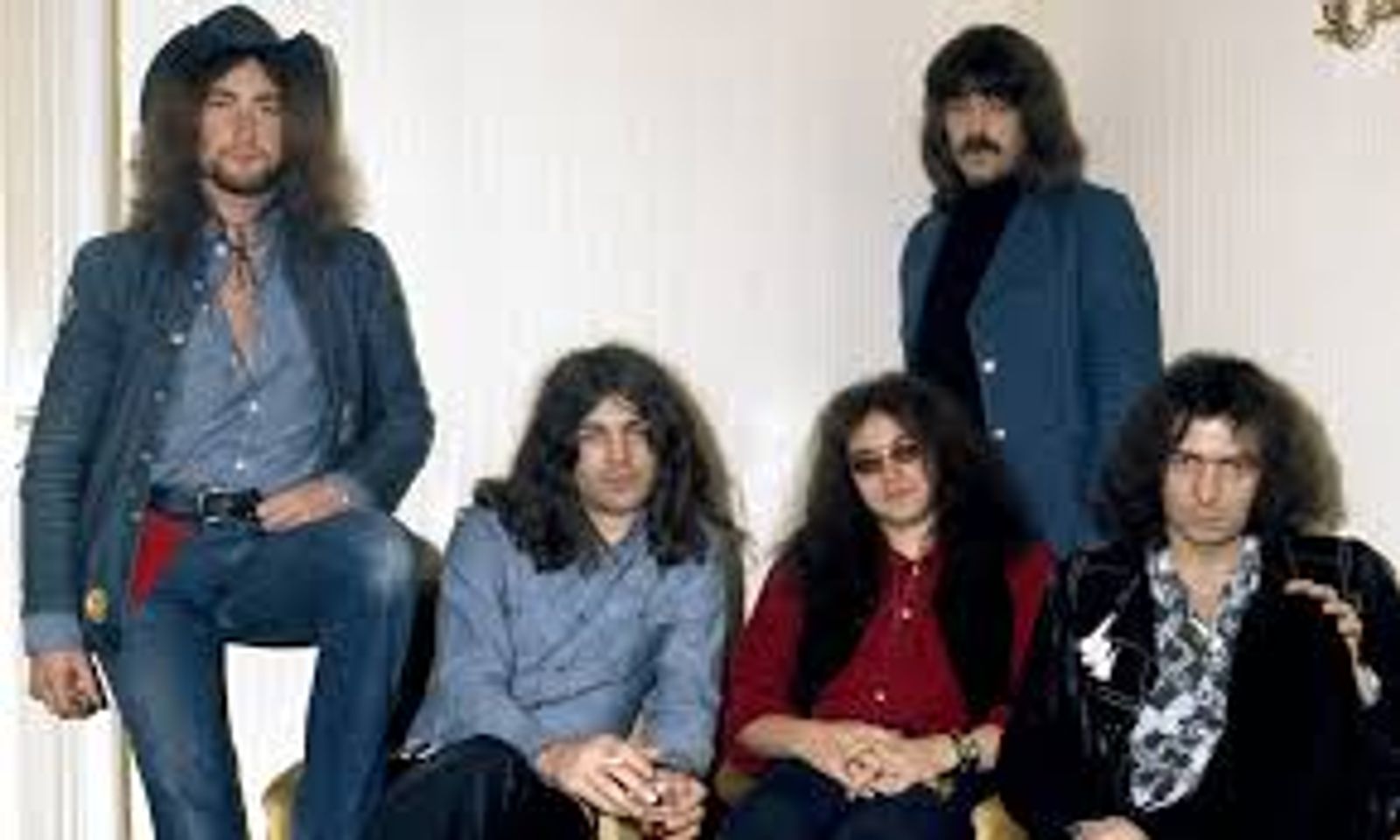
By the time the song was released, Deep Purple were already one of the loudest and most ambitious bands in hard rock. Formed in England in 1968, the group had gone through several lineup changes before settling into their most iconic configuration: Ritchie Blackmore on guitar, Ian Gillan on vocals, Jon Lord on organ, Roger Glover on bass, and Ian Paice on drums. This “Mark II” lineup blended classical influence, blues grit, and sheer volume, pushing rock music toward something heavier and more dramatic than what had come before. Still, nothing in their catalog prepared the world for what was about to happen in Switzerland.
In December 1971, Deep Purple traveled to Montreux to record a new album using the Rolling Stones Mobile Studio. Their plan was to set up near Lake Geneva, close to the Montreux Casino, a venue famous for hosting major acts. On the night before recording was set to begin, the band attended a Frank Zappa and the Mothers of Invention concert at the casino. During the show, a fan fired a flare gun into the ceiling, igniting a fire that spread rapidly. Panic erupted as flames tore through the building, forcing hundreds of people to flee into the cold night.
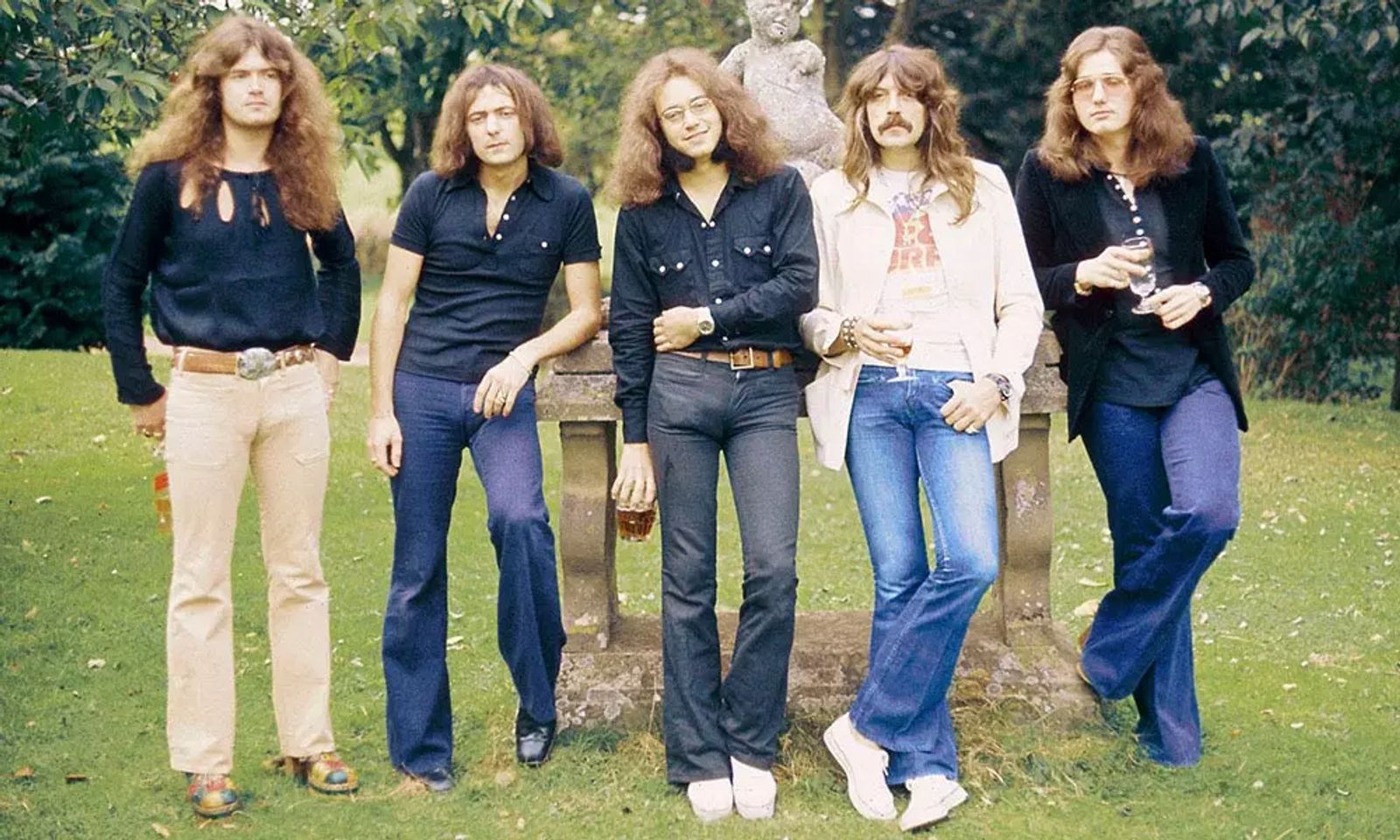
From across the water, the members of Deep Purple watched the casino burn. Thick smoke drifted over Lake Geneva, hanging low above the surface. Bassist Roger Glover later recalled waking from a nightmare repeating the phrase “smoke on the water,” words that would soon become the song’s title. What they witnessed wasn’t metaphorical—it was literal destruction, unfolding in front of them. The band’s recording plans collapsed instantly, and the casino was reduced to ashes.

With nowhere to record and pressure mounting, Deep Purple improvised. They moved from location to location, eventually setting up inside the Grand Hotel, which was closed for the winter. The environment was far from ideal. Mattresses were stacked against walls to control sound, police complaints forced late-night recording sessions, and tension ran high. Yet it was in this uncomfortable, makeshift setting that “Smoke on the Water” took shape—not as a grand artistic statement, but as a straightforward retelling of recent events.

Lyrically, the song reads almost like a news report. Ian Gillan described the fire, the chaos, and even name-checked Frank Zappa directly. There was no attempt to romanticize the situation. That honesty became part of its power. Instead of abstract symbolism or poetic disguise, the band simply told the story as it happened. In doing so, they created one of the most relatable rock narratives ever recorded—musicians caught in the middle of circumstances beyond their control.
Musically, the song’s impact was immediate and unavoidable. Ritchie Blackmore’s opening riff—built from simple parallel fourths—was not flashy or complex. In fact, it was deceptively easy to play, which became part of its legacy. The riff sounded heavy, ominous, and unforgettable, perfectly matching the imagery of fire and smoke. Jon Lord’s distorted organ doubled the guitar line, adding thickness and weight that helped define the emerging hard rock sound of the decade.
At first, “Smoke on the Water” was not released as a single. Deep Purple themselves didn’t initially see it as a standout track. But audiences reacted differently. When the song was eventually released as a single in 1973, it climbed into the Top 5 on the Billboard Hot 100 in the United States, giving the band one of their biggest hits. Radio stations embraced it, and crowds responded instantly when the opening riff rang out live. What began as a documentary-style song became an anthem.
Culturally, the song reshaped rock music’s relationship with simplicity. “Smoke on the Water” proved that power didn’t require complexity. It showed that a few well-chosen notes, delivered with conviction, could be more impactful than technical excess. Guitar stores around the world echoed with beginners learning that riff, often to the frustration of staff—but also as proof of the song’s reach. It became a rite of passage, a universal entry point into rock guitar.
The song also helped solidify Deep Purple’s place among rock’s elite. Alongside Led Zeppelin and Black Sabbath, they formed the unholy trinity of early heavy rock. Yet unlike the fantasy-driven mysticism of Zeppelin or the doom-laden darkness of Sabbath, “Smoke on the Water” was grounded in reality. It captured a moment in time, preserved it in sound, and allowed listeners to step inside it decades later.
Over the years, the song has taken on a life far beyond its original context. It has been covered, referenced, parodied, and taught endlessly. It appears in films, commercials, and sporting events. Even people who don’t know Deep Purple by name often recognize the riff instantly. Its endurance isn’t rooted in nostalgia alone—it’s in the way the song communicates danger, tension, and release in such a direct, human way.
For the band members themselves, “Smoke on the Water” became both a blessing and a burden. While it guaranteed their legacy, it sometimes overshadowed their more complex compositions. Yet even they acknowledged that lightning rarely strikes twice in such a pure form. The song captured who they were at a specific moment: tired, pressured, improvising, and unknowingly creating history.
More than fifty years later, “Smoke on the Water” remains a reminder that great art doesn’t always come from comfort or careful design. Sometimes it comes from watching the world burn, picking up an instrument, and telling the truth about what you saw. In that sense, the song isn’t just about fire on a lake in Switzerland—it’s about turning disruption into creation, and chaos into something that lasts forever.
That is why the riff still echoes. Not because it’s simple—but because it’s real.
Read more stories
- He Was Rejected By His Own Mom And Raised To Think ‘Women Are Evil’ But He Became A Legendary Rockstar
- TOBY KEITH RECORDED SOME OF THE BIGGEST PATRIOTIC ANTHEMS IN COUNTRY MUSIC HISTORY—BUT HIS REAL LEGACY WAS BUILT ON MILITARY BASES WHERE NO CAMERAS WERE ROLLING.
- [Video]: The One-Take Hit That Took Over Rock Radio
- The Box Tops’ “The Letter” Captures Lightning in a Bottle and Redefines Blue-Eyed Soul in 1967-2