
News
Behind the Rhinestones: Why Dolly Parton’s Marriage to Carl Dean Became Her Quietest Triumph
For all the fame, spectacle, and songwriting that made Dolly Parton a global icon, many of her peers see her steadfast protection of her marriage to Carl Thomas Dean as the most revealing measure of who she is.

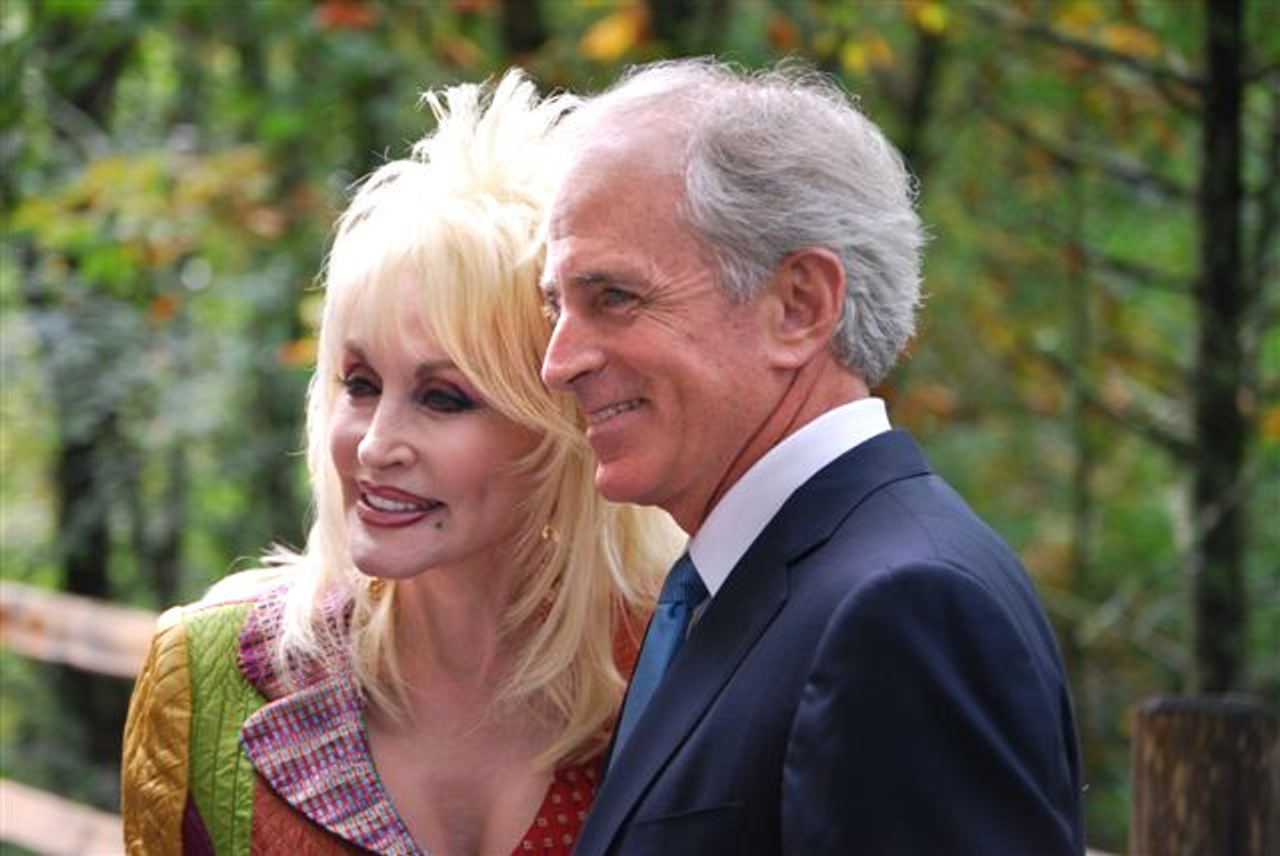
A private life hidden in plain sight
Dolly Parton’s public image has always been larger than life: towering wigs, glittering gowns, quick wit, and a songbook stitched into American culture. Yet for decades, running parallel to that dazzling career, there has been another story she has guarded with unusual discipline. Her marriage to Carl Thomas Dean, rarely displayed and almost never turned into public theater, became one of the most striking acts of restraint in modern celebrity life.
In an industry that often rewards exposure and confessional intimacy, Parton drew a hard line around home. That line did not appear accidental. It was built slowly, carefully, and early, long before social media turned every domestic moment into potential content. The result is that her marriage has endured not because it was marketed as a fairy tale, but because it was protected from becoming one.
The country music world has long admired Dolly Parton’s songs, but among those who understand the cost of fame, her ability to keep a marriage intact without turning it into a brand may be the achievement that speaks most quietly and most powerfully.
The man outside the spotlight
Parton has often spoken about meeting Dean outside the Wishy Washy Laundromat in Nashville in 1964, a story that has become part of her personal mythology precisely because it is so ordinary. Before the stadiums, before the international renown, before Dolly Parton became a singular American institution, there was a young woman new to Nashville and a man who would remain, by choice and temperament, far from the machinery of celebrity.
That contrast shaped the marriage from the beginning. Parton belonged to a profession built on visibility; Dean did not. He became known, paradoxically, through his absence from premieres, award shows, and industry rituals. In a culture that often assumes a famous spouse must be absorbed into the public narrative, Dean’s refusal to play that role helped define the terms of their union.
Why fellow country stars respect the choice
Artists such as Willie Nelson and Reba McEntire, and families like Loretta Lynn’s, know better than most what relentless touring, publicity demands, and public expectation can do to a private life. Country music may celebrate home, commitment, and roots in its songs, but the business itself can strain every one of those ideals. Long stretches on the road, constant attention, and the pressure to always be available can turn intimacy into logistics.
That is why Parton’s peers have often viewed her devotion with a special kind of respect. To them, this is not sentimentality. It is discipline. It is saying no to invitations, appearances, and momentum when someone at home needs you more. It is understanding that the strongest statement a superstar can make is sometimes to disappear for the evening, return to Tennessee, and be fully present in a life that does not require applause.
The boundaries that made endurance possible
Parton and Dean’s marriage appears to have survived because they designed it around boundaries rather than access. She built one of the most recognizable personas in entertainment, but she did not hand over the interior of her home to the public. That separation mattered. It allowed her to perform Dolly Parton as an artist while preserving a part of herself that remained simply a wife, a partner, and a woman tied to the habits and values she carried from East Tennessee.
Those boundaries were not just about secrecy for secrecy’s sake. They created a sanctuary. The less the marriage was forced to carry the weight of public consumption, the more room it had to remain ordinary in the best sense of the word. Ordinary routines, private jokes, familiar rooms, and unglamorous responsibilities can be impossible to defend once fame enters the front door. Parton seems to have understood early that if she wanted lasting stability, some doors had to remain closed.
Care over spectacle in the later years
As Parton and Dean moved into old age, the meaning of that privacy deepened. Public attention often focuses on red carpets and televised moments, but the deepest commitments in a marriage are usually measured elsewhere: in quiet evenings, in canceled plans, in staying home because a spouse’s age or health calls for it. That kind of devotion rarely photographs well, and perhaps that is exactly why it carries such moral force.
For peers who have watched the entertainment world fracture relationships over far less, Parton’s willingness to set aside the superstar role and tend to the daily realities of marriage has become especially resonant. It suggests that behind the legendary performer is a woman still honoring the bond she made long before global fame reached its peak. In that sense, the private care is not separate from her legacy. It is part of it.
The anchor to her Smoky Mountain self
Parton has always spoken with reverence about her Tennessee upbringing and the values formed in the Smoky Mountains. Much of her career has involved translating that background into music, philanthropy, humor, and public warmth. But the marriage to Dean may be the most concrete expression of those roots. It represents continuity in a life otherwise defined by extraordinary transformation.
That is part of why the story resonates so strongly inside country music. The catalog is enormous, the look is unforgettable, and the career is historic. But for those who know the difference between image and foundation, the enduring marriage tells them something essential about Dolly Parton’s character. It suggests that after all the acclaim, she never lost sight of the person she was before the world started watching.
Quick Facts
- Subject: Dolly Parton and Carl Thomas Dean
- How they met: Outside the Wishy Washy Laundromat in Nashville
- Year they met: 1964
- What defines the marriage publicly: Strict privacy and clear boundaries around home life
- Why peers admire it: It reflects discipline, loyalty, and a refusal to let fame overrun marriage
- Setting often associated with their private life: Their Tennessee home and farm
Image credits: United States Congress / Wikimedia Commons / Public domain; Curtis Hilbun / Wikimedia Commons / CC BY 3.0; Moeller Talent, Inc. Nashville (management) / Wikimedia Commons / Public domain.

