
News
Before the Breakthrough, Kid Rock Was a Young Single Father in Detroit
Long before fame and arena crowds, Bob Ritchie was a 22-year-old in suburban Detroit juggling diapers, court dates and studio time after a devastating breakup left him raising his infant son alone.


A romance that began in adolescence unraveled in painful fashion
By late 1993, Bob Ritchie — still years away from becoming a household name as Kid Rock — was facing a private collapse. His relationship with Kelley South Russell had begun when they were kids, stretching back to eighth grade, and for much of his teens and early adulthood it formed the center of his domestic life as well as his emotional one.
By his early twenties, Ritchie was not living the fantasy usually attached to aspiring musicians. He was trying to support a young family in suburban Detroit, caring for three children in the household: one of Russell’s from before, and two born during their years together. Then came the paternity doubts, followed by testing, and the life he thought he was building broke apart almost overnight.
The DNA test changed everything
The most shattering result was not abstract. It was intimate, daily, and cruelly specific. The baby girl he had held, comforted and rocked to sleep was not his biological child. Only his son, Robert James Ritchie Jr., born June 14, 1993, was confirmed to be his by blood.
After nearly a decade together, the sense of betrayal was too deep for the relationship to survive. Ritchie ended it. What followed was not a clean separation but a hard, disorienting rupture, one that left him not just heartbroken but suddenly responsible for an infant at an age when many of his peers were still drifting between jobs, apartments and nights out.
The little domestic world he had been trying to hold together collapsed, and what remained was a baby boy who needed him every day.
Left with a six-month-old on his own
When Russell left with the other two children and left six-month-old Bobby Jr. on the front steps, Ritchie took in his son and kept him. It was a stark turning point: the aspiring rapper and musician, dropped by Jive Records and struggling to establish himself, was now a single father in practical, immediate terms.
He did have another option. His family in Romeo, Michigan, was comparatively well-off, and he could have handed off the child’s care. He did not. Instead, he chose to raise Bobby Jr. himself, a decision that would define this chapter of his life far more than any club appearance or industry disappointment.
Custody battles and survival work replaced any illusion of an easy youth
Ritchie fought in court and ultimately won sole custody of his son. That legal struggle came with costs, and those costs arrived at the same moment his music career was offering little security. There was no glamorous starving-artist mythology in the reality of it — only bills, baby supplies and the pressure of trying to keep going.
To cover formula, diapers and legal fees, he sold homemade cassettes from the trunk of his car. He also cleaned Bob Ebeling’s White Room Studios in Detroit in exchange for recording time, a barter arrangement that captures the precariousness of his life at the time. Music was still the goal, but fatherhood determined the schedule and the stakes.
The studio became both workplace and nursery
One of the most vivid images from this period is not of Kid Rock the future provocateur, but of Bob Ritchie the exhausted young dad. In a cramped control room, he would give a bottle to his son — nicknamed June Bug — and then step back to the microphone to record. The scene says almost everything about the contradiction of those years: ambition and tenderness, hustle and fatigue, performance and responsibility, all compressed into the same small space.
While many 22-year-olds were still figuring out adulthood in loose, reversible ways, Ritchie was living a version of it that allowed no such luxury. His days were shaped by custody, childcare, odd jobs and relentless effort. The work of becoming Kid Rock did not happen before family life interrupted him; it happened inside the interruption.
Why this chapter matters in the Kid Rock story
Kid Rock’s public image would later harden into something loud, defiant and highly stylized, but this earlier period reveals a more vulnerable and grounded reality. Before major commercial success, before the branding and bluster, there was a young Detroit-area musician trying to stay afloat after romantic betrayal and choosing not to abandon his son.
That does not erase the contradictions of the public figure he would become, nor does it need to. But it does add dimension. The years after the breakup with Kelley South Russell were not merely a prelude to fame. They were a crucible in which Ritchie’s persistence, pride and sense of obligation were tested in the most ordinary and unforgiving ways possible: one bottle, one cassette, one studio shift, one court hearing at a time.

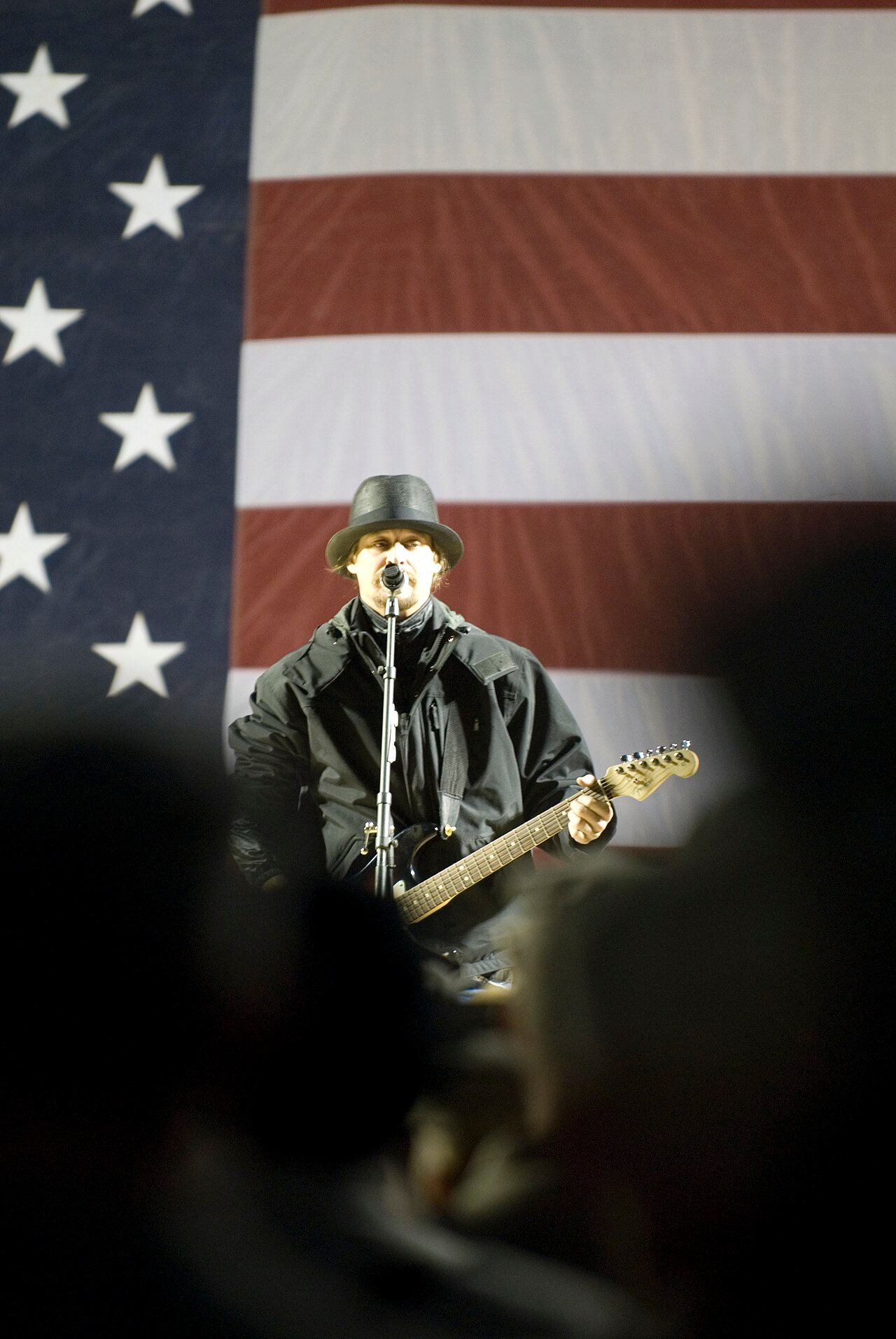
Quick Facts
- Real name: Bob Ritchie
- Stage name: Kid Rock
- Son: Robert James Ritchie Jr.
- Son’s birth date: June 14, 1993
- Place: Detroit area, Michigan
- Key struggle: Single fatherhood while pursuing music and fighting for custody
Image credits: Cpl. William Howard, Combat Aviation Brigade, 1st Infantry Division / Wikimedia Commons / Public domain; U.S. Air Force photo/Staff Sgt. Michael R. Holzworth / Wikimedia Commons / Public domain; Spc. Kiyoshi Freeman / Wikimedia Commons / Public domain.