
Celebrities & Music
Bee Gees’ “I Started a Joke” Captivates the World with Its Poignant Simplicity and Soul-Stirring Honesty (1968)
The Bee Gees’ song “I Started a Joke” is celebrated for its emotional depth and simplicity, marking a significant moment in their musical evolution and influencing future artists.

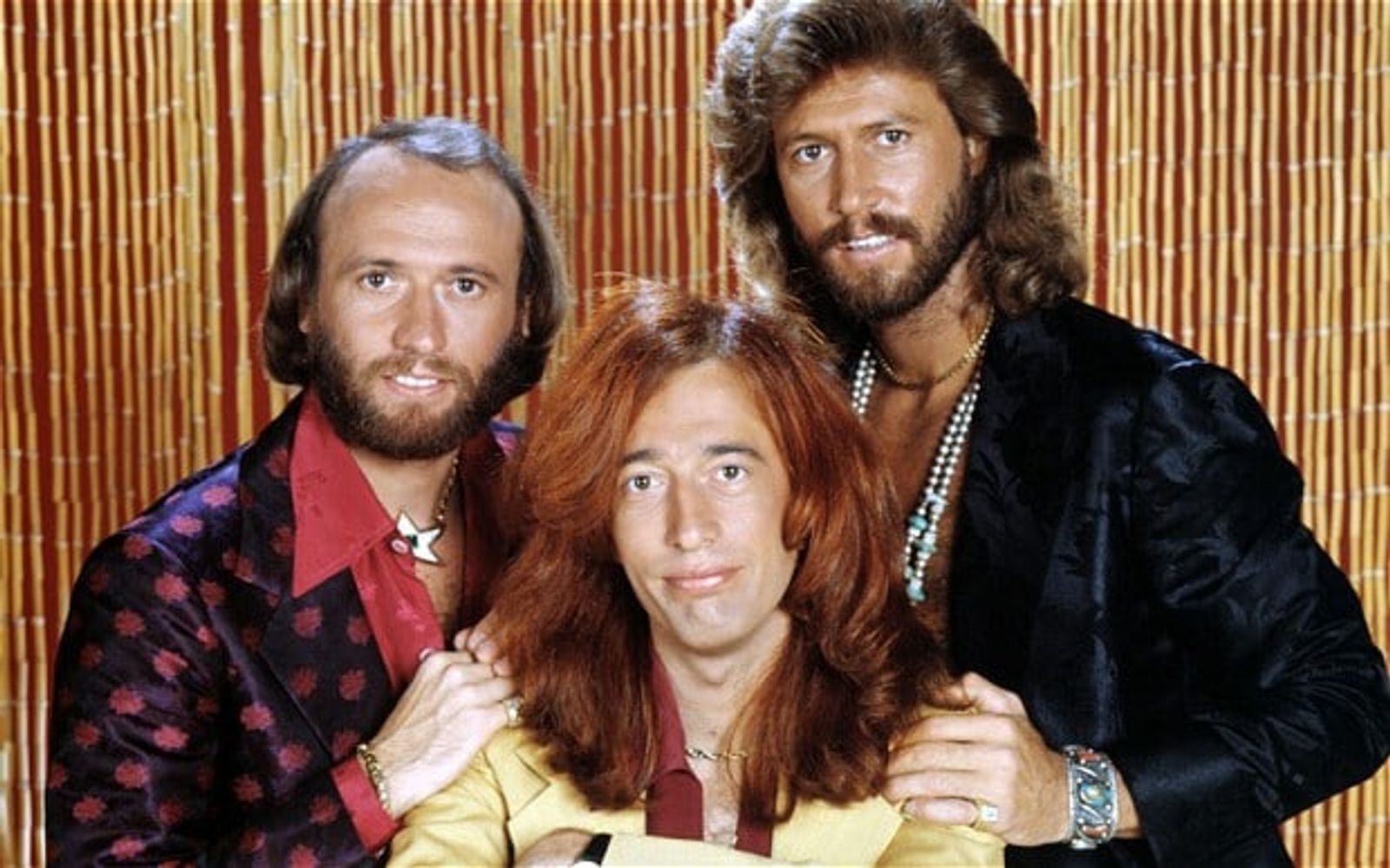
Released in 1968 as part of the Bee Gees’ album Idea, “I Started a Joke” swiftly became one of the group’s most emotionally resonant songs, earning its place among their most enduring classics.
Though never released as a single in the UK, the track achieved massive success globally, particularly in the United States, where it peaked at number 6 on the Billboard Hot 100.
With its introspective lyrics and haunting melody, it marked a shift in the Bee Gees’ songwriting, proving that their appeal extended far beyond pop harmonies and into the realm of deeply personal storytelling.
By the time “I Started a Joke” emerged, the Bee Gees were already on an upward trajectory, riding the wave of international acclaim that followed their 1967 breakthrough.
Hailing from the Isle of Man and raised in Manchester before emigrating to Australia, the Gibb brothers—Barry, Robin, and Maurice—had honed their signature vocal blend from childhood.
It was Robin’s distinct vibrato and melancholic tone that gave “I Started a Joke” its raw emotional core, setting it apart from their earlier hits and affirming the trio’s gift for musical vulnerability.
The inspiration behind the song has long been a topic of intrigue.
Robin Gibb once mentioned that the idea came to him on an airplane, watching the sunrise through a window, evoking the sensation of a joke taken too far, a laugh misunderstood, and the subsequent isolation it causes.
That emotional miscommunication is embedded in every lyric, suggesting a narrative of regret, loss, and unintended consequences.
Unlike the abstract psychedelia of the late ’60s, this was a song grounded in universal human feeling.
Recorded at IBC Studios in London, “I Started a Joke” benefited from a sparse but effective arrangement.
The production, helmed by Robert Stigwood and the Gibb brothers themselves, emphasized Robin’s haunting lead vocal, with Barry and Maurice providing harmonies that shimmered like afterthoughts of sorrow.
The subtle use of Mellotron and orchestration gave the track a timeless, otherworldly feel, enhancing its meditative atmosphere without overwhelming the vocal performance at its center.
The song’s reception was immediate and far-reaching.
In addition to its Billboard success in the U.S., it reached number one in Canada, Brazil, and Australia.
Radio stations played it endlessly, and listeners connected to its lyrics as a quiet anthem of sorrow.
In a decade dominated by protest music and experimentation, “I Started a Joke” stood out for its stark simplicity—there were no political messages, just the pain of emotional fallout rendered in three aching minutes.
Culturally, the song broadened the Bee Gees’ image.
No longer just creators of catchy pop, they were now recognized as poets of sadness, capable of capturing the internal landscapes of their listeners.
It showed that vulnerability could sell records, and that heartbreak, when artfully articulated, could transcend trends.
This song became a turning point, bridging pop and introspective balladry with profound impact.
For Robin Gibb, in particular, “I Started a Joke” became a defining moment.
His uniquely sorrowful voice, often overshadowed by Barry’s falsetto in later years, was thrust into the spotlight.
The song not only expanded the Bee Gees’ reach internationally but also solidified Robin’s place among the great vocal interpreters.
Concertgoers would request the song by name for decades, drawn to the way he could make melancholy sound beautiful.
The song’s influence extended far beyond the Bee Gees’ discography.
It inspired generations of singer-songwriters to embrace emotional honesty, and its stripped-down, introspective style paved the way for soul-searching ballads of the ’70s and ’80s.
Many young artists would later cite it as a formative influence, both musically and lyrically.
“I Started a Joke” has also been covered by a diverse range of artists.
From Faith No More’s reimagining on their 1995 compilation Who Cares a Lot?, to versions by Robbie Williams and The Wallflowers, each interpretation adds new emotional texture.
Yet all remain faithful to the melancholic essence of the original, proving the song’s ability to resonate across genres and generations.
Around the time of the song’s release, the Bee Gees faced their first serious creative tensions, particularly between Robin and Barry.
Despite internal friction, the success of “I Started a Joke” served as a unifying force, reaffirming the strength of their collaboration even as individual identities began to emerge more clearly within the group.
In the decades since its release, the song has remained a staple of classic hits radio and retrospective compilations.
It is often cited as one of the Bee Gees’ most iconic recordings, not because it dazzles with innovation, but because it speaks so quietly and clearly to regret, misunderstanding, and loneliness.
“I Started a Joke” also anticipated the band’s later reinventions.
It demonstrated their capacity for change—from orchestral pop to disco to soft rock—while retaining emotional authenticity.
It proved they were not trend-chasers, but storytellers capable of growth without losing their core.
Following Robin Gibb’s passing in 2012, the song took on new meaning.
Tributes poured in, many citing “I Started a Joke” as a symbol of his artistic legacy.
Performed at his memorial service, its lyrics carried the weight of real-world sorrow, speaking for fans who had long found comfort in his voice.
Ultimately, “I Started a Joke” endures not just as a Bee Gees hit, but as a cultural touchstone.
Its power lies in its humility, its refusal to overexplain, and its ability to make listeners feel seen in their quietest moments.
It doesn’t shout its message.
It whispers—and that whisper continues to echo, generation after generation.
Read more stories
- He Was Rejected By His Own Mom And Raised To Think ‘Women Are Evil’ But He Became A Legendary Rockstar
- TOBY KEITH RECORDED SOME OF THE BIGGEST PATRIOTIC ANTHEMS IN COUNTRY MUSIC HISTORY—BUT HIS REAL LEGACY WAS BUILT ON MILITARY BASES WHERE NO CAMERAS WERE ROLLING.
- [Video]: The One-Take Hit That Took Over Rock Radio
- The Box Tops’ “The Letter” Captures Lightning in a Bottle and Redefines Blue-Eyed Soul in 1967-2