
Celebrities & Music
AT THIRTEEN, MARTY STUART LEFT MISSISSIPPI TO PLAY MANDOLIN FOR LESTER FLATT. BY THE TIME HE CAME HOME, HE WAS CARRYING PIECES OF COUNTRY MUSIC HISTORY IN HIS HANDS.
The article discusses Marty Stuart’s journey from a young boy in Mississippi to becoming a significant figure in country music history, highlighting his experiences with legends like Lester Flatt and Johnny Cash, and his role as a keeper of country music’s legacy.

Marty Stuart was still a kid in Philadelphia, Mississippi when bluegrass started pulling harder than school ever did.
He had learned guitar and mandolin young. He played with a local gospel group called the Sullivans. The boys could hold their own, but nobody was mistaking them for Nashville yet. They were just children from Mississippi trying to play the music they loved well enough that somebody important might notice.
Then Roland White noticed.
White was playing mandolin for Lester Flatt’s band, the Nashville Grass. In 1972, he heard Marty and invited him to sit in at a show in Delaware. Marty was thirteen years old. Lester Flatt had already spent decades helping define bluegrass beside Earl Scruggs. To a boy who had grown up on those records, being asked to play with him was not an opening act. It was like being called into the room where the whole history of the music was still alive.
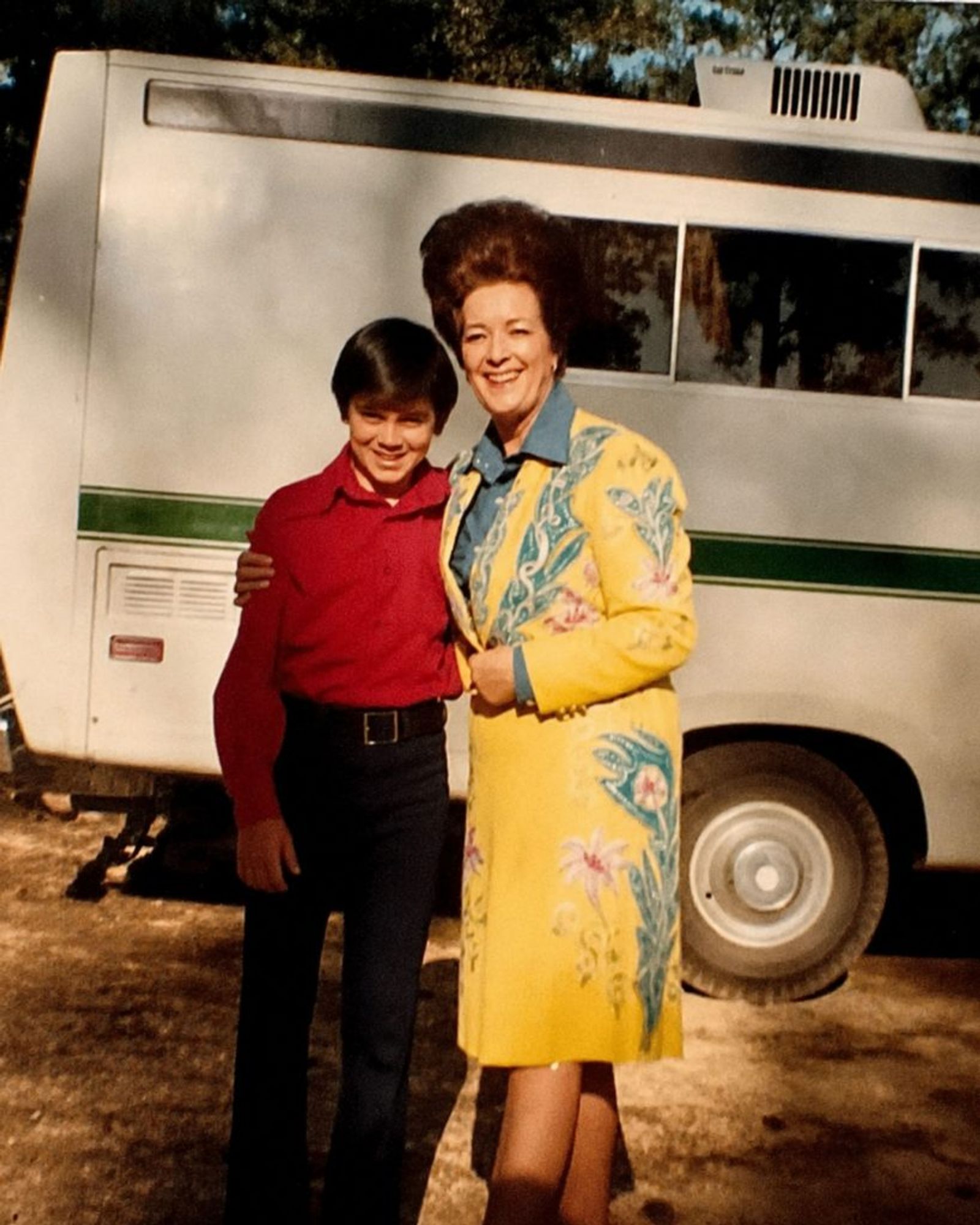
Marty did not go home.
He joined Flatt’s band and spent the next years on buses, backstage floors, festival grounds, and long drives between shows. He was young enough to still be in school, but his classroom had become the road. Lester Flatt taught him the discipline of a bandstand. Curly Seckler, Roland White, and the older players taught him how a song had to sit before it could breathe. Marty was not just learning licks. He was learning how country music carried itself.
Then Lester Flatt died in 1979.
Marty was twenty.
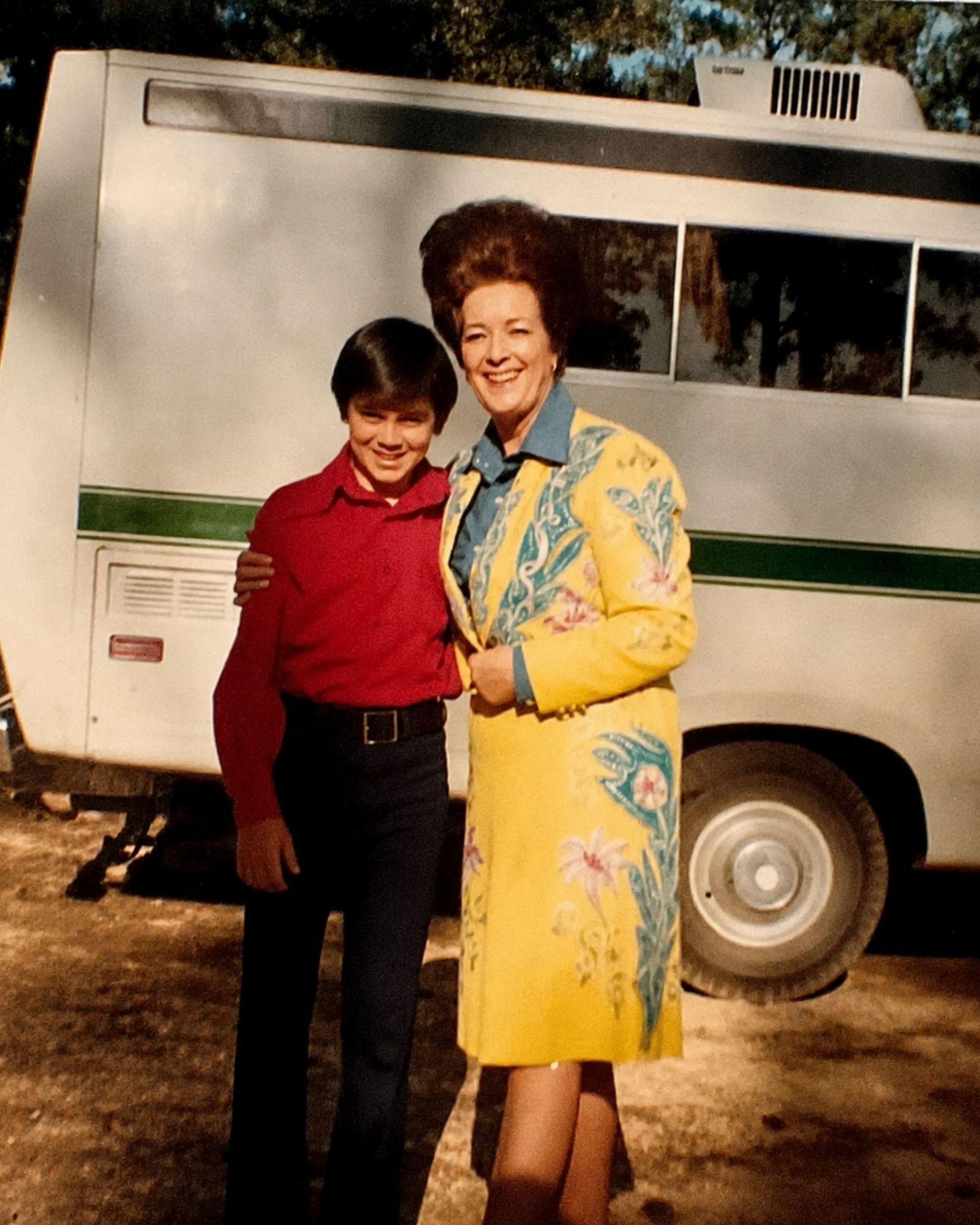
A year later, Johnny Cash asked him to join his road band. That took him into another branch of the same family tree — another man who had lived long enough to become more than a singer, another stage where history kept showing up in boots and black clothes.
Decades later, Marty Stuart became known for more than the records he made himself.
He became one of country music’s keepers. Old guitars. Nudie suits. handwritten lyrics. stage clothes. photographs. the kind of objects that would have been thrown in a closet, sold off, or forgotten after somebody died. Marty kept collecting them because he had learned early what happens when the people who built the music are gone.
The deepest part of this story is not only that Marty Stuart left home at thirteen to play with Lester Flatt. It is that he spent the rest of his life making sure the history he touched did not vanish behind him.
A Mississippi boy with a mandolin. A Delaware stage. Roland White listening. Lester Flatt’s band bus. Johnny Cash in black. Old guitars and handwritten lyrics. A closet full of country music’s past rescued before it could be lost. Marty Stuart did not just inherit country music. He learned to hold it carefully in both hands.
Read more stories
- He Was Rejected By His Own Mom And Raised To Think ‘Women Are Evil’ But He Became A Legendary Rockstar
- TOBY KEITH RECORDED SOME OF THE BIGGEST PATRIOTIC ANTHEMS IN COUNTRY MUSIC HISTORY—BUT HIS REAL LEGACY WAS BUILT ON MILITARY BASES WHERE NO CAMERAS WERE ROLLING.
- [Video]: The One-Take Hit That Took Over Rock Radio
- The Box Tops’ “The Letter” Captures Lightning in a Bottle and Redefines Blue-Eyed Soul in 1967-2