
Stories
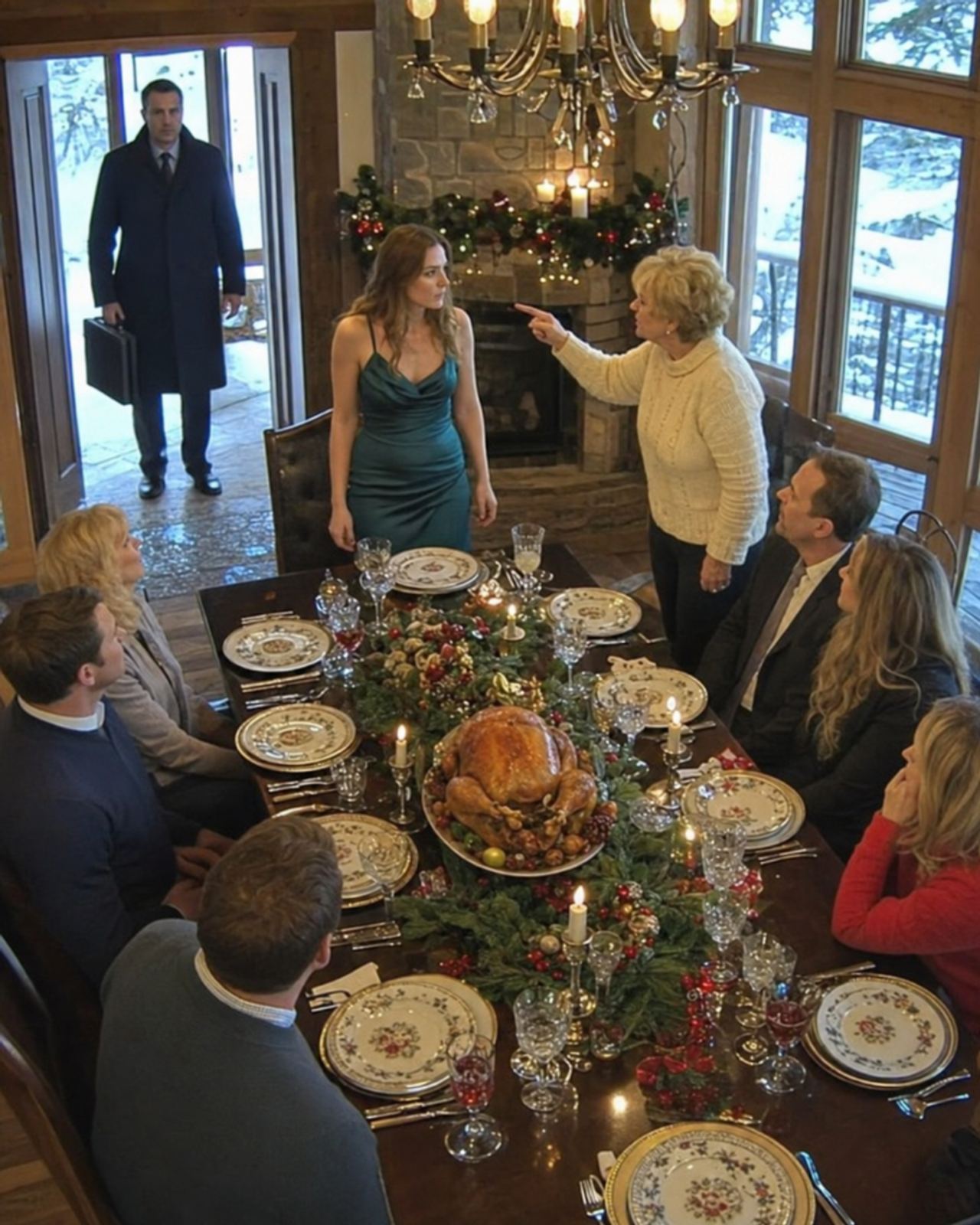
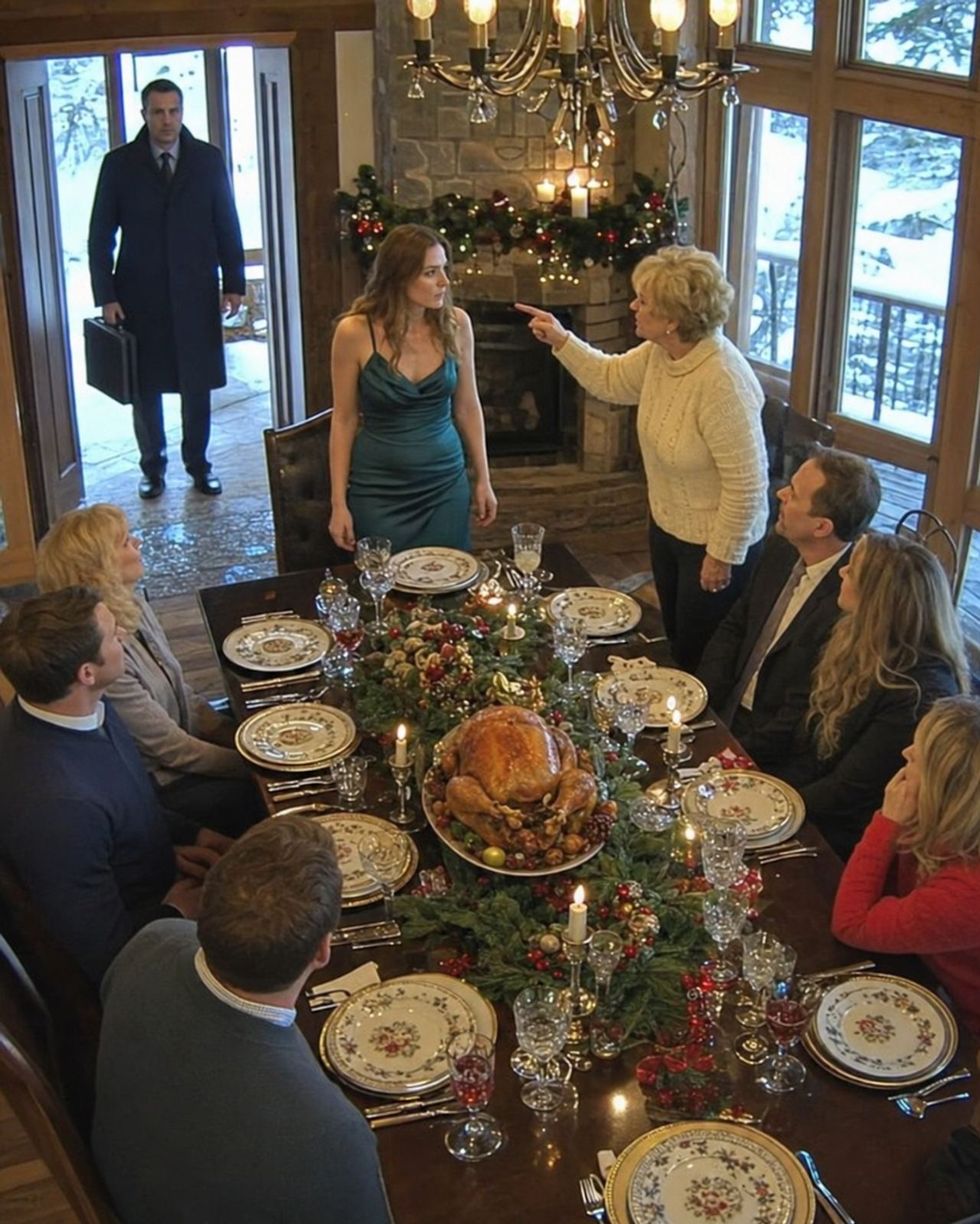
At the Thanksgiving party, my grandma demanded to know why an elderly couple was living in the million-dollar vacation home she bought for me, and when I said I was homeless right now, the room went silent because the lawyer had just arrived.
At a Christmas Eve dinner in Aspen, a grandmother reveals that her granddaughter’s million-dollar chalet has been secretly rented out by the parents, exposing years of financial manipulation and lies. The confrontation forces the family’s hidden control over Isabella’s life into the open as the grandmother calls in a lawyer.

“Isabella, answer me. Why are there strangers living in the alpine chalet I bought for you three years ago?”
My grandmother Margaret’s voice cut through the warmth of Christmas Eve dinner so cleanly that, for one second, even the candles seemed to stop moving.
The crystal glass she set down on the table did not break. It landed with one sharp, controlled sound against the white linen, and somehow that was worse. A crash would have given everyone permission to react. Her calm gave us nowhere to hide.
Outside, snow fell softly over the pines outside Aspen, Colorado, floating past the tall windows in flakes as gentle as ash. Inside, the dining room glowed with expensive holiday light. Amber candles burned in silver holders. Garland twisted around the mantel. A fire moved behind the stone hearth with the quiet confidence of something owned, maintained, and admired.
Everything in that room looked safe.
Nothing was.
My father, Ryan Hansen, stopped laughing with his fork still halfway to his mouth. The smile on his face did not fall all at once. It loosened, twitched, and then vanished by degrees, like a man realizing a camera had caught him doing something he could not explain.
My mother, Elizabeth, went still beside him. She had been reaching for her wineglass, but her fingers froze an inch from the stem. Her eyes widened, not with confusion, but with recognition.
That was the first thing I noticed.
She knew what Grandma was talking about.
My sister Sydney sat across from me in a cream cashmere sweater, her hair curled in perfect waves, her diamond ring flashing every time she moved her hand. A moment earlier, she had been showing our cousin pictures from a resort trip in Vail. Now she looked down at her phone and then up at Mom, quick and sharp, like she was waiting for instructions.
I sat there in my thin gray sweater, my knees pressed together under the table, my hands cold despite the heat pouring from the fireplace. My boots were still damp from the walk up the long driveway. I had parked at the bottom because my old car could not handle the icy curve near the house.
I looked at Grandma, then at my parents.
“Grandma,” I said, and my voice came out smaller than I wanted it to. “What are you talking about?”
She turned her head toward me.
For the first time since I had arrived that evening, she really looked at me. Not at my seat. Not at my plate. Not at the family’s quiet arrangement of who belonged where.
At me.
Her expression changed. The sharpness did not leave her face, but something else moved behind it. Alarm. Suspicion. Maybe pity.
“I’m talking about the alpine chalet on Maroon Creek Road,” she said slowly. “The one I purchased in your name three years ago.”
The words made no sense.
They were English. They were simple. They were arranged in a sentence I could understand.
But my life had no room for a sentence like that.
“I don’t own a chalet,” I said. “I live in a basement apartment on the east side.”
No one breathed.
The table was long enough to seat fourteen, though only seven of us were there that night. The empty chairs made the silence feel larger. Silverware shone beside untouched plates. A Christmas roast sat at the center of the table, glazed and perfect, surrounded by rosemary, cranberries, and roasted vegetables arranged like a magazine photo.
I remember staring at that roast because it gave me something to look at besides my parents’ faces.
My grandmother’s eyes narrowed.
She did not look confused anymore.
She turned slowly toward my father.
“Ryan,” she said. “You told me you were managing it for her.”
My father swallowed. I watched his throat move above his collar.
“Mother,” he said, forcing out a laugh. “You’ve been traveling for months. You just got back from Europe. I think there’s been a misunderstanding.”
Grandma did not blink.
“You told me the renters were temporary,” she continued. “You told me the money was going into a trust for Isabella.”
My mother’s hand moved to her necklace. She always touched her pearls when she needed to look fragile.
“Margaret,” she said softly, “maybe we should discuss this after dinner.”
“No,” Grandma said.
One word.
The whole room tightened around it.
My father set his fork down. Carefully. Too carefully.
“It’s a corporate retreat,” he said. “A short-term arrangement. The property has expenses. Taxes, maintenance, snow removal, utilities. We’re managing the overhead so Isabella won’t have to.”
I almost laughed.
Not because it was funny, but because the words sounded exactly like him.
Managing.
Overhead.
For Isabella’s future.
My father could put a clean shirt on anything ugly. He could turn selfishness into strategy, neglect into discipline, and control into care. He had done it my whole life.
Grandma leaned forward, both hands resting on the carved arms of her chair.
“I went there yesterday,” she said.
My father’s face changed.
It was slight. A twitch at the corner of his eye. A tightening around his mouth.
But I saw it.
So did Sydney.
Grandma kept speaking.
“The couple inside told me they were not corporate guests. They said they are Brandon’s parents. Sydney’s in-laws.” Her voice dropped. “They said they pay six thousand dollars a month in rent directly to Ryan Hansen.”
The room went strange around me.
Six thousand dollars a month.
That number did not belong at the same table as my life.
That morning, I had stood under the fluorescent lights of a gas station on East Fourth Street, staring at my banking app and deciding whether I could afford to put ten dollars in my tank. I had fifteen dollars and twenty-six cents to last until Friday. My phone bill was late. My electric bill was sitting unopened on my kitchen counter because opening it would not make money appear.
Six thousand dollars a month.
I looked at my father.
He looked away.
I looked at my mother.
She pressed her napkin to her lips, but it did not hide the panic in her eyes.
Then I looked at Sydney.
Her face had gone pale beneath the warm light of the chandelier. Her lips parted, then closed again. She was not surprised. She was scared.
That was the moment the first crack opened.
For most of my life, I had believed I was the unlucky daughter.
Sydney was the polished one, the one who knew how to move through country clubs and charity events and influencer brunches with a glass of champagne in her hand and a perfect caption already half-written in her mind. She had always been presented as evidence that our family worked.
I was the exception.
I was the one whose car broke down. The one whose scholarships fell through. The one whose bills multiplied. The one who was “creative,” which in my father’s mouth meant unreliable. The one who needed help, but never the kind that actually changed anything.
My parents never said I was a failure in one clean sentence. They were too careful for that.
They said I was overwhelmed.
They said I needed guidance.
They said I did not understand money.
They said I had a tendency to make emotional decisions.
They said these things gently, usually while doing something that made my life smaller.
And because they said it like love, I believed them.
I believed them when my college plans collapsed.
I believed them when my medical debt swallowed my credit.
I believed them when they told me not everyone was meant for big cities, big schools, big dreams.
I believed them when they said staying near family was safer.
Sitting at that table, hearing Grandma talk about a chalet I had supposedly owned for three years, I felt something inside me stop bending.
It did not happen loudly.
I did not scream.
I did not throw my glass or shove back from the table in some dramatic burst.
Instead, the room sharpened.
The red of the cranberries became too bright. The flame of each candle stood apart from the others. I could hear the fire, the faint hum of the heating system, the tiny scrape of Sydney’s ring against the stem of her glass.
A cold clarity moved through me.
It felt like standing outside in the snow without a coat and realizing the cold had been there all along.
I picked up my napkin, folded it once, then twice, and placed it neatly beside my plate.
My father watched the movement.
So did my mother.
“Dad,” I said.
My voice was steadier than I felt.
He looked at me with warning in his eyes.
I ignored it.
“Did you sign a lease with Brandon’s parents in my name?”
My mother leaned forward.
“Bella,” she said quickly, “sweetheart, this really is not the time.”
“It is exactly the time,” I said.
Her mouth opened, then closed.
I kept my eyes on my father.
“Did you sign a lease with Brandon’s parents in my name?”
Ryan shifted in his chair. “It’s complicated.”
“No,” I said. “It’s a yes-or-no question.”
My grandmother’s face did not move, but her attention sharpened.
Sydney picked up her water glass and put it down again without drinking.
My father gave me the look he always used when he wanted me to remember my place. Not anger, exactly. Disappointment. The kind of disappointment that asked me to apologize before I knew what I had done.
“You’re upset,” he said.
“I’m asking a question.”
“You’re emotional.”
“I’m still asking.”
He inhaled through his nose.
“We were protecting the asset,” my mother said, stepping into the silence. Her voice had gone high and smooth, the voice she used at fundraisers when a donor asked an inconvenient question. “You know how paperwork overwhelms you. After the accident, everything was so difficult for you. We didn’t want to burden you with something that large.”
There it was again.
Burden.
The family word for anything they wanted to keep out of my hands.
I turned toward her.
“Did someone sign my name?”
My mother looked down.
Sydney spoke before anyone else could.
“You signed a power of attorney,” she said. “Years ago. Remember? After the car accident. You gave Dad authority to handle some things.”
Her tone was defensive, but underneath it was something else. A test.
She wanted to know how much I remembered.
The accident had happened four years earlier, on a freezing February evening on I-70, when a delivery truck slid across black ice and clipped the side of my car. I walked away, technically. That was how my father described it. “She walked away,” as if walking away meant nothing had been damaged.
But I spent months in physical therapy. My back seized every time it rained. I lost freelance clients because I missed deadlines from pain and appointments. My savings disappeared in co-pays and repairs. My credit score fell like a stone.
When I asked for help, my parents said they were cash poor.
Cash poor.
I could still hear my mother at my kitchen table, holding my hand with both of hers.
“We wish we could do more, Bella. We really do. But your father has been moving money around, and things are tight right now.”
Things had been tight.
For me.
I looked at Sydney across the Christmas table.
“The accident where they told me they couldn’t help with my medical bills?” I asked. “That accident?”
Sydney’s eyes flicked to our father.
I let the silence stretch.
Then I lied.
“I revoked that power of attorney the day I turned twenty-five.”
My father flinched.
It was small.
It was enough.
I had not revoked it. Not then. I had not even known I needed to. But the lie did exactly what I needed it to do. It stripped the room of their performance for half a second, and in that half second, I saw the truth.
My father knew.
My mother knew.
Sydney knew enough.
I felt the last piece of my old life give way beneath me.
They were not just controlling.
They were not just selfish.
They had used my injury, my confusion, and my trust as tools.
For the first time in my life, I looked at my father and did not see authority.
I saw a man caught holding someone else’s future behind his back.
“Let’s be clear about what burden means,” I said.
My voice was low now. Calm. Almost quiet.
That scared them more than yelling would have.
“I live in a basement apartment on Fourth Street. It smells like mildew when it rains. The ceiling drips near the laundry closet, and my landlord keeps saying he’ll send someone next week.”
My mother closed her eyes.
I kept going.
“I drive a car that doesn’t start when the temperature drops below freezing. I have medical debt from an accident you told me you couldn’t help with because the family was cash poor. I have skipped physical therapy appointments because I couldn’t afford the co-pay.”
“Isabella,” my father warned.
“No.”
The word came out clean.
I had never said it to him like that before.
His eyebrows lifted.
I turned to my mother.
“You helped me with rent once. You paid a five-hundred-dollar deposit four years ago, and you have brought it up every Thanksgiving since.”
Elizabeth’s face reddened.
“We were trying to teach you responsibility.”
“You were teaching me shame.”
Sydney made a small sound.
I turned to her.
She was holding her phone under the table now, thumb moving fast.
“Sydney,” I said.
She froze.
“Put the phone down.”
“I’m not doing anything.”
“Then put it down.”
She stared at me, offended by the fact that I had spoken to her like an equal.
Slowly, she placed the phone beside her plate.
I nodded toward it.
“Deleting location tags?”
Her face went flat.
My father’s eyes moved to her.
That was when I understood there were layers to this. Not one lie. Not one document. Not one mistake they could call a misunderstanding later.
A structure.
A system.
A family business built partly on keeping me uninformed.
“How much is the rent on your downtown condo?” I asked Sydney.
Her chin lifted.
“That is none of your business.”
“Actually,” I said, “it is.”
My father leaned back in his chair. “Careful.”
I looked at him.
“I saw the statement on your desk last Christmas.”
For a moment, no one moved.
“You left it under the club renewal forms,” I said. “Hansen Family Trust. Thirty-two hundred dollars a month. Paid directly to the property management company for Sydney’s condo.”
Sydney’s mouth tightened.
I almost smiled.
Not because I was happy. Because all these years, they had called me irresponsible while hiding their expenses in plain sight, confident I would never think I had the right to understand what I saw.
“The same trust,” I continued, “that apparently couldn’t afford my physical therapy.”
Ryan’s face turned a mottled red.
“Sydney is building a brand,” he said. “That requires investment.”
There were so many absurd things in that sentence that nobody spoke.
A brand.
Investment.
My pain had been a budget issue.
Sydney’s lifestyle had been a strategy.
“You chose graphic design,” my father said. “We warned you it wasn’t lucrative.”
I looked at the chandelier, the garland, the crystal glasses, the house full of carefully selected furniture my mother liked to call timeless.
“And that justifies taking a million-dollar property from me?”
“We didn’t take it,” he snapped. “We managed it.”
The silverware jumped when his hand hit the table.
Not hard enough to be called anything dramatic.
Hard enough to remind everyone that Ryan Hansen did not like being challenged in his own house.
“We managed it,” he repeated. “You were unstable after the accident. You were anxious. You were depressed. You were in no condition to handle major assets. You would have sold it, or neglected it, or let some artist boyfriend talk you into something stupid.”
I stared at him.
It was amazing how quickly love could turn into paperwork when money was involved.
Grandma Margaret finally spoke.
“Safe?” she asked.
Her voice had changed again.
It was lower now. Dangerous in the way quiet water looks dangerous when you realize you cannot see the bottom.
My father turned toward her.
She did not sit back. She leaned forward, pearls gleaming at her throat.
“You charged Brandon’s parents six thousand dollars a month,” she said. “Seventy-two thousand dollars a year. For three years, that is over two hundred thousand dollars before expenses.”
Ryan’s jaw flexed.
Grandma held his gaze.
“So where is it?”
No one answered.
The fire crackled.
From somewhere near the kitchen, I heard a soft clink, probably the caterer setting down a tray and realizing she had walked into the wrong kind of silence.
Grandma’s eyes did not leave my father.
“Where is Isabella’s money, Ryan?”
My mother made a sound.
It was small, almost like the beginning of a sob, but it was too controlled. She had not broken yet. She was choosing when to look broken.
“We can explain,” she whispered.
“Then explain,” Grandma said.
My father pushed his chair back and stood.
At another time, in another version of my life, his height might have worked. He was a handsome man in a tailored navy suit, broad-shouldered, silver at the temples, the kind of man people trusted at banks and charity boards. He looked like someone who handled things.
That was what made him so effective.
He did not look like someone who would take from his daughter.
He looked like someone who would advise other people about integrity.
“You have no idea what it costs,” he said.
His voice was no longer smooth. The polish had cracked.
“What what costs?” Grandma asked.
“Our life,” he snapped. “This family. The clubs. The boards. The events. The vehicles. The memberships. The donations expected at every fundraiser. The appearances.”
The word hung there.
Appearances.
My mother lowered her napkin.
“Ryan,” she whispered, but he was past being managed.
“People expect things from the Hansen family,” he said. “You know that, Mother. You built half of it.”
Grandma’s face hardened.
“I built a reputation,” she said. “Not a disguise.”
He laughed once, bitter and short.
“That is easy for you to say. You spent years traveling, sending instructions from hotels in Paris and Florence while we were here keeping the family relevant.”
Keeping the family relevant.
I looked around the dining room.
The candles. The heavy curtains. The polished table. The antique sideboard. My mother’s pearls. Sydney’s diamond ring. My father’s watch.
For the first time, I saw price tags on everything.
Not numbers written in ink.
Time.
Therapy.
Rent.
Heat.
Food.
Opportunity.
Me.
Elizabeth started crying then. Real tears, perhaps, but still aimed. She pressed the napkin beneath her eyes and looked at Grandma, not at me.
“We did it for the girls,” she said. “So they could have the right connections. So they could marry well. So they could be safe.”
I turned my head slowly toward Sydney.
She looked at the table.
“You mean so Sydney could marry well,” I said.
No one corrected me.
A strange calm settled over my body.
“I was never part of that plan, was I?”
My mother’s lips trembled.
“Bella—”
“I was the backup account.”
“No,” she said quickly.
“The quiet one. The messy one. The one you could call irresponsible so no one would ask why I never had anything.”
My father’s eyes flashed.
“You were always difficult,” he said. “Always sensitive. Always turning every conversation into some emotional trial.”
I almost laughed again.
That was the sentence that finally made me understand how long I had been trained.
Any question became drama.
Any hurt became sensitivity.
Any boundary became disrespect.
Any truth became an attack.
“You really believe that,” I said.
He pointed at me, his finger trembling slightly.
“We knew you would waste it. You would have poured the money into some nonprofit design nonsense or run off to New York and come crawling back broke.”
New York.
The word landed somewhere deep in me.
I had not said New York.
No one had said New York.
For years, I had tried not to think about it. The applications I had filled out. The portfolio I had built at two in the morning after work. The campus photos I used to look at online until the dream hurt too much to touch.
Parsons.
Design studios.
Subway maps.
A life where my hands made something bigger than survival.
I had applied.
I had waited.
I had been told no.
By my parents.
Not by the school directly, I realized suddenly.
By my parents.
A cold thread moved through my spine.
But I held that thought still.
Not yet.
Not until I knew.
Grandma Margaret stood.
Slowly.
The chair did not scrape. It moved back across the rug with barely a sound. Yet every person in that room responded as if something enormous had risen.
She was not tall. At seventy-two, she had grown thinner than I remembered, though she still carried herself with the kind of posture old money teaches and hardship preserves. Her silver hair was swept into a low twist. Her cream dress was simple, her jewelry old, her face lined in ways that made her look sharper rather than softer.
She looked at my father not with rage, but with something worse.
Disappointment without surprise.
“You have lied to everyone,” she said.
My father’s mouth tightened.
“But most of all,” she continued, “you have lied to yourself.”
Elizabeth wept silently.
Sydney stared at her plate.
Grandma’s voice stayed controlled.
“You convinced yourself that taking your daughter’s property was protection. You convinced yourself that keeping her small was care. You dressed greed up as parenting and expected the rest of us to admire the outfit.”
My father’s face went pale.
“Mother,” he said, “you are out of line.”
“No,” she said. “For the first time tonight, someone is standing directly on it.”
The silence after that was almost beautiful.
Then Sydney pushed back her chair and stood.
Her chair legs made a sharp sound against the floor.
“Grandma, you don’t understand,” she said.
Her voice trembled, but not with guilt. With resentment.
“You’ve been gone. You don’t know what things are like now. You don’t know the pressure.”
“The pressure to live in a condo your sister helped pay for without knowing it?” Grandma asked.
Sydney flinched.
“That’s not fair.”
I turned toward her.
She looked at me then, and for the first time that night, her fear sharpened into anger.
“You don’t know how the real world works, Isabella,” she said. “You never have. You act like being broke makes you morally superior, but some of us are trying to build something.”
“A brand?” I asked.
Her face tightened.
“Yes. A brand. A future. A network. Things that matter.”
“The chalet mattered,” I said.
“You didn’t even know about it.”
The room stopped.
Even my father looked at her.
Sydney realized a second too late what she had said.
I smiled.
It was not a kind smile.
“No,” I said. “I didn’t.”
She looked away.
“And whose fault is that?”
My mother whispered, “Sydney, sit down.”
But I was standing now too.
My legs felt steady. That surprised me. I had spent so many years feeling one bad bill away from collapse that I expected my body to shake when the truth arrived.
It did not.
Maybe the body knows when fear is finally useful.
“I know how the real world works,” I said to my sister. “In the real world, you do not sign someone else’s name. You do not hide rent checks. You do not use a car accident as a doorway into someone’s life. And you do not tell the person you are hurting that she is broken just because it makes the hurting easier to explain.”
Sydney’s eyes shone.
My mother made a soft sound.
I turned toward her.
“You told me I was unlucky,” I said.
Elizabeth shook her head.
“You told me I didn’t have the head for business. You told me I needed to accept a smaller life. You told me some dreams are expensive and not every person gets to have them.”
Her tears were falling freely now.
I watched them without moving toward her.
That was new too.
For years, my mother’s tears had been a summons. If she cried, I softened. If she looked fragile, I apologized. If she said I was hurting the family, I stepped backward from whatever line I had drawn.
But that night, her tears did not look like sorrow.
They looked like fear of consequences.
“You made me believe I was broken,” I said, “so you would not have to feel guilty about breaking pieces off me.”
No one spoke.
The fire moved behind the grate.
Snow kept falling outside.
Grandma reached into the pocket of her dress.
My father noticed first.
“What are you doing?” he asked.
She pulled out her phone.
“Margaret,” Elizabeth whispered.
Grandma looked at neither of them.
She pressed a name on the screen, lifted the phone to her ear, and said two words.
“It’s time.”
My father stood so fast his chair slammed back again…
Read more stories
- My Husband Cast Me Out for His Mistress—Then Learned I Owned the House and a $24 Million Fortune
- After my wife died, I threw her son—who wasn’t my blood—out of the house. Ten
- PART 2: When Her Husband Came Home From His Fishing Trip, He Found the House Quiet… And One Envelope Waiting for Him
- I washed the sheets seven times and still the strange smell of my husband wouldn’t go away… but when I tore the mattress with my own hands, the truth hidden inside froze my heart and destroyed our eight-year marriage in an instant.