
Human Stories
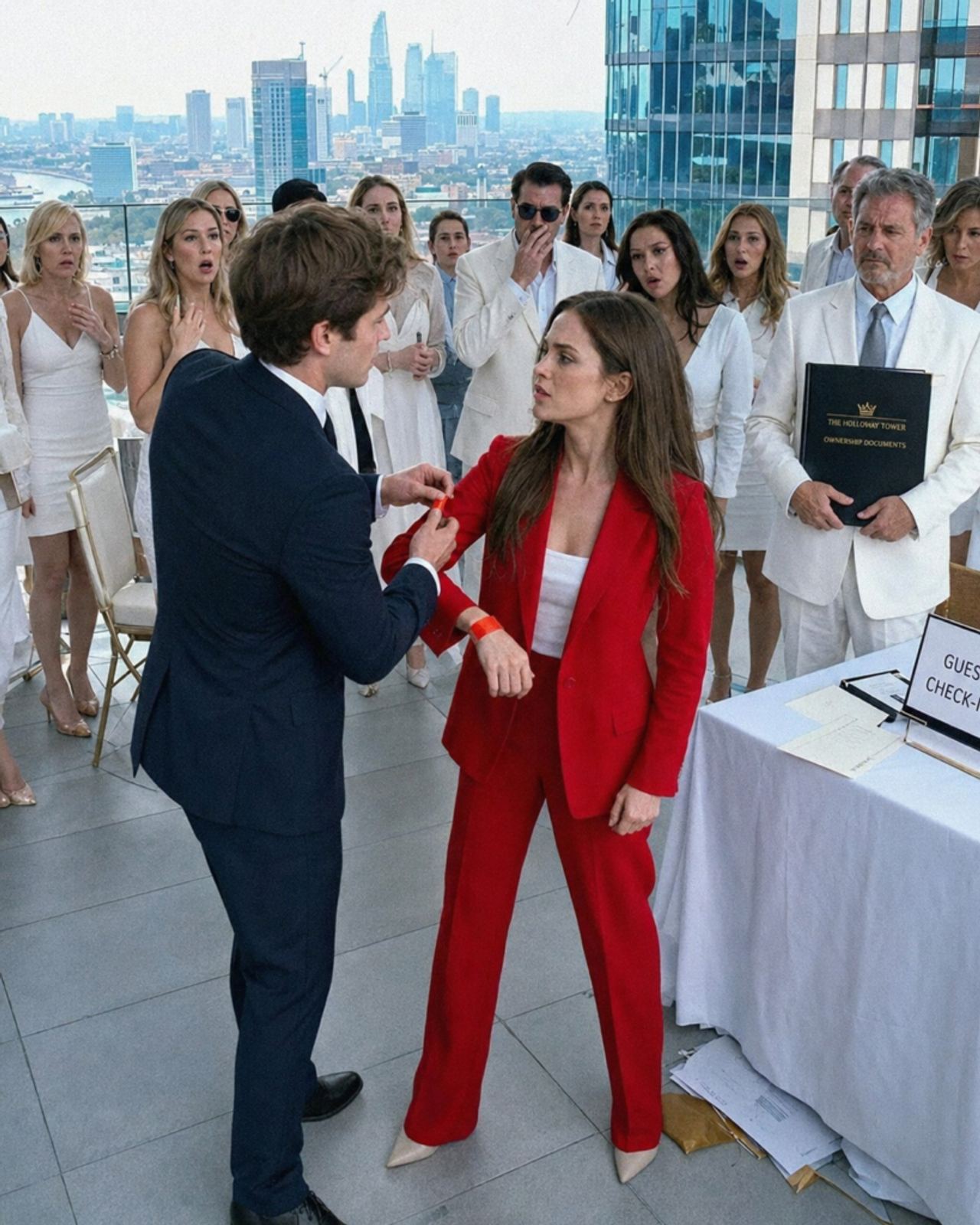
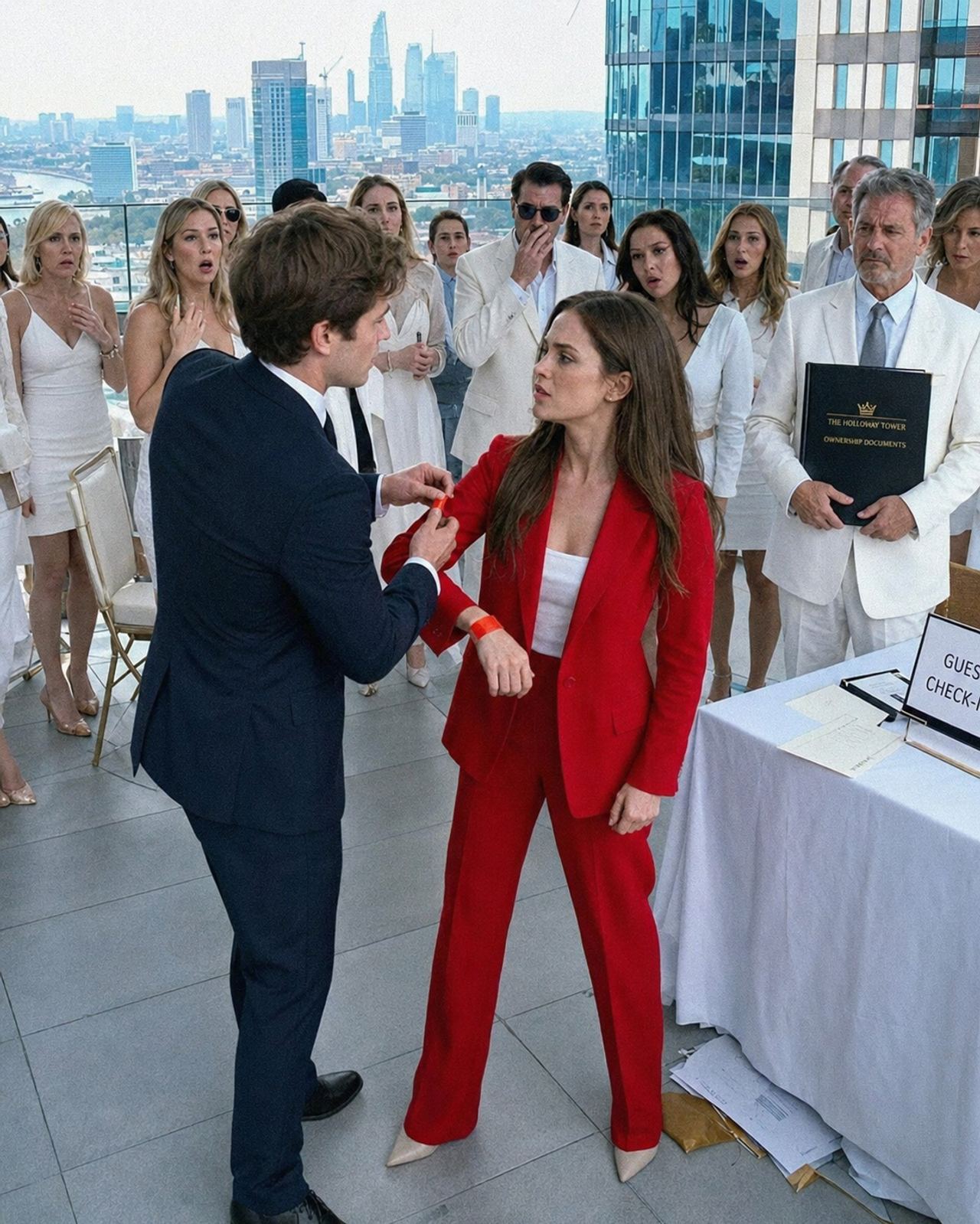
“At my brother’s rooftop graduation party, he clipped a red wristband around my wrist in front of 114 guests and said, “Security needs to know who doesn’t belong here.”
At her brother Derek’s rooftop graduation party, Elena is publicly marked as a lesser guest with a red wristband in front of 114 attendees. She calmly waits before revealing that she secretly owns the venue, turning a humiliating family slight into a stunning reversal of power.

I simply fastened it, smiled, and waited for the building manager to arrive with the folder my family never knew had my name inside.
The red wristband made a cheap snapping sound as it closed around my wrist, yet somehow it rose above the soft jazz, the champagne glasses, and the quiet murmur of wealthy guests pretending they were not staring.
My brother Derek did not look embarrassed. He stood behind the check-in table in his navy suit, one hand holding his phone, the other already reaching for another white VIP band.
“Security needs to know who doesn’t belong here,” he said, as casually as if he were explaining where to park.
The guests behind me fell silent just long enough to make sure I knew they had heard him.
My mother smiled too brightly beside the flowers.
My father adjusted his cufflinks.
And I stood there in a charcoal suit that cost more than Derek’s first month of rent, calmly securing the red wristband around my own wrist.
My name is Elena Marsh, and by twenty-nine, I had mastered the one thing my family always confused with weakness: composure.
Derek was three years younger than me, but in our house, he had always been treated like the miracle child.
When I brought home straight A’s, my father said, “That’s what we expect.”
When Derek came home with B’s, my parents ordered pizza and called relatives to celebrate.
When I got into college with a partial scholarship, they told me student loans would teach me responsibility.
When Derek got into college with no scholarship, they paid every bill, furnished his apartment, bought him a car, and said he needed peace of mind so he could reach his potential.
Potential. That was always their word for him.
For me, they had different words: Practical. Independent. Low-maintenance. Fine.
So I became the daughter who needed nothing, because needing something had never helped me. I worked through college with three jobs, late buses, cheap coffee, and used textbooks full of someone else’s notes. I graduated with honors and debt. My parents attended the ceremony, took two pictures, and spent the drive home discussing Derek’s summer plans.
At twenty-two, I joined a tech startup, earned decent money, and slept badly.
At twenty-three, I discovered a product flaw that was costing the company millions. I wrote a proposal no one expected from the quiet woman in the corner, presented it to the founders, and was promoted with equity.
Three years later, the company was acquired.
My payout was $2.8 million.
I did not tell my parents—not because I was hiding it, but because they never asked the kind of questions that would have led there. At Sunday dinners, my mother could spend forty minutes praising Derek’s new office chair, then turn to me and ask,
“You’re still doing that computer job, right?”
“I consult now,” I would say.
She would nod like I had told her I watered plants for a living, then ask Derek whether his boss had noticed his leadership qualities.
So I invested quietly. Tech startups. Consulting projects. Commercial buildings. By twenty-eight, I owned four properties, held equity in seven companies, and made more in a month than Derek made in a year.
What my family never knew was that eight months before Derek’s graduation party, I bought Skyline Tower.
It was twelve stories downtown:
Retail on the ground floor
Offices above
A luxury event space on the eleventh floor
A rooftop on the twelfth that everyone in the city wanted for weddings, fundraisers, corporate dinners, and parties where people wore confidence like perfume.
I kept the existing property manager, Thomas Chin, because he knew every pipe, vendor, tenant, and weak spot in the building better than any spreadsheet could.
Thomas knew who I was.
My family did not.
So when my mother complained that the Skyline rooftop was booked for months and would have been “perfect for Derek,” I stayed silent. When she called three weeks later, nearly screaming because the venue had suddenly “had a cancellation,” I said, “That’s wonderful.”
When my parents wired the deposit, catering fees, open bar package, and another deposit for Derek’s future wedding reception, I said nothing again.
They were paying me.
They just did not know it.
The night before the party, my mother pulled me aside after Derek’s graduation ceremony.
“Elena, tomorrow is very important,” she said.
Derek stood beside her, scrolling through his phone.
“This is his day,” my father added. “We need you to be supportive and not draw attention to yourself.”
Derek finally looked up.
“Just don’t embarrass me, okay? The people coming are high-level. You don’t really fit with the crowd I’m trying to impress.”
I looked at him.
“The crowd you’re trying to impress?”
“Business contacts. Potential employers. People who matter.”
My mother touched my arm as if she were being gentle. “Just stay in the background.”
The next morning, Derek texted me the dress code and added one more line: Try not to look poor.
I stared at those five words for a long moment. Then I chose a tailored charcoal suit, diamond studs, and simple black heels—the kind of pieces whose value is obvious only to people who understand quality.
I arrived at Skyline Tower fifteen minutes early. Thomas saw me cross the lobby, and his eyebrows lifted slightly. I gave him one small shake of my head.
Not yet.
Upstairs, the rooftop was beautiful. String lights glowed overhead. White flowers stood near the glass railing. The premium bar was fully stocked. Caterers moved between silver trays. The sunset painted the city in orange and gold.
My mother directed the staff as if she owned the place.
Derek stood at the entrance, handing out wristbands: White for VIP guests. White for business contacts. White for family.
Then I reached the table.
“Name?” he asked.
“Derek.”
“Name?” he repeated, still not looking up.
“Elena Marsh.”
The girl with the tablet searched the list. “I don’t see her under VIP.”
Derek finally raised his eyes and smiled. Not warmly. Publicly.
“Oh, right. Elena’s on the alternate list.”
He picked up the red wristband. It read: General Attendance.
“What’s this?” I asked.
“Your wristband.”
“Everyone else has white.”
“White is for VIPs, business contacts, important guests, family,” he said. “Red is for everyone else.”
There it was. Not loud. Not dramatic. Just sharp enough to cut.
Behind me, people shifted awkwardly. A man in a gray suit glanced from my wrist to Derek. My mother watched from across the rooftop and did not step in.
So I fastened it.
The party filled quickly after that. One hundred and fourteen guests. I counted. I was the only person wearing red.
At seven, my father called for family photos. I stepped toward the group, and he stopped me in front of everyone.
“Red wristbands aren’t in this shot.”
My cousins looked away. Aunt Rachel blinked as if she had misheard him. My mother pointed to a spot fifteen feet outside the frame.
“You’ll still be here,” she said. “Just not in the photo.”
The photographer took forty-seven pictures.
I counted those too.
Derek smiled in every one.
Later, I heard my mother showing the photos to one of her friends.
“Where’s Elena?” the woman asked.
My mother laughed softly. “Oh, she’s around somewhere. She’s not really part of Derek’s world. More of a supportive presence.”
Then she said the words that finally made something inside me go still:
“Background family.”
Not anger.
Clarity.
I understood then that they had not failed to see me. They had chosen the version of me that made their lives easier—the quiet one, the useful one, the one they could crop out.
At exactly 9:00 p.m., I looked down at the red wristband one last time. Then I took out my phone and sent Thomas three words:
It is time.
Seconds later, the elevator doors opened.
Thomas Chin stepped onto the rooftop carrying a leather folder in both hands.
Thomas did not walk toward my parents. He did not look at Derek. He walked straight past the string lights, the silver trays, and the sudden quiet of the crowd, stopping directly in front of me.
He held out the leather folder, his expression entirely professional.
“Good evening, Ms. Marsh,” Thomas said, his voice carrying clearly across the terrace. “The evening audit and property transfer confirmations are ready for your signature.”
My mother’s laughter died instantly.
Derek frowned, stepping away from the check-in table. “Wait. What are you doing? Who is she to you? She’s just—she’s on the alternate list.”
Thomas finally turned his head, his gaze cold and unimpressed.
“Mr. Chin,” Derek stammered, his earlier confidence fracturing as a few high-level guests began to whisper. “You’re the building manager. Why are you bringing documents to her?”
“Because,” Thomas said smoothly, “Ms. Marsh doesn’t just attend events here. She owns the building.”
The silence that followed was absolute. The soft jazz playing in the background suddenly felt deafening.
My father pushed through the small crowd, his face pale. “What is he talking about, Elena? Skyline Tower is owned by a private holding firm. It’s worth tens of millions.”
I looked down at my wrist, slowly peeling off the cheap red plastic of the general admission band and letting it drop to the floor.
“It is,” I said quietly. “I bought it eight months ago.”
My mother stared at me as if I had spoken a foreign language. Her hands trembled slightly against the fabric of her dress. “You… you can’t afford this. You have a computer job. You’re practical. You’re low-maintenance.”
“I was,” I replied. “Now, I’m your landlord.”
Derek looked from Thomas to the leather folder, then to the guests who were now watching him with sharp, evaluating eyes—the very people he had tried so desperately to impress.
“You booked this venue,” Derek whispered, the horror finally setting in. “The deposit… the fees… you took our money?”
“No,” I corrected him, taking the folder from Thomas and opening it to the first page. “You paid me. Every single cent went straight into my accounts. Thank you, by the way. The open-bar package was quite profitable.”
I signed the bottom of the top document with a sleek silver pen I had kept in my pocket, the ink flowing smoothly in the warm evening air.
Then I looked up at my family, realizing for the first time that I didn’t feel small, or invisible, or secondary at all.
“Your event ends at eleven,” I said, closing the folder and handing it back to Thomas. “Please make sure the cleanup crew leaves the rooftop spotless. My property, my rules.”
I turned and walked toward the elevators, leaving them standing under the glowing string lights—not as background family, but as guests who had finally worn out their welcome.
Read more stories
- “Enjoy the Finale.” I Said After My Husband Shoved Me Into My Own Pool and Tore Up What He Thought Was Our Prenup—Seconds Earlier, My Lawyer Had Revealed the Real One Was Waiting in a Bank Vault.
- When Andrew Roark came home after a twelve-hour electrical job, he found a thin little boy sitting beneath the maple tree in his yard. The boy lifted his head, and Andrew dropped his tool belt into the grass. It was Harry — his son, the child everyone said had drowned five years ago. But when Andrew held him, Harry whispered, “Dad, it wasn’t an accident.”
- My ex-husband’s new wife appeared at my front door with a confident smile. She said, “We’re here to claim our rightful share of your father’s estate. Move out of here immediately.” I stood still and smiled. Just then, my lawyer walked in behind her. And she had no idea that what he was holding in his hand would wipe that smile off her face.
- Just two days after our wedding, I refused to serve dinner to my sister-in-law while